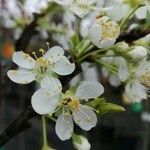
Prunus salicina
Plum · Willow-leaf cherry · Jadu Cherry · Japanese Plum · Asian Plum
Description
Source: leafsnapPrunus salicina, commonly known as the Japanese plum or Chinese plum, is a deciduous fruit tree that belongs to the Rosaceae family. Native to China, it has been cultivated for thousands of years for its delicious and nutritious fruits. This tree can grow up to 10 meters tall and features a spreading canopy with dark green, ovate leaves. In early spring, before the leaves emerge, the Japanese plum produces small white or pink flowers. Its fruits are round or oval-shaped with smooth skin that varies in color from yellow to red-purple, depending on the cultivar. The fruits have juicy yellow flesh with a sweet flavor and are rich in vitamins A, C, and K, as well as potassium, fiber, and antioxidants. Prunus salicina is easy to grow and prefers full sun exposure and well-drained soil. It needs regular watering during its growing season but can tolerate drought once established. Although the tree is self-fertile, it produces better yields when cross-pollinated by another cultivar. The Japanese plum has numerous culinary uses, such as making jams, jellies, pies, and tarts, or simply eating it fresh as a snack. Additionally, it offers medicinal benefits, particularly for aiding digestion problems like constipation due to its high fiber content. Overall, the Prunus salicina is an excellent addition to any garden, providing beautiful flowers in the spring followed by delicious fruits in the summer months.
🌳 The Chinese plum is valued not only for its fruit but also as an ornamental plant; its wood is prized in furniture-making for its durability and deep color. In addition, its blossoms are used as decorations during festivals and hold a central place in traditional Chinese aesthetics. The Chinese plum also serves as a host plant for a variety of butterfly species, helping to support local biodiversity.
🎭 Recovery
Care Guide
💧 Water Every 7 days
The Chinese plum hails from a region with distinct wet and dry seasons, which has endowed it with a moderate tolerance to drought. This plant requires watering every two weeks. It thrives outdoors, where it benefits from the natural rain patterns typical of its growing season, mirroring the fluctuations in water availability found in its native habitat.
☀️ Light Full sun
Chinese plum favors abundant sunlight, performing best in settings where it gets plenty of daylight. It can also cope in spots with partially filtered or screened light. However, too little or too much illumination can impede its healthy growth.
What are the sunlight requirements for Chinese plum?
Chinese plum thrives best with ample sun exposure, requiring above 6 hours of sunlight for optimal growth, termed as 'Full sun'. It can also manage in 'Partial sun' conditions, which constitutes about 3-6 hours of sunlight. Ensuring the right balance of light is crucial for the healthy development of this plant. It is sensitive to both under and overexposure to light, with too little or too much sun potentially hampering its growth.
How do I use artificial lighting for Chinese plum?
When natural sunlight is insufficient for your Chinese plum, especially indoor or during less sunny seasons, artificial lighting can be a suitable alternative. For optimal growth under artificial lights, consider the following: LED lights are recommended as they can be customized to the plant's needs, with full sun plants requiring 30-50W/sq ft, partial sun plants 20-30W/sq ft, and full shade plants 10-20W/sq ft. The light source should be placed 12-36 inches above the plant to mimic natural sunlight. Additionally, the duration of exposure should match natural daylight hours, generally between 8-12 hours per day.
What are the symptoms of inappropriate lighting for Chinese plum?
Symptoms of light deficiency in Chinese plum include smaller new leaves, leggy or sparse growth, faster leaf drop, slower or no new growth, and lighter-colored new leaves. Excessive sunlight can lead to chlorosis (leaves turning yellow), sunscald (damage from intense sunlight), leaf curling, wilting, and leaf scorching. These symptoms reflect the plant's struggle to adapt to either insufficient or excessive light.
How can I manage sunlight exposure for Chinese plum?
To manage sunlight exposure effectively for Chinese plum, consider these strategies: For indoor plants, gradually move them to sunnier locations to achieve at least 6 hours of sunlight daily, using a south-facing window and keeping curtains open. Artificial lighting can supplement natural light. Outdoors, gradually acclimate plants to sunnier spots to prevent sunburn. Pruning nearby trees can reduce obstructions and increase sunlight exposure. If needed, transplanting during the dormant period can help relocate your plant to a better-lit area. Note, parts of the plant that suffered from light deficiency may not recover, but new growth should be healthy with improved conditions.
🌡️ Temperature 5–32.2°C
Chinese plum originates from habitats where temperatures range from 41 to 90 °F (5 to 32 ℃). It attains optimal growth within that range. To recreate those conditions, seasonal temperature adjustments may be required.
What is the optimal temperature range for growing Chinese plums?
Chinese plum, scientifically known as Prunus salicina, thrives in environments with temperature ranges from 41 to 90 °F (5 to 32 °C). Achieving ideal growth requires maintaining this temperature spectrum. The plant exhibits strong cold resistance, meaning special frost protection measures are typically unnecessary. However, if temperatures are expected to plummet below -25°C, it's crucial to provide cold protection by wrapping the trunk and branches with insulating materials like non-woven fabric or cloth. To prepare for winter, it's recommended to water the plant abundantly before the first freeze in autumn, ensuring the soil remains moist and enters a frozen state, thus preventing drought and water scarcity during the colder months.
How does the Chinese plum react to low temperatures, and what measures should be taken?
Chinese plum is highly tolerant of cold, withstanding temperatures above 5°C comfortably. During winter, it's advised to keep the temperature above -20°C to ensure the plant's health. If temperatures drop below -25°C, the plant itself might not show immediate signs of distress during winter, but come spring, the branches may become brittle and dry, failing to produce new shoots. To counteract this, one should prune away any dead branches that have failed to produce new leaves in the spring, facilitating healthier growth.
How does high temperature affect Chinese plum, and what are the solutions?
During the summer, it's essential to keep the Chinese plum's environment below 32°C to avoid any stress caused by high temperatures. When the temperature climbs above 35°C, the plant may display signs of distress; its leaves might lighten in color, tips could become dry and withered, and there’s an increased risk of sunburn. To alleviate these issues, trim away the sunburned and dried parts of the plant and move it to a location where it can be shielded from the midday and afternoon sun, or use a shade cloth for protection. Additionally, watering the plant in the morning and evening can help keep the soil moist, thus supporting the plant's overall health during hotter periods.
💨 Humidity normal (40-60%)
This plant will thrive in moderate humidity, which is probably the level in your home. However, misting it a few times a week can be very beneficial. Make sure the room has good ventilation.
🪴 Soil 6-7
🌱 Fertilizer
The Chinese plum plant needs adequate nutrients to produce fruit at its best. Apply fertilizer in early spring to support new growth and flowering. Regular feeding keeps the plant healthy, promotes tastier fruit, and prevents nutrient deficiency problems like yellowing leaves and poor fruit production.
🪴 Pot & Repot Every 12 months
✂️ Pruning
Chinese plum trees benefit greatly from pruning in late winter. This process involves removing dead branches, thinning out crowded areas, and trimming back long branches to encourage fruit production. By shaping the plant while it is young, you can establish a strong structure that improves fruit yield and overall health. Thus, pruning is an essential practice for maintaining these plants.
🌿 Propagating
🐛 Diseases & pets
☠️ Toxicity
Characteristics
- Plant Type
- Tree
- Life Cycle
- Perennial
- Genus
- Prunus
- Family
- Rosaceae
- Hardiness Zone
- 5-8
- Mature Height
- 9.14 m to 11.89 m
- Mature Spread
- 4.57 m to 9.14 m
- Leaf Color
- Green
- Leaf Type
- Deciduous
- Flower Color
- White
- Flower Size
- 1.52 cm to 2.29 cm
- Bloom Time
- Mid spring, Late spring
- Planting Time
- Spring, Autumn
- Harvest Time
- Mid summer
- Native Area
- Russia, Vietnam, Myanmar, Laos, China