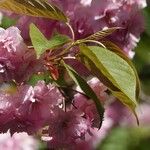
Prunus serrulata
حلما · Ανθοκερασιά · Japanese flowering cherry · Japanese flowering cherry Kwanzan · Tibetan Cherry
Description
Source: leafsnapPrunus serrulata, commonly known as the Japanese cherry blossom or sakura, is a deciduous tree native to Japan, Korea, and China. It is widely cultivated for its beautiful pink or white flowers that bloom in early spring. The tree can grow up to 12 meters tall and features a spreading crown with dark brown bark that peels in horizontal strips. The leaves of Prunus serrulata are oval-shaped with serrated edges and can grow up to 14 cm long. The flowers are usually pink but can also be white or even yellow, depending on the cultivar. They appear before the leaves emerge in early spring and last for about two weeks. The fruit of Prunus serrulata is small, round, and ranges from red to black when ripe. Although it is not commonly eaten by humans, it provides food for birds. Prunus serrulata has been widely cultivated around the world as an ornamental tree due to its beautiful flowers, which symbolize renewal, hope, beauty, and transience in Japanese culture. Additionally, the tree has medicinal properties; its bark contains compounds traditionally used to treat coughs, colds, and other respiratory ailments. Overall, Prunus serrulata is a stunningly beautiful plant with cultural significance across many countries. Its spectacular blooms make it an excellent addition to any garden or landscape design project.
💡 The Japanese cherry blossom is a symbol of both beauty and mortality. Its brief blooming period serves as a powerful metaphor for the fleeting and transient nature of human life. In Japan, people have been gathering for cherry blossom parties during the blooming season for at least 1,000 years.
🌳 Japanese cherry is not only admired for its lovely blooms during 'hanami' in Japan. In China, it is combined with herbs to help reduce cholesterol and hypertension. Its bark helps give 'washi' paper its distinctive feel. Additionally, the wood's fine grain and excellent resonant properties make it desirable for making high-quality woodwind instruments.
🎭 Love, divination, birth, death, heroism, violence, life is brief and constantly changing
Care Guide
💧 Water Every 7 days
Japanese cherry trees thrive in temperate climates and are somewhat drought-tolerant. They prefer well-drained soil and should be watered every one to two weeks to mimic natural rainfall patterns. During the winter dormancy period, when the tree is not actively growing, its water needs decrease. As a deciduous tree, the Japanese cherry exhibits seasonal changes throughout the year.
When should I water my Japanese Cherry?
Watering your Japanese Cherry at the correct times is crucial for its health. The plant thrives in moist, well-drained soil. Check the soil's dryness by inserting a finger about an inch deep; if it feels dry, it's time to water. Watch for signs like soil dryness, leaf curling, wilting, color changes in leaves, and slowed growth as indicators of when to water. However, be cautious not to over-water, as this can lead to root rot and other health issues.
How should I water my Japanese Cherry?
To water your Japanese Cherry effectively, consider bottom-watering by placing the pot in a tray of water, allowing the plant to absorb moisture from the bottom. Misting can help increase humidity, particularly for indoor plants. Use a watering can with a narrow spout to direct water to the base and avoid wetting the foliage excessively. Utilizing a moisture meter may also assist in determining when the plant needs water. It's important to focus on watering the soil around the base and avoid waterlogging.
How much water does Japanese Cherry really need?
The water needs of Japanese Cherry vary based on the pot size, root depth, and plant size. It's important to provide sufficient water to keep the soil consistently moist but not waterlogged. Signs of adequate watering include vibrant foliage and regular flowering. Avoid overwatering to prevent root rot and underwatering to avoid drought stress. Adjust watering according to the plant's needs and environmental conditions.
What kind of water is best for Japanese Cherry?
Japanese Cherry benefits most from rainwater, as it's natural and free of chemicals. Distilled or filtered water are also suitable, whereas tap water should be used cautiously because of its chlorine and fluoride content, which can stress the plant. It's recommended to let tap water sit for 24 hours to allow chlorine to evaporate, and if necessary, adjust the pH to the plant's preferred range.
How do Japanese Cherry's watering needs change with the seasons?
Seasonal changes affect the watering needs of Japanese Cherry. In spring, during the growth phase, ensure the soil never completely dries out. Summer demands moderate moisture to combat heat. In autumn, reduce watering as the plant's growth slows. During winter, water only when the soil is very dry, and be cautious of freezing temperatures. Each season has unique watering requirements reflecting the plant's lifecycle.
☀️ Light Full sun
The Japanese cherry prefers plentiful light, which encourages its best growth. Although it can tolerate areas with less illumination, those circumstances may harm its health and reduce its lushness. In its native range it receives abundant sunlight, reflecting the conditions under which it flourishes. Too much exposure can be harmful, causing scorching, while too little light may lead to diminished vigor.
What are the sunlight requirements for Japanese cherry (Prunus serrulata)?
Japanese cherry (Prunus serrulata) requires full sun, which is above 6 hours of sunlight daily, to thrive optimally. It can also tolerate partial sun, about 3-6 hours of sunlight daily. The plant loves abundant light exposure, which promotes its growth and lushness. However, too much or too little sunlight can be detrimental. Excessive exposure to sunlight can cause scorching, while insufficient light may lead to weakened vigor. It's vital to observe how sunlight moves through your garden to choose spots that provide the perfect balance of light and shade, ensuring the plant's happiness.
How does artificial lighting benefit Japanese cherry plants indoors, and what are the guidelines for its use?
Indoor Japanese cherry plants require adequate lighting for optimal growth. When natural sunlight is insufficient, particularly in winter or in less sunny spaces, artificial lights offer a vital solution. They promote faster, healthier growth by providing the specific wavelengths of light that plants need. LED lights are recommended because they can be customized for the plant's needs. Full sun plants need 30-50W/sq ft, partial sun plants need 20-30W/sq ft, and full shade plants need 10-20W/sq ft of artificial light. The light source should be placed 12-36 inches above the plant to mimic natural sunlight, and most plants need 8-12 hours of light per day.
What are the symptoms of insufficient or excessive sunlight in Japanese cherry?
When Japanese cherry does not receive enough sunlight, it may exhibit symptoms like smaller new leaves, leggy or sparse growth, faster leaf drop, slower or no new growth, and lighter-colored new leaves. Excessive sunlight can cause chlorosis (leaves turn yellow), sunscald (pale or necrotic areas on leaves or stems), leaf curling, wilting, and leaf scorching. These symptoms underscore the importance of providing the right amount of sunlight to keep the plant healthy.
What are the solutions for managing sunlight exposure for Japanese cherry?
To manage sunlight exposure for Japanese cherry, indoors, ensure the plant receives at least 6 hours of direct sunlight by gradually moving it to a sunnier location each week. Use south-facing windows and keep curtains open during the day. If the plant is large or not easily movable, use artificial light for at least 8 hours daily. Outdoors, adapt the plant to sunnier spots gradually to avoid sunburn. For ground plants, reduce obstructions by pruning trees or branches blocking sunlight and consider transplanting smaller plants during their dormant period to sunnier locations with good drainage. Note that parts of the plant affected by insufficient light may not recover, but new growth will be healthy with increased light exposure.
🌡️ Temperature 5–35°C
The Japanese cherry favors a temperate climate and can tolerate temperatures from 5 to 35 ℃ (41 to 95 ℉). In its native growth environment it can thrive across a range of temperatures but prefers cooler conditions during the growing season. During hot summers it benefits from shade and regular watering.
What climate does the Japanese cherry prefer?
The Japanese cherry, or Prunus serrulata, thrives in a temperate climate, tolerating temperatures ranging from 5 to 35°C (41 to 95°F). It prefers cooler temperatures during its growing season and can handle a variety of temperatures in its native environment. During hot summers, the Japanese cherry benefits from being shaded and receiving regular watering. It has strong cold resistance, so it doesn't usually require special frost protection measures in winter. However, if temperatures are expected to drop below the plant's growth temperature limit, protecting it from the cold by wrapping the trunk and branches with non-woven fabric or cloth is advisable. To prevent drought and water scarcity during winter and early spring, it is recommended to water the plant abundantly before the first freeze in autumn, ensuring the soil remains moist.
How does low temperature affect Japanese cherry, and what are the solutions?
Japanese cherry trees are cold-tolerant and perform best when the temperature remains above their minimum suitable growth temperature. During winter, it is important to keep them above their minimum tolerable growing temperature. If temperatures fall below their growth limit temperature, there might not be noticeable changes during winter, but by spring, the branches could become brittle and dry, with no new shoots emerging. To counteract this, any dead branches that have failed to produce new leaves should be pruned away in spring.
How does high temperature affect Japanese cherry, and what are the solutions?
During summer, it's crucial to keep Japanese cherry trees below their maximum suitable growth temperature. Exceeding their maximum tolerable growing temperature can cause the leaves to lighten in color, tips to become dry and withered, and increase susceptibility to sunburn. To mitigate these issues, trim away the sunburned and dried-up parts of the plant. Additionally, moving the plant to a shaded location during the midday and afternoon or using a shade cloth can provide protection from the sun. Ensure the soil remains moist by watering the plant in the morning and evening.
💨 Humidity normal (40-60%)
This plant will thrive in moderate humidity, which is probably the level in your home. However, misting it a few times a week can be very beneficial. Make sure the room has good ventilation.
🪴 Soil 6-7
🌱 Fertilizer
Proper timing is important for fertilizing Japanese cherry. Apply fertilizer in early spring and repeat it monthly until early summer. The fertilizer encourages attractive blooms and supplies energy during both dormant and active growth periods.
Why should I put fertilizer on my Japanese cherry tree?
Fertilizing a Japanese cherry is important for multiple reasons. Firstly, it will help the cherry tree produce beautiful blooms. To ensure excellent flowers in spring, it is recommended to fertilize the tree during early spring. Additionally, fertilizing provides the tree with extra energy that can be stored in the ground during its dormant growth phases. By giving the cherry tree additional nutrients during fall planting or late spring, it can store more energy to use when active growth resumes.
When should I fertilize my Japanese cherry to get the best results?
Fertilizing Japanese cherry trees requires careful timing. It's important not to apply fertilizer too early, when the trees are still dormant. If applied too early, the fertilizer will not be effective and will be washed away by rain, causing waste and pollution. The first application of fertilizer should be done in early spring, followed by monthly applications until early summer.
When is the best time to not use fertilizer on my Japanese cherry tree?
To ensure proper growth and blooming of Japanese cherry trees, it is important to handle fertilization with care. Too much nitrogen in the fertilizer can result in an abundance of leaves while limiting the number of blooms. Therefore, it is advisable to opt for a fertilizer that contains a lower amount of nitrogen compared to other nutrients. Additionally, it is best to avoid fertilizing Japanese cherry trees during the late autumn, as this can encourage excessive growth right before the winter season. Similarly, fertilization should be avoided during hot and dry periods, as dry soil is not as effective at delivering nutrients as moist soil. Fertilizing during such times can also stimulate growth that requires additional water, which may not be readily available. It is ideal to apply fertilizer earlier in the season when temperatures are cooler. Lastly, it is crucial to be cautious when using fertilizers near Japanese cherry trees, as they can absorb any fertilizer that has been applied to nearby plants or lawns. This is important to prevent unintentionally providing a double dosage of fertilizer to the tree or shrub.
Which fertilizer should I use for my Japanese cherry tree?
The best fertilizer for a Japanese cherry is one with a balanced mix of plant nutrients, slightly higher in phosphorus. Alternatively, you can improve the soil by adding organic materials like compost, worm castings, and manure. Experienced gardeners may also use water-soluble fertilizers with phosphorus when flower buds appear, promoting better flower development and longer blooming. Fertilizers can come in various forms, but liquid or powdered fertilizers are often recommended for Japanese cherry trees. Regardless of the form, make sure to dilute the fertilizer and apply it while watering the tree.
How can I make my Japanese cherry tree grow better?
To properly fertilize your Japanese cherry tree, it's important to follow the instructions for the specific type of fertilizer. It's also crucial not to use too much fertilizer, so determining the correct amount is key. Typically, you can use the age of the tree or the diameter of the trunk as a guideline. For every year of the tree's age or every inch of trunk diameter, you can estimate using one-tenth of a pound of fertilizer, up to a maximum of one pound. Granular fertilizers and organic options like blood meal can be sprinkled around the base of the tree, all the way to the drip line (the area below the outermost branches). Take care not to let the fertilizer come in contact with the trunk. As time goes on, the granules will break down and seep into the soil, where the tree's roots can absorb them. After applying fertilizer, it's a good idea to spread a one-inch layer of compost around the base of the tree and give it a thorough watering.
🪴 Pot & Repot Every 12 months
✂️ Pruning
The Japanese cherry tree, famous for its stunning spring blossoms, benefits greatly from pruning in early spring. Begin by removing dead branches and any overcrowded stems to improve air circulation. Trim up to one-third of the older branches to encourage new growth, which will help maintain the tree's health and produce a vibrant display of blooms.
🌿 Propagating
🐛 Diseases & pets
☠️ Toxicity
Characteristics
- Plant Type
- Tree
- Life Cycle
- Perennial
- Genus
- Prunus
- Family
- Rosaceae
- Hardiness Zone
- 5-10
- Mature Height
- 3.96 m to 15.85 m
- Mature Spread
- 4.57 m to 6.1 m
- Leaf Color
- Green
- Leaf Type
- Deciduous
- Flower Color
- Pink, White
- Flower Size
- 2.03 cm to 3.05 cm
- Bloom Time
- Mid spring, Late spring
- Planting Time
- Spring, Autumn
- Harvest Time
- Early summer, Mid summer
- Native Area
- Koppen, Japan, South Korea, China