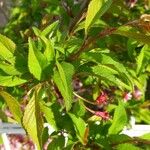
Prunus subhirtella
Spring cherry · Rosebud cherry · Autumn cherry · Higan cherry · Winter flowering cherry
Description
Source: leafsnapPrunus subhirtella, commonly known as the Higan cherry or winter-flowering cherry, is a deciduous tree native to Japan. It is a popular ornamental choice for gardens and parks due to its beautiful pink or white flowers that bloom in late winter or early spring, before the leaves emerge. The tree typically reaches heights of 10 to 15 meters and features a spreading crown with smooth gray bark. The leaves are oval-shaped with serrated edges, turning yellow-orange in autumn before falling off. The fruit of the Higan cherry is small, dark red, and generally not consumed by humans but is a food source for birds and other wildlife. This plant prefers full sun but can tolerate partial shade. It adapts well to various soil types, including clay, loam, sand, and acidic soils, as long as they are well-drained. While it requires moderate watering during its growing season, it can tolerate drought conditions once established. Overall, Prunus subhirtella is an attractive ornamental plant that adds beauty to any landscape during late winter and early spring, when most other plants are still dormant. It is an excellent choice for gardeners seeking early-season color displays from their plants.
Care Guide
💧 Water Every 7 days
Winter-flowering cherry thrives in temperate climates with moderate moisture. While it prefers consistent hydration, it can tolerate short periods of dryness. Water the plant every 1-2 weeks, ensuring the soil dries slightly between watering sessions. This plant is ideal for outdoor growth and blooms best in cool conditions during its flowering season.
☀️ Light Full sun
The winter-flowering cherry comes from open habitats, like sunny meadows and forest edges, where light is plentiful. It performs best in Full Sun but can tolerate Partial Sun, adjusting well to different light conditions.
What are the sunlight requirements for Winter-flowering cherry?
The Winter-flowering cherry, also known by its botanical name Prunus subhirtella, thrives in different sunlight conditions depending on the variety. For those varieties that require full sun, they will need above 6 hours of sunlight daily to flourish. Others that are categorized under partial sun need about 3-6 hours of sunlight. It's crucial to observe the movement of sunlight through your garden, selecting locations that offer the ideal mix of light and shade. This careful placement ensures the plants remain happy and healthy.
🌡️ Temperature 5–32.2°C
The winter-flowering cherry shows strong adaptability to a wide range of climatic conditions, whether faced with blazing summers or frosty winters. Nevertheless, it has an ideal temperature band for growth. If temperatures climb too high, the plant becomes susceptible to heat and humidity stress, which can lead to its death. In areas where temperatures approach the lower limit of its cold tolerance, taking insulating precautions to protect the plant is important.
What is the botanic name of the Winter-flowering cherry?
The botanic name of the Winter-flowering cherry is Prunus subhirtella. It is known for its distinctive characteristics and is a popular choice among garden enthusiasts for its aesthetic appeal.
💨 Humidity normal (40-60%)
This plant will thrive in moderate humidity, which is probably the level in your home. However, misting it a few times a week can be very beneficial. Make sure the room has good ventilation.
🪴 Soil 6-7
🌱 Fertilizer Every 110 days
Timing matters when fertilizing Winter-flowering cherry. Apply fertilizer in early spring and continue monthly until early summer. Fertilizer promotes attractive blooms and provides energy during both dormant and active growth stages.
🪴 Pot & Repot
✂️ Pruning
Winter-flowering cherry trees benefit from pruning in early spring. This process involves removing dead or diseased branches, which enhances airflow and shapes the tree's natural form. By improving light penetration, this practice encourages healthier growth and better flowering, while maintaining an attractive and vigorous structure.
🌿 Propagating
🐛 Diseases & pets
☠️ Toxicity
Characteristics
- Plant Type
- Tree
- Life Cycle
- Perennial
- Genus
- Prunus
- Family
- Rosaceae
- Hardiness Zone
- 5-8
- Mature Height
- 12.19 m to 15.24 m
- Mature Spread
- 4.57 m to 7.62 m
- Leaf Color
- Yellow, Green, Bronze
- Leaf Type
- Deciduous
- Flower Color
- Pink
- Flower Size
- 2.54 cm
- Bloom Time
- Early spring, Mid spring
- Planting Time
- Spring, Autumn, Winter
- Harvest Time
- Early summer, Mid summer