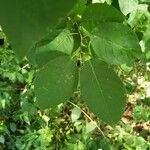
Prunus virginiana
Chokecherry · Impatiens capensis · Canadian Choke Cherry · Bitter-berry · Virginia bird cherry
Description
Source: leafsnapPrunus virginiana, commonly known as chokecherry, is a deciduous shrub or small tree native to North America. Typically reaching up to 20 feet in height, it features a spreading crown with a diameter of up to 15 feet. The leaves are oval-shaped with serrated edges, displaying a glossy dark green on the upper surface and a paler green underneath. In late spring or early summer, chokecherry produces clusters of small white flowers, which are followed by dark red or purple berries in late summer. Although the berries are edible, they have an extremely tart flavor that most people find unpalatable. Chokecherry serves as an important food source for wildlife, such as birds, bears, and deer. It also holds cultural significance for Native American tribes, who use it in traditional medicine and ceremonies. The plant prefers moist soils but can tolerate drought conditions once established. It thrives in full sun to partial shade and is often used as an ornamental shrub or tree in landscaping, owing to its attractive foliage, flowers, and fruit. While chokecherry offers many benefits for wildlife conservation and cultural practices among Native American tribes, it is important to note that its leaves contain cyanide compounds, which can be toxic if ingested by humans or livestock in large quantities. Therefore, the berries should not be consumed without proper preparation methods, such as cooking or drying.
💡 In 2007, Governor John Hoeven designated the common chokecherry as the official state fruit of North Dakota. This decision was influenced by the frequent discovery of chokecherry remnants at various archaeological sites across the state. The indigenous peoples of North Dakota traditionally incorporated the common chokecherry into their culinary dishes and used it in a ceremonial smoking mixture known as kinnikinnick.
🌳 Black cherry fulfills many roles beyond its commonly known uses. Its strong, fine-grained wood is used to make furniture. It also acts as a host plant for several butterfly species, supporting ecological biodiversity, and its bark has been utilized in traditional dye-making. Surprisingly, black cherry can also signal the presence of certain metals in the soil.
🎭 Romance, fortune-telling, intuition, long life, prosperity gained through effort and good fortune
Care Guide
💧 Water Every 7 days
The common chokecherry is drought-tolerant and adaptable to various moisture conditions. It does well with a watering schedule of once every 1-2 weeks. This plant thrives outdoors in well-draining soil, which helps prevent root rot and supports healthy growth.
When Should I Water My Common Chokecherry?
The optimal time to water the common chokecherry involves several indicators including soil moisture, leaf condition, root growth, and the time since the last watering. Check the soil's moisture by inserting your finger about 1 to 2 inches deep; dry soil at this depth means it's time to water. Also pay attention to the plant's leaves; wilting, lackluster, or discoloration could indicate dehydration. Consider the roots' health and growth, and keep track of when you last watered. Wilting in the late afternoon or dryness in the early morning are also signs the plant needs water. It's critical to avoid overwatering to prevent root rot but equally important not to underwater to prevent stress and potential death. Managing these aspects carefully will support the chokecherry's health and growth.
How Should I Water My Common Chokecherry?
Watering the common chokecherry effectively requires understanding its unique needs. This plant thrives with deep watering at the root zone, which encourages deeper root growth and prevents surface saturation. Utilizing a watering can with a long spout or a soaker hose is ideal. To avoid over or under-watering, consider using a moisture meter or soil probe. When watering, focus on the base of the plant to minimize wetting the foliage, which can lead to fungal diseases. Morning is the best time for watering to allow the plant to dry throughout the day, reducing the risk of fungal growth. Avoid late evening watering and ensure the soil is checked for moisture 2 to 3 inches below the surface before re-watering.
How Much Water Does Common Chokecherry Really Need?
The water requirement for the common chokecherry varies based on the plant's size, environmental conditions, and soil composition. Seedlings and juvenile plants generally need consistent moisture, equivalent to about 1-2 inches of water for potted plants, ensuring the soil feels moist at a finger's depth. Mature plants require less frequent but deeper watering to encourage strong root development. The plant exhibits its hydration status through its foliage; lush, green leaves suggest optimal watering, whereas yellow or brown leaves may indicate water stress - either too much or too little. Proper watering is crucial for preventing root rot or stress-related symptoms like wilting and slowed growth.
What Kind of Water is Best for Common Chokecherry?
Rainwater is the most beneficial for the common chokecherry due to its natural nutrient content. If rainwater is unavailable, distilled water or tap water left to stand for 24 hours (to allow chlorine to evaporate) are good alternatives. These plants are moderately sensitive to chlorine but less so to fluoride, meaning fluoride-treated tap water is typically safe to use. Common chokecherry prefers slightly alkaline soil, so lime-rich water can be beneficial, though hard water with high magnesium and calcium levels should be avoided. Water treatments to neutralize potentially harmful components and maintain a water pH of 6 to 7.5 are beneficial.
How Do Common Chokecherry's Watering Needs Change with the Seasons?
Seasonal changes significantly impact the watering needs of the common chokecherry. In spring, during active growth, maintaining consistent soil moisture is essential. Summer may see a natural dormancy with reduced watering needs, allowing the soil to dry slightly between watering. As the plant prepares for winter dormancy in autumn, reduce watering frequency while keeping the soil lightly moist. In winter, water sparingly, allowing the topsoil to dry out between waterings. Adjusting your watering routine in accordance with these seasonal needs supports the health and growth of the common chokecherry.
☀️ Light Full sun
Black cherry does best in strong light, which promotes optimal growth. While partial shade won't harm it, it can slow its growth and increase its susceptibility to disease. Its native environment points to a preference for open sites with generous direct sunlight. Both too little and too much light can negatively affect flowering and fruit production.
What are the sunlight requirements for Common Chokecherry?
Common Chokecherry thrives best when it receives ample sun exposure, ideally thriving under full sun conditions which mean above 6 hours of sunlight daily. It can also adapt to partial sun conditions, receiving about 3-6 hours of sunlight. It's pivotal to observe the movement of sunlight through your garden to ensure the plants are placed in spots that provide the ideal balance of light and shade, securing their health and growth. The sunlight requirement is consistent across all growth stages of the Common Chokecherry, mimicking its natural habitat which allows for optimal growth.
How can artificial lighting support indoor growth of plants?
Indoor plants, including those that would naturally require full sun, can significantly benefit from artificial lighting to support their growth, especially in situations where natural sunlight is insufficient. This can be during winter or in less sunny indoor spaces. LED lights are often the preferred choice for indoor plant lighting, as they can provide specific wavelengths needed by the plant. The requirements for artificial lighting vary by plant type: full sun plants need 30-50W/sq ft, partial sun plants require 20-30W/sq ft, while those that grow in full shade need 10-20W/sq ft. The artificial light source should be placed 12-36 inches above the plant, mimicking the natural sunlight's distance, and should remain on for 8-12 hours per day, similar to natural daylight hours.
What are the symptoms of insufficient lighting in Common Chokecherry?
Common Chokecherry is sensitive to lighting conditions and may exhibit various symptoms when exposed to suboptimal lighting, indicating a deficiency. These symptoms include: smaller new leaves compared to mature ones, leggy or sparse growth due to stretched spaces between leaves or stems, premature leaf dropping as the plant attempts to conserve resources, inhibited or ceased new growth as the plant goes into survival mode, development of lighter-colored or pale new leaves due to a lack of chlorophyll, and various forms of tissue damage such as chlorosis, sunscald, leaf curling, wilting, and leaf scorching when exposed to excessive sunlight.
What solutions are available for Common Chokecherry experiencing insufficient sunlight?
To mitigate issues related to insufficient sunlight for Common Chokecherry, several strategies can be employed. Indoors, gradually moving plants to sunnier locations until they receive at least 6 hours of direct sunlight daily is advisable, using south-facing windows for natural light, and supplementing with artificial lighting such as desk lamps or grow lights for at least 8 hours a day if the plant is large or not easily moved. For outdoor plants, a gradual relocation to better-lit areas is key to avoid shock. Removing obstructions that block sunlight, such as pruning branches from trees, or transplanting smaller plants during their dormant period to areas with more sunlight and good drainage, can significantly improve light exposure for optimal growth.
🌡️ Temperature 0–35°C
The black cherry plant is native to temperate regions and thrives in temperatures from 32 to 95 ℉ (0 to 35 ℃). In hotter periods, it benefits from shade and well-draining soil to avoid heat stress and root rot. In colder periods, it can withstand temperatures as low as 5 ℉ (-15 ℃), though extended frost can damage the branches and buds.
What is the native growth environment of the common chokecherry?
The common chokecherry (Prunus virginiana) thrives in temperate regions, with a preferred temperature range of 32 to 95°F (0 to 35°C). It is well-adapted to withstand cold temperatures, demonstrating strong cold resistance. Despite its hardiness, during the winter, particularly if temperatures drop below 32°F (0°C), it is advisable to take measures to protect the plant. This can involve mulching or wrapping the trunk with fabrics to prevent frost damage. Before the onset of the first freeze in autumn, it's recommended to water the plant abundantly to keep the soil moist, which aids in preventing drought and water scarcity during winter and early spring.
How does low temperature affect the common chokecherry and what are the solutions?
Common chokecherry is cold-tolerant, ideally maintaining temperatures above a certain minimum for optimal growth. During winters, it is crucial to ensure the temperature stays above a tolerable minimum. If temperatures drop below this threshold, there may not be visible damage in winter, but by spring, you might notice that the branches become brittle, dry, and fail to produce new shoots. To mitigate these effects, it is recommended to prune away any dead branches in the spring to encourage new growth and maintain the health of the plant.
What are the effects of high temperature on the common chokecherry and what measures can be taken?
During the summer months, it's important to keep the common chokecherry below a maximum suitable temperature. Exceeding this temperature can lead to the leaves becoming lighter in color, tips drying and withering, and an increased susceptibility to sunburn. To protect the plant under such conditions, trim away any sunburned and dried parts. It may also be necessary to move the plant to a shadier location or use a shade cloth to guard against the midday and afternoon sun. Additionally, watering the plant in the morning and evening can help keep the soil adequately moist, reducing stress on the plant.
💨 Humidity normal (40-60%)
This plant will thrive in moderate humidity, which is probably the level in your home. However, misting it a few times a week can be very beneficial. Make sure the room has good ventilation.
🪴 Soil 6-7
🌱 Fertilizer
The Black cherry plant needs adequate nutrients to achieve optimal fruit production. Fertilize in early spring to support new growth and flower development. Regular fertilization helps the plant stay healthy, produce more delicious fruit, and prevents nutrient-deficiency problems like yellow leaves and poor fruit production.
Why do I have to add fertilizer to my Common chokecherry?
No matter which type of Common chokecherry you have, regular fertilization is essential for its overall health. Providing the proper nutrients will result in stronger growth and increased resilience to difficult growing conditions. It will also improve the plant's ability to defend against diseases and pests. The foliage of your Common chokecherry is particularly attractive, so it is important to maintain its condition. This can be achieved by following a regular fertilization schedule tailored to your specific Common chokecherry. By doing so, you will promote the development of vibrant, lush leaves.
When should I fertilize my Common chokecherry?
To give your Common chokecherry the nutrients it needs for healthy growth, fertilize it in late winter or early spring. This will prepare it for warmer weather. If you live in a warm climate, an extra fertilizer feeding in early fall can be helpful. This adds nutrients for the following growing season and makes the plant hardier in colder temperatures. Fertilizing earlier in fall ensures the growth of strong branches that can withstand the winter cold without damage.
When is it not a good idea to fertilize my Common chokecherry plant?
There are specific times throughout the year when you should avoid fertilizing your Common chokecherry. One such time is in the early and mid-winter months, when the plant is dormant and does not require any nutrient intake. It is also not recommended to fertilize this plant in late spring and during the entire summer. This is because the weather tends to be hotter and drier during this time, which can have a harmful effect on your Common chokecherry if fertilized. To prevent any negative consequences, it is advisable to stick to a fertilization schedule that solely includes feeding during early spring and early fall.
What kind of fertilizer does my Common chokecherry tree need?
Common chokecherry plants primarily require nitrogen as their main nutrient, but this doesn't mean that phosphorus and potassium should be overlooked. In fact, an adequate amount of all three nutrients is essential for the healthy growth of your Common chokecherry. Therefore, a balanced fertilizer like a 10-10-10 can be quite effective. However, for optimal growth, a more nuanced nutrient ratio is often beneficial. Generally, fertilizers with a slightly higher nitrogen content work better. For instance, a ratio of 10-6-4 is often suitable. You have the option of using either granular or liquid-based fertilizers when applying them to your plants.
How should I fertilize my Common chokecherry plant?
To fertilize your Common chokecherry, you have two options: granular or liquid fertilizer. With granular fertilizer, simply sprinkle it on the soil at the correct time. This type of fertilizer releases nutrients slowly over time. It's a good idea to lightly water your chokecherry before applying the granular fertilizer. On the other hand, liquid fertilizer is less common but can still be used. Mix the fertilizer with water and pour it onto the soil around the base of your chokecherry. Before fertilizing, it might be helpful to do a soil test to check if you need to adjust the pH.
🪴 Pot & Repot
For healthy growth and to prevent root rot, common chokecherry plants need pots with excellent drainage.
✂️ Pruning
The common chokecherry is characterized by clusters of white flowers and dark fruits. To promote better air circulation and light penetration, it is best to prune it in early spring. Focus on removing dead or crossing branches, while avoiding heavy pruning to minimize stress on the plant. By pruning correctly, you encourage healthier growth, more abundant blooms, and improved fruit production.
🌿 Propagating
🐛 Diseases & pets
☠️ Toxicity
Characteristics
- Plant Type
- Tree
- Life Cycle
- Perennial
- Genus
- Prunus
- Family
- Rosaceae
- Hardiness Zone
- 3-9
- Mature Height
- 7.01 m to 24.08 m
- Mature Spread
- 7.92 m
- Leaf Color
- Green, Yellow, Gold, Brown
- Leaf Type
- Deciduous
- Flower Color
- White
- Flower Size
- 0.76 cm to 1.52 cm
- Bloom Time
- Late spring, Early summer
- Planting Time
- Spring, Autumn
- Harvest Time
- Mid summer
- Native Area
- Colombia, Honduras, Mexico, Guatemala, Bolivia, Venezuela, Peru, El Salvador, Nicaragua, Ecuador, Costa Rica, Panama