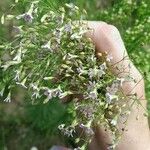
Psammophiliella muralis
Low baby's-breath · Russian vine · Annual baby's breath · Annual gypsophila · Cushion baby's-breath
Description
Source: leafsnapPsammophiliella is a genus of flowering plants in the family Caryophyllaceae. It has only one species, Psammophiliella muralis (synonym Gypsophila muralis), known as annual gypsophila, cushion baby's-breath and low baby's-breath, an annual plant principally native to Europe except the British Isles. It can be also found in Central Asia, Turkey, the Caucasus, and Siberia.
Care Guide
💧 Water
Low baby's-breath thrives when kept moderately hydrated, meaning the soil should remain consistently moist without becoming waterlogged. To ensure the plant's optimal health, it is advisable to water it weekly. Often cultivated indoors, low baby's-breath also benefits from stable humidity levels, which help reduce stress caused by fluctuating water availability.
How should I water my Low baby's-breath plant?
To water Low baby's-breath, there are several options you can choose from. You can use a garden hose with a spray nozzle, a watering can, or any other common watering tool. This plant is not too particular about the type of water it receives and can thrive with rainwater, tap water, or filtered water. However, it is best to avoid watering from overhead as it can harm the leaves and flowers and potentially cause disease. Setting up a drip irrigation system is often the most effective method for watering Low baby's-breath as it evenly and directly supplies water to the soil. If you have a container-grown Low baby's-breath, you can use a cup, watering can, or tap water to directly water the soil.
What should I do if I give my Low baby's-breath plant too much or too little water?
If you underwater your Low baby's-breath, the solution is simple: water it more often. However, overwatering can be a bigger problem as it can lead to diseases and plant death. To prevent this, choose a sunny location with good drainage for your plant. If you overwater your potted Low baby's-breath, consider changing to a pot with better drainage and loose soil during the repotting process.
How often do I need to water my baby's-breath plant that is low to the ground?
Low baby's-breath requires regular watering during the growing season. To start, water the plant once a week in the spring. As the season progresses and temperatures rise, you may need to increase watering to two or three times a week. However, be cautious not to exceed this frequency as it can harm the plant. It's important to keep the soil moist but not overly wet, regardless of how often you water. Watering potted Low baby's-breath is a bit different. Since pot soil can heat up and dry out faster than ground soil, watering frequency should be increased. In most cases, plan to water a container-grown Low baby's-breath a few times per week, compared to just once a week for an in-ground plant.
How much water does my Low baby's-breath plant need?
To determine how much water to give to your Low baby's-breath, you have a few options. One approach is to feel the soil for moisture and water until the top six inches are moist. Another option is to use a set measurement, like two gallons per week, taking into account factors like temperature and soil dryness. However, sticking strictly to these guidelines might cause overwatering if your plant needs less water. When growing Low baby's-breath in a container, you need to use a different method. Check the soil's layers for dryness by sticking your finger in it, and water until all the dry layers are moist. You can also check for excess water by observing if it trickles out of the drainage holes when you water.
How can I know if I'm giving enough water to my Low baby's-breath plant?
Avoiding overwatering can be challenging for Low baby's-breath. While these plants have deep roots that need weekly watering, they are also prone to root rot and browning if overwatered. Underwatering is not as common, as these plants can survive without water for a while. However, if they are not watered for too long, they may wilt and develop dry leaves.
☀️ Light Full sun
Low baby's-breath generally does best with abundant sunlight, which promotes strong growth and good health. Although it naturally prefers a lot of light, it can tolerate conditions with somewhat less sun. Both too little and too much light can impede its optimal development.
What are the sunlight requirements for Low baby's-breath?
Low baby's-breath (Psammophiliella muralis) thrives in conditions that offer substantial exposure to sunlight, ideally flourishing in full sun, which implies it requires above 6 hours of sunlight daily. It can also tolerate partial sun, meaning it can grow in about 3-6 hours of sunlight. Observing how sunlight moves through your garden helps in choosing spots that optimally balance light and shade, ensuring the plants' well-being.
Can I use artificial lighting for Low baby's-breath?
Yes, artificial lighting can be used for Low baby's-breath, especially in scenarios where natural sunlight is insufficient, like in winter or less sunny indoor spaces. LED lights are recommended due to their customizability to provide specific wavelengths needed by plants. For full sun plants, 30-50W/sq ft of artificial light is needed, partial sun plants require 20-30W/sq ft, and full shade plants need 10-20W/sq ft. The artificial light source should be placed 12-36 inches above the plant for 8-12 hours per day to mimic natural daylight hours.
What are the symptoms of insufficient light for Low baby's-breath?
When Low baby's-breath is cultivated indoors with inadequate light, several symptoms may indicate a deficiency in light. These include smaller new leaves, leggy or sparse growth, faster leaf drop, halted or no new growth, paler new leaves indicating a lack of chlorophyll, chlorosis or yellowing leaves due to excessive sunlight, damage from intense light exposure known as sunscald, leaf curling as a defense against overexposure, wilting from excessive transpiration, and leaf scorching manifested by brown, dry edges on leaves.
How can I address light deficiency in Low baby's-breath?
To address light deficiency in Low baby's-breath, start by gradually moving plants to sunnier locations to achieve at least 6 hours of direct sunlight daily. For indoor plants, use south-facing windows or artificial light sources like desk lamps or grow lights for at least 8 hours a day. If moving plants outdoors, do so gradually to avoid sunburn and aim for the best sunlit spot. If sunlight is blocked by obstacles like trees, consider pruning or transplanting to better-lit areas. Notably, parts of the plant already affected by low light may not recover, but new growth will be healthy post-adjustment.
🌡️ Temperature 15–35°C
Low baby's-breath comes from temperate regions and shows a clear preference for temperatures between 68 and 95 °F (20 and 35 °C). Because of this, making suitable adjustments to its environment, particularly in extreme climates, is essential for optimal growth.
What is the optimal temperature range for Low baby's-breath?
Low baby's-breath, scientifically known as Psammophiliella muralis, thrives best in temperate environments with temperatures ranging between 68 to 95 °F (20 to 35 °C). These conditions are critical for the plant's optimal growth. It displays some cold tolerance, managing well without additional protective actions if temperatures stay above 0°C. However, in extreme climates, especially when temperatures are expected to dip below 0°C, implementing temporary measures for cold protection, such as wrapping the plant with materials like plastic film or fabric, is necessary for its well-being. It's important to remove these protections once temperatures rise to prevent any adverse effects.
How should you care for Low baby's-breath in low temperatures?
Low baby's-breath possesses a moderate tolerance to low temperatures, but it performs optimally when the environment remains above 20°C. In winter, it's crucial to keep the plant above 0°C to avoid damage. If temperatures drop below -10°C, you may notice the leaves beginning to droop. While mild exposure can be recuperated from, more severe cases lead to leaf wilting and eventual loss. To protect Low baby's-breath in cold conditions, it's advisable to trim off frost-damaged parts and wrap the plant with insulating materials like non-woven fabric or cloth. Additionally, constructing a wind barrier can further shield the plant from cold winds.
What care is needed for Low baby's-breath in high temperatures?
During the summer, it's important to ensure that Low baby's-breath is kept in conditions below 35°C to prevent heat stress. Exposure to temperatures above 41°C can lead to noticeable stress signs, such as lighter leaf color, dry and withered leaf tips, curling leaves, and increased susceptibility to sunburn. To mitigate these effects, sunburned and dried parts of the plant should be trimmed away. Relocating the plant to a shadier location or using shade cloth can protect it from the harsh midday and afternoon sun. Additionally, watering the plant during cooler times of the day, like morning and evening, can help maintain soil moisture and reduce temperature stress.
💨 Humidity
🪴 Soil 6-7
🌱 Fertilizer
Low baby's-breath benefits from regular, light applications of fertilizer to encourage healthy leaf development. You should feed Low baby's-breath about once per month during the summer months. Nitrogen is important for foliage, and providing nitrogen-rich sources helps Low baby's-breath thrive.
🪴 Pot & Repot
✂️ Pruning
Low baby's-breath is a low-growing perennial featuring delicate foliage and charming white flowers. To maintain its compact growth, lightly prune in early spring and again after it blooms in late spring. Regular deadheading not only encourages continuous blooming but also improves air circulation, which helps prevent legginess and promotes a robust appearance.
🌿 Propagating
🐛 Diseases & pets
☠️ Toxicity
Characteristics
- Plant Type
- Herb
- Life Cycle
- Annual
- Genus
- Psammophiliella
- Family
- Caryophyllaceae
- Hardiness Zone
- 8-10
- Mature Height
- 30 cm to 40 cm
- Mature Spread
- 15 cm to 30 cm
- Leaf Color
- Green
- Leaf Type
- Evergreen
- Flower Color
- Pink
- Flower Size
- 3.56 cm to 6.35 cm
- Bloom Time
- Late spring, Early summer, Mid summer
- Planting Time
- Spring
- Harvest Time
- Mid summer
- Native Area
- Sweden, Austria, Slovakia, Croatia, Slovenia, Belarus, Russia, Germany, Estonia, Romania, Latvia, Belgium, Netherlands, France, Czech Republic, Bulgaria, Armenia, Poland, Greece, Ukraine, Serbia, China, Lithuania, Kyrgyzstan, Kazakhstan, Italy, Spain, Switzerland, Denmark, Finland, Azerbaijan, Hungary