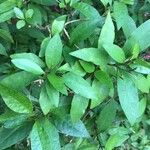
Pseuderanthemum laxiflorum
Purple star
Description
Source: leafsnapPseuderanthemum laxiflorum, commonly known as False Eranthemum or Loose-flowered Pseuderanthemum, is a tropical plant species belonging to the Acanthaceae family. Native to Southeast Asia, it is found predominantly in Thailand, Malaysia, and Indonesia. This plant exhibits a shrubby growth habit and can reach a height of 1-2 meters. Its glossy green leaves are ovate or elliptic, measuring up to 10 cm long, and are alternately arranged on the stem. The flowers of Pseuderanthemum laxiflorum are small, tubular, and feature five petals in shades of pink or purple with white markings on each petal's throat. These flowers bloom in clusters at the ends of long stems from late spring through summer. Pseuderanthemum laxiflorum thrives in warm temperatures between 18-27°C (65-80°F) and high humidity levels of 50-70%. It prefers bright indirect light but can also tolerate partial shade conditions. This plant is easy to grow and requires regular watering. However, it should not be overwatered to prevent root rot. Regular fertilization during the growing season (spring through summer) enhances its health and vitality. Overall, Pseuderanthemum laxiflorum makes a great houseplant due to its attractive foliage and colorful blooms. It adds a tropical touch indoors and is relatively low-maintenance, making it ideal for beginners.
Care Guide
💧 Water Every 7 days
The purple false erantheum flourishes in tropical climates, needing consistent moisture and high humidity. It grows best in well-drained soil that stays evenly moist, and it should be watered every 1-2 weeks, allowing the soil to dry slightly between watering. Regular misting is advantageous, making it an excellent choice for humid indoor spaces such as bathrooms or kitchens.
☀️ Light Partial sun
Purple false erantheum occurs naturally in habitats like forest understories and rocky sites, where it exists in natural shade. It favors partial sun but can adjust to full sun or full shade, demonstrating its versatility and hardiness.
🌡️ Temperature 20–37.8°C
Purple false erantheum comes from tropical areas, where the climate is generally warm and humid. Consequently, it is adapted to high temperatures and moisture. It does not tolerate sudden temperature changes and prefers a steady thermal environment, so avoiding temperature fluctuations indoors is important. It typically cannot endure cold conditions and requires warmer temperatures for growth. If the ambient temperature falls too low, the plant may stop growing or even die.
💨 Humidity
🪴 Soil 6-6
🌱 Fertilizer
Proper fertilization is vital for Purple false erantheum's health and appearance. Fertilize Purple false erantheum during summer, repeating the application monthly throughout summer. Nutrients support growth and help maintain the plant's parts. Fertilization boosts Purple false erantheum's flower display, ensuring the best blooms.
🪴 Pot & Repot
✂️ Pruning
🌿 Propagating
🐛 Diseases & pets
☠️ Toxicity
Characteristics
- Plant Type
- Herb
- Life Cycle
- Perennial
- Genus
- Pseuderanthemum
- Family
- Acanthaceae
- Hardiness Zone
- 10-12
- Mature Height
- 61 cm to 91 cm
- Mature Spread
- 30 cm to 61 cm
- Leaf Color
- Dark Green, Forest Green
- Leaf Type
- Semi-evergreen
- Flower Size
- 2.03 cm to 3.05 cm
- Bloom Time
- Late spring, Summer, Early fall, Mid fall
- Planting Time
- Spring, Summer, Autumn
- Harvest Time
- Fall, Early winter
- Native Area
- Vanuatu, Fiji