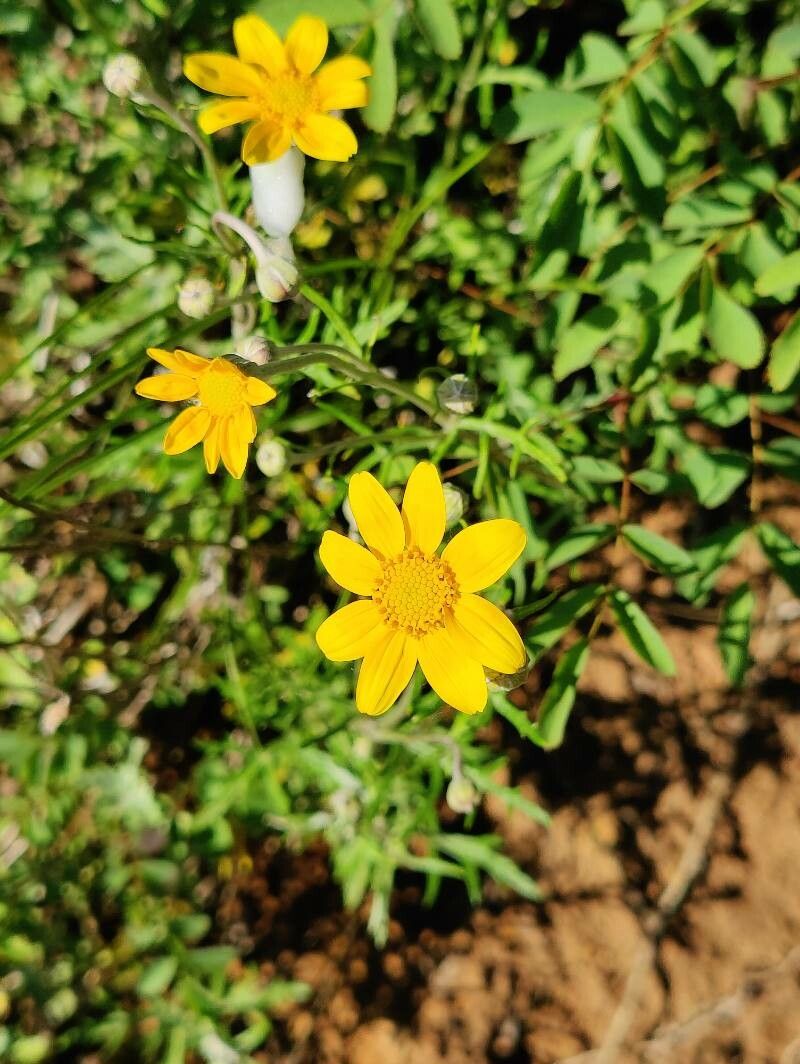
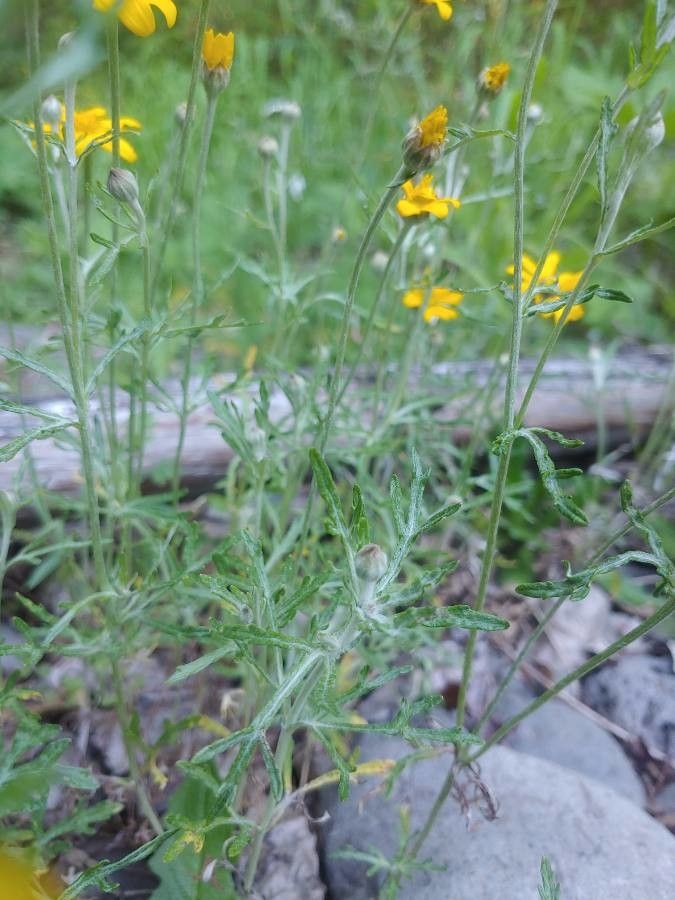
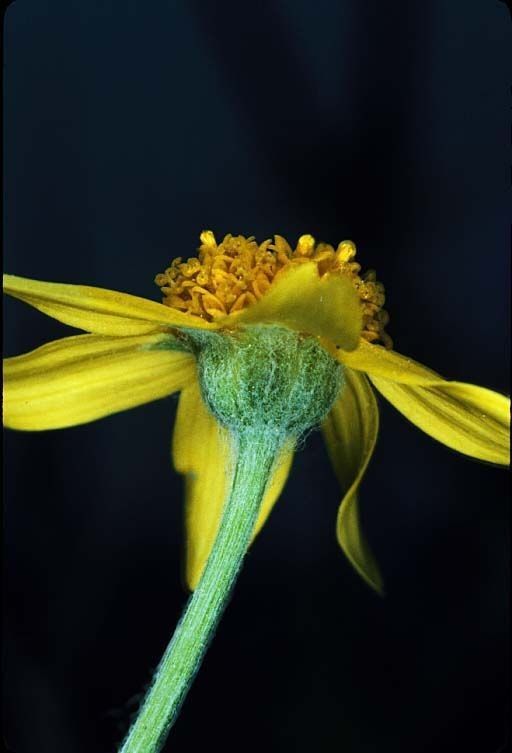
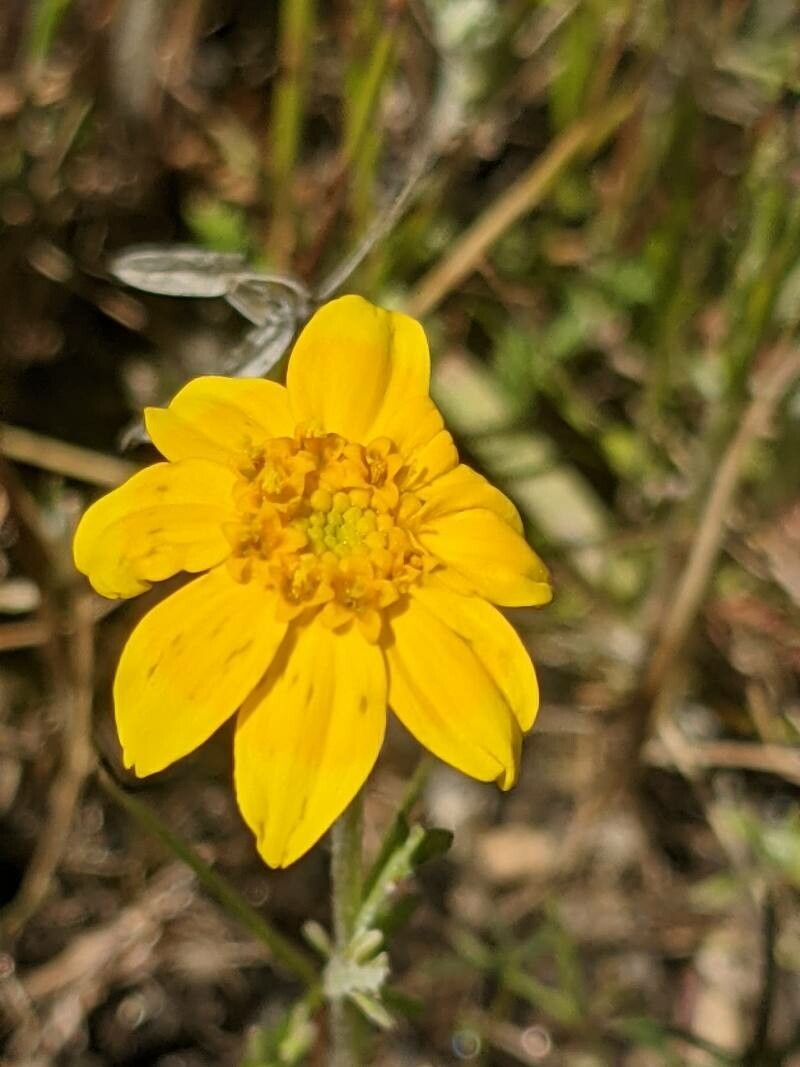
Pseudobahia peirsonii is a rare species of flowering plant in the family Asteraceae known by the common names San Joaquin adobe sunburst and Tulare pseudobahia. It is endemic to California, where it is known from a few mostly small occurrences along the southeastern side of the San Joaquin Valley where it rises into the Sierra Nevada foothills. It grows in grassland and oak woodland habitat. It prefers heavy adobe clay soils. The plant became a federally listed threatened of the United States in 1997.This species is an annual herb growing 20 to 70 centimeters tall. It has a thin coating of woolly hairs. The leaves are up to 6 centimeters long and are generally divided into a few leaflets which are subdivided into lobed segments. The inflorescence is a solitary flower head lined with about eight phyllaries which are fused at the base, making the involucre a rounded cup with pointed lobes. There are about 8 golden ray florets. At the center of the head are yellow disc florets. The main threat to its remaining populations is destruction of its habitat for residential development. Other threats include grazing and agriculture and maintenance of flood control structures, transmission lines, and roads. The heavy presence of competitive exotic plants in the habitat, including charlock (Sinapis arvensis), stork's bill (Erodium cicutarium), and non-native bromes, is detrimental.
San joaquin adobe sunburst has good disease resistance and is generally not prone to illnesses. However, it can be vulnerable to pests and diseases present in its environment. These infections are typically not serious. In terms of care, this plant requires medium maintenance. It should be pruned regularly to maintain an attractive appearance and healthy growth. Fertilizing can also help encourage flowering. San joaquin adobe sunburst is appropriate for anyone with an outdoor area, like a garden or patio, and does not demand extensive care experience. It may need more attention when grown indoors.
How to keep Pseudobahia Peirsonii.
Light
San joaquin adobe sunburst comes from bright, open habitats where it does best in full sun. It can tolerate partial sun but favors direct sunlight for optimal growth. This plant, both annual and biennial, is noted for its sun-loving nature.
Water
The San Joaquin Adobe Sunburst is well-suited for arid environments and is highly drought-tolerant, requiring only minimal watering about once a week. It thrives outdoors in well-draining soil that resembles its native dry habitat, matching its natural moisture needs.
Temperature
san joaquin adobe sunburst can tolerate a wide range of temperature conditions, but its distribution may still be restricted by different combinations of water and heat. It performs best in warm summer climates with sufficient rainfall or watering. Extended periods of cloudy, rainy weather or prolonged high temperatures can increase the chance of san joaquin adobe sunburst dying. In winter, adequate protection from cold can boost the plant's survival rate.
Fertilizer
When San joaquin adobe sunburst has opened most of its blooms to full size, resume fertilizing. At peak bloom, feed it every three to four weeks, as weather allows. After the plant begins producing fewer new blooms, stop fertilizing; there's no need to feed it when it can no longer produce additional blooms.
Pruning
The San Joaquin Adobe Sunburst flourishes with selective pruning from early to late spring, which promotes healthy growth and abundant blooms. Remove dead branches carefully, avoiding excessive pruning, to maintain the plant's natural shape. This approach enhances its appearance, improves airflow, reduces the risk of disease, and encourages strong new growth, ensuring a thriving plant.
Botanical profile.
- Plant Type
- Herb
- Life Cycle
- Annual
- Genus
- Pseudobahia
- Family
- Asteraceae
- Hardiness Zone
- 8-10
- Mature Height
- 10 cm to 30 cm
- Mature Spread
- 10 cm to 20 cm
- Leaf Color
- Green
- Leaf Type
- Semi-evergreen
- Flower Size
- 2.03 cm to 3.05 cm
- Bloom Time
- Early spring, Mid spring
- Planting Time
- Spring
- Harvest Time
- Late spring, Early summer
Other names.