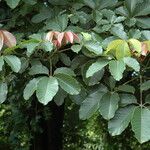
Pseudobombax ellipticum
Shaving-brush-tree · Bombax · Pink Shaving Brush Tree · Shavingbrush tree · Shaving brush tree
Description
Source: leafsnapPseudobombax ellipticum, commonly known as the Shaving Brush Tree or Pink Bombax, is a deciduous tree native to Mexico and Central America. Belonging to the Malvaceae family, it can grow up to 30 meters tall with a trunk diameter of up to 1 meter. The tree is distinctive for its thick, spiny trunk and large, pink flowers that bloom in late winter or early spring, preceding the appearance of its leaves. The Shaving Brush Tree is often cultivated as an ornamental plant due to its striking appearance. It thrives in full sun and well-drained soil but can tolerate some shade. While drought-tolerant, it does require regular watering during dry periods. For centuries, indigenous peoples have used the bark of Pseudobombax ellipticum for medicinal purposes, particularly to treat skin conditions such as burns, wounds, and rashes. The bark contains compounds with anti-inflammatory properties. Overall, Pseudobombax ellipticum is an impressive plant with unique features that make it a standout in any landscape or garden setting. Additionally, it offers medicinal benefits rooted in the traditional knowledge systems of indigenous communities from Mexico and Central America.
Care Guide
💧 Water Every 7 days
The Shaving Brush Tree is well-suited for dry climates, as it exhibits excellent drought tolerance and thrives with minimal moisture. It typically needs watering only every 2-3 weeks and prefers soil that drains well. Ideally grown outdoors, the tree benefits from natural rainfall, mirroring the conditions of its native habitat.
How should I water my Shaving Brush Tree?
To promote excellent root development, place a garden hose at the base of the plant. Avoid spraying the leaves directly, but be aware that outdoor plants exposed to direct sunlight will need more water for their leaves. Use bubblers or soaker hoses to moisten the roots of each plant. When adding or removing plants, use soaker hoses that cover the entire garden or bed to ensure deep root irrigation. After watering, drain any excess water and wait for the soil to dry before watering again. Water at ground level to prevent diseases. On sunny days, consider spraying the entire bush with water. Whether in a pot or in the ground, the Shaving Brush Tree prefers deep watering rather than light sprinkling.
What should I do if I give the Shaving Brush Tree too much water or too little water?
An overwatered Shaving Brush Tree can exhibit several symptoms such as yellowing, dropping, and wilting leaves. The plant may also look unhealthy with mushy stems. In such cases, it is recommended to adjust your watering schedule accordingly. Conversely, wilting can also be a sign of under watering, characterized by crispy and dry leaves. In such instances, check the soil for dryness and ensure to provide a thorough watering when necessary. However, even with adequate water, the damaged root system may result in the plant still appearing dry with yellow leaves for a few days. Once the plant has returned to normal, the yellowing of leaves will cease. When keeping the Shaving Brush Tree indoors, always monitor moisture levels and avoid overwatering. Look for signs of black spots and if present, allow the soil to dry out by refraining from watering for a few days. Overwatering can lead to root rot, so transplanting into a different pot is advisable if discolored and slimy roots are observed. Preventing root rot and avoiding excessively soggy soil is crucial. When planting the Shaving Brush Tree outdoors, ensure to dig deeper and check the soil's moisture level. If the soil feels too dry, it could indicate underwatering, and adequate watering is necessary for the plant's recovery.
How often do I need to water my Shaving Brush Tree?
The Shaving Brush Tree prefers deep, infrequent watering. When planted in pots, it's important to soak them in a gallon of water each time, as the limited water storage in pots causes the soil to dry out faster. In cold regions, watering is necessary every 3 to 5 days. It's best to water in the morning when the soil is dry, both indoors and outdoors. You can check if watering is needed by examining the soil. If the top 2-3 inches are dry, it's time for a full watering. During hot days, it's important to monitor soil moisture daily because the heat can quickly dry out the pot's soil. If you have a garden, irrigation of the soil is also necessary. In hot climates, watering once a week may be sufficient. Again, check if the top 2-3 inches of soil are dry before watering. Take into account rainfall and avoid overwatering to prevent root rot. The Shaving Brush Tree typically grows in spring and fall. Outdoors, adding 3 to 4 inches of mulch helps conserve water. Sandy soil requires more frequent watering due to its fast drainage, while clay soil can be watered less often to avoid root rot. Keep track of watering dates and watch for drooping leaves as a sign that you might need to water sooner.
How much water should I give to my Shaving Brush Tree?
The Shaving Brush Tree requires about a gallon of water per schedule. For potted plants, water them deeply until you see water dripping from the bottom of the pot. Wait for the soil to dry before watering again. You can use a water calculator or moisture meter to determine how much water the plant has received in a week. During the flowering period, provide plenty of water but allow the moisture to evaporate to prevent root rot. If the Shaving Brush Tree is planted outdoors with sufficient rainfall, it may not need additional watering. For young or newly planted Shaving Brush Trees, ensure they receive 1-2 inches of rain per week. As the tree grows, it can survive solely on rainfall. If the weather is extremely hot or if there is no rainfall for 2-3 weeks, consider watering the tree during the cooler parts of the day to prevent heat damage. Additional watering may be necessary during prolonged dry spells.
Do I need to change how often I water my Shaving Brush Tree based on the time of year or the weather?
To properly care for a Shaving Brush Tree, it is important to consider its water needs based on the season and weather conditions. During the spring and fall growth periods, the soil should be kept consistently moist, but not overly saturated. Alternating between dry and moist soil conditions will promote healthy growth. In the summer, hot weather can cause water to evaporate quickly, so more frequent watering may be necessary, especially if there is a lack of rainfall. However, during the winter, the tree requires less water as it goes dormant and drops its leaves. To help with drainage, it is recommended to use well-draining soil and pots for the tree during this period. Once the tree starts budding and going dormant in the outdoor growing season, watering can be skipped, relying on fall and winter rains. It is important to ensure good drainage throughout the year to avoid ponding or drought during flowering. When the tree is in a pot, it has limited root growth, so it should be kept well-watered, especially in the summer. It is best to water the entire root system deeply once or twice a week, avoiding shallow sprinkles that may encourage fungal growth. Complete drying out should be avoided, even during dormancy. Additionally, excessive water accumulation should be prevented to avoid winter plant death. Using mulch can help reduce stress, conserve water, and promote healthy blooms.
☀️ Light Full sun
Shaving Brush Tree requires plenty of sunlight for healthy growth. Its natural habitat receives abundant sunshine, which positively affects its development. At different stages of growth it can tolerate less-lit conditions, but it does best in very sunny locations. Both excessive and insufficient sun exposure can result in poor health.
What are the sunlight requirements for the Shaving Brush Tree?
The Shaving Brush Tree requires full sun, which means it needs more than 6 hours of sunlight daily, but it can also tolerate partial sun, receiving about 3-6 hours of sunlight. It's crucial to observe how sunlight moves through your garden to ensure that plants get the ideal balance of light and shade for optimal health. The natural habitat of the Shaving Brush Tree is abundant in sunlight, which significantly impacts its healthy growth. While it can tolerate less sunlit areas, its prosperity is greatest in highly sunlit regions. Both excessive and inadequate sun exposure can lead to poor health, so finding the right balance is key.
How do I use artificial lighting for my indoor Shaving Brush Tree?
Indoor plants like the Shaving Brush Tree require adequate lighting for optimal growth, especially when natural sunlight is insufficient, such as during winter or in less sunny spaces. Artificial lights, particularly LED lights, are recommended because they can be customized to provide specific wavelengths of light that your plants need. Full sun plants need 30-50W/sq ft, partial sun plants need 20-30W/sq ft, and full shade plants require 10-20W/sq ft of artificial light. The light source should be placed 12-36 inches above the plant to mimic natural sunlight. It's also important to mimic natural daylight hours, with most plants needing 8-12 hours of light per day.
What are the symptoms of incorrect sunlight exposure in Shaving Brush Trees?
Incorrect sunlight exposure can lead to a range of symptoms in Shaving Brush Trees. When receiving insufficient light, the tree may develop smaller new leaves, leggy or sparse growth, faster leaf drop, slower or no new growth, and lighter-colored new leaves. Excessive sunlight can cause chlorosis, where leaves lose their green color and turn yellow, sunscald with pale or necrotic areas on plant tissue, leaf curling as a defense mechanism against water loss, wilting due to increased transpiration, and leaf scorching characterized by brown, dry edges on leaves. Correcting the light exposure can lead to healthier growth.
How can I solve sunlight exposure issues for my Shaving Brush Tree?
To address sunlight exposure issues, consider the following solutions: For indoor plants, gradually move them to a sunnier location each week until they receive at least 6 hours of direct sunlight daily, using a south-facing window if possible. If the plant is large or not easily movable, use artificial light, keeping a lamp on for at least 8 hours daily or investing in professional grow lights. For outdoor plants, also move them gradually to avoid sunburn. If sunlight is obstructed, identify and reduce obstructions like pruning tree branches. For smaller plants, consider transplanting during their dormant period to a location with ample sunlight. Note that parts of the plant affected by insufficient sunlight may not recover, but new growth should be healthy with proper light exposure.
🌡️ Temperature 20–37.8°C
The Shaving Brush Tree originates from warm climates and does best at temperatures of 68 to 100 °F (20 to 38 ℃). During cooler seasons, it is advisable to keep it in a heated indoor environment or to use plant heaters for the best growth.
What is the native climate of the Shaving Brush Tree?
The Shaving Brush Tree, scientifically known as Pseudobombax ellipticum, thrives in warmer climates. It prefers temperature ranges between 68 to 100 °F (20 to 38 °C). This tree is particularly fond of heat and does not tolerate cold well. During cooler seasons, it's imperative to keep the tree in a heated indoor environment or utilize plant heaters to ensure optimal growth. As temperatures drop, especially in autumn, it is advisable to move outdoor-grown Shaving Brush Trees indoors, placing them near bright windows while avoiding proximity to heaters to prevent damage.
How does low temperature affect the Shaving Brush Tree and what are the solutions?
Shaving Brush Trees prefer warm temperatures and struggle in cold conditions. They prosper when the temperature remains above 20°C and require that the environment doesn't dip below 5°C during winter. Exposure to temperatures below 1°C can cause the leaves to lighten in color, leading to browning or blackening and symptoms like wilting and drooping after frost damage. To counteract frost damage, it's essential to trim the damaged parts and move the tree to a warmer location immediately. Ideal spots are near south-facing windows where the tree can receive ample sunlight, but it should not be placed near heaters or air conditioning vents to avoid air dryness.
What should be done when the Shaving Brush Tree experiences high temperatures?
During the summer months, it's crucial to keep the Shaving Brush Tree below 38°C to prevent heat stress. If temperatures soar above 43°C, the leaves may lighten in color, indicating an increased risk of sunburn. To mitigate the effects of excessive heat, trim away sunburned and dried parts of the plant. Relocate the tree to a spot that offers shade during the intense midday and afternoon sun. Ensuring the soil remains moist by watering the plant in the morning and evening will also help in managing the stress from high temperatures.
💨 Humidity
🪴 Soil 6-7
🌱 Fertilizer
The best time to fertilize a Shaving Brush Tree is in early spring, as it breaks dormancy. This stimulates overall growth and flower development. Fertilization improves the foliage, stems, and branches, while encouraging flowers that are larger, brighter, and longer-lasting. It helps transport nutrients from the roots to the flowers and enhances the plant’s health and disease resistance.
Why should I put fertilizer on my Shaving Brush Tree?
Ensuring the overall health and well-being of a Shaving Brush Tree requires proper fertilization. This will provide the necessary energy and nutrients for the tree to develop healthy foliage, sturdy stems, and branches. Additionally, fertilization plays a crucial role in enhancing the value of the tree's flowers. By supplying the right fertilizer, the tree is able to efficiently transfer fuel from its roots to its flowers, resulting in larger, vibrant, and long-lasting blooms. Furthermore, adequate fertilization supports the tree's overall health, making it more resistant to diseases.
When should I fertilize my Shaving Brush Tree?
To properly fertilize a Shaving Brush Tree, you should primarily do so in early spring when the plant exits its dormant phase and prepares to open its buds. This timing provides ample energy for the tree's growth and flower development. However, it is not the only recommended feeding period. Another feeding in the fall can also benefit the plant, albeit with a smaller dosage than the first. While some gardeners choose to fertilize the Shaving Brush Tree during planting, it is not always necessary.
When is not a good time to fertilize my Shaving Brush Tree?
During the winter, like other plants, you don't need to fertilize your Shaving Brush Tree. This is because the tree is in a dormant phase and doesn't require much energy from the soil for new growth. Fertilizing in winter increases the chances of overfertilization and negative outcomes. The best times to feed your Shaving Brush Tree are early spring and fall. This means that for most of spring and summer, the tree won't need fertilizer. Additionally, it's a good idea to avoid feeding if the plant is experiencing excessively hot or dry conditions.
What kind of plant food should I use for my Shaving Brush Tree?
When fertilizing a Shaving Brush Tree, it is generally recommended to use a specific type of fertilizer. While a general-purpose fertilizer with even ratios of nitrogen, phosphorus, and potassium can be okay, Shaving Brush Trees tend to thrive when they receive a fertilizer that prioritizes nitrogen and phosphorus. Ideally, the nitrogen and phosphorus content should be higher than the potassium content, such as a fertilizer with an N-P-K ratio of 10-10-8 or something similar. Additionally, applying organic material like compost for at least one annual feeding can be beneficial. If using fertilizer, granular fertilizer is commonly used for Shaving Brush Trees.
How should I add plant food to my Shaving Brush Tree?
Fertilizing your Shaving Brush Tree is an easy task that any gardener, even those with minimal experience, can do. To use granular fertilizer, simply sprinkle it on the soil after moistening it with water. You can also improve the soil by adding organic material like compost or manure. To do this, place the material on top of the soil and gently work it into the top few inches with a hand rake, being careful not to disturb the roots.
🪴 Pot & Repot 2-3 years
Repot the Shaving Brush Tree every 2-3 years, ideally after it finishes flowering in late spring. Use a deep pot filled with well-draining soil. Place the tree in a location with bright, indirect light, and keep the soil consistently moist to ensure optimal recovery and support its growth as a distinctive, large shrub.
✂️ Pruning
The Shaving Brush Tree is known for its distinctive brush-like flowers. To encourage healthy growth, it's best to prune the tree in early spring. Begin by removing any dead or diseased branches. Then, shape the plant to improve air circulation. Be careful not to over-prune, as this can stress the tree and reduce its blooms during the dormancy period.
🌿 Propagating
🐛 Diseases & pets
☠️ Toxicity
Characteristics
- Plant Type
- Tree
- Life Cycle
- Perennial
- Genus
- Pseudobombax
- Family
- Malvaceae
- Hardiness Zone
- 10-11
- Mature Height
- 6.1 m to 9.14 m
- Mature Spread
- 3.05 m to 4.57 m
- Leaf Color
- Green, Dark Green
- Leaf Type
- Deciduous
- Flower Color
- Pink, White
- Flower Size
- 10.16 cm to 12.70 cm
- Bloom Time
- Winter, Early spring
- Planting Time
- Spring, Summer, Autumn
- Harvest Time
- Spring, Early summer
- Native Area
- Belize, Cuba, Honduras, Mexico, Guatemala, Nicaragua