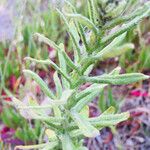
Pseudognaphalium californicum
California rabbit-tobacco · Ladies' tobacco
Description
Source: leafsnapPseudognaphalium californicum, commonly known as California cudweed, is a perennial herbaceous plant belonging to the Asteraceae family. It is native to California and thrives in diverse habitats such as grasslands, chaparral, and oak woodlands. Reaching up to 60 cm in height, the plant features a woody base with numerous branches. The leaves are narrow and linear, measuring between 1 and 5 cm in length. The small flowers are either white or yellowish and lack petals, but are surrounded by bracts that resemble petals. Traditionally, Native Americans used California cudweed for medicinal purposes, particularly in treating respiratory ailments such as coughs, colds, asthma, and bronchitis. Ecologically, California cudweed is significant as it provides food for various insects like bees, which play a crucial role in pollinating other plants. Overall, Pseudognaphalium californicum is a vital herbaceous perennial, contributing both ecologically and medicinally to its native Californian habitat.
Care Guide
💧 Water Every 7 days
Ladies’ tobacco is well-adapted to dry environments, making it drought-tolerant. It only needs to be watered once a week and thrives in well-draining soil that allows for drying out between waterings, simulating its natural habitat. This plant serves as an excellent example of nature’s ingenuity in water conservation.
How should I water my Ladies' tobacco plant?
To water Ladies' tobacco, you have various options for tools such as a garden hose with a spray nozzle or a watering can. This plant is not too particular about its water source, as it can thrive with rainwater, tap water, or filtered water. However, it is best to avoid watering from above to prevent leaf and flower damage and potential disease. Ideally, a drip irrigation system works well for this plant because it provides even and direct watering to the soil. If you are growing Ladies' tobacco in a container, you can use similar watering techniques but with tools like a cup, watering can, or even tap water, directing the water specifically to the soil.
What should I do if I give too much or too little water to my Ladies' tobacco plant?
To remedy the problem of underwatering Ladies' tobacco, simply increase the frequency of watering when you notice the plant lacks moisture. On the other hand, overwatering can be a more serious issue, especially if not detected early. Overwatered Ladies' tobacco plants may become prone to diseases, leading to their decline and death. To prevent this, it is important to choose an appropriate location for growing that receives sufficient sunlight to dry the soil and has good drainage to prevent waterlogging. If you have overwatered Ladies' tobacco in a pot, you may need to transfer it to a new one with better drainage. When repotting, ensure the use of loose soils and an efficiently draining pot.
How often should I water my Ladies' tobacco plant?
Ladies' tobacco requires regular watering throughout the growing season. In the spring, you should water the plant about once a week. As the season progresses and it gets warmer, you may need to increase watering to two or three times a week. However, watering more than that can harm the plant. It's important to keep the soil moist but not wet, regardless of how often you water. Watering Ladies' tobacco in a pot is a bit different. In general, you'll need to water container-grown plants more frequently because the soil in the pot can heat up and dry out faster than ground soil. So, for a potted plant, plan to water it a few times per week instead of just once a week for a plant in the ground.
How much water does my tobacco plant for women need?
Determining how much water to give your Ladies' tobacco can be done in a few ways. Some gardeners prefer to gauge the moisture in the soil by feeling it. This method suggests watering until the top six inches of soil feel moist. Another approach is to use a standard measurement, like two gallons per week, depending on temperature and soil dryness. However, strictly following this may result in overwatering if your plant needs less. When growing Ladies' tobacco in a container, a different method is needed. You should water until all layers of dry soil are moistened, which can be checked by feeling the soil or observing water draining through the pot's holes.
How can I know if I am giving enough water to my Ladies' tobacco plants?
Avoiding overwatering your Ladies' tobacco can be somewhat difficult as these plants have deep roots that require weekly moisture. However, they are also highly prone to root rot and browning if overwatered. Underwatering is less likely to occur as these plants can survive for a while without extra watering. However, if you neglect to water them for too long, they will likely wilt and exhibit dry leaves.
☀️ Light Full sun
Ladies' tobacco prefers strong sunlight and grows most vigorously when it receives it. Its native habitat, with its broad sunlit areas, shaped that preference. Too little light reduces its vigor, while an excess of sun does not harm it.
What are the sunlight requirements for Ladies' tobacco?
Ladies' tobacco requires full sun exposure to thrive, meaning it needs more than 6 hours of sunlight daily. It's important to observe your garden's sunlight patterns to find spots that provide a balance of light and shade. This plant's affinity for robust sunlight comes from its natural habitat, which is rich in sunlight. While too little sun leads to a vitality decline, Ladies' tobacco can tolerate excess sunlight without negative impacts.
How should I use artificial lighting for indoor Ladies' tobacco plants?
When natural sunlight is insufficient for your Ladies' tobacco plants indoors, particularly during winter or in less sunny spaces, artificial lighting can be a vital solution. For optimal growth, consider LED lights, which can be customized to provide specific wavelengths needed by the plants. Full sun plants require 30-50W/sq ft, partial sun plants 20-30W/sq ft, and shade plants 10-20W/sq ft of artificial light. Place the light source 12-36 inches above the plant, mimicking natural sunlight, and ensure it receives 8-12 hours of light daily.
What are the symptoms of inadequate light in Ladies' tobacco?
When Ladies' tobacco does not receive sufficient light, it may display symptoms such as smaller new leaves, leggy or sparse growth, early leaf drop, halted new growth, pale or irregularly colored new leaves, chlorosis (yellowing leaves), sunscald, leaf curling, wilting, and leaf scorching. These symptoms indicate light deficiency and excessive sunlight exposure, impacting the plant's health and growth.
What solutions can address light deficiency in Ladies' tobacco plants?
To address light deficiency in Ladies' tobacco, indoor plants can benefit from being gradually moved to sunnier locations or using artificial lights, like desk or grow lights, for at least 8 hours daily. Outdoor plants should be moved to optimal sunlight spots gradually to prevent sunburn. Reducing obstructions, such as pruning trees, can help outdoor plants receive more sunlight. If necessary, transplanting smaller plants during their dormant period to a sunnier location can improve sunlight exposure. Remember that portions of the plant that suffered from insufficient light might not recover, but new growth should be healthy with adjusted light conditions.
🌡️ Temperature 15–35°C
Ladies' tobacco can adapt to a broad range of temperatures, yet its distribution may still be restricted by different combinations of water and heat conditions. It performs best in warm summer climates with sufficient rainfall or watering. Extended periods of cloudy, rainy weather and prolonged high temperatures both raise the likelihood of Ladies' tobacco dying. In winter, adequate protection from the cold can increase the plant's chances of survival.
💨 Humidity
🪴 Soil 6-7
🌱 Fertilizer
Ladies' tobacco benefits from frequent, dilute applications of fertilizer to encourage healthy leaf growth. You should fertilize Ladies' tobacco about once a month during the summer. Nitrogen is essential for the foliage, and supplementing with nitrogen-rich sources helps Ladies' tobacco thrive.
🪴 Pot & Repot
✂️ Pruning
🌿 Propagating
🐛 Diseases & pets
☠️ Toxicity
Characteristics
- Plant Type
- Herb
- Life Cycle
- Annual, Biennial, Perennial
- Genus
- Pseudognaphalium
- Family
- Asteraceae
- Hardiness Zone
- 8-10
- Mature Height
- 20 cm to 76 cm
- Mature Spread
- 61 cm
- Leaf Color
- Green, Blue
- Leaf Type
- Evergreen
- Flower Color
- White
- Flower Size
- 2.54 cm to 12.70 cm
- Bloom Time
- Late spring, Summer
- Planting Time
- Spring
- Harvest Time
- Mid summer, Late summer, Early fall
- Native Area
- Mexico