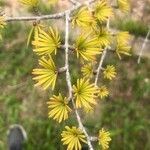
Pseudolarix amabilis
Chinese golden larch · Japanese-larch · Golden larch
Description
Source: leafsnapPseudolarix amabilis is a species of coniferous tree in the pine family Pinaceae. The species is commonly known as golden larch, but being more closely related to Keteleeria, Abies and Cedrus, is not a true larch (Larix). P. amabilis is native to eastern China, occurring in small areas in the mountains of southern Anhui, Zhejiang, Fujian, Jiangxi, Hunan, Hubei and eastern Sichuan, at altitudes of 100–1,500 m (328–4,921 ft). The earliest known occurrences are of compression fossils found in the Ypresian Allenby Formation and mummified fossils found in the Late Eocene Buchanan Lake Formation on Axel Heiberg Island.
Care Guide
💧 Water
Golden larch thrives in its native habitat and prefers moist, well-drained soil. It has a moderate tolerance for drought and should be watered every two weeks. As an outdoor plant, the golden larch adapts to seasonal rainfall, receiving the necessary hydration during its growth period and allowing for natural dormancy when appropriate.
How should I water my Golden larch?
Watering your Golden larch is an easy task. One way to do it is by slowly soaking the soil with your garden hose. This is best for mature trees that require a lot of water. For smaller trees, you can use a watering can or another smaller tool. It's important to avoid watering the leaves too much, as it can cause disease, especially in young trees.
What do I do if I give my Golden larch too much water or not enough water?
Overwatering can sometimes happen if the soil doesn't drain well for your Golden larch. This can cause the plant to decline. To fix this, you can either improve the soil's drainage or move the plant to a better location. If you have the Golden larch in a pot, you might need to use looser soil and a container with good drainage. Overwatering can also lead to diseases, so it's important to treat those right away. If your Golden larch is underwatered, just water it more often and it should bounce back. To tell if you've overwatered your Golden larch, look at the new growth. If it's discolored or easily breaks, that's a sign of too much moisture. Also, if the water isn't draining quickly or there's standing water in the plant's area, the soil might be too moist. Underwatered Golden larch trees will have sparse, brown leaves. Consider if there's been too much rain or high temperatures, which can help you determine the correct judgment.
How frequently should I give water to my Golden larch tree?
A mature Golden larch is drought tolerant and usually survives purely on rainfall, needing little water. During the hottest months, watering once a week may be necessary, but in other seasons, watering may not be needed at all. The only exception is newly planted trees, which should be watered regularly to establish their roots. However, it is crucial to avoid overwatering, as Golden larch does not tolerate standing water. When unsure, it is safer to refrain from watering rather than risking overwatering.
How much water does my Golden larch tree need?
During the height of summer, it is important to water your Golden larch. Usually, giving it about one inch of water per week is enough. However, if it has already rained one inch or more that week, you don't need to water it. When you first plant a Golden larch, it will require more water during the establishment period. Generally, this means watering it once every one to two weeks for the first few growing seasons.
How do I water my Golden larch throughout the year?
The Golden larch tree requires the most water in the summer when it's hot. During this time, water it once a week if there's no rain. In other seasons, it can go without water. Sometimes in spring and fall, you may need to water it if it's unusually hot, but this doesn't happen often. Unlike other plants, the Golden larch doesn't go completely dormant in winter, so it continues to grow even in the coldest months. However, it doesn't need much water in winter because the cool temperatures don't quickly dry out the soil.
☀️ Light Full sun
Golden larch flourishes in areas where it receives plenty of sunlight. Its robust growth and development depend on ample sun exposure. It is accustomed to plenty of light in its natural habitat during all phases of growth. Too much or too little light can drastically impair its health and growth.
How much sunlight does a Golden Larch require?
The Golden Larch thrives in conditions where it receives abundant sunlight. It's essential for the plant to bask in more than 6 hours of sunlight each day to support its healthy growth and development. Keeping an eye on how sunlight moves through your garden will help you find the perfect balance of light and shade, ensuring your plants' well-being.
What are the essentials for growing Golden Larch?
Golden Larch requires generous sunlight for optimal growth and health. It’s accustomed to ample light throughout all its growth stages in its natural habitat. Both an excess and a lack of sunlight can significantly affect its health and growth. When natural light is insufficient, especially during winter or in areas with less sunlight, artificial lighting can be an effective solution. Indoor plants benefit from adequate lighting that supports faster and healthier growth. LED lights are a preferable option due to their efficiency and the ability to provide specific wavelengths needed by plants. Depending on the plant's sunlight needs, artificial light ranging from 10-50W per square foot may be necessary, mimicking natural daylight hours.
What are the symptoms of light deficiency in Golden Larch?
A Golden Larch in low light conditions exhibits various symptoms indicating its need for more sunlight. These include smaller than usual new leaves, leggy or sparse growth, early leaf drop, halted or no new growth, lighter-colored or irregularly patterned new leaves. These symptoms highlight the plant's struggle in suboptimal lighting conditions. Conversely, too much sunlight can cause chlorosis, sunscald, leaf curling, wilting, or leaf scorching, where the plant shows physical damage due to excessive light exposure.
How can I address light-related issues in Golden Larch?
To address light-related issues in Golden Larch, gradually increase its sunlight exposure to a minimum of 6 hours daily. For indoor plants, consider placing them by a south-facing window or using artificial lights if moving them isn't feasible. Outdoor plants should also be moved to sunnier spots progressively to avoid shock from sudden light changes. If natural sunlight is blocked, identify and reduce obstructions, or opt for transplanting smaller plants to sunnier locations. Remember, parts of the plant that have been negatively affected by improper lighting may not recover, but with adequate light adjustment, new growth should be healthy.
🌡️ Temperature 5–32.2°C
The Golden larch is used to a temperate climate due to its roots. Its optimal temperature range is between 41 and 89.6 °F (5 to 32 ℃). Depending on the temperature fluctuations in the region, the plant may need to adapt seasonally to reach its peak growth.
What are the ideal temperature conditions for Golden Larch?
Golden Larch, known botanically as Pseudolarix amabilis, thrives in mild climates, with its ideal temperature conditions ranging between 41 to 89.6 °F (5 to 32 °C). Though it is highly cold-tolerant and doesn't require special frost protection measures, regional temperature variations require seasonal adaptation for optimal growth. Before the first freeze of autumn, it's recommended to water the plant generously to allow the soil to enter a frozen state moist, preventing drought and water scarcity during the colder months.
How does low temperature affect Golden Larch?
Golden Larch is extremely cold-tolerant, capable of withstanding temperatures down to -25°C. However, if the temperature falls below this threshold, you might not notice immediate changes during winter, but come spring, the branches may become brittle and dry, with no new shoots emerging. It's advisable to prune away any dead branches that have failed to produce new leaves in spring to promote new growth.
What should I do if my Golden Larch experiences high temperatures?
Golden Larch struggles to tolerate high temperatures, particularly those exceeding 32°C, which can lead to significant leaf drop or, in severe cases, the death of the plant. To mitigate damage from high temperatures, trim away sunburned and dried parts of the plant. Moving the plant to a shaded area or utilizing a shade cloth can protect it from the harsh midday and afternoon sun. Additionally, watering the plant in the morning and evening can help keep the soil moist and reduce stress on the plant.
💨 Humidity
🪴 Soil 5-6
🌱 Fertilizer
The golden larch possesses distinct nutritional needs and doesn't require abundant fertilization. Fertilizing in spring is best for maximum growth. Supplementing with nutrients enhances its wellbeing, increases its ability to fend off pests and diseases, and promotes its longevity.
Why should I add fertilizer to my Golden larch?
By fertilizing Golden larch in the spring, you can promote healthy growth. It's important to remember that this plant has a long lifespan and requires support. Adding nutrients to the soil is also beneficial, as it improves the plant's health and helps it resist common pests and diseases that could hinder growth or reduce its lifespan.
When should I fertilize my Golden larch tree?
When it comes to nutrients, the growing medium may not always provide enough for healthy growth. However, Golden larch is unique compared to other garden plants as it doesn't need a lot of extra nutrients. The ideal time to fertilize Golden larch is in the spring, right before new growth starts to appear.
When is it not a good idea to fertilize my Golden larch tree?
Golden larch is a plant that does not need excessive nutrients. Unlike other plants that benefit from monthly or weekly fertilization, applying too much fertilizer to the Golden larch can actually harm it and cause it to die back. To keep the Golden larch healthy, it is recommended to only apply fertilizer in the spring and avoid fertilizing in the summer, fall, and winter. Additionally, during these seasons, refrain from adding any organic matter to the soil.
What kind of plant food does my Golden larch tree need?
Consider the age of your plant when choosing fertilizer. Keep in mind that Golden larch doesn't need a lot of nutrients. Opt for a balanced plant food to promote healthy roots and growth, but avoid fertilizers high in nitrogen.
How can I add fertilizer to my Golden larch tree?
Fertilizing Golden larch properly is crucial for its growth and health. To do so, apply fertilizer once in the spring, specifically around the base of the plant. Be careful not to get any fertilizer on the trunk. If you are using granulated fertilizer, cover the pellets with a thin layer of soil. This step assists in the absorption of the fertilizer into the soil.
🪴 Pot & Repot Every 12 months
✂️ Pruning
The golden larch is distinctive for its deciduous foliage, which turns a stunning golden color in the fall. This tree requires minimal pruning, which is best done in early spring to remove any dead or diseased branches. Light pruning helps improve airflow and reduces the risk of disease, thereby enhancing the tree's overall health and aesthetic appeal. At the same time, it avoids the stress that can result from heavy pruning.
🌿 Propagating
🐛 Diseases & pets
☠️ Toxicity
Characteristics
- Plant Type
- Tree
- Life Cycle
- Perennial
- Genus
- Pseudolarix
- Family
- Pinaceae
- Hardiness Zone
- 5-7
- Mature Height
- 39.93 m
- Mature Spread
- 1.52 m
- Leaf Color
- Green, Yellow, Gold
- Leaf Type
- Deciduous
- Flower Color
- Yellow, Green, Blue, Brown, Gold
- Flower Size
- 0.51 cm to 0.76 cm
- Bloom Time
- Mid spring, Late spring
- Planting Time
- Spring, Summer, Autumn
- Harvest Time
- Late summer, Early fall, Mid fall
- Native Area
- China