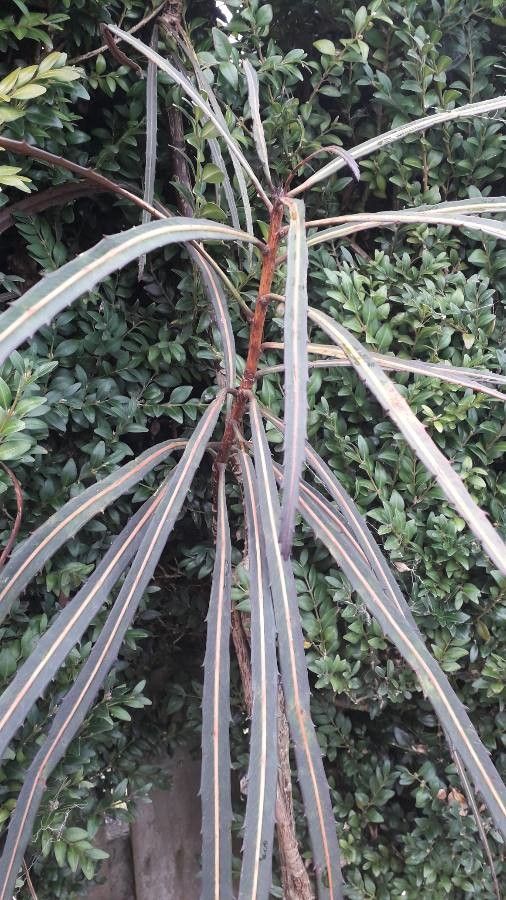
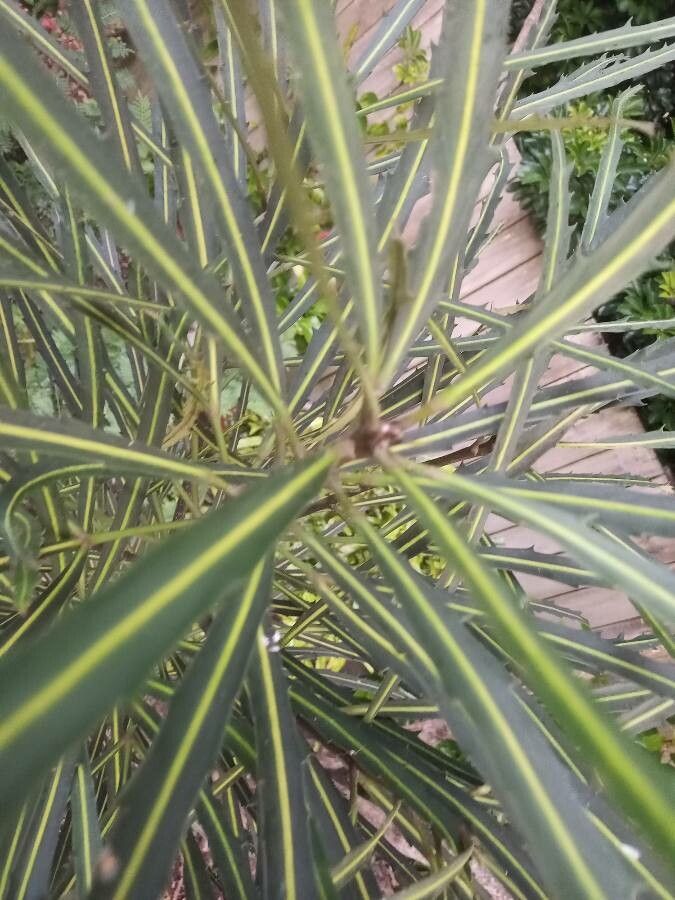
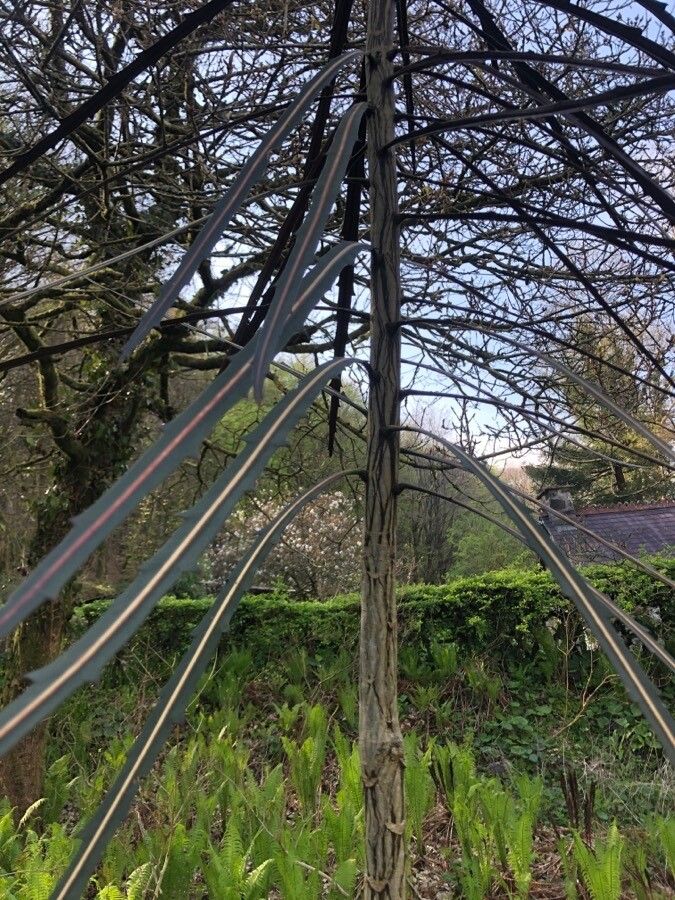
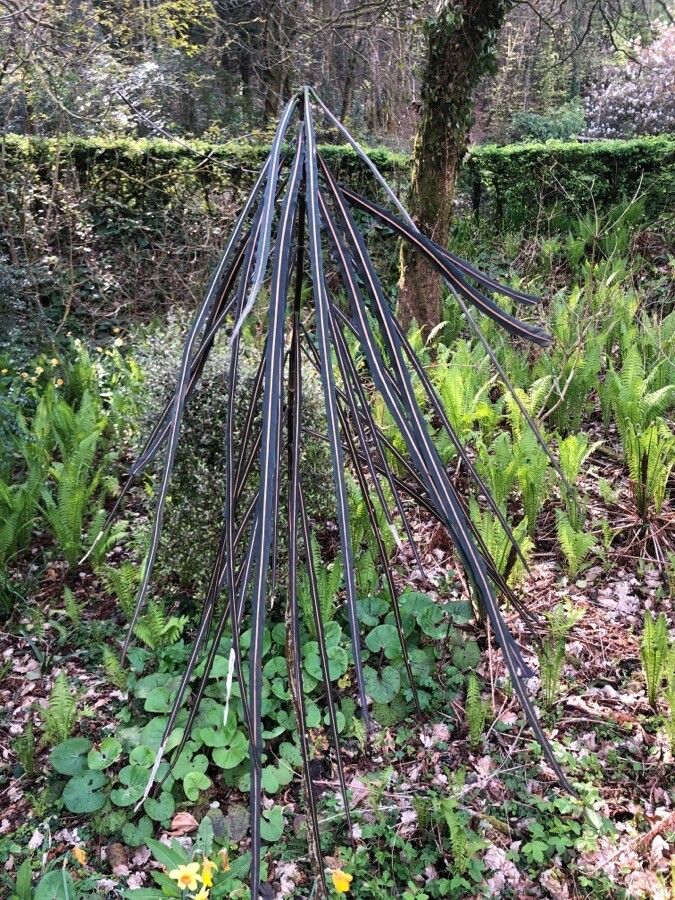
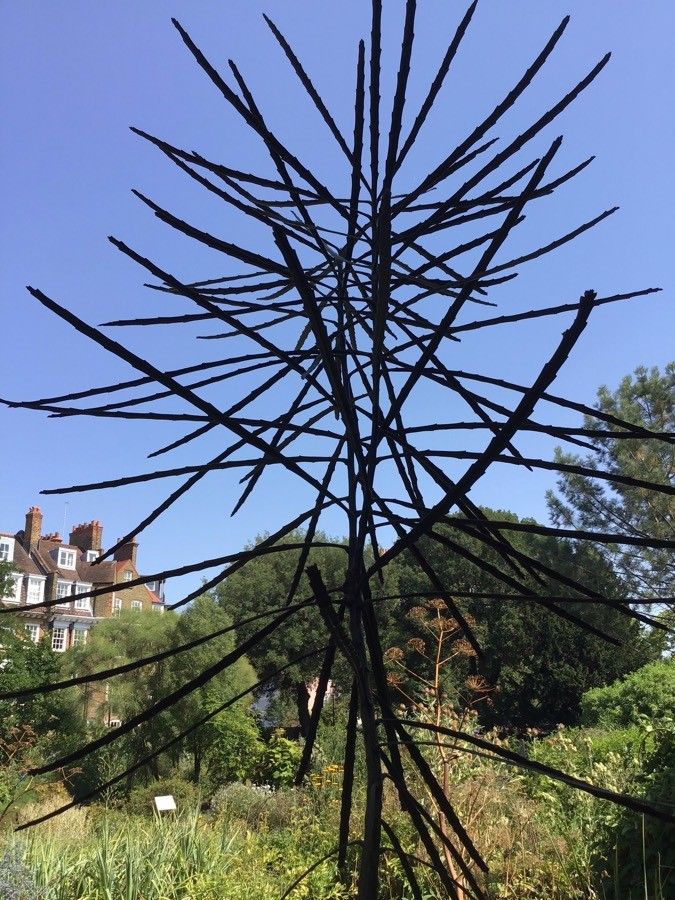
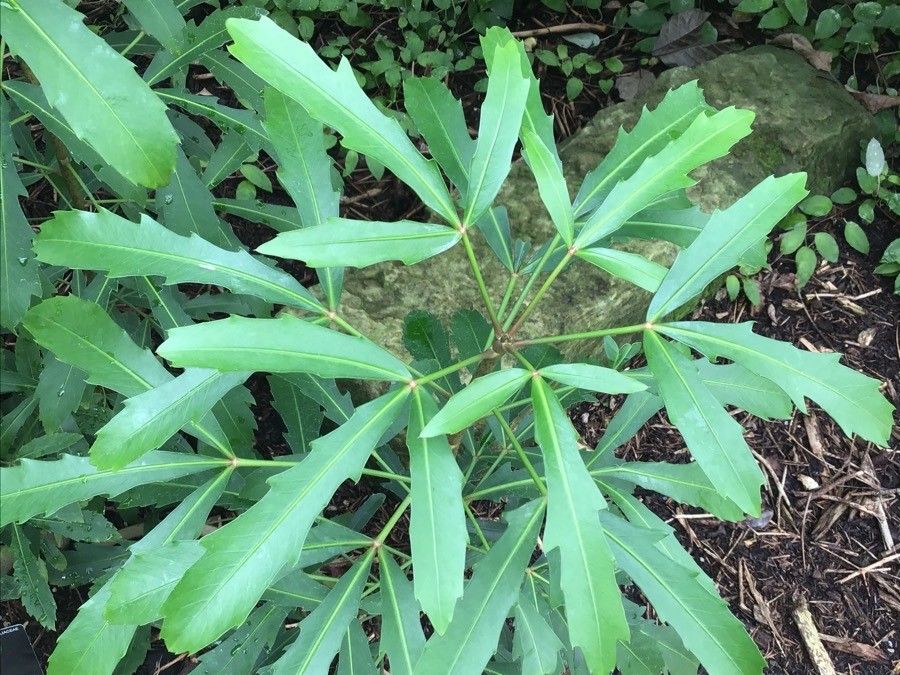
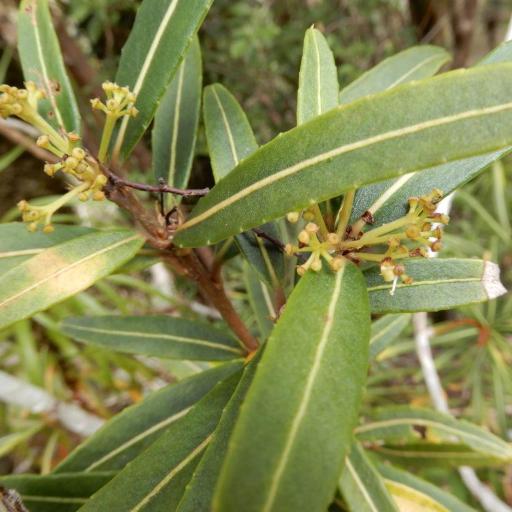
Pseudopanax crassifolius, the horoeka or lancewood, is a New Zealand native tree belonging to the family Araliaceae. It is found throughout New Zealand from sea level up to about 750 m. The juvenile form, which lasts for between 15 and 20 years, is very easily recognized. The leaves are stiff and leathery with a prominent central rib, about 1 cm wide and up to 1 m long with irregular teeth, all growing downwards from a central stem. The young trunk has characteristic vertical swollen ridges. As the tree gets older the stem begins to branch, producing a bushy top, and the leaves become wider and shorter, losing their teeth. It is only when the tree is mature that it adopts a typical tree shape. One of the theories about this curious change of appearance is that the young plant had to protect itself against browsing by the moa, the giant flightless bird that roamed New Zealand's bush in prehistoric times. Once above moa height, it was out of danger and turns into a "regular" tree. A study of leaf colour development in P. crassifolius found that leaves of seedlings would blend with leaf litter, while juvenile leaf colouration would draw attention to their spines. A closely related Chatham Island species, which evolved in the absence of moa, did not display these changes.Closely related is Pseudopanax ferox, the toothed lancewood. It is similar to P. crassifolius except the leaves are more abundant and severely toothed, resembling remotely a bandsaw blade.
Lancewood is resistant to disease and generally not susceptible to illnesses. In terms of care, this plant is fairly low-maintenance. When grown outdoors it needs minimal watering, and larger specimens typically do not require pruning. Smaller plants, however, should be pruned after they have finished blooming. Lancewood is suitable for anyone who has an outdoor space, such as a garden or deck, and it does not require extensive care experience.
How to keep Pseudopanax Crassifolius.
Light
Lancewood does best with moderately filtered sunlight, though it can tolerate sites with ample sun. Excessive unobstructed sun, however, can cause scorching. In its native environment, lancewood grows beneath other vegetation, indicating its adaptation to lower light conditions. Conversely, too little sunlight can impede healthy growth, producing a weak structure and dull foliage.
Water
Lancewood thrives with intermittent rainfall and generally needs watering every one to two weeks. This plant strikes a balance between retaining moisture and tolerating drought. In temperate regions, planting lancewood outdoors during a growing season that coincides with natural rainfall helps maximize water efficiency.
Temperature
Lancewood is native to temperate regions, which lessens its need for significant temperature changes. It naturally thrives between 59 and 95 °F (15 and 35 °C), demonstrating considerable adaptability. However, in colder seasons, keeping it toward the warmer part of this preferred range supports optimal growth.
Fertilizer
Fertilize your Lancewood in early spring to encourage healthy growth. Routine feeding improves its overall health, producing vigorous growth, greater resilience to harsh conditions, and increased resistance to pests and diseases. Follow a consistent fertilization schedule for your Lancewood to keep the foliage vibrant, deeply colored, and lush in appearance.
Pruning
To maintain the shape and health of lancewood trees, it is important to prune them during their dormant period, from early to late winter. Pruning during this time encourages denser foliage and enhances the tree's vigor. Be sure to remove any dead or damaged branches, and always use clean tools to prevent the spread of disease.
Pot & Repot
When repotting Lancewood, select a pot 1-2 inches (2.5–5.1 cm) larger with good drainage. Use a well-draining potting mix. Repot in spring or fall, ensuring the root ball is positioned slightly below the rim of the flower pot. Water thoroughly after repotting and place it in a warm spot with indirect sunlight.
Botanical profile.
- Plant Type
- Tree
- Life Cycle
- Perennial
- Genus
- Pseudopanax
- Family
- Araliaceae
- Hardiness Zone
- 8-10
- Mature Height
- 14.94 m
- Mature Spread
- 1.52 m to 2.44 m
- Leaf Color
- Green
- Leaf Type
- Evergreen
- Flower Color
- Green, White
- Flower Size
- 0.25 cm to 0.51 cm
- Bloom Time
- Mid fall, Late fall
- Planting Time
- Spring
- Harvest Time
- Winter
- Native Area
- New Zealand
Other names.
Reader questions.
What are the sunlight requirements for plants?
Plants have varying needs for sunlight, categorized mainly under partial sun and full sun requirements. Partial sun refers to plants needing about 3-6 hours of sunlight daily, while full sun implies a need for more than 6 hours of sunlight each day. Observing how sunlight moves through your garden helps in choosing locations that provide an ideal balance of light and shade, essential for the well-being of your plants.
What is the optimal temperature range for lancewood?
Lancewood, also known by its botanical name Pseudopanax crassifolius, is indigenous to temperate climates, thriving optimally at temperatures ranging from 59 to 95 °F (15 to 35 °C). This range allows it to adapt well without needing extensive temperature adjustments. Though lancewood has some cold tolerance, maintaining it at the warmer end of its preferred temperature spectrum during colder seasons is crucial for its optimal growth.
How does lancewood respond to sunlight and what are its sunlight essentials?
Lancewood thrives in conditions with moderately filtered sunlight but can also adapt to areas with more generous sunlight exposure. However, too much direct sun can cause scorching. In its natural habitat, lancewood grows under the cover of other vegetation, indicating its preference for lesser light environments. Yet, insufficient sunlight can hinder its growth, causing weak structure and dull foliage. When natural sunlight is not enough, especially during winter or in less sunny spaces, using artificial lighting can be a beneficial supplement. It's advisable to choose the correct type of artificial light, like LED lights, adjust the distance from the plant, and mimic natural daylight hours to promote healthy growth.
How can lancewood be protected during cold seasons?
Lancewood generally does not require any special measures for cold protection when the temperature stays above -5°C. However, if temperatures are expected to drop below this threshold, temporary cold protection measures should be implemented. These can include wrapping the plant with plastic film, fabric, or other suitable materials to insulate it against the cold. It's important to remove these protective measures once the temperature rises to prevent any potential damage to the plant.
What are the symptoms of inappropriate sunlight exposure for lancewood?
Lancewood exhibits various symptoms when grown in inadequate light conditions. Such symptoms include smaller new leaves, leggy or sparse growth, faster leaf drop, slowed or halted growth, lighter-colored new leaves, chlorosis (yellowing of leaves), sunscald, leaf curling, wilting, and leaf scorching. Each symptom indicates a specific issue related to either too little or too much sunlight, affecting the plant's photosynthesis process, nutrient absorption, and overall health.
What should be done if a lancewood is exposed to very low temperatures?
If a lancewood is subjected to temperatures below -5°C, and especially if it drops below -10°C, its leaves may start to droop, and in severe cases, they can wilt and fall off. To mitigate frost damage, trim off any frost-damaged portions of the plant. Before the plant is exposed to low temperatures again, wrap it with non-woven fabric or cloth and construct a wind barrier to shield it from cold winds. These actions can help protect the plant from further cold damage.
What solutions can help deal with lancewood's light exposure issues?
Managing sunlight exposure for lancewood involves several strategies depending on whether the plant is indoors, outdoors, or in the ground. For indoor plants, gradually increasing direct sunlight exposure to 3-6 hours daily or using artificial lights if moving the plant is not feasible can be effective. Outdoors, gradually moving plants to sunnier spots each week helps them adapt without suffering sunburn. Reducing obstructions, such as by pruning tree branches that block sunlight, or transplanting smaller plants during their dormant period to sunnier locations, can provide better sunlight access. It's important to make adjustments carefully to avoid stress and enable healthy new growth, despite some parts of the plant possibly not recovering from prior inadequate light conditions.
How should lancewood be cared for during high temperatures?
During the hotter periods, particularly in summer, it's essential to ensure that the lancewood's temperature does not exceed 35°C. Exposure to temperatures above 41°C can cause the leaves to lighten in color, dry and wither at the tips, curl, and increase the plant's susceptibility to sunburn. In such cases, remove the sunburned and dried-up parts of the plant. To protect the lancewood from excessive heat, move it to a shaded location, especially away from the midday and afternoon sun, or use a shade cloth. Additionally, keeping the soil moist by watering the plant in the morning and evening will help counteract the effects of high temperatures.