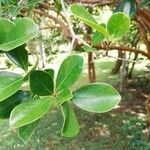
Psidium cattleianum
Purple Strawberry Guava · Cherry guava · Strawberry guava · Cattley guava · Chinese guava
Description
Source: leafsnapPsidium cattleianum, commonly known as strawberry guava, is a small evergreen tree or shrub native to South America. It has been widely introduced to other parts of the world. Typically, it grows up to 6 meters tall and features a dense canopy of glossy green leaves. The plant produces small white flowers followed by round or oval-shaped fruit that resembles a strawberry in both appearance and taste. The fruit of Psidium cattleianum is highly nutritious, rich in vitamin C, fiber, antioxidants, and other beneficial compounds. It is commonly used in jams, jellies, juices, desserts, and as a flavoring for various dishes. The plant prefers warm climates with well-drained soil but can tolerate some drought conditions once established. It can be propagated by seeds or cuttings but requires regular pruning to maintain its shape. Despite its many benefits as an edible fruit tree and its ornamental value for landscaping due to its attractive foliage and flowers, Psidium cattleianum can be invasive in some areas where it has been introduced. This is due to its ability to spread rapidly through seed dispersal by birds. Overall, Psidium cattleianum offers both aesthetic value for landscaping and nutritional benefits through the consumption of its delicious fruits. However, it should be carefully managed when planted outside its native range to prevent it from becoming an invasive species, which could negatively impact local ecosystems.
💡 Strawberry guava is regarded as the most invasive plant species in Hawaii, and it is also highly invasive in other regions where it is not native. This plant is often linked with feral pigs, as the two help each other to spread and multiply. Pigs consume the fruit and disperse the seeds through their droppings. Additionally, they uproot the soil, creating ideal conditions for the seeds to germinate with minimal competition.
🌳 Although the strawberry guava is widely recognized for its edible berries, its often-overlooked range of non-food uses is striking. Essential oils can be obtained from the leaves, which exhibit antimicrobial activity. The fruit can also function as a natural dye, its vivid juice supplying a sustainable source of pigment. Additionally, the wood is hard and fine-grained and could be used to craft detailed furniture. Even in a few local areas it has been used in traditional beverages, suggesting its untapped potential in global markets.
Care Guide
💧 Water Every 7 days
Strawberry guava thrives in tropical climates and has a moderate tolerance for drought, requiring watering every 2-3 weeks. As an evergreen plant, it needs consistent soil moisture to remain healthy. It is usually grown outdoors, and using mulch can help retain moisture and mimic the natural leaf litter environment it is accustomed to.
☀️ Light Full sun
The strawberry guava plant flourishes optimally when it receives plenty of sunlight, which is crucial for robust growth and healthy development. The vibrancy of the plant's fruit and leaf coloring is also augmented by sun exposure. However, too much or too little sunlight can cause a decrease in fruit production, a dulling of color or stunted growth. The native environment of the plant exhibits a need for lots of sunlight, reflecting its sunlight-demanding nature.
What are the sunlight requirements for Strawberry Guava?
Strawberry Guava, or Psidium cattleianum, requires full sun, defined as above 6 hours of sunlight per day, for optimal growth and development. Adequate sunlight exposure is crucial for the plant's robust growth, vibrant fruit and leaf coloration, and prevention of fruit yield decrease, color dullness, or restricted growth. The plant's origin in light-rich habitats underscores its need for abundant luminary exposure. It's advisable to watch how sunlight moves through your garden to ensure you choose spots that provide the perfect balance of light and shade, ensuring the plants' happiness.
How does artificial lighting support Strawberry Guava plants indoors?
Indoor Strawberry Guava plants require adequate lighting, especially when natural sunlight is insufficient, such as during winter or in less sunny spaces. Artificial lighting, particularly LED lights, is vital as it can be customized to provide the specific wavelengths the plants need. For healthy growth, full sun plants need 30-50W/sq ft of artificial light, partial sun plants need 20-30W/sq ft, and full shade plants need 10-20W/sq ft. The artificial light source should be placed 12-36 inches above the plant, mimicking natural sunlight, and plants generally need 8-12 hours of light per day.
What are the symptoms of insufficient lighting for Strawberry Guava?
When Strawberry Guava does not receive enough light, especially indoors during winter, it may exhibit several symptoms including smaller new leaves, leggy or sparse growth, faster leaf drop, slower or no new growth, lighter-colored new leaves, chlorosis, sunscald, leaf curling, wilting, and leaf scorching. These symptoms indicate a lack of chlorophyll and essential nutrients or damage from excessive sunlight exposure, affecting the plant's ability to photosynthesize and maintain adequate hydration.
How can I remedy insufficient lighting for my Strawberry Guava plant?
To address insufficient lighting for Strawberry Guava plants, gradually move them to sunnier locations, ensuring they receive at least 6 hours of direct sunlight daily. This can be done both indoors, using a south-facing window or artificial light sources such as desk lamps or professional grow lights for at least 8 hours daily, and outdoors, by moving plants gradually to prevent sunburn. If obstructions block sunlight, consider pruning or transplanting the plant during its dormant period for better sunlight access. Remember, while affected parts may not recover, new growth after increasing light exposure will be healthy.
🌡️ Temperature 20–37.8°C
Strawberry guava thrives naturally in a tropical environment where the temperature ranges between 68 and 100 °F (20 to 38 ℃). It adjusts to changes in seasonal temperatures, has a preference for hotter conditions, and may need extra warmth in the colder months.
What climate does Strawberry guava prefer?
Strawberry guava thrives in a tropical climate where the temperature range is ideally between 68 to 100°F (20 to 38°C). This plant loves warm conditions and is accustomed to seasonal temperature fluctuations, but requires extra warmth during colder months. It's extremely sensitive to cold temperatures, so when autumn arrives, it's advisable to move any outdoor-grown Strawberry guavas indoors. They should be placed near a bright window but kept away from direct heat sources to ensure the temperature remains above 20°C, particularly during winter. Avoid exposing the plant to temperatures nearing 0°C as it can be harmful.
How does low temperature affect Strawberry guava and what are the solutions?
Strawberry guava is not tolerant of low temperatures and prefers to be kept in environments where the temperature is above 20°C. Exposure to temperatures below 0°C, especially below -5°C, can cause the leaves to lighten in color, and following frost damage, the leaves may turn brown or black. Signs of distress such as wilting and drooping are common. To mitigate these effects, any frost-damaged parts of the plant should be trimmed off. The plant should be moved to a warmer indoor setting quickly, preferably near a south-facing window for ample sunlight, while ensuring it is not placed near heaters or air conditioning vents to avoid air dryness.
How does high temperature affect Strawberry guava and what are the solutions?
Strawberry guava should ideally be kept in temperatures below 38°C during summer. Exceeding temperatures of 43°C can lighten the leaves' color and increase the risk of sunburn. To care for a plant that has sustained sunburn or dry damage, trim the affected parts and relocate the plant to a shadier spot, especially to avoid the intense midday and afternoon sun. Watering the plant in the mornings and evenings can help keep the soil adequately moist, providing relief from high temperatures.
💨 Humidity high (>60%)
This plant needs special care because it loves high humidity levels of 60-80% or more. The best way to achieve this is by placing a humidifier near the plant. Daily misting is also essential! Make sure the room has good ventilation.
🪴 Soil 5-7
🌱 Fertilizer Every 90 days
Opt for organic fertilizers like fish emulsion or compost instead of chemical ones for Strawberry guava. During spring, give young plants more nitrogen and phosphorus. Mix compost or fertilizer into the soil either before or after planting the tree. For full-grown plants, add either a balanced diet or fertilizers that address specific deficiencies in the spring. A lack of nutrients results in abnormally small leaves, dwarfed branches, leaves that turn yellow or bronze, overly sour fruits, fruits that drop prematurely, and fruits that split open.
🪴 Pot & Repot Every 12 months
✂️ Pruning
Strawberry guava benefits greatly from pruning during its dormant period, which lasts from early to late winter. When pruning, prioritize removing dead branches, thinning out crowded areas, and shaping the plant to ensure strength. These practices improve air circulation, increase sunlight exposure, and boost fruit yield. Additionally, always use sanitized tools to ensure effective care.
🌿 Propagating
🐛 Diseases & pets
☠️ Toxicity
Characteristics
- Plant Type
- Tree, Shrub
- Life Cycle
- Perennial
- Genus
- Psidium
- Family
- Myrtaceae
- Hardiness Zone
- 9-12
- Mature Height
- 2.13 m to 6.1 m
- Mature Spread
- 3.05 m to 7.62 m
- Leaf Color
- Green, Bronze
- Leaf Type
- Evergreen
- Flower Color
- White
- Flower Size
- 2.03 cm to 3.05 cm
- Bloom Time
- Late spring, Early summer, Mid summer
- Planting Time
- Spring, Autumn
- Harvest Time
- Mid summer, Late summer
- Native Area
- Brazil, Uruguay