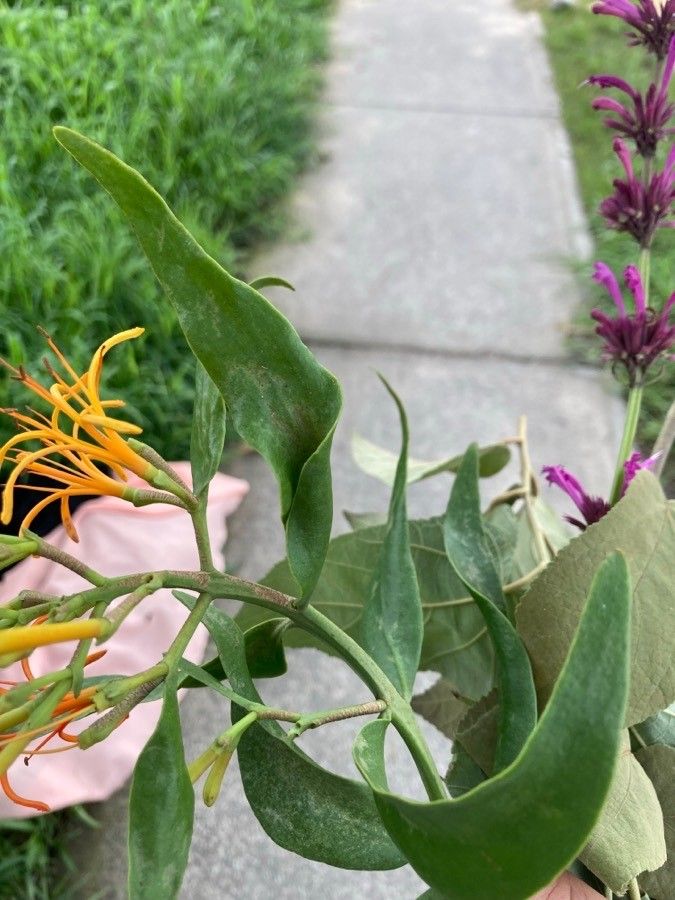
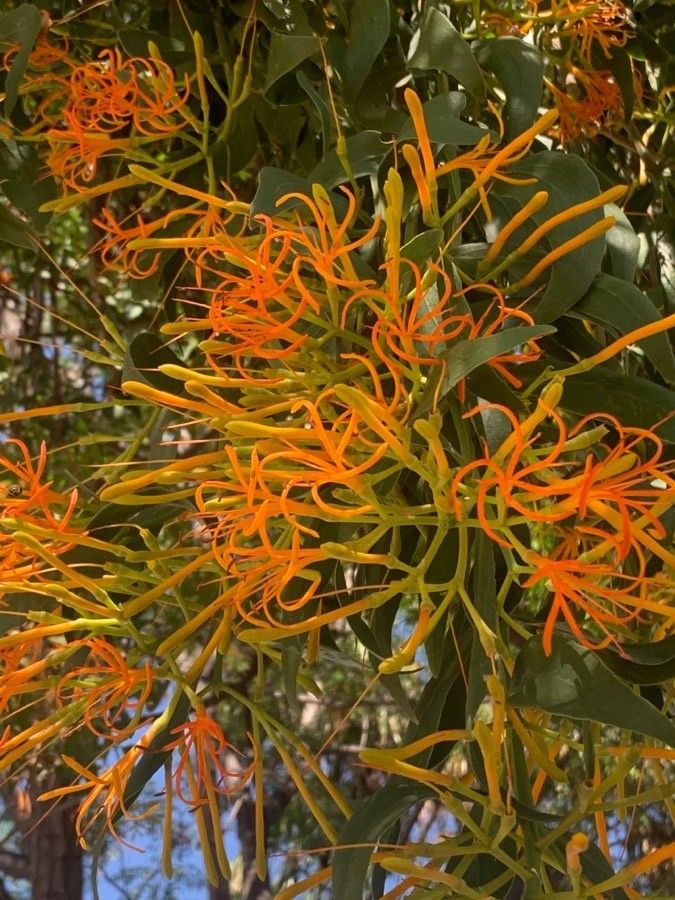
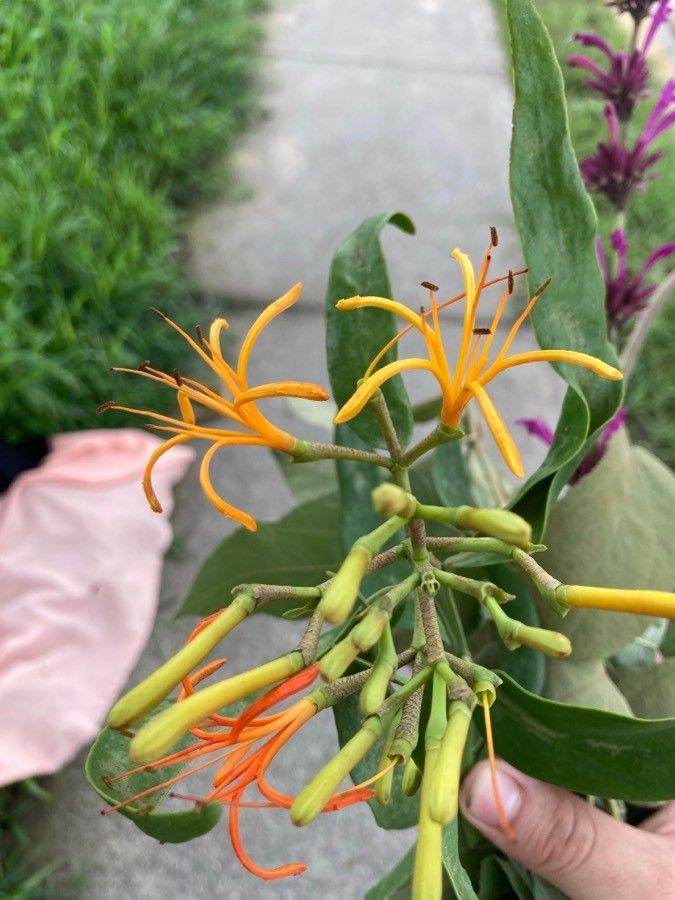
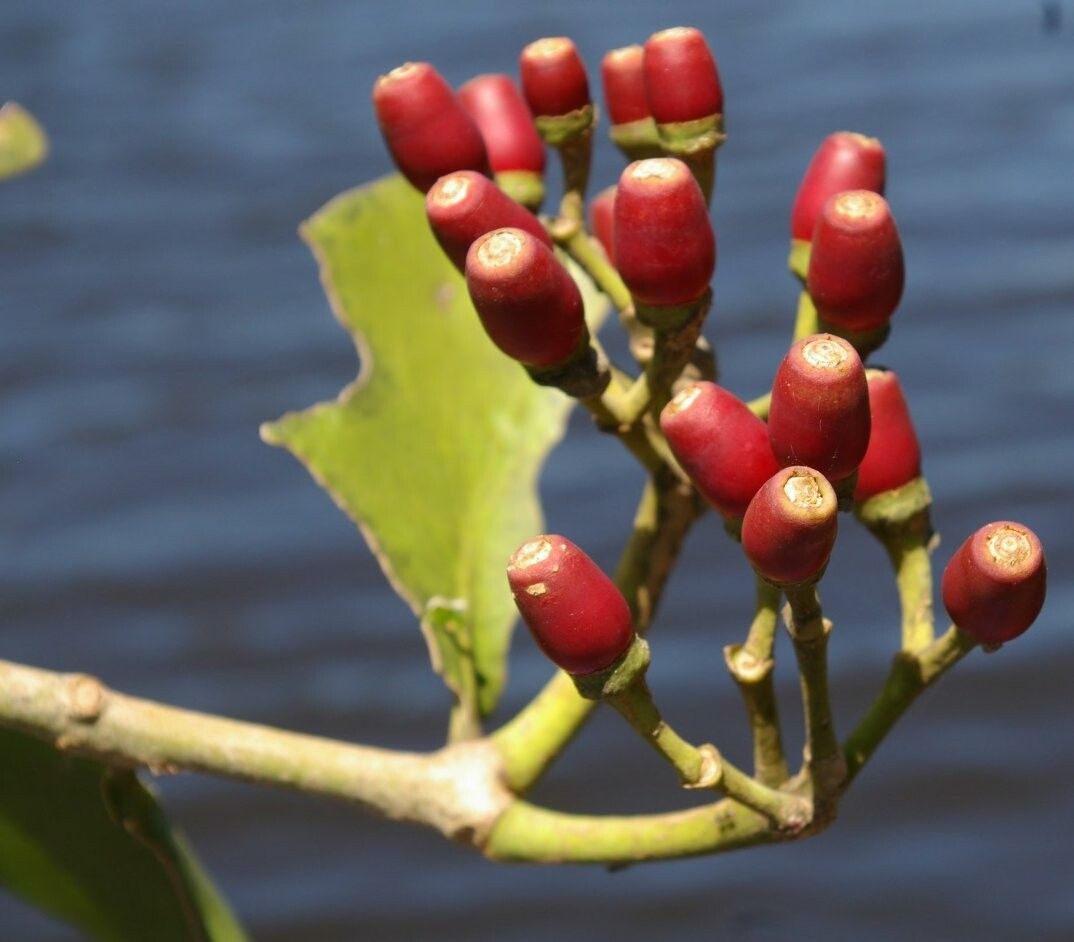
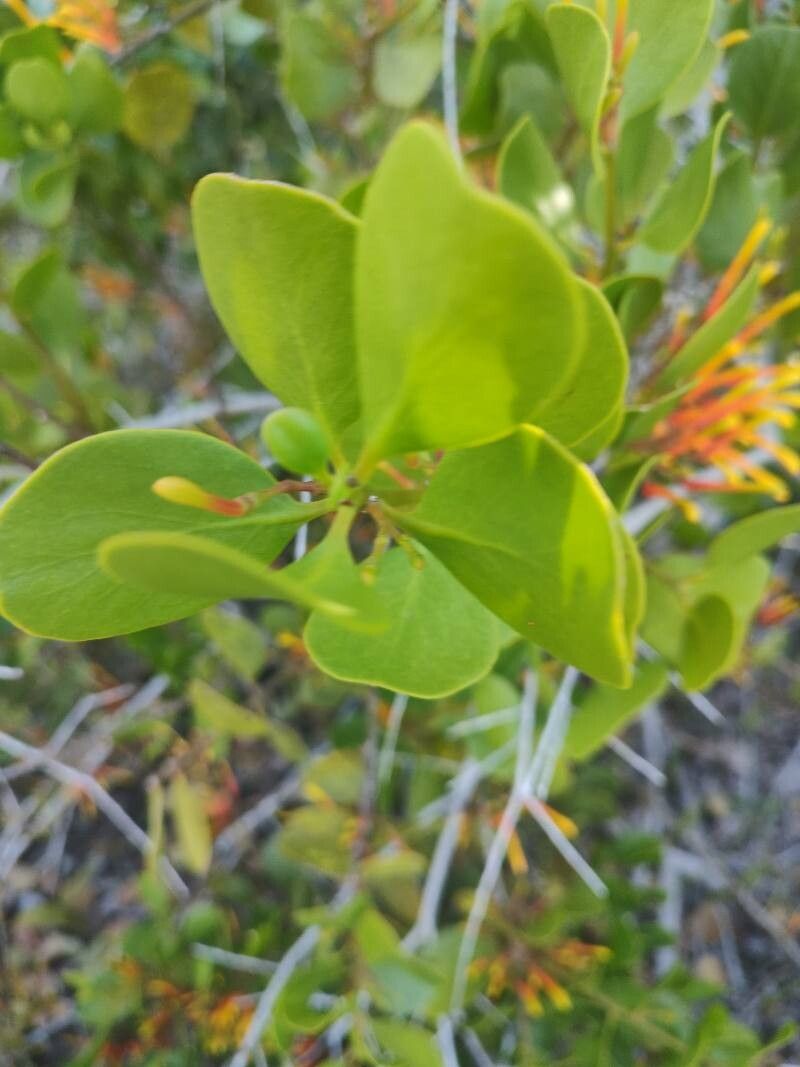
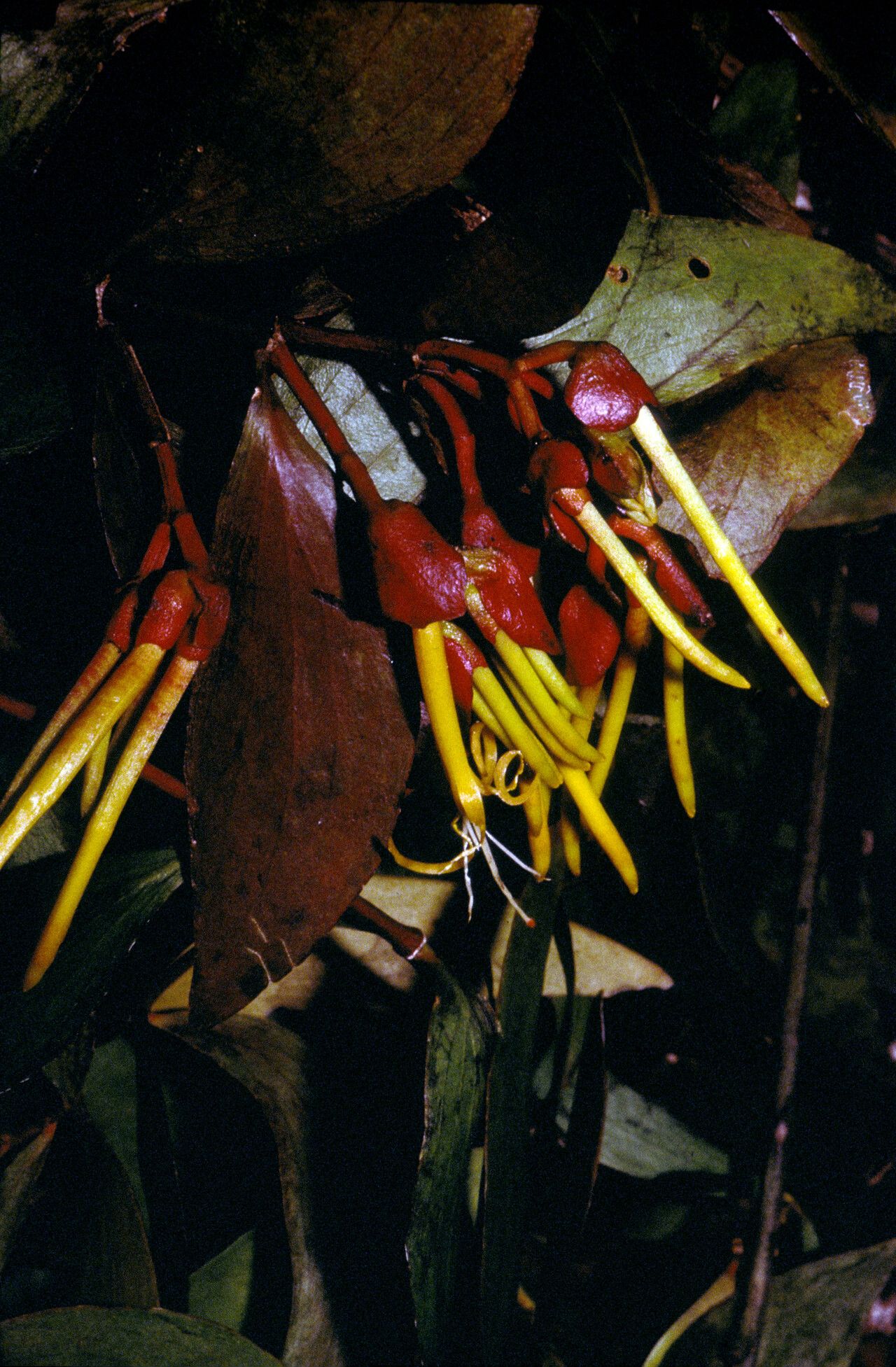
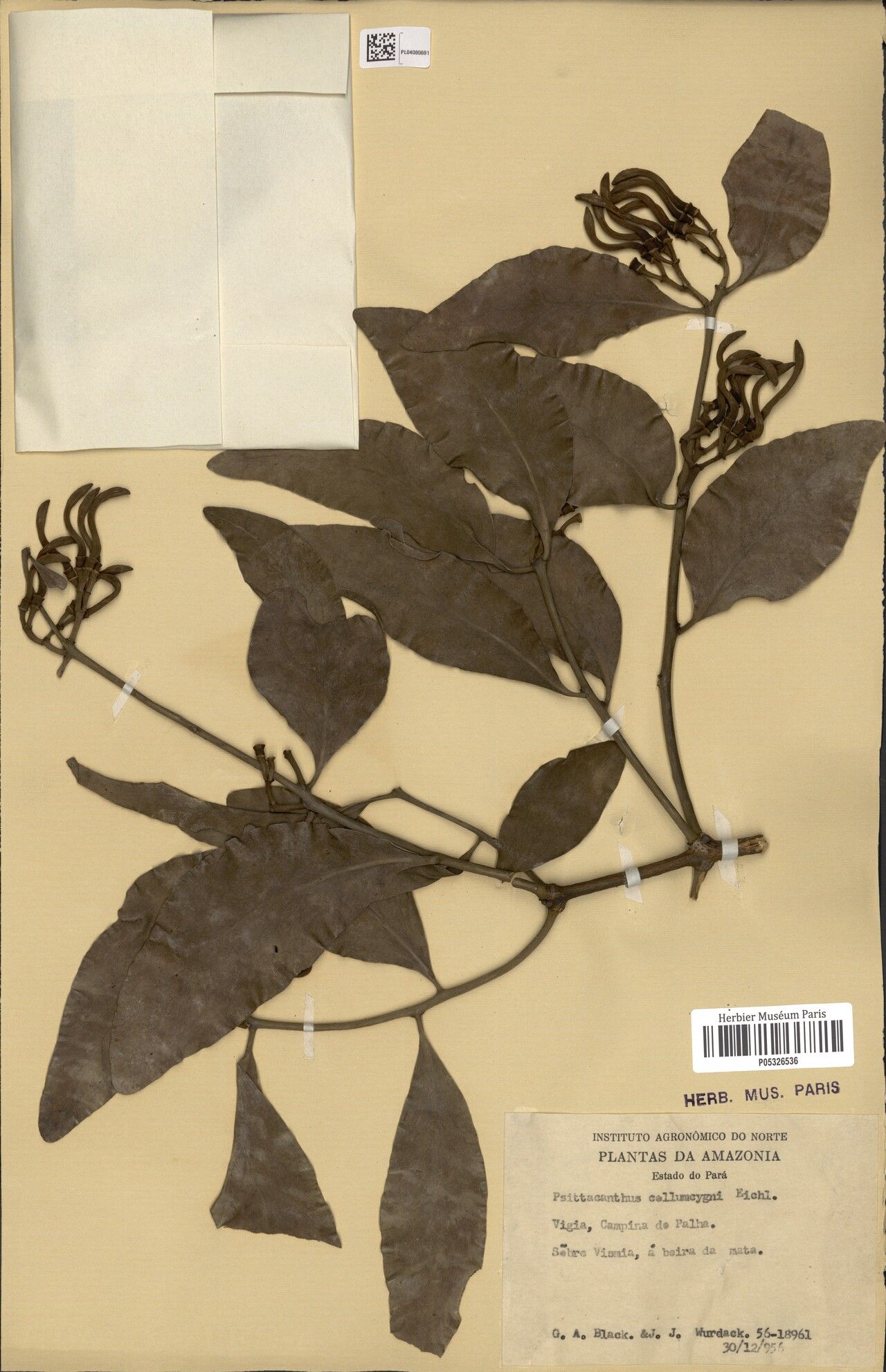
Psittacanthus calyculatus, (erva de passerinho), is a species of Neotropical mistletoe in the family Loranthaceae, native to Colombia, Mexico, the Mexican Gulf, and Venezuela.
The parrot flower is strongly resistant to disease and is usually not susceptible to illnesses. In terms of upkeep, this plant is fairly low-maintenance. When grown outdoors it needs only light watering, and larger plants normally do not require pruning. However, smaller plants should be trimmed after they have finished blooming. The parrot flower is suitable for anyone with an outdoor area, such as a garden or a deck, and does not demand much prior care experience.
How to keep Psittacanthus Calyculatus.
Light
Parrot flower originates in open habitats, like sunny meadows and forest edges, where there is plenty of light. It flourishes in Full Sun but can also tolerate Partial Sun, adjusting well to different sunlight levels.
Water
Adapted to intermittent rainfall, the parrot flower thrives when watered every 2-3 weeks, maintaining a balance between moisture retention and drought resistance. As an epiphyte found in tropical canopies, it absorbs moisture from the air. The parrot flower prefers outdoor environments, where its growth synchronizes with seasonal rains, leading to lush foliage and vibrant blooms.
Temperature
Parrot flower comes from tropical areas, where conditions are generally warm and humid. Consequently, it is adapted to high heat and humidity. It dislikes abrupt temperature swings and favors a consistent thermal environment, so avoiding indoor temperature variations is important. It typically cannot tolerate cold and requires warmer temperatures for growth. If the surrounding temperature falls too low, the plant may stop growing or even die.
Fertilizer
Early spring, when the Parrot flower breaks dormancy, is the best time to apply fertilizer. This encourages overall growth and flower development. Fertilizing improves the foliage, stems, and branches, and promotes flowers that are larger, more vivid, and longer-lasting. It helps transport nutrients from the roots to the flowers and boosts the plant’s health and resistance to disease.
Pruning
The parrot flower is known for its vibrant blossoms and its semi-parasitic growth habit. To care for it, prune the plant from early to late winter while it is dormant. This involves removing dead branches and improving airflow, which is essential for its health. It is important to be cautious when cutting around the host plant to avoid causing any damage. Regular pruning encourages growth and blooming, as supported by reputable horticultural guides.
Botanical profile.
- Plant Type
- Shrub
- Life Cycle
- Perennial
- Genus
- Psittacanthus
- Family
- Loranthaceae
- Hardiness Zone
- 9-11
- Mature Height
- 91 cm
- Mature Spread
- 20 cm to 61 cm
- Leaf Color
- Dark Green, Forest Green
- Leaf Type
- Evergreen
- Flower Color
- Yellow, Orange
- Flower Size
- 3.05 cm to 5.08 cm
- Bloom Time
- Late spring, Summer
- Planting Time
- Spring, Summer, Autumn
- Harvest Time
- Late summer, Fall
- Native Area
- Colombia, Mexico, Venezuela, Costa Rica, Panama
Other names.
Reader questions.
What are the sunlight requirements for Parrot flowers?
Parrot flowers thrive best in partial sun, receiving about 3-6 hours of sunlight per day. They are adaptable plants, native to forest understories or rocky areas, hence they can also tolerate full shade. It's crucial to observe how sunlight moves through your garden throughout the day, selecting spots that offer an ideal mix of light and shade. This careful placement ensures the plants' well-being by mimicking their natural habitats.
How can artificial lighting benefit Parrot flowers indoors?
Artificial lighting is essential for Parrot flowers grown indoors, especially when natural sunlight is inadequate. During winter or in less sunny locations, artificial lights such as LED lights, which can be customized to produce specific wavelengths, can significantly enhance plant growth. The general recommendation is to provide full sun plants with 30-50W/sq ft, partial sun plants with 20-30W/sq ft, and full shade plants with 10-20W/sq ft of artificial light. Positioning the light source 12-36 inches above the plant and ensuring 8-12 hours of light per day mimics natural sunlight conditions, promoting healthier growth.
What symptoms indicate light deficiency in Parrot flowers?
Parrot flowers may exhibit several symptoms under light deficiency, including smaller new leaves, leggy or sparse growth, faster leaf drop, slower or no new growth, lighter-colored new leaves, chlorosis (leaves turning yellow), sunscald, leaf curling, wilting, and leaf scorching. These signs point towards the plant struggling with inadequate exposure to light, impacting its health and growth negatively.
How can I address light deficiency in Parrot flowers?
To combat light deficiency in Parrot flowers, gradually increase their exposure to sunlight or use artificial lighting. For indoor plants, shift them to sunnier spots weekly until they achieve 3-6 hours of direct sunlight per day or use desk, ceiling, or professional grow lights for at least 8 hours a day. For outdoor plants, move them to sunnier locations gradually to prevent sunburn. Reducing obstructions like pruning trees can also help. New growth is expected to be healthy after these adjustments, though parts of the plant already affected may not recover.