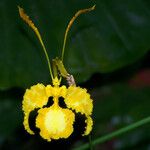
Psychopsis papilio
Butterfly Orchid
Care Guide
💧 Water
The butterfly orchid originates from warm, humid tropical regions and thrives in consistently moist conditions. It prefers high humidity and has moderate drought tolerance. To maintain its moisture needs, especially indoors during its active growing season, it is essential to water it weekly. This regular watering helps support vibrant flowering.
☀️ Light Partial sun
The butterfly orchid does best with moderate sunlight, similar to its native forest where light filters through the canopy. This level of light supports healthy growth without burning the leaves. It can survive without light, but not optimally. Excessive light may scorch the leaves, while too little light can impede growth.
What are the sunlight requirements for Butterfly Orchid?
Butterfly Orchid thrives under moderate sun exposure, akin to its native forest habitat where sunlight is filtered through the tree canopy. It requires about 3-6 hours of sunlight daily. Insufficient light might hamper its growth, while too much sun can lead to leaf scorching. It's crucial to observe your garden's sun movement to pick spots offering the right light balance. During winter or when indoor conditions lack natural light, the use of artificial lighting, such as LED lights suitable for plant growth, can supplement the needed light. Different plants have varied artificial light requirements, from 10-20W/sq ft for full shade plants to 30-50W/sq ft for full sun plants.
What are the signs of improper lighting for Butterfly Orchid?
Signs of improper lighting in Butterfly Orchid include smaller new leaves, leggy or sparse growth, faster leaf drop, slower or no growth, lighter-colored or chlorotic leaves, sunscald, leaf curling, wilting, and leaf scorching. These symptoms indicate either excessive sunlight or insufficient light exposure. Adaptation to the right lighting conditions is crucial to prevent these issues and ensure the plant's health.
How can I address improper lighting conditions for my Butterfly Orchid?
To address improper lighting conditions for Butterfly Orchid, gradually adjust the plant's exposure to sunlight. For indoor plants, consider shifting them to sunnier spots each week until achieving 3-6 hours of direct sunlight daily or use artificial light for plants that are not easily movable, keeping a lamp on for at least 8 hours daily. For outdoor plants, similarly move them to progressively sunnier locations to prevent sunburn. If sunlight obstruction is an issue, strategically prune obstructing branches or consider transplanting to lighter areas. Note that while parts of the plant damaged by light issues might not recover, new growth should be healthy with proper light adjustments.
🌡️ Temperature 20–37.8°C
The butterfly orchid naturally thrives in conditions with temperatures from 68 to 100°F (20 to 38°C). It prefers warm conditions and is not tolerant of cold. Adjust indoor conditions with the seasons to replicate its natural habitat.
What is the ideal temperature range for Butterfly Orchid?
The Butterfly Orchid thrives in warm environments with temperatures ranging between 68 to 100°F (20 to 38°C). It is a tropical plant that requires warmth and does not tolerate cold well. To ensure its health, it is important to maintain indoor temperatures above 20°C, especially during winter when the temperature should not drop below 10°C. For optimal growth, replicate its natural habitat by adjusting indoor settings according to the season, and during colder months, it may be necessary to bring the orchid indoors to maintain the right temperature conditions.
How should I care for my Butterfly Orchid during the winter?
Caring for your Butterfly Orchid during the winter involves ensuring it is kept in an environment where temperatures are consistently above 20°C, as the plant does not tolerate cold well. If the minimum temperature drops below 10°C, bring the Orchid indoors. Place it near a south-facing window for ample sunlight, and use a humidifier or mist the plant regularly to maintain humidity levels. For orchids needing to overwinter outdoors, ensure they are sheltered and receive sunlight, considering a temporary greenhouse or wrapping with plastic film or fabric for extra protection against cold temperatures.
What are the symptoms of low temperature exposure in Butterfly Orchid, and how can I address them?
Exposure to low temperatures can cause the Butterfly Orchid to exhibit signs such as extensive water-soaked necrosis, wilting, and drooping, as it thrives best above 20°C and should not be kept in conditions below 10°C. Frostbite can occur when temperatures fall below 5°C. To address these symptoms, trim off the frostbitten areas and immediately move the orchid to a warm, indoor environment. Placing the plant near a south-facing window ensures it receives sufficient sunlight. Additionally, avoid placing the orchid near heaters or air conditioning vents to prevent the air from becoming excessively dry.
How do I protect my Butterfly Orchid from high temperatures?
During the summer, it is crucial to ensure that the Butterfly Orchid is not exposed to temperatures above 38°C, as excessive heat can halt its growth, cause wilting, and make it more susceptible to root rot and sunburn. When temperatures exceed 43°C, and sunburn occurs, trim away the affected parts. Move the orchid to a location with shade from the midday and afternoon sun for protection. Watering the plant in the morning and evening helps to keep both the plant and its surrounding environment moist, mitigating the stress caused by high temperatures.
💨 Humidity
🪴 Soil 5-6
🌱 Fertilizer
The best time to fertilize a Butterfly orchid is in early spring as it comes out of dormancy. This encourages overall growth and flower development. Fertilization improves the foliage, stems, and branches, while encouraging flowers that are larger, more vibrant, and longer-lasting. It helps transport nutrients from the roots to the flowers and boosts the plant’s health and resistance to disease.
🪴 Pot & Repot Every 12 months
When repotting a butterfly orchid, pick a slightly larger pot with good drainage, preferably a clear orchid pot. Use a well-draining, orchid-specific potting mix that includes bark or moss. Gently clean the roots and remove any that are dead or rotting. Repot after it finishes flowering, usually in spring or fall, water thoroughly, and keep it in bright, indirect light. Avoid disturbing the roots once it has been repotted.
✂️ Pruning
The Butterfly Orchid, named for its butterfly-like flowers, requires minimal pruning. It's best to prune these plants in early spring. Start by removing any dead leaves and spent flower spikes to encourage new growth. Be sure to use sterilized tools to prevent infections. Keep in mind that excessive cutting can damage the orchid's delicate structure and slow growth, negatively impacting its health and appearance.
🌿 Propagating
🐛 Diseases & pets
☠️ Toxicity
Characteristics
- Plant Type
- Vine
- Life Cycle
- Perennial
- Genus
- Psychopsis
- Family
- Orchidaceae
- Hardiness Zone
- 11
- Mature Height
- 15 cm to 30 cm
- Mature Spread
- 20 cm to 30 cm
- Leaf Color
- Green, Red
- Leaf Type
- Evergreen
- Flower Color
- Yellow, Brown
- Flower Size
- 12.70 cm to 15.24 cm
- Bloom Time
- All year round
- Planting Time
- Spring, Summer
- Native Area
- Colombia, Venezuela, Peru, Brazil, Ecuador