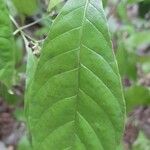
Psychotria nervosa
Wild Coffee · Seminole Balsamo · Bastard Cankerberry · Bastard Canckerberry
Description
Source: leafsnapPsychotria nervosa is a tropical plant species belonging to the Rubiaceae family and is commonly known as wild coffee or mountain coffee. Native to the Amazon rainforest in South America, this plant can grow up to 3 meters tall. Its glossy, dark green leaves are oval-shaped with pointed tips. The Psychotria nervosa plant produces small, white, tubular flowers that emit a pleasant fragrance and bloom in clusters at the ends of branches during the summer months. The plant's fruit is a small red berry containing two seeds. Indigenous people have traditionally used the leaves of Psychotria nervosa for their medicinal properties, specifically for treating fever, headaches, and stomach ailments. The plant contains alkaloids such as caffeine, which give it stimulant properties similar to those of coffee. Recently, Psychotria nervosa has attracted attention for its psychoactive properties, particularly its high content of dimethyltryptamine (DMT). DMT is a powerful hallucinogenic compound found in various plants used in shamanic rituals by indigenous communities in South America. Overall, Psychotria nervosa holds both medicinal and cultural significance due to its traditional use by indigenous communities over centuries. However, it is important to note that any use or consumption of this plant should be done under the guidance of trained professionals due to the potential risks associated with its psychoactive compounds.
🌳 Wild coffee contains caffeine, making it a lesser-known but feasible source for preparing regional beverages with a stimulant effect. Unlike the commonly consumed coffee from Coffea species, wild coffee provides a new option for local beverage traditions and could expand into niche markets for coffee alternatives.
🎭 Spirit, life
Care Guide
💧 Water Every 7 days
Wild coffee, native to tropical rainforests, thrives in environments with high humidity and consistent moisture. To care for this plant, water it every 1-2 weeks, allowing the soil to dry out partially between waterings. In warm climates, wild coffee is an evergreen and needs sufficient water during its active growing season to maintain lush foliage and overall health.
How should I water my Wild coffee plant?
You can water your Wild coffee plant using various common tools like watering cans, hoses, or even cups. It's important to apply the water directly to the soil and ensure that all areas are moistened equally to provide adequate hydration to the root system. Filtering the water is preferable to remove any harmful particles that may be present in tap water. Additionally, using water at or slightly above room temperature is recommended as extremely cold or hot water can be a bit too much for the plant. However, overall, the Wild coffee plant generally responds well to any type of water.
What do I do if I give my Wild coffee plant too much or too little water?
When it comes to outdoor plants, especially newly planted ones or seedlings, they can easily suffer from lack of watering. It's important to remember to water them consistently for a few months while they are still small or newly planted. Once the roots are established, Wild coffee plants can rely on rain for most of their water needs. If you have Wild coffee planted in pots, overwatering is more likely to happen. If you accidentally overwater your Wild coffee, you need to act quickly to fix the situation. First, stop watering the plant immediately to minimize the impact of overwatering. Then, take the plant out of its pot and check the roots for any signs of root rot. If there is no root rot, you can return the plant to its container. However, if root rot is present, trim away the affected roots and consider using a fungicide to prevent further damage. Finally, repot the Wild coffee in well-draining soil. On the other hand, if your Wild coffee is underwatered, it's a relatively easy problem to fix. When a plant is underwatered, its leaves may droop, dry out, and fall off. However, after giving it sufficient water, the leaves will quickly regain their fullness. Make sure to correct your watering frequency as soon as you notice signs of underwatering.
How often do I need to water my Wild coffee?
If your area gets enough rainfall, most outdoor plants can grow on their own without additional watering. However, if your area lacks rainfall, you should water your plants every 2 weeks in the spring and fall, and more frequently in the summer. In the winter, when plants don't need as much water, you can water them less often or not at all. If your Wild coffee plant is young or newly planted, it's important to water it more frequently to help it establish and become more adaptable to drought conditions. For potted plants, there are two main ways to determine how often to water your Wild coffee. The first way is to set a watering schedule, such as once a week or once every other week. However, this may not always work because it doesn't take into account the specific conditions of your plant's environment. Your watering frequency should also change depending on the season. For example, a set watering schedule may not be sufficient during the summer when your plant needs more water. An alternative approach is to base your watering frequency on the moisture level of the soil. It's generally best to wait until the top two to four inches of soil have completely dried out before watering again.
How much water does my Wild coffee plant need?
To water your Wild coffee, you don't always need a lot of water. If only a few inches of soil have dried since your last watering, give it about five to ten ounces of water. You can also judge how much water to give based on how dry the soil is. If more than half of the soil has dried, give it more water until you see excess water draining from the pot's holes. If your Wild coffee gets enough rain outdoors, it may not need additional watering. When it's young, make sure it gets 1-2 inches of rain per week. Once it's more established, it can survive on rainwater alone, but if there's a hot, dry spell for 2-3 weeks, give it a good watering to prevent stress.
How can I know if I'm giving enough water to my Wild coffee?
Overwatering is a common issue for Wild coffee. There are clear signs to watch out for when this happens. Typically, an overwatered Wild coffee will have yellowing leaves and may lose some leaves. Overwatering can also cause the plant's overall structure to shrink and lead to root rot. On the other hand, an underwatered Wild coffee will droop and could show brown or brittle leaves. Whether you see signs of overwatering or underwatering, it's important to intervene and revive your Wild coffee's health.
☀️ Light Partial sun
Wild coffee grows best in places with abundant but filtered sunlight. It can tolerate very strong sun and even low-light conditions, though a moderate amount of sun is preferred. Both extremes can harm its health and vigor, reflecting the varied light conditions of its native habitat.
What are the sunlight requirements for wild coffee (Psychotria nervosa)?
Wild coffee (Psychotria nervosa) requires a balance of sunlight exposure, thriving in conditions ranging from partial to full sunlight. Partial sun exposure means about 3-6 hours of sunlight daily, while full sun or full shade refers to areas receiving more than 6 hours of sunlight. The plant prefers ample yet filtered solar exposure and can adapt to both intense sunlight and limited light conditions. However, a moderate sun environment mimicking its native habitat's varied light conditions is optimal for its health and vibrancy. It's important to observe how sunlight moves through your garden and choose spots that offer the perfect balance for your plants.
How can artificial lighting be used for wild coffee indoors?
For indoor wild coffee plants requiring additional lighting, especially when natural sunlight is insufficient, artificial lights offer a vital solution. LED lights, being customizable to specific wavelengths, are popular for indoor plant lighting. Full sun plants need 30-50W/sq ft of artificial light, partial sun plants 20-30W/sq ft, and full shade plants 10-20W/sq ft. The recommended placement is 12-36 inches above the plant, imitating natural sunlight and ensuring the plants receive 8-12 hours of light per day. This strategy helps in promoting faster, healthier growth.
What are signs of insufficient light in wild coffee plants?
Signs of insufficient light in wild coffee plants include lighter-colored new leaves, indicative of irregular color patterns or a lack of chlorophyll and essential nutrients. Fast leaf drop, leggy or sparse growth, chlorosis (yellowing of leaves due to chlorophyll breakdown), sunscald, leaf curling, wilting, and leaf scorching are also symptoms. These conditions stem from inadequate light exposure leading to poor photosynthesis, reduced plant health, and damage from excessive sunlight.
How can I address light deficiency in wild coffee plants?
To address light deficiency in wild coffee plants, gradually acclimatize them to sunlight by shifting them to sunnier spots each week until they receive 3-6 hours of direct sunlight daily. For indoor plants that are large or not easily movable, supplement with artificial lighting, keeping a desk or ceiling lamp on for at least 8 hours daily or investing in professional plant grow lights. Gradually moving your plants outdoors to the best sunlight spots can prevent sunburn. It's also advised to reduce obstructions to sunlight, such as pruning trees or relocating plants to sunnier locations. Note that parts of the plant affected by insufficient light may not recover, but new growth should be healthy with increased light exposure.
🌡️ Temperature 20–37.8°C
The natural temperature range for wild coffee growth is 68 to 100 ℉ (20 to 38 ℃), so it thrives in warm conditions. It prefers daytime temperatures of 68 to 86 ℉ (20 to 30 ℃) and can tolerate nighttime temperatures of 50 to 68 ℉ (10 to 20 ℃). In warmer months, the plant may need to be watered more often to offset dry heat.
What is the ideal temperature range for wild coffee?
Wild coffee, botanically known as Psychotria nervosa, thrives in a temperature range of 68 to 86°F (20 to 30°C) during the day and tolerates nights with temperatures between 50 to 68°F (10 to 20°C). It is a plant that loves warmth, requiring a habitat where temperatures stay above 68°F (20°C) to grow healthily. During the winter, it's important to maintain the environment above 20°C to facilitate its growth. Any temperatures dropping near 5°C can be harmful to the plant.
What should I do if my wild coffee is exposed to low temperature?
If wild coffee is subjected to low temperatures, particularly below 1°C, there's a noticeable lightening of the leaf color, followed by the leaves turning brown or black after frost damage, accompanied by wilting and drooping. To mitigate frost damage, trim off the damaged parts and move the plant to a warmer indoor setting right away. Positioning it near a south-facing window ensures it gets enough sunlight. However, it's also crucial to keep the plant away from direct heat sources like heaters or air conditioning vents to avoid excessive dryness.
How should I care for wild coffee during high temperatures?
In high temperatures, specifically if the mercury goes beyond 100°F (38°C), wild coffee's leaf color may lighten, increasing its susceptibility to sunburn. In such cases, prune away the sun-damaged and dried parts of the plant. Then, relocate the plant to a spot where it can enjoy shade during the peak sun hours of midday and afternoon. Ensuring to water the plant in the morning and the evening will help keep the soil consistently moist, combating the effects of dry heat.
💨 Humidity
🪴 Soil 5-6
🌱 Fertilizer
Fertilizing is essential for the care of Wild coffee. Consistent feeding during the growing season preserves the energy needed for its showy leaves and supports overall growth. Failing to fertilize can lead to unhealthy leaves, reduced ornamental value, and stunted or weak growth that is prone to breaking.
Why do I need to add nutrients to my Wild coffee plant?
Wild coffee needs regular fertilization primarily because its showy leaves require a significant amount of energy for production and maintenance. However, this poses a challenge as the plant must allocate enough energy not only for leaf upkeep, but also for the growth of its stems, branches, roots, and other crucial structures. Neglecting fertilization can lead to two likely outcomes. Firstly, the leaves of the Wild coffee will start to lose their vibrant color and texture, overall appearing unhealthy and significantly impacting its ornamental appeal. Secondly, the plant's growth will slow down or produce weak growth that may be susceptible to breakage.
When should I fertilize my Wild coffee?
Wild coffee plants benefit from occasional feedings, so there is no need to establish a fixed schedule when planting them. One simple method to fertilize your Wild coffee is to apply fertilizer whenever you water the plant. Additionally, during the growing season, it requires a good amount of water. You can feed the plant once every two to three weeks, consistently during periods of new growth.
When is the best time to not fertilize my Wild coffee?
For most of the year, you can stick to a regular fertilization routine for your Wild coffee. This includes the active growing season of spring, summer, and early fall. However, in winter, it's important to refrain from fertilizing the plant. During this time, the Wild coffee enters a dormant phase with minimal to no new growth. Because of its reduced energy usage during this period, fertilization is unnecessary.
What kind of fertilizer should I use for my Wild coffee plant?
The fertilizer for Wild coffee is specially blended with specific nutrients, each of which is present in low amounts. An optimal fertilizer will have an N-P-K ratio of 3-1-2. However, a general-purpose fertilizer with an even nutrient blend can also be effective. When using a balanced fertilizer, the volume ratio of each nutrient should be 3 or lower. You can choose either a granular or liquid-based fertilizer. If you opt for a liquid fertilizer, it is usually best to dilute its strength by half. Granular fertilizer generally has no drawbacks, but using liquid fertilizer is often more practical, especially when watering your Wild coffee.
How do I help my Wild coffee grow better?
One of the easiest ways to fertilize a Wild coffee plant is to feed it every time you water it. To do this, gather your fertilizer and a watering can. Dilute the fertilizer by mixing it with water in the can. Then, simply pour the water and fertilizer mixture onto the soil, allowing it to soak down to the roots. Alternatively, you can use a granular fertilizer. With this method, sprinkle the fertilizer directly onto the soil where your Wild coffee plant is. Granular fertilizers are usually slow-release, so you won't need to fertilize as frequently as you would with a liquid fertilizer. Regardless of the method you choose, remember to water your Wild coffee plant while you feed it. This will ensure proper absorption of the fertilizer.
🪴 Pot & Repot 2-3 years
When repotting Wild coffee, choose a flower pot 1-2 inches (2.5–5.1 cm) larger with ample drainage. Use a well-draining potting mix. Repot in spring or fall, ensuring that the root ball is slightly lower than the rim of the flower pot. Water thoroughly after repotting and place it in a warm spot with indirect sunlight.
✂️ Pruning
Wild coffee is a hardy, evergreen shrub known for its glossy leaves and small white flowers. To maintain its shape, remove dead branches, and encourage new growth, it's best to prune it from early to late winter. Regular pruning not only enhances the shrub's density but also boosts its ornamental appeal. Always use clean, sharp tools during pruning to prevent infections.
🌿 Propagating
🐛 Diseases & pets
☠️ Toxicity
Characteristics
- Plant Type
- Shrub
- Life Cycle
- Perennial
- Genus
- Psychotria
- Family
- Rubiaceae
- Hardiness Zone
- 10-11
- Mature Height
- 1.22 m to 3.05 m
- Mature Spread
- 1.22 m to 2.44 m
- Leaf Color
- Green
- Leaf Type
- Evergreen
- Flower Color
- White
- Flower Size
- 2.54 cm
- Bloom Time
- Early summer, Mid summer
- Planting Time
- Spring, Summer, Autumn
- Harvest Time
- Mid summer, Late summer, Early fall
- Native Area
- Colombia, Bahamas, Belize, Honduras, Mexico, Guatemala, Venezuela, Peru, Nicaragua, Ecuador, Costa Rica, Panama, Jamaica