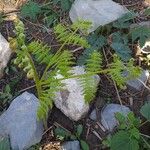
Pteridium aquilinum
Northern bracken fern · Bracken · Brackenfern · Brake · Western Brackenfern
Description
Source: leafsnapPteridium aquilinum (bracken, brake or common bracken), also known as eagle fern, is a species of fern occurring in temperate and subtropical regions in both hemispheres. Originally native to Eurasia and North America, the extreme lightness of its spores has led to it achieving a cosmopolitan distribution.
🌳 Aside from its familiar identity, braken fern functions as a distinctive bioindicator of arsenic in soil, acting as a sentinel for potential contamination. It can also signal habitat diversity, since it thrives in a range of ecosystems from forest understories to open fields. Its extensive rhizome network promotes soil stability and serves as a linchpin for numerous insects and wildlife, underscoring its ecological utility.
🎭 Restoration, Runic magic, Dreams of prophecy
Care Guide
💧 Water
The Western brackenfern is a versatile plant that thrives in a variety of climates, exhibiting resilience in both wet and dry environments. Although it prefers consistent moisture, it is also drought-tolerant and only needs watering twice a week. It grows best in dappled light and, as an outdoor fern, benefits from natural rainfall.
If I give my Western brackenfern too much or too little water, what should I do?
The Western brackenfern, despite its love for water, can actually be overwatered. This is most likely to happen if the plant sits in stagnant water or if the planter lacks drainage holes. These conditions create excessive moisture, preventing the roots from absorbing nutrients and moisture properly. Additionally, an overly moist environment can lead to fungal or bacterial diseases. The initial signs of overwatering are wilted and yellow leaves, followed by drooping or soft and mushy stems. However, it's important to consider other potential causes for the plant's symptoms since it's difficult to overwater this plant. On the other hand, underwatering the Western brackenfern is a common problem. Unless using a self-watering planter, fern owners often inadvertently let the plant become too dry. In dry conditions, the plant's appearance can quickly change from lush and green to brown and crispy. In severe cases, it may seem like the plant has completely dried up with no living fronds remaining. However, if some of the roots are still healthy, there may still be a chance to save the plant. To do so, remove all the dry and dead stems, thoroughly water the plant, and return it to its usual spot. With proper care, the plant can surprisingly recover and produce new fronds, although it may take several months to regain its previous size.
How do I water my Western brackenfern correctly?
Your Western brackenfern thrives in consistently moist soil, similar to its natural habitat. This means you may need to water it every one or two days. It's important to avoid letting the plant dry out. As soon as you notice the top layer of soil becoming slightly dry, it's time to water again. Ensure thorough watering by soaking the soil completely until water drains from the bottom of the pot. Afterward, be sure to remove any excess water to prevent the pot from sitting in a puddle. This method is highly effective in maintaining adequate moisture in the soil.
What do I need to think about when watering my Western brackenfern?
To determine how often to water your Western brackenfern, pay attention to the humidity levels in the air. Higher humidity means less frequent watering since evaporation is slower. Avoid placing the plant near heating or cooling vents as it will dry out quickly. Instead, choose a draft-free location. These ferns thrive in dappled and indirect sunlight with temperatures ranging from 55-80 degrees F (13-27 degrees C). Placing them on a warm and sunny windowsill may cause dehydration. If possible, use rainwater or distilled water for this plant. Tap water works fine in most areas, but the minerals and chemicals could result in brown leaf tips since the leaves are delicate. Western brackenfern may struggle in small pots since they dry out quickly due to the limited amount of potting medium. Providing more space in the pot is recommended. Consider using a self-watering planter for this fern. This type of pot has a wicking system that continuously supplies water to the soil from a central reservoir. This ensures a consistently moist environment for the plant's roots. Not only does this eliminate the need for frequent watering, but it also benefits the roots by maintaining a steady water supply.
☀️ Light Full shade
Showing adaptability to a range of light conditions, the braken fern does best with periods of sun alternating with shade. Although it can tolerate constant sun or continuous shade, a mix of both encourages healthier growth. An imbalance in sun exposure can reduce the fern’s vigor.
What are the sunlight requirements for Western brackenfern?
Western brackenfern needs a balanced exposure of sunlight and shade to thrive optimally. It can tolerate both full sun and full shade conditions, with full sun referring to more than 6 hours of sunlight per day and partial sun being about 3-6 hours. However, a mix of light and shade throughout the day is ideal for healthier growth. It's crucial to observe how sunlight moves through your garden and choose planting spots accordingly to ensure the plants' happiness and balance.
How does artificial lighting benefit indoor plants like Western brackenfern?
Artificial lighting is crucial for indoor plants' growth, especially when natural sunlight is insufficient, like in winter or less sunny spaces. LED lights are a popular artificial lighting choice, providing necessary wavelengths for plant growth. Full sun plants require 30-50W/sq ft, partial sun 20-30W/sq ft, and full shade 10-20W/sq ft of artificial light. The light source should be placed 12-36 inches above the plant to mimic natural sunlight, and plants typically need 8-12 hours of light per day to emulate natural daylight hours effectively.
What are the signs of improper light exposure in Western brackenfern?
Western brackenfern shows several symptoms when it's not getting the right amount of light. With too little light, it may exhibit slower or no new growth as it enters a survival mode. Chlorosis, or yellowing leaves, indicates excessive sunlight or possibly other issues affecting chlorophyll and photosynthesis. Sunscald, leaf curling, wilting, and leaf scorching are other symptoms of light-related stress, often due to too much direct sunlight leading to damaged tissues, reduced photosynthesis, and dehydration.
What solutions can address light-related issues in Western brackenfern?
To optimize growth and address light-related issues in Western brackenfern, gradual adaptation to light is key. For indoor plants, gradually shifting them to sunnier spots or using artificial lighting, such as desk or ceiling lamps on for at least 8 hours daily, can help. Outdoors, it's crucial to move plants to ideal sunlight spots gradually to prevent sunburn. If sunlight is blocked by obstacles like trees, consider pruning or transplanting smaller plants to more sun-receptive areas. Remember, while parts of the plant with insufficient sunlight might not recover, new growth should flourish under improved light conditions.
🌡️ Temperature 0–32.2°C
The braken fern favors a temperature range of 32℉ to 90℉ (0℃ to 32℃) and is native to a growth environment with cool to mild temperatures. In winter, when the temperature falls below freezing, it can adjust by entering dormancy, whereas in spring and summer it grows actively within its preferred temperature range.
What is the preferred temperature range for Western brackenfern?
The Western brackenfern, scientifically known as Pteridium aquilinum, thrives in a temperature range of 32°F to 90°F (0°C to 32°C). This plant is native to regions with cool to mild temperatures and exhibits strong cold resistance. It is well-adapted to active growth in spring and summer within its preferred temperature range. In winter, the fern can go dormant when temperatures fall below freezing, thus not requiring special frost protection measures under normal winter conditions. However, to prepare for winter's freeze, it's beneficial to water the plant abundantly before the first frost to ensure the soil remains moist, aiding in drought and water scarcity prevention during the colder months.
How does low temperature affect Western brackenfern and what are the solutions?
Western brackenfern is cold-tolerant, thriving best in temperatures above its minimum suitable growth temperature. Although it can generally weather winters above its tolerable growing temperature minimum, temperatures falling below a certain limit (not specified in the provided information) may not show immediate adverse effects but can lead to decreased sprouting or no sprouting in the following spring. The recommended solution for any parts of the plant that fail to sprout in the spring due to low winter temperatures is to remove those parts to allow for the emergence of new growth.
What are the effects of high temperature on Western brackenfern and how can they be mitigated?
High temperatures during summer can adversely affect Western brackenfern, especially when exceeding its maximum tolerable growing temperature. Symptoms of heat stress include leaves becoming lighter in color, prone to curling, and susceptible to sunburn. To mitigate these effects, it's advisable to trim away sunburned and dried-up parts of the plant. Moving the plant to a location that provides shade during the midday and afternoon sun, or employing a shade cloth, can protect it from excessive sun exposure. Additionally, watering the plant in the morning and evening helps keep the soil moist and supports plant health during hot weather.
💨 Humidity dry (<40%)
This plant prefers dry conditions, so don't mist it. However, watering it less often can also thrive in higher humidity.
🪴 Soil 4-7
🌱 Fertilizer
To promote healthy growth in Western brackenfern, apply a high-nitrogen fertilizer twice a year: once in the spring and again in late summer. Ensure you use moderate amounts to avoid causing root burn. Tailor the fertilization to the plant's lifecycle, giving more fertilizer to juvenile ferns. Additionally, incorporate organic matter into the soil and use slow-release fertilizer formulas to encourage healthy growth and minimize the risk of chemical shock.
Why should I put fertilizer on my Western brackenfern?
Fertilizing Western brackenfern is necessary for a few reasons. First, it supplies your plant with the necessary nutrients for healthy new growth. Second, these additional nutrients help maintain the overall health of the plant, and can even enhance its ability to resist diseases and pests.
When should I fertilize my Western brackenfern?
The feeding schedule of Western brackenfern depends on its location. It is not a very hungry plant, but it does need some extra nutrients. Outdoor plants should be fertilized once in the spring, while indoor ones should be fed monthly from spring to summer.
When is it not a good idea to add fertilizer to my Western brackenfern?
To ensure optimal growth for Western brackenfern, it is important to consider the timing of fertilizer application. Avoid fertilizing after early autumn, as this may lead to excessive growth just before winter. Additionally, refrain from fertilizing during hot and dry periods, as dry soil does not effectively deliver fertilizer, and stimulating growth during this time may require more water than available. Instead, it is best to apply fertilizer earlier in the season when temperatures are cooler. Lastly, be cautious of inadvertently providing double-dose of fertilizer to Western brackenfern by considering the absorption of nearby plant or lawn fertilizers.
What kind of fertilizer should I use for my Western brackenfern?
When selecting a fertilizer for Western brackenfern, there are a few options to consider. The choice of fertilizer depends on whether the plant is growing indoors or in the garden. For outdoor plants, applying a layer of mulch or compost can ensure thriving growth. On the other hand, indoor plants will benefit from a fertilizer with an N-P-K ratio of 3-1-2. However, in some situations, a general-purpose fertilizer with a balanced blend of nutrients can also be effective. Regardless, for any fertilizer used, it is important to ensure that the ratio number representing the volume of each nutrient is at 3 or lower.
How should I help my Western brackenfern grow better?
Fertilizing Western brackenfern can be done differently depending on its location. For outdoor garden plants, the best approach is to add a layer of mulch or compost to the soil around the plant's base. On the other hand, indoor plants respond well to a diluted liquid fertilizer, which should be applied before watering on a monthly basis during the spring and summer seasons.
🪴 Pot & Repot 2-3 years
When repotting Braken fern, pick a pot 1–2 inches (2.5–5.1 cm) larger that has good drainage. Use a well-draining potting mix. Repot in spring or fall, making sure the root ball is slightly lower than the rim of the flower pot. Water thoroughly after repotting and place the pot in a warm spot with indirect sunlight.
✂️ Pruning
The Western brackenfern is a fast-growing plant known for its spreading fronds. To manage its growth effectively, prune it in early spring. This will help remove dead fronds and encourage the development of new shoots. Regular pruning not only prevents the fern from becoming invasive but also promotes a healthier and more appealing plant. By allowing more light to penetrate and reducing overcrowding, you can ensure your brackenfern thrives.
🌿 Propagating
🐛 Diseases & pets
☠️ Toxicity
Characteristics
- Plant Type
- Fern
- Life Cycle
- Perennial
- Genus
- Pteridium
- Family
- Dennstaedtiaceae
- Hardiness Zone
- 3-8
- Mature Height
- 30 cm to 91 cm
- Mature Spread
- 91 cm
- Leaf Color
- Green
- Leaf Type
- Deciduous
- Planting Time
- Spring, Summer
- Harvest Time
- Mid summer, Late summer, Early fall
- Native Area
- Sri Lanka, Belize, India, Turkey, Sweden, Mexico, Guatemala, Slovakia, Madagascar, Pakistan, Slovenia, Croatia, Fiji, Belarus, Uganda, Tanzania, Germany, Paraguay, Sierra Leone, Indonesia, Cameroon, Koppen, Ethiopia, Romania, Suriname, Latvia, Belgium, Moldova, Netherlands, Portugal, Malawi, Honduras, Peru, Philippines, Bulgaria, Cyprus, Panama, Ukraine, New Zealand, China, Colombia, Afghanistan, Italy, Japan, Finland, Bosnia and Herzegovina, El Salvador, Iran, Ecuador, Costa Rica, Congo (DRC), Austria, Rwanda, Kenya, Zimbabwe, Russia, Uruguay, Iraq, Cuba, Argentina, Equatorial Guinea, Burundi, Venezuela, Estonia, Brazil, Ghana, South Korea, France, Czech Republic, South Africa, Sudan, Zambia, Poland, Greece, Guinea, Trinidad and Tobago, North Macedonia, Serbia, Lithuania, Norway, Spain, Switzerland, Bolivia, Vietnam, Denmark, Israel, Guyana, Bhutan, Nicaragua, Albania, Ireland, United Kingdom, Hungary, Thailand, Gabon