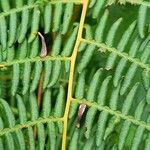
Pteridium caudatum
Southern brackenfern · Lacy bracken · Southern bracken fern
Description
Source: leafsnapPteridium caudatum, commonly known as bracken fern, is a species of fern native to various parts of the world, including North America, Europe, Asia, and Africa. This large and robust plant can grow up to 2 meters in height. Its fronds are triangular in shape and divided into smaller leaflets, giving the plant a feathery appearance. Bracken ferns thrive in open areas such as meadows and forests with ample sunlight. They can also tolerate acidic soils, making them well-suited for areas with poor soil quality. Historically, some cultures have used bracken ferns for medicinal purposes. However, they are also known to be toxic if ingested by humans or animals, as they contain carcinogenic compounds linked to an increased risk of cancer. Despite these toxicity concerns, bracken ferns remain an important part of many ecosystems worldwide. They provide habitat for wildlife and help prevent soil erosion.
Care Guide
💧 Water Every 7 days
☀️ Light Full shade
Southern brackenfern is native to habitats such as forest understories or rocky areas that provide natural shade. It prefers Full Shade but can tolerate Partial Sun.
What are the sunlight requirements for Southern brackenfern (Pteridium caudatum)?
The Southern brackenfern, known botanically as Pteridium caudatum, thrives under specific sunlight conditions. It requires 'full sun' exposure, which means it should receive above 6 hours of sunlight each day. Alternatively, it can grow under 'partial sun,' indicating it needs about 3-6 hours of sunlight daily. When deciding on a location for your Southern brackenfern, it's important to observe the movement of sunlight through your garden throughout the day. Finding the right balance between light and shade ensures the plant's health and happiness, making such observations crucial for gardening success.
🌡️ Temperature 15–37.8°C
Southern brackenfern comes from tropical areas, where the climate is generally warm and humid. Consequently, it is well suited to high heat and moisture. It does not tolerate abrupt temperature changes and prefers a steady thermal environment, so avoiding temperature fluctuations indoors is important. It typically cannot endure cold conditions and requires warmer temperatures for growth. If the environmental temperature falls too low, the plant may stop growing or even die.
💨 Humidity
🪴 Soil 6-7
🌱 Fertilizer
🪴 Pot & Repot
✂️ Pruning
The Southern brackenfern has fern-like fronds and thrives with regular pruning. Trimming away the old fronds in early spring encourages healthy growth, improves air circulation, lowers the risk of disease, and enhances its appearance. This practice ensures the plant remains a strong presence in your garden while following its natural growth cycle.
🌿 Propagating
🐛 Diseases & pets
☠️ Toxicity
Characteristics
- Plant Type
- Fern
- Life Cycle
- Perennial
- Genus
- Pteridium
- Family
- Dennstaedtiaceae
- Hardiness Zone
- 8-11
- Mature Height
- 30 cm to 91 cm
- Mature Spread
- 0.91 m to 1.52 m
- Leaf Color
- Forest Green, Dark Green
- Leaf Type
- Deciduous
- Planting Time
- Spring, Summer, Autumn
- Native Area
- Belize, Honduras, Mexico, Guatemala, Peru, Panama, Jamaica, Colombia, Bahamas, Cuba, Bolivia, Venezuela, Guyana, El Salvador, Nicaragua, Brazil, Ecuador