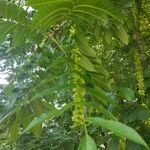
Pterocarya fraxinifolia
Caucasian Walnut · Caucasian Wingnut · Ash-leaf Wingnut · Caucasian Pterocarya · Ash-leaved Walnut
Description
Source: leafsnapPterocarya fraxinifolia, commonly known as the Caucasian wingnut, is a deciduous tree native to the Caucasus region of Eurasia. As a member of the walnut family, this tree can grow up to 30 meters tall and features a broad, expansive crown. Its pinnate leaves can reach up to 60 centimeters in length and typically consist of 11 to 19 leaflets. In the spring, the tree produces small greenish-yellow flowers, followed by distinctive winged fruits that resemble those of maple trees. Pterocarya fraxinifolia is often cultivated as an ornamental tree due to its attractive foliage and unique fruiting structures. It thrives in moist soils and can tolerate flooding, making it an ideal choice for planting near water bodies such as rivers or ponds. Beyond its ornamental appeal, Pterocarya fraxinifolia has been utilized in traditional medicine systems like Ayurveda and Unani. The bark has been used to treat conditions such as fever, diarrhea, and dysentery, while the leaves have been applied to treat skin diseases. In summary, Pterocarya fraxinifolia is a fascinating plant that offers both aesthetic and medicinal benefits, making it a valuable addition to any garden or landscape project.
Care Guide
💧 Water Every 7 days
Originating from riverbanks, the Caucasian walnut thrives in consistently moist soil, but it can also withstand moderate drought conditions. To ensure the tree remains properly hydrated, water it every three weeks. The tree's strong root system has adapted to the changing water levels of its native habitat, which contributes to its resilience against varying moisture conditions.
☀️ Light Full sun
The caucasian walnut gains considerable advantage from a full spectrum of light throughout the day, which helps it thrive and grow healthily. Despite this preference, it does not require constant sunlight exposure. In its natural environment it encounters varying light intensities over the course of a day. Excessive exposure can cause sunburn, while too little light may impede its healthy growth.
What are the sunlight requirements for Caucasian walnut?
Caucasian walnut (Pterocarya fraxinifolia) thrives with full sun exposure, needing above 6 hours of sunlight daily. However, it's important to watch the movement of sunlight through your garden to find spots that offer a good balance of light and shade, ensuring the plant's happiness. Despite its preference for full sunlight, the Caucasian walnut doesn't need constant direct exposure to thrive. It grows best with a full spectrum of light, experiencing varying intensities throughout the day. Insufficient light can hinder healthy growth, while too much direct sunlight can cause sunburn.
How can artificial lighting support Caucasian walnut's growth indoors?
Indoor Caucasian walnut plants require adequate lighting for optimal growth. When natural sunlight is insufficient, artificial lighting becomes vital. LED lights are a popular choice because they can provide specific wavelengths needed by plants. For full sun plants, 30-50W/sq ft of artificial light is recommended, 20-30W/sq ft for partial sun plants, and 10-20W/sq ft for full shade plants. The light source should be placed 12-36 inches above the plant, mimicking natural sunlight's distance. The plants typically need 8-12 hours of light per day, varying by plant species to simulate natural daylight hours efficiently.
What symptoms indicate light deficiency or overexposure in Caucasian walnut?
Symptoms of light deficiency in Caucasian walnut include smaller new leaves, leggy or sparse growth, faster leaf drop, slower or no new growth, and lighter-colored or chlorotic new leaves. On the other hand, overexposure can lead to chlorosis, sunscald, leaf curling, wilting, and leaf scorching. These symptoms show the plant's struggle with too much or too little sunlight, affecting its health and growth.
What are some solutions to improve sunlight exposure for Caucasian walnut?
To improve sunlight exposure for Caucasian walnut, gradually move plants to sunnier locations, ensuring they receive at least 6 hours of direct sunlight daily. Use south-facing windows for indoor plants and keep curtains open. Consider artificial lighting for large or immovable plants, with lamps on for no less than 8 hours daily or invest in grow lights. Outdoors, gradually move plants to optimize sunlight without causing sunburn. Minimize obstructions by pruning trees or relocating plants to sunnier spots. For plants in the ground, consider transplanting during the dormant season to areas with better sunlight and drainage.
🌡️ Temperature 5–32.2°C
Caucasian walnut is native to areas where temperatures usually range from 41 to 89.6 °F (5 to 32 ℃). It grows best under these temperature conditions. Seasonal adjustments may be needed to replicate these temperatures for optimal growth.
What are the ideal temperature conditions for growing Caucasian walnut?
Caucasian walnut, or Pterocarya fraxinifolia, thrives in its native temperature range of 41 to 89.6 °F (5 to 32 °C). It is well-adapted to these conditions, showing strong cold resistance, making it unnecessary to take special frost protection measures in winter. However, if winter temperatures are expected to fall below the species' lower temperature tolerance limit, it's crucial to protect the plant by wrapping its trunk and branches with non-woven fabric or cloth. Additionally, abundant watering before the first freeze in autumn is recommended to keep the soil moist, helping prevent winter and early spring drought.
How should I care for a Caucasian walnut during cold and hot temperature extremes?
During cold weather, it's important to ensure that the temperature stays above the minimum tolerable limit for Caucasian walnut to prevent branches from becoming brittle and dry, which could result in no new shoots emerging in spring. The recommended action is to prune away any dead branches. In contrast, during hot weather, it's critical to keep the plant below its maximum tolerable temperature to avoid leaf discoloration, tip dryness, and increased sunburn susceptibility. This can be managed by trimming sunburned and dried-up parts, moving the plant to a shaded area during the midday and afternoon, or using a shade cloth. Additionally, maintaining soil moisture with morning and evening watering is beneficial.
💨 Humidity
🪴 Soil 6-7
🌱 Fertilizer
The timing for fertilizing a Caucasian walnut is vital. Apply fertilizer in early spring and then every month until early summer. Fertilizer promotes attractive blooms and supplies energy both during dormancy and throughout active growth.
🪴 Pot & Repot
✂️ Pruning
To promote healthy growth and maintain the shape of a Caucasian walnut tree, prune it in early spring. Start by removing any dead or diseased branches, and thin out overcrowded areas to improve air circulation. Make sure to use clean, sharp tools to prevent infections and to help the tree develop a vibrant, attractive structure for the growing season.
🌿 Propagating
🐛 Diseases & pets
☠️ Toxicity
Characteristics
- Plant Type
- Tree
- Life Cycle
- Perennial
- Genus
- Pterocarya
- Family
- Juglandaceae
- Hardiness Zone
- 5-8
- Mature Height
- 9.14 m to 18.29 m
- Mature Spread
- 20.12 m
- Leaf Color
- Green
- Leaf Type
- Deciduous
- Flower Color
- Green, Yellow
- Flower Size
- 2.03 cm to 3.05 cm
- Bloom Time
- Late spring, Early summer
- Planting Time
- Spring, Summer
- Harvest Time
- Mid summer