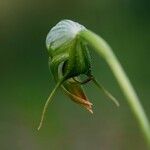
Pterostylis nutans
Nodding greenhood
Description
Source: leafsnapPterostylis nutans, commonly known as the nodding greenhood or the parrot's beak orchid, is a species of orchid endemic to eastern Australia. Nodding greenhoods have flowers which "nod" or lean forwards strongly, have a deeply notched sinus and a curved, hairy labellum.
Care Guide
💧 Water
The Parrot's Beak Orchid flourishes in high humidity and needs watering every week to grow well. As an evergreen, it keeps its leaves throughout the year, so it's important to maintain consistent moisture. This plant is popular for indoor gardening, where creating a humid environment similar to its natural habitat is crucial for its success.
☀️ Light Partial sun
Parrot's beak orchid naturally occurs in habitats such as forest understories or rocky areas, where it receives natural shade. It prefers partial sun but can tolerate full sun or full shade, showing its versatile and hardy nature.
What are the sunlight requirements for a Parrot's beak orchid?
The Parrot's beak orchid (Pterostylis nutans) requires varying amounts of sunlight depending on its location. For partial sun exposure, it needs about 3-6 hours of sunlight, whereas for full sun conditions, it requires more than 6 hours of sunlight. It's important to observe how sunlight moves through your garden to find the ideal spot that offers a perfect balance of light and shade, ensuring the plant's well-being.
What is the botanical name of the Parrot's beak orchid?
The botanical name of the Parrot's beak orchid is Pterostylis nutans.
🌡️ Temperature 15–37.8°C
Parrot's beak orchid can tolerate a wide range of temperatures, but its distribution may still be restricted by particular combinations of moisture and heat. It does best in warm summers with sufficient rainfall or watering. Extended periods of cloudy, rainy weather or sustained high temperatures increase the chance that the orchid will die. In winter, protecting it from cold boosts its survival rate.
What is the common name of Pterostylis nutans?
The common name of Pterostylis nutans is Parrot's beak orchid. This name is inspired by the unique shape of the flower that resembles a parrot's beak.
What is the botanical name of the Parrot's beak orchid?
The botanical name of the Parrot's beak orchid is Pterostylis nutans. This name refers to the genus and species within the botanical classification system.
💨 Humidity
🪴 Soil 5-7
🌱 Fertilizer
For Parrot's beak orchid, the main time to apply fertilizer is in early spring when the flowers are forming. Using the appropriate fertilizer promotes better blooms and helps the Parrot's beak orchid produce attractive flowers. Fertilizing in early spring ensures strong flowering during the season and supplies energy for dormant growth periods.
🪴 Pot & Repot
✂️ Pruning
The Parrot's Beak Orchid is known for its distinctive foliage and elegant flowers. To encourage healthy growth and flowering, prune the plant from early to late spring. Remove any withered leaves and spent stems during this time. Be sure to use clean, sharp tools to minimize stress on the plant and enhance its vitality. This approach promotes robust development and helps prevent disease.
🌿 Propagating
🐛 Diseases & pets
☠️ Toxicity
Characteristics
- Plant Type
- Herb
- Life Cycle
- Perennial
- Genus
- Pterostylis
- Family
- Orchidaceae
- Hardiness Zone
- 8-11
- Mature Height
- 10 cm to 30 cm
- Mature Spread
- 5 cm to 10 cm
- Leaf Color
- Dark Green
- Leaf Type
- Deciduous
- Flower Color
- Green
- Flower Size
- 1.02 cm to 1.52 cm
- Bloom Time
- Fall
- Planting Time
- Spring
- Harvest Time
- Winter
- Native Area
- New Zealand