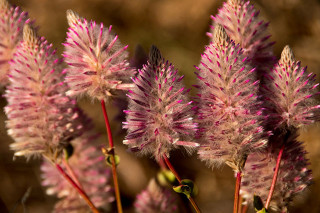
Ptilotus exaltatus
Lamb's tail · Pink mulla mulla · Tall mulla mulla
Description
Source: leafsnapPink Mulla Mulla (Ptilotus exaltatus), also known as the Tall Mulla Mulla, is well-known for its stunning spires of plump, feathery bottlebrush-shaped blooms in a gorgeous silver-pink hue. This cone-shaped plant is one of the largest and most unusual of the overarching ptilotus genus's roughly one hundred species. These plants feature thick and lush silver-green foliage that is beautiful. Its delicate plumes stand approximately four inches tall and gently drape over the leathery leaves. The long-lasting blossoms of the ptilotus, which is native to Australia's dry, arid plains, seem soft and fuzzy, but they are extremely harsh and bristly to the touch. The texture of the blossoms allows them to withstand a wide range of weather conditions. They have a similar look to celosia and are both members of the Amaranthaceae family.
Care Guide
💧 Water 1-2 times a month
Tall mulla mulla is well-suited to arid environments, showing excellent drought tolerance. It needs minimal watering, typically only once every 1-2 weeks. Although it is hardy in full sun, providing consistent moderate watering during the growing season encourages optimal flowering.
☀️ Light Full sun
Tall mulla mulla grows vigorously in locations that receive abundant sunlight throughout the day. The lack of shade in its native habitat lets it endure continuous sun exposure without harm. Excessive or insufficient sunlight can negatively affect the plant's health.
🌡️ Temperature 20–37.8°C
Tall mulla mulla is native to regions where temperatures range from 68 to 100 °F (20 to 38 ℃). It does best in these warm conditions. In cooler climates, seasonal temperature adjustments may be necessary to meet its requirement.
💨 Humidity
🪴 Soil 6-6
🌱 Fertilizer
Proper fertilization is vital for the health and appearance of Tall mulla mulla. Fertilize Tall mulla mulla during summer, repeating the application monthly throughout the season. Nutrients provide the energy for growth and help maintain the plant’s parts. Regular fertilization improves Tall mulla mulla’s flowering, ensuring the best blooms.
🪴 Pot & Repot 2-3 years
Repot tall mulla mulla every 2-3 years in the spring to encourage bushy growth. Choose a large, well-draining pot to prevent root crowding. After repotting, place the plant in indirect light and water it consistently. Handle the plant with care to protect its unique woolly flower spikes.
✂️ Pruning
Tall mulla mulla is characterized by its upright flowers and silvery leaves. To encourage new growth and maintain its shape, prune the plant from late winter to early spring. Be sure to remove any dead stems to improve air circulation and increase the plant's resistance to disease. For the best results and overall plant health, always use clean, sharp tools when pruning.
🌿 Propagating
🐛 Diseases & pets
☠️ Toxicity
Characteristics
- Plant Type
- Herb
- Life Cycle
- Perennial, Annual
- Genus
- Ptilotus
- Family
- Amaranthaceae
- Hardiness Zone
- 10-11
- Mature Height
- 30 cm to 46 cm
- Mature Spread
- 30 cm
- Leaf Color
- Light Green, Gray
- Leaf Type
- Evergreen
- Flower Color
- Pink
- Flower Size
- 2.54 cm
- Bloom Time
- Late spring, Summer, Early fall
- Planting Time
- Spring, Summer, Autumn
- Harvest Time
- Mid summer, Late summer, Fall
- Native Area
- Australia