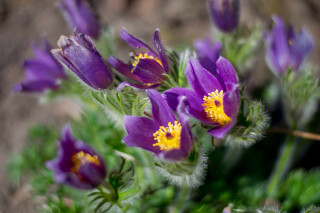
Pulsatilla vulgaris
European Pasqueflower · Pasqueflower · Common pasqueflower · Common Pasque-flower
Description
Source: leafsnapPulsatilla vulgaris, commonly called Pasque flowers, are herbaceous perennials belonging to the Ranunculaceae or buttercup family. Native to the grasslands of Europe, Pasque flowers are sunny Easter plants that can be observed in meadows and forest floors. They feature upright stalks and light green, fern-like, rosette-forming leaves. In the spring, purple flowers bloom on fuzzy stems, each with purple sepals and golden stamens. Pasque flowers are open, bell-shaped, and come in various hues of lilac, purple, and violet.
Care Guide
💧 Water 1 to 2 times a week
The pasque flower, which is well-suited for temperate grasslands, thrives in well-drained soil and can endure short periods of drought. To keep it healthy, it needs to be watered weekly. After flowering, the plant enters a dormant phase and requires less water during this time.
☀️ Light Full sun
The pasque flower depends on generous sunlight for healthy growth. Native to a habitat with plentiful sun, it performs well even when exposed to less light. An extreme shortage or an excess of sunshine can result in poor plant health.
🌡️ Temperature 5–32.2°C
Pasque flower thrives in a moderate climate, native to regions where temperatures commonly fall between 68 and 95 °F (20 and 35 ℃). During cooler seasons, ensure the temperature does not drop below that range for optimal growth.
💨 Humidity
🪴 Soil 6-7
🌱 Fertilizer
For Pasque flower, the best time to fertilize is in early spring while the flowers are forming. The proper fertilizer promotes improved blooms and helps the Pasque flower produce attractive flowers. Fertilizing in early spring ensures excellent flowering during the season and supplies energy for dormant growth phases.
🪴 Pot & Repot 2-3 years
Repot the pasque flower every 2 to 3 years in early spring, using a deep container to accommodate its taproot. Ensure the pot has good drainage, and water the plant sparingly after repotting. Place the pasque flower in an area with partial sunlight to promote vibrant growth and to maintain the health of its bell-shaped blossoms and feathery foliage.
✂️ Pruning
The Pasque flower features bell-shaped blossoms and feathery leaves. To enhance its health and appearance, it's best to prune the plant from early to late spring, right after it blooms. This process involves removing spent flowers and dead stems, which helps improve air circulation. When pruning, always use clean tools and avoid cutting into the woody base to encourage vigorous and healthy growth.
🌿 Propagating
🐛 Diseases & pets
☠️ Toxicity
All parts of Pasque flowers are considered toxic. Ingesting large quantities of the plant may cause an upset stomach. Stay on the side of caution by keeping these plants out of the reach of children and pets.
Characteristics
- Plant Type
- Herb
- Life Cycle
- Perennial, Annual
- Genus
- Pulsatilla
- Family
- Ranunculaceae
- Hardiness Zone
- 4-8
- Mature Height
- 20 cm
- Mature Spread
- 20 cm
- Leaf Color
- Green
- Leaf Type
- Deciduous
- Flower Color
- Purple, Violet
- Flower Size
- 2.54 cm to 7.62 cm
- Bloom Time
- Mid spring, Late spring
- Planting Time
- Spring
- Harvest Time
- Late spring, Early summer
- Native Area
- Norway, Germany, Austria, Sweden, Switzerland, Denmark, Netherlands, Poland, United Kingdom, Belgium, France