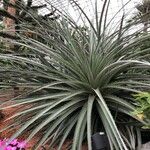
Puya chilensis
Chilean Puya
Description
Source: leafsnapPuya chilensis, a flowering plant species of the Bromeliaceae family, is indigenous to the Andes Mountains of Chile and Argentina. It thrives in rocky, arid habitats at high elevations. The plant features a rosette of spiky leaves that can grow up to 2 meters long and 10 centimeters wide. These leaves are armed with sharp, needle-like spines that protect the plant from herbivores. Puya chilensis showcases tall spikes of vivid blue-green flowers, which can extend up to 3 meters in height. The flowers, clustered densely along the spike, bloom from late spring through early summer. This plant is remarkably adapted to survive in harsh environments with minimal water and nutrients. It collects moisture from fog or dew via specialized leaf structures known as trichomes. Additionally, it has a unique reproductive strategy, producing large quantities of nectar at night to attract nocturnal pollinators such as bats and moths. Puya chilensis plays a vital role in conservation efforts, providing habitat for numerous animals, including birds and insects. It also serves as an important food source for local communities, who utilize its nectar to make syrup or ferment it into an alcoholic beverage known as "miel de Puya." However, the populations of Puya chilensis are declining rapidly due to habitat loss caused by human activities like mining and agriculture, making conservation efforts critical for its survival.
Care Guide
💧 Water Every 7 days
The yellow-flowered chagual is native to the arid regions of Chile and is highly tolerant to drought. It thrives in conditions with minimal moisture and requires watering only once every 2-3 weeks. To ensure healthy growth, it should be planted outdoors in an area with full sun exposure. Providing infrequent but deep watering mimics the natural rainfall patterns that are crucial for its survival.
How should I water Yellow flowered chagual plants?
To produce a healthy Yellow flowered chagual plant, there are a few methods you can follow. Firstly, placing a saucer under the potted plant prevents the roots from sitting in excessive water and maintains consistent humidity. This also allows for water evaporation. Another approach is the soak and dry method. This assists in the development of a strong root system for the Yellow flowered chagual, as it mimics their natural habitat on rocky cliffs and crevices. These plants experience heavy downpours and flash floods that can last up to 24 hours, followed by weeks of drought. By replicating these conditions, you can greatly benefit the plant's overall health.
What can I do if I give my Yellow flowered chagual plant too much or too little water?
Overwatering the Yellow flowered chagual can harm the plant and cause root rot. This can happen if the soil is constantly wet or if the potting mix becomes waterlogged. Overwatered plants show signs such as yellowing leaves that feel mushy and soft. Drooping, wilting, and yellowing leaves are indications of excessive watering. Lack of air circulation can lead to root or plant death. To prevent this, water the plant correctly when the soil becomes dry. On the other hand, under watering can impede plant growth. The plants may appear wilted, but they can recover when given enough water. It's important to allow the plant to dry between waterings for optimal growth. Signs of underwatering include wilting, dead leaf tips, and slow growth. Sagging is a common symptom due to loss of cell rigidity. Brown leaf tips can cause entire leaves to die, and new leaf growth may be slower and smaller with a color that is less vibrant than existing leaves.
How often do I need to water my Yellow flowered chagual plant?
The Yellow flowered chagual needs to be watered at least once every 2 weeks. Unlike succulents, they are xerographic and can go dormant for weeks without water. They don't store water in their leaves, so it's important to balance the moisture they receive. Only water them when the container is dry but slightly moist. In the fall, watering is not necessary if there is sufficient rain. The soil won't dry out quickly, so stop watering when the temperature is below 40 ℉. During winter, the plants go dormant, so no watering is needed. Let them rest and recover for a few weeks. In the spring, water deeply and thoroughly once every two weeks for new leaf growth. In the summer, water once a week when it's hot and dry. While drought tolerant, it's not ideal for their growth to go without water for a few weeks.
How much water does my Yellow flowered chagual plant need?
Yellow flowered chagual requires 5% to 24% moisture to grow. If you see that the soil is dry, either on the ground or in a pot, water the plant until water begins to drip from the bottom of the pot. Avoid watering the soil until it is very dry. These plants prefer not to have wet feet, so give them water when they really need it. When planting yellow flowered chagual in the garden during hot weather, make sure to water them at least once a week. They may already be getting moisture from nearby trees or enough rainwater, so only water them if the soil is very dry.
How can I make sure I'm giving enough water to my Chagual plant with yellow flowers?
To evenly distribute the water in the pot, water the soil generously until you see water dripping from the bottom of the pot. When watering chagual plants with yellow flowers, it is important to use well-draining soil and follow the soak and dry method. Check the soil at least once a week to make sure the roots are not becoming too dry. Additionally, you may find it helpful to keep track of your watering schedule by using applications or taking notes.
☀️ Light Full sun
Yellow flowered chagual does best with a plentiful amount of sunlight, reflecting the bright, sunlit environments where it originates. Without some protection from intense sun it can suffer in its development and become vulnerable to damage. To grow healthily, yellow flowered chagual needs generous light exposure during all of its growth stages.
What are the sunlight requirements for Yellow Flowered Chagual?
The Yellow Flowered Chagual (Puya chilensis) requires above 6 hours of sunlight to thrive, mimicking its native sun-drenched landscapes. It's important to choose spots in your garden that provide a perfect balance of light and shade, ensuring the plant's growth and happiness. Lack of sufficient sunlight can make the plant susceptible to harm. Observing the movement of sunlight through your garden can help identify the ideal locations with the necessary light exposure.
How can artificial lighting benefit indoor Yellow Flowered Chagual plants?
For indoor Yellow Flowered Chagual plants, artificial lighting can be a vital solution for optimal growth, especially when natural sunlight is insufficient. LED lights, being customizable to provide specific wavelengths of light needed by plants, are a popular choice. The requirements vary with full sun plants needing 30-50W/sq ft, partial sun plants 20-30W/sq ft, and full shade plants 10-20W/sq ft of artificial light. The light source should be placed 12-36 inches above the plant, mimicking natural sunlight for 8-12 hours per day to promote faster, healthier growth.
What are the signs of light deficiency or excessive sunlight in Yellow Flowered Chagual?
Signs of light deficiency in Yellow Flowered Chagual include small new leaves, leggy or sparse growth, faster leaf drop, slower or no new growth, and lighter-colored new leaves. Excessive sunlight can cause chlorosis (leaves turning yellow), sunscald (pale, bleached areas on plant tissue), leaf curling (a defense mechanism to minimize water loss), wilting (loss of turgor pressure), and leaf scorching (brown, dry edges on leaves). These symptoms indicate the plant's struggle with its light environment and may require adjustments in its care.
What are some solutions for Yellow Flowered Chagual experiencing light-related issues?
For Yellow Flowered Chagual facing light-related issues, gradual exposure to sunlight is key. Move plants to sunnier locations each week to adapt, aiming for at least 6 hours of direct sunlight daily. Use a south-facing window for indoor plants or consider artificial lights if moving the plant is not feasible. For outdoor plants, avoiding sudden changes in light intensity is important to prevent sunburn. Minimize obstructions by pruning or transplanting to sunnier locations. Note that affected parts of the plant may not recover, but new growth will be healthy with improved light exposure.
🌡️ Temperature 15–37.8°C
The yellow-flowered chagual prefers warm conditions. If ambient temperatures fall too low, the plant may stop growing or suffer frost damage. It tolerates high heat and humidity well and needs a steady level of moisture in its surroundings. However, excessively high temperature and humidity can make it prone to fungal infections. In dry environments, regular watering and misting are necessary to maintain adequate air humidity. The plant is sensitive to sudden temperature shifts, so keeping the temperature relatively stable is important.
What is the ideal environment for Yellow flowered chagual?
Yellow flowered chagual, botanically known as Puya chilensis, thrives in warm environments and has a strong tolerance for high temperatures and humidity. It requires consistent moisture in the surroundings to grow optimally. The plant's growth may cease or suffer damage if exposed to too low temperatures or frost. In dry conditions, maintaining adequate air humidity through regular watering and misting is necessary. This tropical plant is sensitive to sudden temperature shifts, thus maintaining a relatively stable temperature is important. During winter, it should be kept in places where the temperature is above 5°C and moved indoors if temperatures drop below -20°C.
How should Yellow flowered chagual be cared for during winter?
During the winter, Yellow flowered chagual requires special care, especially when the minimum temperature drops below -20°C. It is advisable to move the plant indoors and place it near a south-facing window to ensure it receives sufficient sunlight. Keeping it away from heaters or air conditioners will prevent the air around it from becoming too dry. The indoor temperature should be kept above 5°C for the plant’s well-being. If the temperature falls below this threshold, watering should be reduced, and the plant should only be watered again once the soil surface is dry to avoid root rot. For outdoor overwintering, place the plant in a sheltered, sunny location. Consider setting up a temporary greenhouse or using protection like plastic film or fabric wraps to shield the plants from cold. Watering should be minimized to keep the soil slightly moist.
What are the symptoms and solutions for Yellow flowered chagual exposed to low temperatures?
Yellow flowered chagual is not tolerant of low temperatures and thrives best above 5°C. It should remain above -20°C during winter. When the temperature drops below -25°C, the plant may not show immediate symptoms, but within three to five days, leaves may start to wither, and the plant can dry up in severe cases. The solution involves trimming the frostbitten areas and moving the plant to a warm, indoor environment. It’s crucial to select a placement near a south-facing window for ample sunlight while avoiding spots near heaters or air conditioning vents to keep the air from becoming excessively dry.
How can Yellow flowered chagual be protected from high temperatures?
Yellow flowered chagual should ideally be kept below 35°C during hot summer months. When the temperature exceeds 41°C, the plant's leaves can become dry and withered at the tips, and it may stop growing altogether, becoming prone to root rot. Excessive direct sunlight can also cause sunburn on the plant. To protect Yellow flowered chagual from high temperatures, remove any withered parts and relocate the plant to a shaded area during the midday and afternoon sun. Water the plant in the morning and evening to ensure both the plant and its environment remain moist.
💨 Humidity
🪴 Soil 5-7
🌱 Fertilizer
Appropriate fertilization is essential for Yellow flowered chagual's health and appearance. Fertilize Yellow flowered chagual during summer, repeating the treatment monthly throughout the season. Nutrients support growth and help maintain the plant's parts. Fertilizing boosts Yellow flowered chagual's floral display, ensuring the best blooms.
Why should I put plant food on my Yellow flowered chagual?
Fertilization is important for the Yellow flowered chagual because it provides essential nutrients for growth. Although the fertilization needs for this plant are relatively low, regular fertilization can greatly benefit its survival and promote the development of beautiful, long-lasting flowers. Therefore, those seeking to enhance the appearance of their Yellow flowered chagual should consider annual fertilization.
When should I fertilize my Yellow flowered chagual plant for the best results?
The best time to fertilize a Yellow flowered chagual is in late winter to early spring when it is coming out of dormancy and starting active growth. Fertilizing at this time helps promote healthy growth and a good start for the season. While early spring is ideal, it is also okay to fertilize in the fall. However, it is not recommended to feed the plant during summer or winter.
When is the best time to not put fertilizer on my Yellow flowered chagual?
To properly care for your Yellow flowered chagual, it is important to only fertilize it during late winter and early spring. This plant has low fertilization needs, so a single feeding per year is sufficient. Fertilizing it during spring, summer, and fall can result in overfertilization and its associated problems. However, if you skipped fertilizing in spring, it is acceptable to feed the plant in fall. Additionally, there is no need to fertilize the Yellow flowered chagual during winter. This is because the plant goes into a dormant growth phase during this time and does not produce new growth. As a result, it is not recommended to fertilize it for most of the winter.
What kind of fertilizer does my Yellow flowered chagual plant need?
For a Yellow flowered chagual plant, any general-purpose fertilizer with a balanced amount of the three main plant nutrients will work well. However, some specific nutrient blends can be even more beneficial. Many gardeners believe that higher levels of phosphorus result in stronger roots and better flowers. Since Yellow flowered chagual is a flowering plant, using a phosphorus-rich fertilizer may be the best option. It doesn't matter if the fertilizer is in granular or liquid form, as long as it contains plenty of nutrients. In addition to manufactured fertilizers, you can also use organic methods to improve the soil for your Yellow flowered chagual. Compost, manure, and similar materials are effective in creating a healthy growing medium for the plant.
How should I provide nutrients for my Yellow flowered chagual plant?
To fertilize a Yellow flowered chagual, the most common method is to apply either granular or pellet fertilizer to the soil around the plant. It's important to do this as the plant is transitioning from its winter dormant growth phase to active growth. In early spring, wait until the plant starts to push shoots through the soil, and then apply the fertilizer. Alternatively, some people may opt for liquid fertilizer, in which case it should be mixed with water before applying. Regardless of the type of fertilizer used, it's recommended to moisten the soil before, during, and after application.
🪴 Pot & Repot
✂️ Pruning
The yellow-flowered chagual is a plant with spiky foliage and vibrant yellow blooms. For best results, prune it between late winter and early spring by removing dead leaves and spent flower stalks to improve growth and air circulation. Be careful, as the leaf edges are sharp. Regular maintenance not only enhances its appearance but also promotes healthy growth.
🌿 Propagating
🐛 Diseases & pets
☠️ Toxicity
Characteristics
- Plant Type
- Herb
- Life Cycle
- Perennial
- Genus
- Puya
- Family
- Bromeliaceae
- Hardiness Zone
- 8-11
- Mature Height
- 46 cm
- Mature Spread
- 91 cm
- Leaf Color
- Green
- Leaf Type
- Evergreen
- Flower Color
- Green, Yellow, Blue, Orange
- Flower Size
- 30.48 cm
- Bloom Time
- Early summer, Mid summer
- Planting Time
- Spring, Autumn
- Harvest Time
- Late summer, Early fall