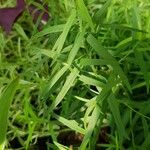
Pycnanthemum tenuifolium
Slender mountain-mint · Narrow-leaf mountain-mint · Common horsemint · Narrowleaf mountainmint · Narrowleaf Mountain-mint
Description
Source: leafsnapPycnanthemum tenuifolium, commonly known as slender mountain mint, is a herbaceous perennial plant belonging to the mint family. Native to eastern North America, it thrives in dry, open woods, prairies, and along roadsides. The plant typically reaches a height of 2 to 3 feet and features slender stems with narrow, aromatic leaves that are about 2 to 3 inches long. When crushed, the leaves emit a minty scent. Pycnanthemum tenuifolium produces small clusters of white or pale pink flowers that bloom from mid-summer to early fall. Slender mountain mint is an important plant for pollinators, attracting bees, butterflies, moths, and other beneficial insects with its nectar-rich flowers. Additionally, it has medicinal properties, containing essential oils historically used in traditional medicine to treat various ailments such as headaches and digestive issues. Overall, Pycnanthemum tenuifolium is an attractive native plant offering numerous benefits to both wildlife and humans. It makes a great addition to any garden or natural area restoration project.
🌳 A notable feature of slender mountain mint is that it acts as an ecological cornerstone by attracting a range of beneficial insects, including bees and butterflies. It is valued in pollinator gardens and is frequently planted to boost biological control in agricultural systems by drawing in natural predators of pests.
Care Guide
💧 Water Every 7 days
Slender mountain mint flourishes in humid environments, preferring consistently moist soil without becoming waterlogged. To maintain the right moisture level, water it twice a week. While typically grown outdoors, this plant is resilient during the growing season, effectively using water to sustain its lush foliage.
How should I water my Slender mountain mint plant?
To properly water the Slender mountain mint, it is recommended to use filtered water at room temperature. Tap water may contain harmful particles, so filtering is preferable. The plant prefers warmer water as it originates from a warm environment and cold water can be a shock. It is important to avoid overhead watering to prevent foliage issues. Instead, gently water the soil until it is thoroughly soaked. This helps moisten the roots and allows them to spread and absorb nutrients effectively.
What should I do if I give my Slender mountain mint too much or too little water?
Overwatering and underwatering are both harmful to your Slender mountain mint's health, but overwatering is more commonly problematic. When this plant gets too much water, its stems and leaves may wilt and turn yellow. Prolonged overwatering can also lead to diseases like root rot, mold, and mildew, which can be fatal. Underwatering is less common because the Slender mountain mint can tolerate drought fairly well. However, there is still a possibility of underwatering, which is evidenced by brittle, brown leaves. It's important to recognize the signs of overwatering early when caring for your Slender mountain mint because some diseases like root rot cannot be fixed if left too long. If you see early signs of overwatering, reduce your watering schedule immediately. Additionally, assess the soil quality where your Slender mountain mint is planted. If the soil drains poorly, replace it with a loose, well-draining potting mix. Conversely, if your plant shows signs of receiving too little water, simply water more regularly until those signs go away.
How frequently should I water my Slender mountain mint plant?
If your Slender mountain mint is in a pot, the most accurate way to determine if it needs water is to stick your finger into the soil. If the top two to three inches of soil feel dry, it's time to water it. If your Slender mountain mint is planted outdoors in the ground, you can use a similar method to test the soil. Again, if the top few inches of soil have dried out, it's time to water. In the spring and early fall, this usually means watering once a week. However, during extremely hot weather, you may need to water it twice or more per week. It's important to note that mature, well-established Slender mountain mint can handle drought conditions quite well.
How much water does my Slender mountain mint plant require?
To properly water your Slender mountain mint, don't hesitate to give it a generous amount of water. Wait until the top two to three inches of soil are dry, and then thoroughly soak the soil. Make sure to add enough water so that it flows out of the drainage holes at the bottom of the pot. If you don't see excess water draining, it means you haven't watered enough, but avoid letting water accumulate in the soil, as this can harm the plant. On the other hand, if water doesn't drain properly, it could be due to poorly draining soil, which is harmful for the plant's health. If the plant is outside, 1 inch of rain per week should be sufficient.
How do I correctly water my Slender mountain mint at different stages of growth?
The water needs of the Slender mountain mint can vary depending on its growth stages. Initially, when the plant is young or if it has been recently transplanted, it will require more water than usual. During these stages, the Slender mountain mint focuses on developing new roots to support future growth, and these roots perform best with slightly higher moisture levels. As the plant matures over a few seasons, it will require less water overall. Additionally, during the bloom period, when the plant is producing flowers, it may need more water due to the moisture-intensive process of flower development.
☀️ Light Full sun
Slender mountain mint performs best when it gets bright sun for most of the day, though it can cope with less. Too little light can result in spindly growth and fewer blooms. Excessive shade may reduce the plant’s vigor, while too much sun can scorch the leaves.
What are the sunlight requirements for Slender Mountain Mint?
Slender Mountain Mint thrives best in full sun conditions, requiring above 6 hours of sunlight daily to flourish optimally. However, it can also tolerate partial sun, managing well with about 3-6 hours of sunlight. It's essential to observe how sunlight moves through your garden to choose spots that offer the ideal balance of light and shade. This consideration ensures the plant's happiness by accommodating its light needs effectively.
How does sunlight affect the growth of Slender Mountain Mint?
Sunlight greatly influences the growth and health of Slender Mountain Mint. While the plant flourishes under the full intensity of the sun for most of the day, it can also manage with fewer rays, albeit with potential consequences. Insufficient sunlight can lead to frail growth and fewer flowers, stressing the importance of providing adequate light. Excessive shade can weaken the plant significantly, whereas overexposure might result in leaf scorch. It's critical to balance sunlight exposure to ensure the plant's vigorous growth and bloom.
Can artificial lighting be used for Slender Mountain Mint? If so, how?
Yes, artificial lighting can be utilized for Slender Mountain Mint, especially when natural sunlight is inadequate, such as in winter or less sunny spaces. LED lights, in particular, are beneficial because they can be customized to provide specific wavelengths of light needed by the plants. For optimal growth using artificial light, full sun plants need 30-50W/sq ft, partial sun plants require 20-30W/sq ft, and full shade plants should get 10-20W/sq ft. The light source should be placed 12-36 inches above the plant to mimic natural sunlight ideally. Moreover, mimicking natural daylight hours, most plants will need 8-12 hours of light per day to thrive healthily.
What are the signs of inadequate lighting for Slender Mountain Mint?
Signs of inadequate lighting in Slender Mountain Mint include the emergence of smaller leaves than previously grown ones, leggy or sparse growth indicating a thin, stretched appearance, faster leaf drop as a conservation effort, and delayed or halted growth effectively putting the plant in survival mode. Additionally, lighter-colored new leaves and chlorosis can occur, highlighting a lack of chlorophyll and essential nutrients. Leaf curling, wilting, and leaf scorching are also signs of distress, either from insufficient or excessive sunlight.
What solutions can help Slender Mountain Mint receive adequate light?
To ensure Slender Mountain Mint receives adequate light, gradually move plants to sunnier locations to get at least 6 hours of direct sunlight daily, particularly using a south-facing window. Artificial lighting, like desk or ceiling lamps for at least 8 hours daily or professional plant grow lights, can also supplement light needs. Outdoors, avoiding sudden changes in light intensity is crucial to prevent sunburn. Reducing obstructions, like pruning trees, or transplanting to sunnier locations with good drainage can significantly improve sunlight exposure. It's noteworthy that areas of the plant affected by insufficient light may not recover, but new growth will be healthy with improved light conditions.
🌡️ Temperature 5–32.2°C
Slender mountain mint grows naturally in settings where temperatures range from 41 to 89.6 °F (5 to 32 °C). It favors moderate conditions and may need appropriate heat management in different seasons to sustain its growth.
What is the optimal temperature range for Slender mountain mint?
Slender mountain mint, or Pycnanthemum tenuifolium, thrives best in environments with a temperature range between 41 to 89.6 °F (5 to 32 °C). It prefers moderate temperatures and requires proper heat management in different seasons to maintain its growth. This plant demonstrates strong cold resistance, typically not needing special frost protection measures during winter. However, if temperatures are expected to drop below -30°C, it's important to provide cold protection by covering the plant with materials such as soil or straw. Before the first freeze in autumn, watering the plant abundantly to ensure the soil remains moist can help prevent drought and water scarcity during winter and early spring.
How does Slender mountain mint respond to low temperatures, and what measures should be taken?
Slender mountain mint is cold-tolerant and thrives best when the temperature is above 5°C. During winter, it is advised to keep the plant above -25°C to avoid damage. If temperatures fall below -30°C, there might not be noticeable changes immediately, but there could be a decrease in sprouting or even no sprouting during the spring. In spring, it's recommended to remove any parts of the plant that have failed to sprout as a method to manage and recover from the low temperature effects.
How does Slender mountain mint react to high temperatures, and how can the plant be protected?
Slender mountain mint should ideally be kept below 32°C during summer. Exceeding temperatures of 35°C can cause the leaves to lighten in color, become prone to curling, susceptible to sunburn, and in severe cases, cause the entire plant to wilt and dry. To protect and care for the plant under high temperature conditions, trim away any sunburned and dried-up parts. Moving the plant to a location with shade from the midday and afternoon sun or using a shade cloth can help. Additionally, watering the plant in the morning and evening helps keep the soil moist, aiding in the plant's resilience against high temperatures.
💨 Humidity
🪴 Soil 6-7
🌱 Fertilizer
The best time to fertilize a Slender mountain mint is in early spring, when it is coming out of dormancy and starting active growth. Fertilization supplies essential nutrients for healthy development. Although Slender mountain mint has fairly low fertilizer needs, an annual application can improve its survival and encourage better, longer-lasting flowers.
🪴 Pot & Repot
✂️ Pruning
Slender mountain mint is characterized by its aromatic leaves and flowers that range in color from white to lavender. To encourage growth, it is best to prune in early to late spring, and you should also trim any dead stems to improve air circulation. Avoid heavy pruning after the plant has bloomed, as this can affect the development of future flowers. Pruning at the right time enhances the plant's visual appeal and overall health.
🌿 Propagating
🐛 Diseases & pets
☠️ Toxicity
Characteristics
- Plant Type
- Herb
- Life Cycle
- Perennial
- Genus
- Pycnanthemum
- Family
- Lamiaceae
- Hardiness Zone
- 4-8
- Mature Height
- 61 cm to 91 cm
- Mature Spread
- 61 cm to 91 cm
- Leaf Color
- Green, Gray
- Leaf Type
- Deciduous
- Flower Color
- White
- Flower Size
- 2.54 cm
- Bloom Time
- Early summer, Mid summer
- Planting Time
- Spring, Summer
- Harvest Time
- Mid summer