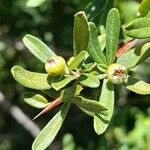
Pyracantha angustifolia
Narrowleaf Firethorn · Orange firethorn · Yellow firethorn · Narrow-leaf firethorn
Description
Source: leafsnapPyracantha angustifolia, commonly known as the narrowleaf firethorn, is an evergreen shrub in the Rosaceae family. Native to China, this plant is widely cultivated around the world for its ornamental appeal. Typically growing up to 3 meters tall, it boasts a dense, thorny growth habit with glossy, dark green leaves that are narrow and lance-shaped. In the spring, Pyracantha angustifolia produces clusters of small white flowers, which are followed in the autumn by bright red or orange berries that persist into winter. The plant is prized not only for its attractive appearance but also for its ability to serve as a natural barrier due to its thorny branches. It is often used as an ornamental hedge or planted against walls or fences, where it can climb with the support of trellises or wires. This shrub prefers well-drained soil and full sun exposure but can tolerate partial shade. It requires regular watering during dry periods; however, overwatering can lead to root rot. Overall, Pyracantha angustifolia is an excellent choice for gardeners seeking an attractive evergreen shrub that offers both aesthetic value and practical benefits, such as security fencing, due to its dense, thorny growth habit.
Care Guide
💧 Water Every 7 days
The slender firethorn thrives in semi-arid conditions and does well with infrequent watering. It is drought-tolerant but requires watering every two weeks to maintain its health. As an evergreen, it needs consistent moisture, particularly when grown outdoors, to support its growth.
☀️ Light Full sun
The slender firethorn prefers unfiltered light all day, though it tolerates periods with less sunlight. Sufficient light improves its growth, vigor, and berry production. Both excessive light and insufficient light can weaken the plant, showing up as reduced growth or fewer berries.
What are the sunlight requirements for the Slender Firethorn (Pyracantha angustifolia)?
The Slender Firethorn thrives in full sunlight, requiring above 6 hours of sunlight for optimal growth, known as full sun exposure. It also tolerates partial sun, which is about 3-6 hours of sunlight per day. It's beneficial to observe the movement of sunlight through your garden to find spots that offer a perfect balance of light and shade, ensuring your plants' happiness and health.
What are the essentials for growing Slender Firethorn concerning sunlight exposure?
Slender Firethorn prefers unfiltered light throughout the day but can withstand lower light conditions to some extent. Its growth, vitality, and berry production significantly benefit from ample light exposure. Both overexposure to light and inadequate lighting can affect the plant's health, leading to stunted growth or a decrease in berry yield. In situations where natural sunlight is insufficient, especially during winter or in less sunny spaces, artificial lighting like LED lights can be utilized to provide the necessary wavelengths of light. Such artificial lights should be placed 12-36 inches above the plant and turned on for 8-12 hours per day, with wattage adjusted based on the plant's specific light needs.
What symptoms indicate light deficiency or overexposure in Slender Firethorn?
Symptoms of light deficiency in Slender Firethorn include smaller new leaves, leggy or sparse growth, faster leaf drop, slower or halted new growth, and lighter-colored new leaves. Chlorosis, or the yellowing of leaves due to chlorophyll breakdown, can occur from excessive sunlight, along with sunscald, which appears as pale, bleached areas on the plant. Leaf curling and wilting are defense mechanisms against excessive sunlight, aiming to reduce water loss. Leaf scorching, characterized by brown, dry edges on leaves, indicates too much sunlight. These symptoms help identify when the plant is not receiving the ideal amount of sunlight.
What solutions can address the Slender Firethorn's light-related issues?
To combat light-related issues in Slender Firethorn, a gradual adjustment to sunlight exposure is key. For indoor plants, moving the plant to a sunnier location weekly until it receives at least 6 hours of direct sunlight daily is recommended, along with using South-facing windows. Artificial lighting can supplement natural light, especially for larger plants. Outdoors, find the best sunlight spot and move the plants gradually to avoid sunburn. Reducing obstructions, such as pruning trees, can increase sun exposure. Transplanting smaller plants during their dormant period can also help. It’s important to note that while parts of the plant affected by insufficient light may not recover, new growth will be healthy with proper light adjustments.
🌡️ Temperature 5–35°C
Slender firethorn comes from habitats that typically have temperatures ranging from 41 to 95 °F (5 to 35 °C). The plant favors moderate climates and can tolerate seasonal temperature fluctuations as long as they remain within that range.
What is the ideal temperature range for Slender firethorn?
Slender firethorn, or Pyracantha angustifolia, thrives best within a temperature range of 41 to 95 °F (5 to 35 °C). It prefers moderate climates and can adapt well to seasonal temperature changes as long as they remain within this specified range. This resilience includes a strong cold resistance, indicating that special frost protection measures are typically not required during winter. However, in extreme cases where temperatures are expected to drop below -25°C, protective steps such as wrapping the trunk and branches with non-woven fabric or cloth are recommended. Additionally, watering the plant abundantly before the first freeze in autumn helps to ensure the soil remains moist, aiding the plant during winter and early spring.
What should I do if the temperature drops below -25°C?
If the temperature is expected to drop below -25°C, Slender firethorn, known for its cold tolerance, may not show immediate changes during the winter, but you might notice that its branches become brittle and dry come spring, without any new shoots emerging. During springtime, it is advisable to prune away any dead branches that have failed to produce new leaves. This action helps in managing the plant's health and encourages new growth.
How should Slender firethorn be cared for in high temperature environments?
During the summer, when temperatures rise, it's important to keep Slender firethorn below 35°C. Exposure to temperatures exceeding 38°C can result in the leaves becoming lighter in color, tips becoming dry and withered, and increased susceptibility to sunburn. To mitigate these issues, trim away sunburned and dried-up parts of the plant. Relocating the plant to a spot with shade during the midday and afternoon sun or using a shade cloth can provide necessary protection. Additionally, watering the plant in the morning and evening will help keep the soil adequately moist, reducing stress on the plant.
💨 Humidity
🪴 Soil 6-7
🌱 Fertilizer
Timing is essential for fertilizing Slender firethorn. Apply fertilizer in early spring and repeat monthly until early summer. Fertilizer promotes attractive blooms and supplies energy during both dormant and active growth periods.
🪴 Pot & Repot
✂️ Pruning
🌿 Propagating
🐛 Diseases & pets
☠️ Toxicity
Characteristics
- Plant Type
- Shrub
- Life Cycle
- Perennial
- Genus
- Pyracantha
- Family
- Rosaceae
- Hardiness Zone
- 5-9
- Mature Height
- 3.96 m
- Mature Spread
- 1.83 m to 2.44 m
- Leaf Color
- Green
- Leaf Type
- Evergreen
- Flower Color
- White
- Flower Size
- 0.25 cm to 0.76 cm
- Bloom Time
- Late spring, Early summer
- Planting Time
- Spring, Autumn
- Harvest Time
- Late summer, Fall
- Native Area
- China