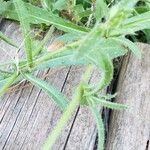
Pyrrhopappus carolinianus
Carolina desert-chicory · Carolina false dandelion
Description
Source: leafsnapPyrrhopappus carolinianus, commonly known as Carolina False Dandelion, is a perennial herbaceous plant that belongs to the Asteraceae family. Native to the southeastern United States, you can find it in open fields, meadows, and along roadsides. This plant can grow up to 60 cm tall and features a basal rosette of deeply lobed leaves with toothed margins. The slender, hairy stem produces yellow flowers that bloom from April to October. These flowers, arranged in clusters at the top of each stem, resemble dandelions. Carolina False Dandelion has been used medicinally by Native Americans to treat various ailments such as fever, coughs, colds, and headaches. The plant prefers well-drained soils and thrives in full sun or partial shade. However, it can tolerate a wide range of soil types, including sandy soils, and requires moderate watering during dry periods. An important part of local ecosystems, Carolina False Dandelion provides essential food for various pollinators like bees and butterflies. Overall, Pyrrhopappus carolinianus is an attractive wildflower with medicinal properties. It plays a key role in supporting local biodiversity, making it a valuable addition to any garden or natural area restoration project.
🌳 Carolina Desert-chicory signals the quality of an ecosystem. As a member of the aster family, Carolina Desert-chicory frequently grows in particular habitats that support certain insects, including pollinators and butterflies. Its presence can point to healthy ground cover and soil conditions that benefit a variety of plant species. This trait is important for ecologists and conservationists who monitor habitat quality and seek to preserve biodiversity.
Care Guide
💧 Water Every 7 days
Carolina Desert-chicory is native to arid regions and boasts a high tolerance for drought. In cultivation, it requires minimal watering, with just once a week mimicking its natural habitat. This plant thrives in poor soil and can withstand prolonged dry spells, making it an excellent choice for xeriscaping.
How should I water my Carolina Desert-chicory plant?
Carolina Desert-chicory can be watered using various tools, such as a garden hose with a spray nozzle, a watering can, or any common watering tool. This plant is not picky and can thrive with rainwater, tap water, or filtered water. It's best to avoid watering from above as this can harm the leaves and flowers and potentially cause disease. A drip irrigation system is often the recommended watering method for Carolina Desert-chicory, as it provides even and direct water application to the soil. For container-grown Carolina Desert-chicory, you can use a cup, watering can, or tap water to water the plant directly at the soil.
What do I need to do if I give too much or too little water to my Carolina Desert-chicory?
If you notice that your Carolina Desert-chicory lacks moisture, the solution is simple: water it more regularly. Overwatering, on the other hand, can be a serious issue that may lead to diseases and even death for your plant. To avoid overwatering, find a suitable location for your plant that receives plenty of sunlight to dry the soil and has good drainage to prevent waterlogging. If you have overwatered your potted Carolina Desert-chicory, consider changing it to a new pot with better drainage. Use loose soils and ensure the new pot drains efficiently when repotting your plant.
How often should I give water to my Carolina Desert-chicory plant?
To help your Carolina Desert-chicory thrive, it is important to water it regularly. During the growing season, starting in spring, aim to water the plant once a week. As the season progresses and temperatures rise, you may need to increase watering to two or three times a week. However, be careful not to overwater as it can harm the plant. Regardless of the watering frequency, make sure that the soil remains moist but not wet. When watering a Carolina Desert-chicory in a pot, you will need to water it more frequently compared to one planted in the ground. This is because pot soil can dry out faster due to increased heat. Typically, aim to water a potted Carolina Desert-chicory a few times a week, as opposed to just once a week for an in-ground plant.
How many water does my Carolina Desert-chicory need?
Determining the appropriate amount of water for your Carolina Desert-chicory can be done in a few ways. Some gardeners prefer to gauge the moisture level of the soil by feeling it with their hands. This method suggests watering until the top six inches of soil feel moist. Alternatively, you can use a specific measurement to determine the water quantity. Usually, providing around two gallons per week should suffice for your Carolina Desert-chicory, depending on the temperature and how quickly the soil dries. However, strictly following this guideline can result in overwatering if your plant requires less water in certain circumstances. When growing Carolina Desert-chicory in a container, a different approach is necessary. It is recommended to moisten all the dry layers of soil, which can be tested by inserting your finger into the soil to check for moisture. Another way is to water until a small amount of excess water trickles out of the pot's drainage holes.
How can I know if I'm giving enough water to my Carolina Desert-chicory?
Avoiding overwatering your Carolina Desert-chicory can be quite tricky. These plants have deep roots that need to be moistened weekly, but they are also very prone to root rot. Overwatering can also lead to browning of the plant. Underwatering is less of a concern for Carolina Desert-chicory as they can tolerate periods without watering. However, if you wait too long, the plant will start to wilt and the leaves may become dry.
☀️ Light Full sun
Carolina Desert-chicory performs best in places that receive light for most of the day, though it can tolerate areas with more subdued or filtered light. Sunlight fosters vigorous growth, but too much can potentially harm the plant. Its native habitat was generally open to sunlight. An imbalance in light exposure could negatively affect the plant's health.
What does Carolina Desert-chicory require in terms of sunlight?
Carolina Desert-chicory thrives best in conditions where it is exposed to light for most of the day but can also manage in areas with moderated sunlight exposure. Ideal growth is encouraged by full sun, which is defined as over 6 hours of sunlight per day, and partial sun, with about 3-6 hours of sunlight. However, it's important to ensure that the plant does not receive too much sun, as its natural habitat was generally open to sunlight, and too much exposure can harm the plant. Monitoring how sunlight moves through your garden will help you find the right balance of light and shade, promoting the plant's health and happiness.
What are the solutions for Carolina Desert-chicory if it's not getting enough light?
If your Carolina Desert-chicory is not receiving enough light, consider gradually moving it to a sunnier location, ensuring it gets at least 6 hours of direct sunlight daily. This can be done by using a south-facing window or artificial lighting, such as keeping a lamp on for at least 8 hours a day or investing in professional plant grow lights. For outdoor plants, it's crucial to avoid dramatic light intensity changes to prevent sunburn. Minimizing obstructions by pruning trees or transplanting to sunnier spots can also help. It's key to note that while parts affected by insufficient sunlight may not recover, new growth should flourish with proper light exposure.
How can artificial lighting support Carolina Desert-chicory's growth indoors?
Indoor Carolina Desert-chicory plants can benefit greatly from artificial lighting, especially when natural sunlight is insufficient. LED lights are recommended, as they can be adjusted to provide specific wavelengths needed for the plant's growth. For full sun plants, 30-50W per square foot is advisable, while partial sun plants require 20-30W, and full shade plants need 10-20W. The light source should be placed 12-36 inches above the plant, mimicking natural sunlight. Ensuring that your plant receives 8-12 hours of artificial light per day will promote healthier, faster growth.
What are the signs of light deficiency or overexposure in Carolina Desert-chicory?
Carolina Desert-chicory may exhibit several symptoms if it suffers from inadequate light or is overexposed to sunlight. Signs of light deficiency include smaller new leaves, leggy or sparse growth, faster leaf drop, slower or halted growth, and paler new leaves. Overexposure symptoms encompass chlorosis (yellowing leaves), sunscald, leaf curling, wilting, and leaf scorching. These symptoms indicate the plant's struggle either with absorbing enough light or with managing the stress from too much light, which can impact its health and growth.
🌡️ Temperature 0–35°C
Carolina Desert-chicory can tolerate a broad range of temperatures, but its distribution may still be constrained by various combinations of moisture and heat. It does best in warm summer climates with adequate rainfall or watering. Extended periods of cloudy, rainy weather, as well as prolonged high temperatures, can increase the likelihood of Carolina Desert-chicory dying. In winter, proper protection against cold can improve the plant's survival rate.
What is the botanical name of Carolina Desert-chicory?
The botanical name of Carolina Desert-chicory is Pyrrhopappus carolinianus. This plant is known for its unique characteristics and is recognized by its distinctive botanical name, setting it apart from other species.
💨 Humidity
🪴 Soil 6-7
🌱 Fertilizer
When most of Carolina Desert-chicory’s blooms have opened to full size, resume fertilizing. Around the period when blooms are at peak production, apply fertilizer every three to four weeks, weather permitting. Once the plant begins producing fewer new blooms, stop fertilizing; there’s no need to feed it when it can no longer produce additional blooms.
🪴 Pot & Repot
✂️ Pruning
Carolina Desert-chicory is known for its bright yellow flowers and thrives in open areas. To maintain healthy growth, prune the plant from early to late spring. Remove any dead or damaged stems and thin out crowded sections. This helps improve airflow, prevents pests, and encourages more abundant flowering. Be sure to use clean, sharp tools for accurate cuts to reduce stress on the plant.
🌿 Propagating
🐛 Diseases & pets
☠️ Toxicity
Characteristics
- Plant Type
- Herb
- Life Cycle
- Annual, Biennial
- Genus
- Pyrrhopappus
- Family
- Asteraceae
- Hardiness Zone
- 8-9
- Mature Height
- 49 cm
- Mature Spread
- 30 cm
- Leaf Color
- Green
- Leaf Type
- Deciduous
- Flower Color
- Yellow
- Flower Size
- 2.54 cm to 5.08 cm
- Bloom Time
- Mid spring, Late spring, Early summer
- Planting Time
- Spring, Summer
- Harvest Time
- Early summer, Mid summer
- Native Area
- Mexico