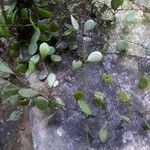
Pyrrosia piloselloides
Epiphytic creeping fern · Dragon's scale fern · Dragon scales
Description
Source: wikipedia (CC BY-SA)Pyrrosia piloselloides, also known as the Dragon-scale fern, is a fern first published in 1974. Native to a wide range from Southwest India to Japan and Papuasia, it is an epiphytic fern that primarily grows in wet tropical biomes. The species is characterized by its dimorphic fronds and rhizomes covered in scales. It has distinct star-like hairs that cover its fronds.
Care Guide
💧 Water Every 7 days
The dragon's scale plant thrives in the high humidity and moisture levels typical of tropical rainforests. It prefers damp conditions, can tolerate some drought, and should be watered twice a week for optimal growth. As an evergreen, the dragon's scale requires consistent watering throughout the year, even in cooler temperatures.
☀️ Light Full shade
Dragon's scale does well in sheltered conditions and needs only limited light, reflecting its natural preference for shady, protected environments. Too much light can alter its leaf color, while too little light can hinder its growth.
What are the sunlight requirements for Dragon's Scale?
Dragon's Scale, also known by its botanical name Pyrrosia piloselloides, thrives in environments that are primarily shady. It requires less than 3 hours of direct sunlight daily, favoring full shade conditions. Observing the movement of sunlight through one's garden to find spots that offer an ideal balance of light and shade is crucial for the plant's well-being. Too much direct sunlight can adversely affect the plant's leaf color, whereas too little light can hinder its growth.
How can artificial lighting be used for Dragon's Scale indoor plants?
For Dragon's Scale plants kept indoors, artificial lighting is an effective alternative when natural sunlight is inadequate, especially during winter or in less sunny spaces. Optimal growth is supported by using artificial lights, like LEDs, which can be adjusted to provide specific light wavelengths needed by plants. Artificial lighting guidelines include using 30-50W/sq ft for full sun plants, 20-30W/sq ft for partial sun plants, and 10-20W/sq ft for full shade plants. The artificial light source should be placed 12-36 inches above the plant and operated for 8-12 hours daily to replicate natural daylight hours, promoting healthier and faster growth.
What are the symptoms of inadequate light for Dragon's Scale?
Symptoms that Dragon's Scale is receiving insufficient light include smaller new leaves, leggy or sparse growth, faster leaf drop, halted or delayed growth, lighter-colored or chlorotic new leaves, sunscald, leaf curling, wilting, and leaf scorching. These signs indicate the plant might be struggling due to low light conditions, which can impede its growth, affect its coloration, and overall health.
What solutions can correct light deficiency issues for Dragon's Scale?
To address light deficiency in Dragon's Scale plants, consider moving them to spots where they can receive ample filtered light including brief periods of direct morning sunlight, ideally 1-2 meters away from a window. If the plant is large or difficult to move, supplement with artificial light by keeping a desk or ceiling lamp on for at least 8 hours daily or using professional plant grow lights. For outdoor plants, gradually acclimate them to sunnier locations to prevent sunburn. Reduce obstructions to sunlight by pruning trees or relocating smaller plants. Remember that parts of the plant already affected by insufficient light might not recover, but new growth should be healthy once lighting conditions improve.
🌡️ Temperature 20–37.8°C
Dragon's scale comes from tropical areas, where the weather is generally warm and humid. As a result, it is well-suited to high heat and moisture. It dislikes abrupt temperature changes and prefers a steady temperature, so it's important to avoid indoor temperature swings. It generally cannot tolerate cold and needs warmer conditions to grow. If the surrounding temperature falls too low, the plant may stop growing or even die.
💨 Humidity normal (40-60%)
This plant will thrive in moderate humidity, which is probably the level in your home. However, misting it a few times a week can be very beneficial. Make sure the room has good ventilation.
🪴 Soil 6-7
🌱 Fertilizer
To keep your dragon's scale plant healthy, fertilize it monthly with a high-nitrogen fertilizer during the spring and summer. Use the fertilizer at half strength to prevent root burn. In the fall and winter, reduce fertilization to every other month. Ensure you water the plant thoroughly both before and after fertilizing to improve nutrient absorption and maintain its health.
🪴 Pot & Repot
✂️ Pruning
To keep a Dragon's Scale plant thriving, it's important to prune it regularly. This includes removing dead fronds and thinning the plant to improve air circulation. The best time to do this is in early spring, as it promotes healthy growth and helps prevent fungal issues. Be sure to use sterilized tools to avoid infections and preserve the plant's distinctive beauty and vitality.
🌿 Propagating
🐛 Diseases & pets
☠️ Toxicity
Characteristics
- Plant Type
- Fern
- Life Cycle
- Perennial
- Genus
- Pyrrosia
- Family
- Polypodiaceae
- Hardiness Zone
- 10-12
- Mature Height
- 3 cm to 5 cm
- Mature Spread
- 30 cm to 61 cm
- Leaf Color
- Green
- Leaf Type
- Evergreen
- Planting Time
- Spring, Summer, Autumn
- Native Area
- India, Malaysia, Indonesia, Vietnam, Japan, Philippines, Singapore, Bangladesh, Laos, Thailand, China