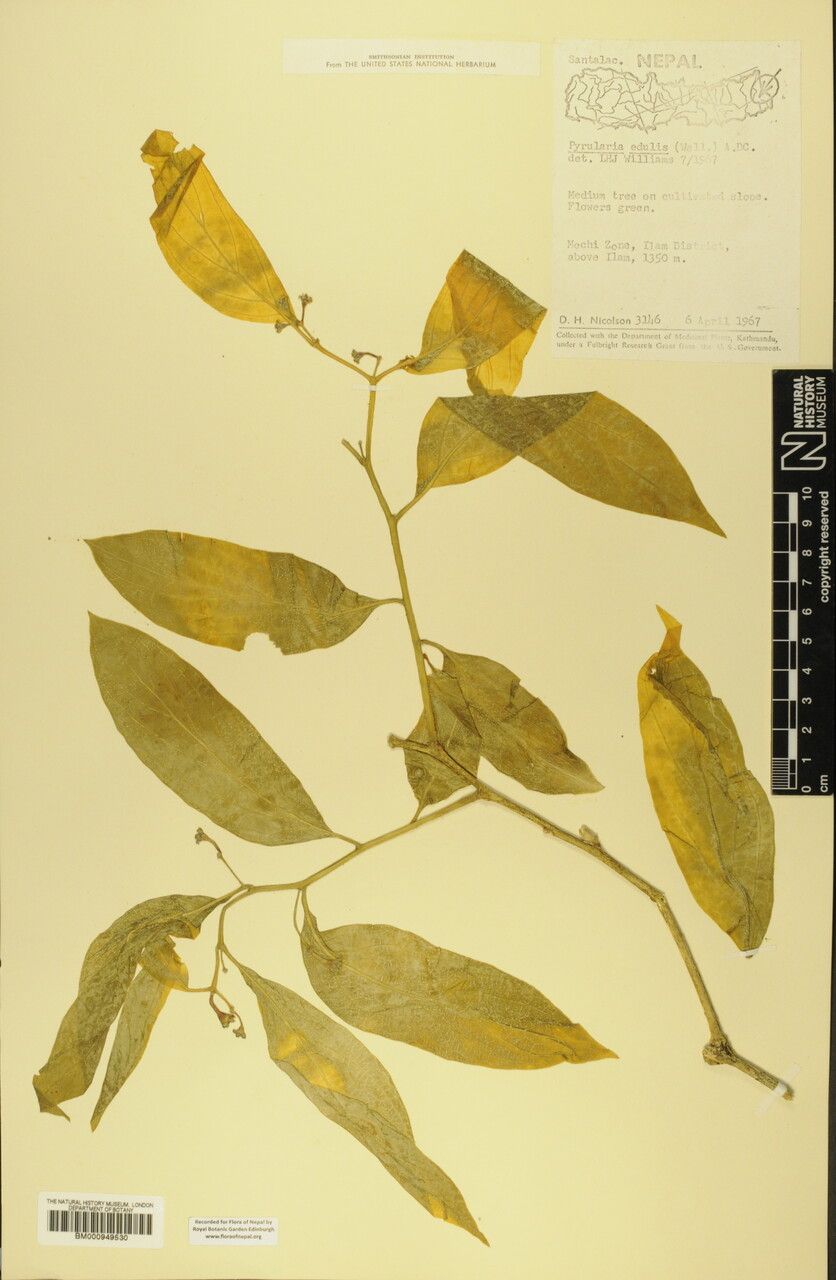
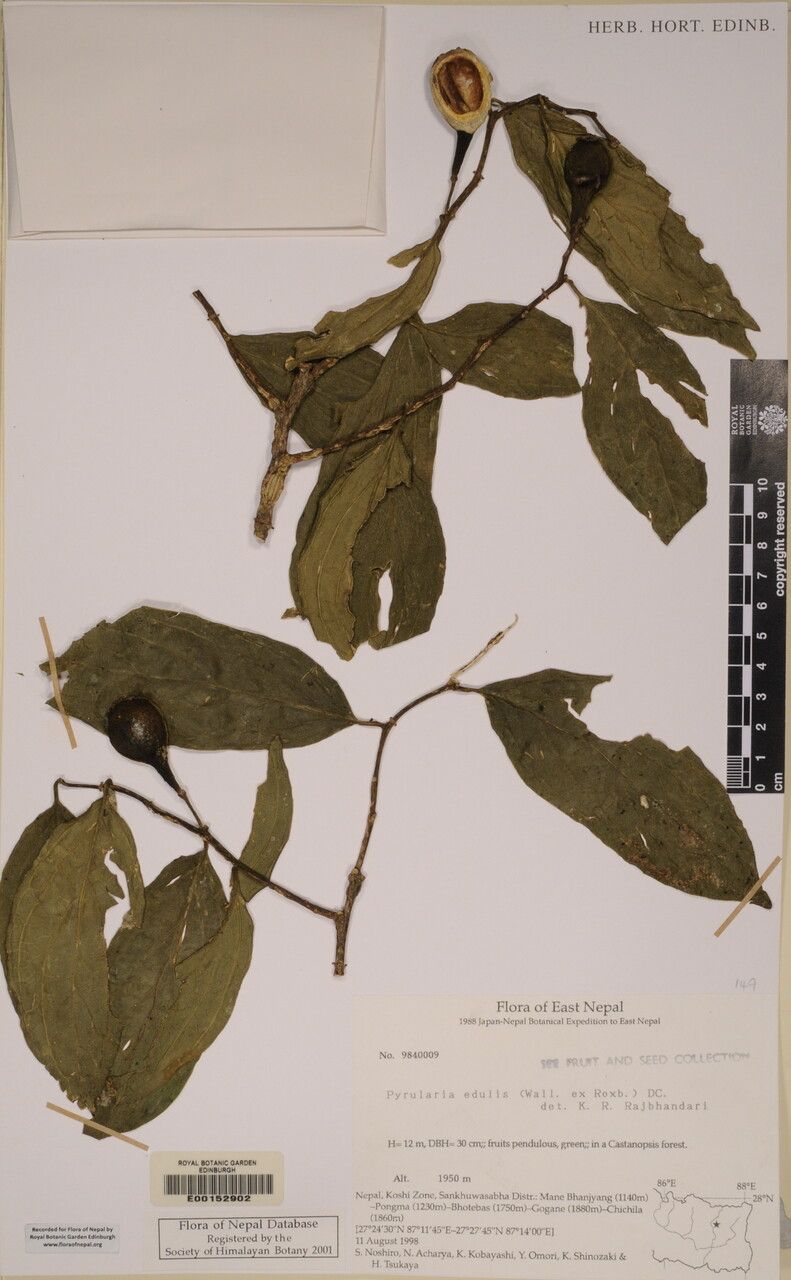
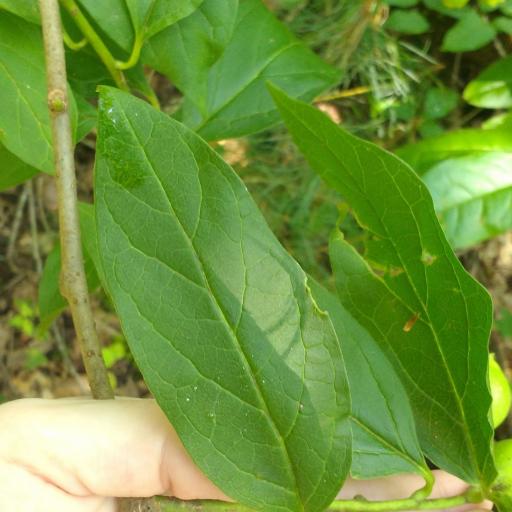
Pyrularia edulis is a species of shrub or small tree in the sandalwood family. It grows in Bhutan, China, India, Myanmar, and Nepal.
Pyrularia edulis has strong resistance to disease and is usually not susceptible to illnesses. In terms of care, this plant is fairly low maintenance. When grown outdoors it needs little watering, and larger specimens typically do not require pruning. However, smaller plants should be pruned after they finish blooming. Pyrularia edulist is well suited to anyone with an outdoor area, such as a garden or deck, and does not demand extensive care experience.
How to keep Pyrularia Edulis.
Light
Pyrularia edulis thrives when given abundant light. It can also tolerate moderate levels of illumination. Too much shade can impede its growth. Coming from environments with plentiful sunlight, every stage of its development needs sufficient light. Both excessive and insufficient light can harm the plant, negatively impacting its health and development.
Water
Pyrularia edulis is moderately tolerant to drought and should be watered every 2-3 weeks to prevent waterlogging. When grown indoors, it benefits from occasional misting to maintain adequate humidity levels. To support its health and growth, plant it in well-draining soil that retains some moisture.
Temperature
Pyrularia edulis shows strong adaptability to a wide range of climate conditions, from scorching summers to chilly winters. Still, it has an optimal temperature range for growth. If temperatures become too high, the plant is vulnerable to heat and humidity stress, which can lead to its death. In areas where temperatures approach the lower limit of its cold tolerance, it's important to provide insulation to protect the plant.
Fertilizer
Fertilize your Pyrularia edulis in early spring to encourage healthy growth. Regular fertilization improves overall health, producing vigorous growth, greater tolerance of harsh conditions, and increased resistance to pests and diseases. Keep a specific fertilization schedule for your Pyrularia edulis to maintain foliage that is vibrant, deeply colored, and lush.
Pruning
To ensure a vibrant and robust Pyrularia edulis plant, it is important to prune it properly in early spring. Focus on removing dead branches, thinning the branches to improve airflow, and shaping the plant for better aesthetics. This practice enhances sunlight penetration, reduces the risk of disease, and promotes healthier growth and fruit production.
Botanical profile.
- Plant Type
- Tree, Shrub
- Life Cycle
- Perennial
- Genus
- Pyrularia
- Family
- Santalaceae
- Hardiness Zone
- 6-9
- Mature Height
- 2.44 m to 4.57 m
- Mature Spread
- 3.05 m to 3.96 m
- Leaf Color
- Green, Dark Green
- Leaf Type
- Semi-evergreen
- Flower Color
- Yellow, Green
- Flower Size
- 2.54 cm
- Bloom Time
- Mid spring, Late spring
- Planting Time
- Spring, Summer
- Harvest Time
- Late summer, Early fall, Mid fall
- Native Area
- Nepal, India, Indonesia, Myanmar, Bhutan, China
Reader questions.
What are the sunlight requirements for Pyrularia edulis?
Pyrularia edulis requires generous exposure to sunlight to flourish, with a tolerance for moderate illumination. Originating from habitats abundant in sunlight, it needs ample lighting throughout all stages of growth. Full sun is defined as above 6 hours of sunlight a day, while partial sun means about 3-6 hours of sunlight. It's important to watch how sunlight moves through your garden to ensure the perfect balance for your plants, enhancing their growth and happiness.
Can artificial lighting be used for Pyrularia edulis, and how?
Yes, artificial lighting can be used for Pyrularia edulis, especially when natural sunlight is insufficient, such as during winter or in less sunny spaces. Optimal growth is achievable with adequate artificial lighting. LED lights are recommended for indoor plant lighting because they provide specific wavelengths needed by plants. Full sun plants should have 30-50W/sq ft, partial sun plants 20-30W/sq ft, and full shade plants 10-20W/sq ft of artificial light. The light source should be placed 12-36 inches above the plant, mimicking natural sunlight for 8-12 hours per day.
What symptoms indicate poor lighting conditions for Pyrularia edulis?
Poor lighting conditions for Pyrularia edulis can lead to several issues, such as smaller new leaves, leggy or sparse growth, faster leaf drop, slower or no new growth, lighter-colored new leaves, chlorosis, sunscald, leaf curling, wilting, and leaf scorching. These symptoms range from subtle changes in growth to severe damage from excessive sunlight, demonstrating both the plant's need for adequate sunlight and its sensitivity to intense light exposure.
How can I address insufficient sunlight for Pyrularia edulis?
To address insufficient sunlight for Pyrularia edulis, gradually move the plant to a sunnier location to receive at least 6 hours of direct sunlight daily if indoors. For large or immovable plants, consider using artificial lighting, keeping lamps on for at least 8 hours daily or using professional grow lights. Outdoors, it's important to transition plants to sunnier spots gradually to avoid sunburn. Removing obstructions or transplanting smaller plants to sunny locations with good drainage can also improve light exposure. Note that parts of the plant affected by insufficient sunlight may not recover, but new growth should be healthy.