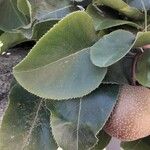
Pyrus communis
گلابی · ناکھ · Pear · European Pear · Common pear
Description
Source: leafsnapPyrus communis, commonly known as the European pear, is a deciduous tree belonging to the Rosaceae family. Native to Europe and Asia, it has been cultivated for thousands of years for its delicious fruit. The tree can grow up to 40 feet tall and features a rounded shape with dark green leaves that turn yellow in the fall. The European pear produces small white flowers in early spring, followed by green fruit that ripens into a yellow or brownish color by late summer or early fall. The fruit is juicy with a sweet flavor and can be eaten fresh or used in cooking. Pyrus communis thrives in well-drained soil and full sun, although it can tolerate some shade. It requires regular watering during the growing season but should be allowed to dry out slightly between waterings. In addition to its delectable fruit, Pyrus communis has ornamental value due to its attractive shape and foliage. It is often used as an accent tree in landscapes or as part of an orchard. Overall, Pyrus communis is a visually appealing deciduous tree with both ornamental and culinary significance due to its delicious fruit.
🌳 Although commonly prized for its culinary uses, the wood of the common pear is also valued for its fine grain, strength, and durability, making it well suited for crafting high-quality musical instruments such as lutes and woodwinds. Additionally, common pear leaves and bark have long been used to produce a natural dye, and its high tannin content can be applied in leather tanning. The common pear also has the distinctive ability to reveal the presence of heavy metals in the soil, acting as an unintentional bioindicator.
🎭 Plenty, long life, feminine traits, reproductive ability
Care Guide
💧 Water Every 7 days
Common pear trees, which originate from temperate regions, thrive with moderate moisture and consistent soil hydration. They generally need watering every 1-2 weeks. While they can tolerate some drought, careful water management is essential during the active growing season to ensure healthy foliage and fruit development.
When should I water my common pear (Pyrus communis)?
Watering your common pear tree is crucial for its growth, fruit development, and overall vitality. The soil moisture level is the primary indicator for when to water. Insert a finger about an inch into the soil; if it feels dry, it's time to water. Leaves provide visual cues for watering needs as well; if they appear pale green or start yellowing, the plant needs water. In contrast, black or brown leaves may indicate overwatering. Seasonal changes affect the tree's water requirements, with increased needs during the spring and summer growth and fruit production seasons, and less water needed during dormant periods. It's important to avoid both overwatering, which can cause root rot and disease, and underwatering, which can stress the plant and reduce fruit production. Ignoring signs of improper watering can lead to stunted growth, poor fruit quality, and potentially the death of the plant.
How should I water my common pear?
Common pear trees require deep watering instead of frequent shallow applications. This approach ensures that water reaches the deeper root systems of the plant, which is crucial for its health. Deep watering can be achieved by slowly watering the plant until water runs out of the drainage holes, ensuring the entire root zone is moistened. To avoid disease, water the base of the plant rather than the foliage. A soil moisture meter can be a valuable tool in determining when to water, helping to avoid over or under watering. Special equipment like a long-spouted watering can also aid in precisely applying water to the plant’s base, focusing on where the roots can absorb the moisture. It's critical to avoid watering the foliage directly and to prevent waterlogging of the soil as these can lead to fungal diseases and root rot.
How much water does common pear really need?
The amount of water required by a common pear tree varies based on its size, the size of the pot (if applicable), and the depth of the roots. Large trees may rely more on rainfall, while smaller trees or those in containers may need additional watering during dry periods. Ideally, the soil should be consistently moist but not waterlogged. During low rainfall periods or for trees in pots, it's usually recommended to give the tree a thorough soaking until water drains out of the pot's bottom. The healthiest common pear trees will have lush green leaves and abundant fruit yields. Under or overwatering can lead to wilting or yellowing leaves, root rot, and a decline in the tree’s health. Incorrect watering practices can decrease yield and increase susceptibility to pests and diseases.
What kind of water is best for common pear?
Common pear trees have moderate sensitivity to the type of water used for irrigation. Distilled water is ideal due to its purity and lack of contaminants. Rainwater is also suitable for common pear as long as it's collected cleanly and free from pollutants. Tap water can be used if it's the only source available, but it may contain chlorine, fluoride, and other minerals that could affect the plant’s health. To mitigate the effects of chlorine and fluoride found in tap water, it's recommended to dechlorinate by letting the tap water sit out for at least 24 hours before use or by using a water filter that removes these components. The plant prefers water at room temperature (68-72°F or 20-22°C) and thrives with water that has a neutral to slightly acidic pH level (between 6 and 7).
How do common pear's watering needs change with the seasons?
Seasonal changes significantly impact the watering needs of common pear trees. In spring, the plant requires more water than in winter as it enters an active growth phase. Ensure the soil remains consistently moist, adjusting for rainfall and temperature. Summer's higher temperatures and increased sunlight elevate evaporation rates, necessitating balanced, adequate watering, preferably in the early morning or late evening. During autumn, as the tree prepares for dormancy, gradually decrease watering. In winter, the plant's water needs are minimal; water only when the soil surface is dry, and ensure good drainage to prevent root rot. Adjust watering practices based on seasonal variations to maintain plant health.
☀️ Light Full sun
The common pear prefers a brightly lit spot for best growth but can also grow well with moderate light. Its light requirements remain largely the same through different growth stages. If it receives too little or too much light, it may weaken or show signs of poor health.
What are the sunlight requirements for a Common Pear tree?
The Common Pear (Pyrus communis) requires specific sunlight conditions to thrive. It benefits from being in full sun, which means it should receive above 6 hours of sunlight a day, but it can also grow in partial sun, receiving about 3-6 hours of sunlight. It's important to watch the movement of sunlight through your garden to choose spots that offer the right balance of light and shade, ensuring the plant's happiness and optimal growth.
How does sunlight affect the growth of Common Pear, and what are the essentials for optimal growth?
Sunlight plays a crucial role in the growth and health of the Common Pear. This plant prefers areas that are flooded with light for its optimal growth and can still thrive with moderate light exposure. Throughout its growth stages, its need for light remains consistent, and insufficient or excessive light can lead to weakness or signs of unhealthiness. Artificial lighting can be a vital solution for indoor plants or during less sunny times, with options like LED lights that can be customized to deliver specific wavelengths needed by the plant. Adequate lighting is essential, requiring 30-50W/sq ft for full sun plants, 20-30W/sq ft for partial sun plants, and 10-20W/sq ft for full shade plants.
What are the symptoms of inadequate sunlight for Common Pear and how can these issues be addressed?
Inadequate sunlight can lead to several symptoms in Common Pear, including leggy or sparse growth, slower or halted growth, lighter-colored or small new leaves, chlorosis, sunscald, leaf curling, wilting, and leaf scorching. Solutions for insufficient light involve gradually moving plants to sunnier locations or using artificial lighting, such as keeping a lamp on for at least 8 hours a day or investing in professional grow lights. For outdoor plants, it's crucial to move them gradually to avoid sunburn. Pruning trees or branches that block sunlight and transplanting to sunnier locations can also help. Note that parts of the plant that have been severely affected may not recover, but new growth should be healthy with improved light exposure.
🌡️ Temperature 5–35°C
The common pear is a temperate, woody plant able to tolerate temperatures from 41 to 95 ℉ (5 to 35 ℃). It favors a moderate climate and does well in regions with mild summers and cool winters. In summer it grows best at about 70 ℉ (21 ℃), and in winter it can endure temperatures as low as 23 ℉ (-5 ℃).
What are the optimal growing conditions for the common pear (Pyrus communis)?
The common pear (Pyrus communis) thrives in a temperate climate, with a preference for moderate conditions featuring mild summers and cool winters. Optimal summer temperatures for this woody plant are around 70°F (21°C), while in winter, it can withstand lows of 23°F (-5°C). The pear tree has strong cold resistance and can typically survive temperatures ranging from 41 to 95°F (5 to 35°C) without requiring special frost protection measures. However, in regions where winter temperatures might drop below -30°C, it's critical to wrap the trunk and branches with protective materials like non-woven fabric to prevent cold damage. Adequate watering before the first autumn freeze to maintain soil moisture is also advisable, ensuring plant well-being during the cold season.
How should I care for a common pear tree in cold temperatures?
The common pear tree is notably cold-tolerant, thriving best at temperatures above 5°C and withstanding winter conditions above -25°C. When temperatures drop below -30°C, there may not be noticeable damage during winter, but in spring, you might find the branches become brittle and dry, leading to a lack of new shoots. To mitigate this, you should prune any dead branches that have not produced new leaves in spring, ensuring the health and vigour of the pear tree.
What should I do if my common pear tree experiences high temperatures?
During the summer, it's crucial to keep the common pear tree in conditions below 35°C to avoid heat stress. Exposure to temperatures above 38°C can lead to symptoms such as a lightening of leaf color, drying and withering of leaf tips, and an increased risk of sunburn. To alleviate these symptoms, trim away any sunburned or dried parts of the plant. Moving the tree to a shaded area during the midday and afternoon sun, or employing a shade cloth, can offer protection. Additionally, watering the tree in the morning and evening will help keep the soil moist and the plant hydrated.
💨 Humidity normal (40-60%)
This plant will thrive in moderate humidity, which is probably the level in your home. However, misting it a few times a week can be very beneficial. Make sure the room has good ventilation.
🪴 Soil 6-7
🌱 Fertilizer
The Common pear plant needs adequate nutrients for optimal fruit production. Fertilize in early spring to encourage new growth and bloom development. Regular fertilization helps the plant remain healthy, produce more delicious fruit, and prevents nutrient deficiency problems such as yellow leaves and poor fruit production.
Why do I have to put fertilizer on my Common pear tree?
Plants need nutrients to grow, and fast-growing plants can quickly deplete the soil of these nutrients. Therefore, it is important to regularly fertilize Common pear trees to provide them with the extra nutrients they need. This will not only help the trees stay healthy, but also promote the growth of delicious fruit. If plants are not fertilized for a long time, they can face various problems. Nutrient deficiency can result in issues with the foliage, such as yellowing leaves or leaves with a reddish color. The leaves may also become deformed in shape, have withered tips, or experience dieback, which is when large portions of the plant die. Some nutrient deficiencies can also cause problems with the bark, slow down growth, hinder shoot development, and lead to a lack of fruit production.
When should I apply fertilizer to my Common pear tree?
The best time to fertilize common pear trees is in early spring, before the buds start to appear. During this time, the tree uses the stored reserves from winter to grow new branches and flowers. To ensure proper development, it's recommended to fertilize 2 to 4 weeks before the expected bloom, allowing enough time for the nutrients to penetrate the soil and be absorbed by the tree. It's also possible to continue fertilizing during spring, but it's important to avoid fertilizing in autumn. Fertilizing late in the season can cause excessive foliage growth, which makes the leaves vulnerable to winter damage.
When is the best time to not fertilize my Common pear?
Here are some tips for fertilizing Common pear trees: 1. Avoid fertilizing in the first year of growth and use caution when providing fertilizer if it's not necessary. 2. If you pruned 20% or more of the plant the previous year, do not fertilize. 3. Don't fertilize diseased or damaged plants as it can do more harm. 4. Address the root cause of any issues before considering fertilizer, as it is not a cure-all. 5. Avoid fertilizing after the peak of summer, as this can cause excessive growth before winter. 6. Do not fertilize during hot and dry times of the year, as dry soil is not effective at delivering fertilizer and can lead to excessive growth. 7. It's best to apply fertilizer earlier in the season when temperatures are cooler. 8. Be cautious about inadvertently giving nearby plants or lawns a double-dose of fertilizer, as Common pear trees can absorb fertilizer from surrounding areas.
Which fertilizer should I use for my Common pear?
Using fertilizer that contains a balance of nitrogen, phosphorus, and potassium can bring many benefits to plants. Nitrogen is important for leaf growth and chlorophyll production. Phosphorus helps support the root system and promotes the development of blossoms, fruits, and seeds. Potassium plays a role in photosynthesis and the movement of water and nutrients throughout the plant. When choosing a fertilizer, you can opt for a commercial one that is specifically designed for a particular type of tree. Alternatively, you can use organic sources of nitrogen such as manure, feather meal, or blood meal. To ensure you apply fertilizer accurately, conducting a soil test can give you a better understanding of the condition of your soil. For commercial fertilizers, if your soil lacks sufficient phosphorus and potassium according to the soil test, you can use a balanced granular fertilizer with a ratio of 10-10-10 or similar. In most cases, nitrogen in the soil is continuously depleted with rainfall. If your soil already has enough phosphorus and potassium, it would be more appropriate to use a high-nitrogen fertilizer with a ratio of 6-2-1 or 10-2-2.
How should I fertilize my Common pear tree?
To properly fertilize your Common pear tree, it's crucial to follow the specific directions for the fertilizer you're using. It's important not to over-fertilize, so figuring out the correct amount is key, especially for fruit trees. Generally, you can estimate the amount based on the age of the tree or the trunk's diameter. A good rule of thumb is to use one-tenth of a pound of fertilizer per year or per inch of trunk, with a maximum of one pound. However, Common pears should not be fertilized in the first few years. When using granular or organic fertilizers like blood meal, spread them around the tree's base up to the drip line (the area beneath the farthest-reaching branches). Be careful not to let the fertilizer come into contact with the trunk. Over time, the granules will break down and seep into the soil, reaching the tree's roots. After fertilizing, apply a one-inch layer of compost around the base of the tree and water thoroughly.
🪴 Pot & Repot 2-3 years
When repotting Common pear, select a pot 1–2 inches (2.5–5.1 cm) larger with good drainage. Use a well-draining potting mix. Repot in spring or fall, making sure the root ball sits slightly below the rim of the flower pot. Water thoroughly after repotting and place in a warm spot with indirect sunlight.
✂️ Pruning
For optimal health and fruit yield, common pear trees need regular pruning. The best time to prune is in late winter, just before new growth begins. When pruning, focus on removing dead wood, thinning out branches, and shaping the canopy to allow for better light and air circulation. It's important to avoid heavy pruning in the fall, as this can make the tree vulnerable to winter damage.
🌿 Propagating
🐛 Diseases & pets
☠️ Toxicity
The seeds of pear trees contain amygdalin, a compound that releases cyanide, but it’s highly unlikely a person could eat enough pears to reach that level of toxicity.
Characteristics
- Plant Type
- Tree
- Life Cycle
- Perennial
- Genus
- Pyrus
- Family
- Rosaceae
- Hardiness Zone
- 4-9
- Mature Height
- 2.13 m to 20.12 m
- Mature Spread
- 6.1 m
- Leaf Color
- Green, Red, Orange
- Leaf Type
- Deciduous
- Flower Color
- White
- Flower Size
- 1.52 cm to 3.05 cm
- Bloom Time
- Mid spring, Late spring
- Planting Time
- Spring, Autumn
- Harvest Time
- Mid summer
- Native Area
- Turkey, Austria, Bulgaria, Cyprus, Poland, Greece, Belarus, Ukraine, Russia, Hungary, Germany, Iraq, Italy, Spain, Switzerland, France, Albania, Romania, Belgium, Netherlands