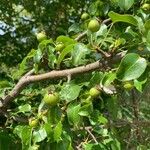
Pyrus cordata
Plymouth pear · Heart-leaved pear · Heart-shaped pear · Peruyal Brava Atlántica (AST) · Plymouth Pyrus
Description
Source: leafsnapPyrus cordata, commonly known as the Heart-leaved Pear, is a deciduous tree belonging to the Rosaceae family. Native to China, this tree can reach a height of up to 10 meters. It features a rounded crown and grayish-brown bark with shallow fissures. The heart-shaped leaves of Pyrus cordata have serrated edges and can grow up to 10 cm long. These leaves are dark green in the summer but turn yellow or red in the autumn. In the spring, the Heart-leaved Pear produces clusters of small white flowers. Each flower has five petals and is fragrant, attracting bees for pollination. The fruit of Pyrus cordata is a small pear-shaped fruit that ripens between August and September. When ripe, the fruit has a greenish-yellow skin with brown spots. The flesh is white or yellowish-white and sweet. Pyrus cordata thrives in well-drained soil but can tolerate various soil types, provided they are not waterlogged. It also requires full sun exposure for optimal growth. In traditional Chinese medicine, the Heart-leaved Pear is used to treat coughs, sore throats, fever, and diarrhea, among other ailments, due to its anti-inflammatory properties. Overall, Pyrus cordata makes an excellent ornamental tree. Its attractive foliage, beautiful flowers, and delicious fruits make it an ideal choice for gardens and parks alike.
💡 According to legend, a beautiful woman inspired an entire village to plant pear trees across a mountain to sustain their livelihoods. Enchanted by her beauty, a god attempted to seduce her, but she refused his advances. In retaliation, the god caused a drought, and the pear trees began to wither. Desperate and with no other options, the woman chose to end her life beneath the pear trees. To everyone's astonishment, the moment she died, the pear trees blossomed in the wind.
Care Guide
💧 Water Every 7 days
The heart-shaped pear grows best in regions with moderate rainfall, requiring a balance between hydration and proper drainage. This drought-tolerant plant needs watering every 2-3 weeks. Usually cultivated outdoors, the heart-shaped pear is a deciduous tree, which means it sheds its leaves during dry seasons to conserve water.
What's the best way to water my pear tree that is shaped like a heart?
To promote excellent root development, it is recommended to place a garden hose at the base of the plant. When watering, avoid spraying the leaves directly, as this can be detrimental. If the plant is outdoors and exposed to direct sunlight, it is important to note that the leaves will need more water. For moistening the roots, bubblers that can be installed on each plant or soaker hoses that cover the entire garden or bed can be used. When adding or removing plants, it is helpful to use soaker hoses to ensure deep root growth. Make sure to drain any excess water and allow the soil to dry before watering again. To prevent diseases, it is best to water at ground level. On a sunny day, spraying the entire bush with water can be beneficial. Whether the plant is in a pot or in the ground, it is important to remember that the Heart-shaped pear variety prefers deep watering rather than light sprinkling.
What should I do if I give too much or too little water to my Heart-shaped pear plant?
A Heart-shaped pear plant that is overwatered may have yellow leaves that fall off and become wilted. The plant may also appear dull and unhealthy, with mushy stems. When you start seeing these signs, it's best to adjust your watering schedule. Wilting can also indicate under watering, with leaves becoming crispy and dry. If the soil is dry and watering alone is not enough, give the plant a thorough watering. This will help the plant recover, but it may still have dry and yellow leaves due to damage to the root system. Once the plant returns to normal, the yellowing leaves will stop. When growing a Heart-shaped pear indoors, always check the moisture levels in the pot. Avoid overwatering and be on the lookout for black spots, if present, allow the soil to dry by withholding water for a few days. Overwatering can lead to root rot, so if you notice discolored and slimy roots, consider transferring the plant to a different pot. Prevent root rot by avoiding overly soggy soil. When planting a Heart-shaped pear outdoors, ensure the soil is adequately watered and dig deeper if the soil feels dry. Inadequate watering may be the cause of dry soil. Provide sufficient water to help the plant recover.
How frequently should I water my Heart-shaped pear?
The Heart-shaped pear prefers deep and infrequent watering. If they are planted in pots, it is important to soak them in a gallon of water each time. Potted plants have limited water storage and the soil dries out more quickly. In cold regions, watering every 3 to 5 days is necessary. It is best to water early in the morning when the soil is dry, whether the plant is indoors or outdoors. You can also check the soil inside to determine if watering is needed. When the top 2-3 inches of soil are dry, it is time to give the plant a thorough watering. On hot days, check the moisture daily, as the potting soil can dry out quickly. If you have a garden, irrigation of the soil is also necessary. In hot climates, watering once a week is recommended. Only water when you notice that about 2 to 3 inches of soil has become too dry, both indoors and outdoors. Take into consideration the amount of rainwater the plant receives and avoid overwatering to prevent root rot. Heart-shaped pear plants usually grow in spring and fall. When they are outdoors, adding a layer of mulch about 3 to 4 inches deep can help conserve water. Sandy soil requires more frequent watering due to its faster drainage, while clay soil needs less frequent watering to avoid root rot. To keep track of watering, mark the date on the calendar and pay attention to any drooping leaves, as this may indicate that watering is needed soon.
How much water should I give to my Heart-shaped pear?
The Heart-shaped pear generally needs about a gallon of water on a regular schedule. For potted plants, water them deeply until the water is dripping from the bottom of the pot. Wait for the soil to dry before watering again. Use a water calculator or moisture meter to determine how much water you've given your plant in a week. During the flowering period, provide plenty of water but let the moisture evaporate to prevent root rot. If the Heart-shaped pear is planted outdoors and receives adequate rainfall, it may not need additional watering. When the pear is young or newly planted, make sure it gets 1-2 inches of rain per week. As the pear continues to grow, it can rely on rainfall alone. Only water it fully during the cooler moments of the day if the weather is too hot or if there has been no rainfall for 2-3 weeks to prevent heat damage. Additional watering will be necessary during prolonged dry spells.
Do I need to change how often I water my Heart-shaped pear based on the time of year or the weather conditions?
The Heart-shaped pear plant requires outdoor conditions with sufficient rain, but if the weather is consistently dry, it will need to be watered. In the spring and fall, the soil should be kept moderately moist, but not overly saturated, for optimal growth. During the summer, hot weather and lack of rainfall may cause the plant to dry out quickly, so extra watering is necessary to keep it moist. However, during the winter, the plant requires less water as it goes dormant and loses its leaves. Using well-draining soil, such as terracotta, can aid in the evaporation of excess water during this period. When the plant starts to leaf out and go dormant in the spring, watering can be skipped, and it can rely on natural rainfall. Proper drainage is important, especially during the winter, to prevent waterlogging or drought during flowering. When the plant is in a pot, it has limited root growth, so regular watering is essential, particularly during the summer. Avoid shallow sprinkles that only wet the leaves and promote fungal growth. Even in dormancy, the plant should not be allowed to completely dry out in the fall and winter. Overwatering, however, should be avoided as the plant does not tolerate sitting in water for prolonged periods, which can be fatal during winter. Additionally, using mulch can help reduce stress, conserve water, and promote healthy blooms.
☀️ Light Full sun
The heart-shaped pear is native to open habitats, such as sunny meadows and forest edges, which provide abundant light. It thrives in Full Sun but will also tolerate Partial Sun, adapting well to a range of sunlight conditions.
What are the sunlight requirements for a Heart-shaped pear plant?
The Heart-shaped pear plant (Pyrus cordata) thrives in different sunlight conditions, depending on your garden's exposure. For those seeking to ensure the plant receives an optimal amount of light, providing 'full sun' conditions, which equate to above 6 hours of sunlight a day, is essential. Alternatively, if your garden space receives less light, aiming for 'partial sun' conditions, or about 3-6 hours of sunlight, can also support the plant's growth. It's important to observe how sunlight moves through your garden over the day to find spots that offer the right balance of light and shade, ensuring your Heart-shaped pear's well-being.
🌡️ Temperature 5–35°C
The heart-shaped pear adapts well to a wide range of climates, from sweltering summers to cold winters. Still, it has a preferred temperature range for healthy growth. If temperatures get too high, the plant can suffer from heat and humidity stress, which may kill it. In areas where temperatures approach the lower end of its cold tolerance, providing insulation to protect the plant is important.
What is the botanical name of the Heart-shaped pear?
The botanical name of the Heart-shaped pear is Pyrus cordata. This name helps in scientifically identifying the plant.
💨 Humidity
🪴 Soil 6-7
🌱 Fertilizer
The Heart-shaped pear plant needs adequate nutrients to achieve the best fruit production. Fertilize in early spring to promote new growth and bloom development. Regular feeding keeps the plant healthy, produces more flavorful fruit, and prevents nutrient-deficiency problems like yellow leaves and poor fruit production.
🪴 Pot & Repot
✂️ Pruning
Heart-shaped pear trees benefit from early spring pruning. This process involves removing dead or damaged branches and thinning out crowded areas to improve air circulation and light penetration. Pruning in this way encourages new growth, helps shape the plant for better balance, and ultimately results in healthier, more abundant yields.
🌿 Propagating
🐛 Diseases & pets
☠️ Toxicity
Pyrus cordata has no toxic effect reported.
Characteristics
- Plant Type
- Tree, Shrub
- Life Cycle
- Perennial
- Genus
- Pyrus
- Family
- Rosaceae
- Hardiness Zone
- 4-9
- Mature Height
- 4.88 m to 10.06 m
- Mature Spread
- 3.05 m to 6.1 m
- Leaf Color
- Dark Green, Forest Green
- Leaf Type
- Deciduous
- Flower Color
- White
- Flower Size
- 1.52 cm to 2.03 cm
- Bloom Time
- Early spring, Mid spring
- Planting Time
- Spring, Summer
- Harvest Time
- Late summer, Early fall, Mid fall
- Native Area
- Spain, France, Algeria, United Kingdom, Morocco, Portugal