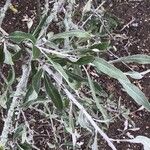
Pyrus salicifolia
Willow-leaf pear · Willow-leaved Pear
Description
Source: leafsnapPyrus salicifolia is a species of pear, native to the Middle East. It is widely grown as an ornamental tree, almost always as a pendulous (or "weeping") cultivar, and is called by various common names, including willow-leaved pear, weeping pear, and similar. The tree is deciduous and of comparatively small stature, rarely reaching 10–12 meters in height. The crown is rounded. It has pendulous, silvery foliage, superficially similar to a weeping willow. The flowers are large and pure white highlighted with black-tipped stamens although the buds are tipped with red. The small green fruits are inedible, being hard and astringent. This tree is cultivated widely in gardens and landscapes. It grows well on infertile sandy soils due to its spreading root system. The trees flower in the spring, but during the rest of the year can be trimmed back and shaped almost like topiary. This species of tree is very susceptible to fireblight, a bacterial pathogen. Pyrus salicifolia may also be confused with Pyrus nivalis which is generally taller and hardly pendulous or with Pyrus elaeagnifolia which has broader entire leaves and longer petioles. The cultivar 'Pendula' has gained the Royal Horticultural Society's Award of Garden Merit.
💡 According to legend, a beautiful woman inspired an entire village to plant pear trees across a mountain to sustain their livelihoods. Enchanted by her beauty, a god attempted to seduce her, but she refused his advances. In retaliation, the god caused a drought, and the pear trees began to wither. Desperate and with no other options, the woman chose to end her life beneath the pear trees. To everyone's astonishment, the moment she died, the pear trees blossomed in the wind.
Care Guide
💧 Water
The willow-leaved pear, which originates from arid regions, is known for its drought tolerance and needs watering only once every one to two weeks. It thrives best in well-draining soil and is ideally suited for outdoor environments. Being a deciduous plant, its water requirements decrease during dormancy, helping it conserve resources for the growing season.
What's the most effective way to water my Willow-leaved pear tree?
For optimal root development, place a garden hose at the base of the plant. Avoid spraying water directly onto the leaves as this can be detrimental. If the plant is outdoors and exposed to direct sunlight, the leaves may require more watering. To moisten the roots, consider using bubblers or soaker hoses for individual plants or the entire garden or bed. When adding or removing plants, use soaker hoses to encourage deep root growth. After watering, ensure any excess water drains and allow the soil to dry before watering again. Watering at ground level will help prevent diseases. On sunny days, it may be beneficial to spray the entire bush with water. Whether the plant is potted or in-ground, it is important to remember that Willow-leaved pear prefers deep watering rather than light sprinkling.
What if I give the Willow-leaved pear tree too much or too little water?
An overwatered Willow-leaved pear may display yellowing, dropping, and wilting leaves, as well as a dull and unhealthy appearance with mushy stems. It is important to adjust your watering schedule when these signs begin to show. Additionally, wilting can also indicate under watering, causing crispy and dry leaves. In such cases, check the soil moisture and provide a thorough watering if needed. However, even with sufficient water, the damaged root system may cause yellowing and dryness in the leaves after a few days. Once the plant recovers, the yellowing will stop. When keeping the Willow-leaved pear indoors, always monitor the moisture levels and avoid overwatering, watching out for black spots indicating potential issues. In such cases, allow the soil in the pot to dry out for a few days before watering again. Overwatering can lead to root rot, so if you notice discolored and slimy roots, consider transferring the plant to a different pot. Preventing root rot is crucial, so ensure the soil does not become overly soggy. When planting the Willow-leaved pear outdoors, check the soil moisture by digging a bit deeper. If the soil is too dry, it may indicate underwatering, and adequate watering is necessary to help the plant recover.
How frequently should I give water to my Willow-leaved pear?
The Willow-leaved pear thrives with deep, infrequent watering. If they are planted in pots, they especially need to be soaked with a gallon of water each time. Pots have limited water storage, so the soil dries out quickly. In colder regions, watering is necessary every 3 to 5 days. Water the plant early in the morning when the soil is dry, whether it is indoors or outdoors. You can also check the soil inside to see if watering is needed. When the top 2-3 inches of soil is dry, it's time for a thorough watering. On hot days, check the moisture daily as the heat can quickly dry out the soil in the pots. If you have a garden, watering the soil is also essential. In hot climates, watering once a week is sufficient. Only water when you notice 2 to 3 inches of soil becoming too dry, both indoors and outdoors. Consider existing rainfall and avoid overwatering to prevent root rot. If there is abundant rain, additional watering may not be necessary. Willow-leaved pear typically grows in spring and fall. When the plant is outdoors, adding 3 to 4 inches of mulch helps conserve water. Sandy soil drains faster, so more frequent watering is needed. However, clay soil requires less frequent watering, allowing the plant to dry out for 2 to 3 days to avoid root rot. Keep track of watering dates on a calendar and pay attention to drooping leaves as it may indicate the need for watering.
How much water should I give my Willow-leaved pear?
The Willow-leaved pear plant requires about a gallon of water on a regular schedule. For potted plants, water deeply until you see water dripping from the bottom of the pot. Wait for the soil to dry before watering again. To determine the amount of water given in a week, you can use a water calculator or a moisture meter. During the flowering period, provide plenty of water but allow the moisture to evaporate afterwards to avoid root rot. If the Willow-leaved pear is planted outside with sufficient rainfall, additional watering may not be necessary. When the plant is young or newly planted, ensure it receives 1-2 inches of rain per week. As the Willow-leaved pear grows, it can rely entirely on rainfall, except during very hot weather or a lack of rainfall for 2-3 weeks. In such cases, give the plant a full watering during the cooler part of the day to prevent heat damage. Additional watering may be needed during extended dry periods.
Do I need to change how often I water my Willow-leaved pear tree based on the time of year or the weather?
To ensure the proper care of the Willow-leaved pear tree, it is important to consider its watering needs throughout different seasons. During the spring and fall growing seasons, the soil should be kept moist but not overly wet. Alternating between drying and moistening the soil will promote healthy growth. In the summer, hot weather can cause water to evaporate quickly, so additional watering may be needed if there is a lack of rainfall. It is generally recommended to water less during winter when the tree goes dormant. Well-draining soil is crucial during this period, and terracotta pots can help water evaporate faster. Once the tree starts to leaf out and go dormant, watering can be skipped as it can rely on fall and winter rains. During the flowering period, it is important to ensure good drainage to prevent ponding or drought. When the tree is in a pot, its root growth is limited, so regular watering, especially in summer, is necessary. Deep soaking the entire root system once or twice a week is preferable over shallow sprinkles. However, even during dormancy, the tree should not be allowed to dry out completely. Avoid excessive watering that can lead to waterlogging, as this can cause the tree to die, especially in winter. Applying mulch can help reduce stress, conserve water, and promote healthy blooming.
☀️ Light Full sun
The willow-leaved pear is native to open habitats, like sunny meadows and forest margins, which provide plenty of light. It prefers full sun but can also tolerate partial sun, adapting well to different light conditions.
What are the sunlight requirements for a Willow-leaved pear (Pyrus salicifolia)?
The Willow-leaved pear, or Pyrus salicifolia, thrives in areas that receive full sun, which means more than 6 hours of sunlight daily. It can also grow in partial sun, requiring about 3-6 hours of sunlight each day. It's important to observe the movement of sunlight through your garden to find locations that offer the right mix of light and shade. This careful selection ensures the plants' well-being and growth.
🌡️ Temperature 5–32.2°C
The willow-leaved pear is highly adaptable to a variety of climates, tolerating both hot summers and cold winters. However, it does have an optimal temperature range for growth. If temperatures become too high, the plant can suffer from heat and humidity stress, which may lead to its death. In areas where temperatures near the lower limit of its cold tolerance, it is important to provide insulation to protect the plant.
What is the botanical name of the Willow-leaved pear?
The botanical name of the Willow-leaved pear is Pyrus salicifolia. This information highlights its classification within the broader Pyrus genus, indicating its unique characteristics among pear trees, particularly its willow-like leaves.
💨 Humidity
🪴 Soil 6-7
🌱 Fertilizer
The timing of fertilization is important for Willow-leaved pear. Apply fertilizer in early spring and then once a month through early summer. Fertilizer encourages attractive blooms and provides energy during both dormant and active growth periods.
🪴 Pot & Repot Every 2 years
✂️ Pruning
Prune willow-leaved pear trees in early spring to encourage growth and prevent disease. Start by removing any dead branches and thinning crowded areas to improve air circulation. Avoid heavy pruning to preserve the tree's sculptural shape and promote flowering. Light and regular maintenance helps maintain its ornamental beauty.
🌿 Propagating
🐛 Diseases & pets
☠️ Toxicity
Characteristics
- Plant Type
- Tree
- Life Cycle
- Perennial
- Genus
- Pyrus
- Family
- Rosaceae
- Hardiness Zone
- 4-8
- Mature Height
- 4.57 m to 7.62 m
- Mature Spread
- 6.1 m
- Leaf Color
- Green, Gray, Silver
- Leaf Type
- Deciduous
- Flower Color
- White
- Flower Size
- 2.03 cm to 3.05 cm
- Bloom Time
- Early spring, Mid spring
- Planting Time
- Spring, Summer, Autumn
- Harvest Time
- Late summer, Early fall, Mid fall
- Native Area
- Turkey, Iran, Armenia, Azerbaijan