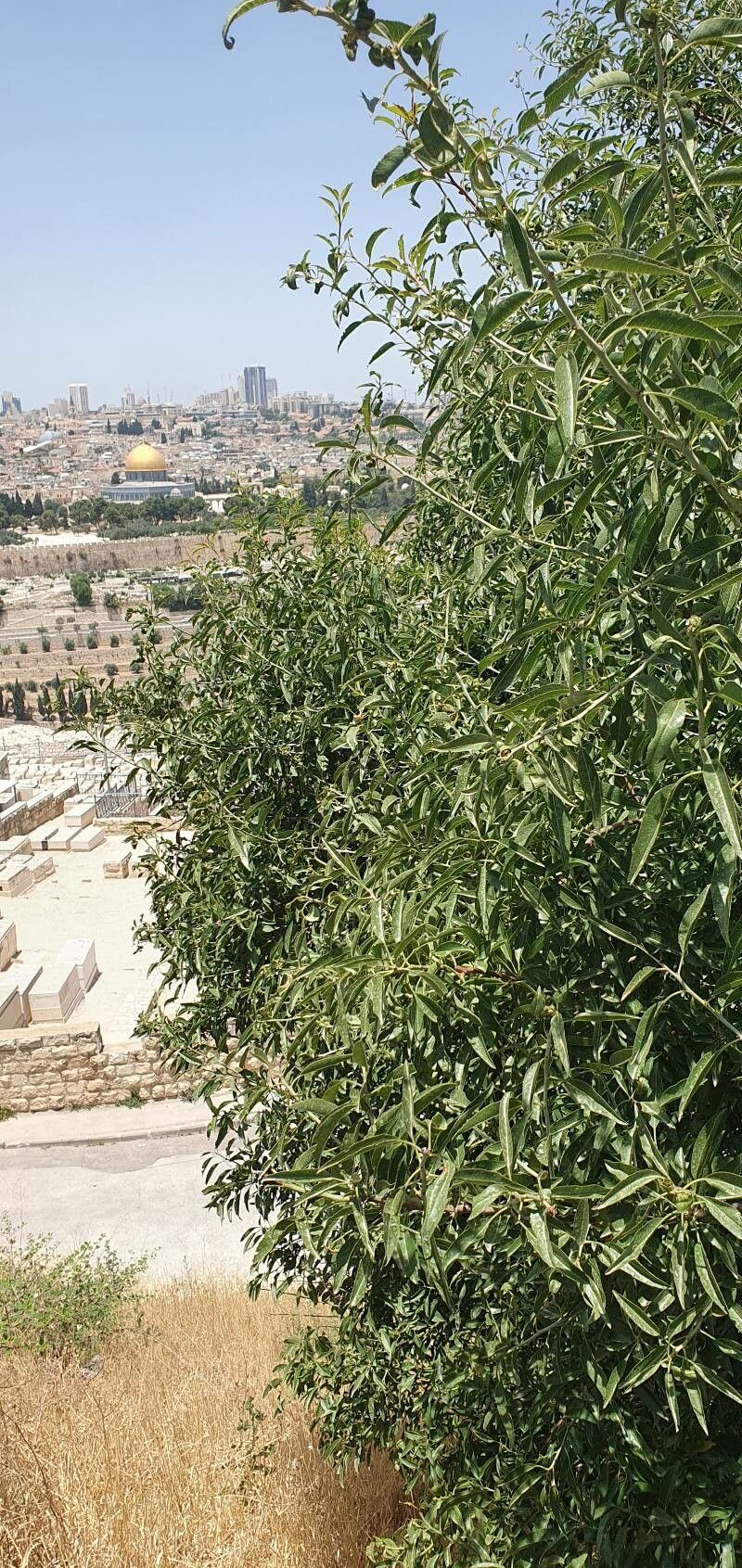
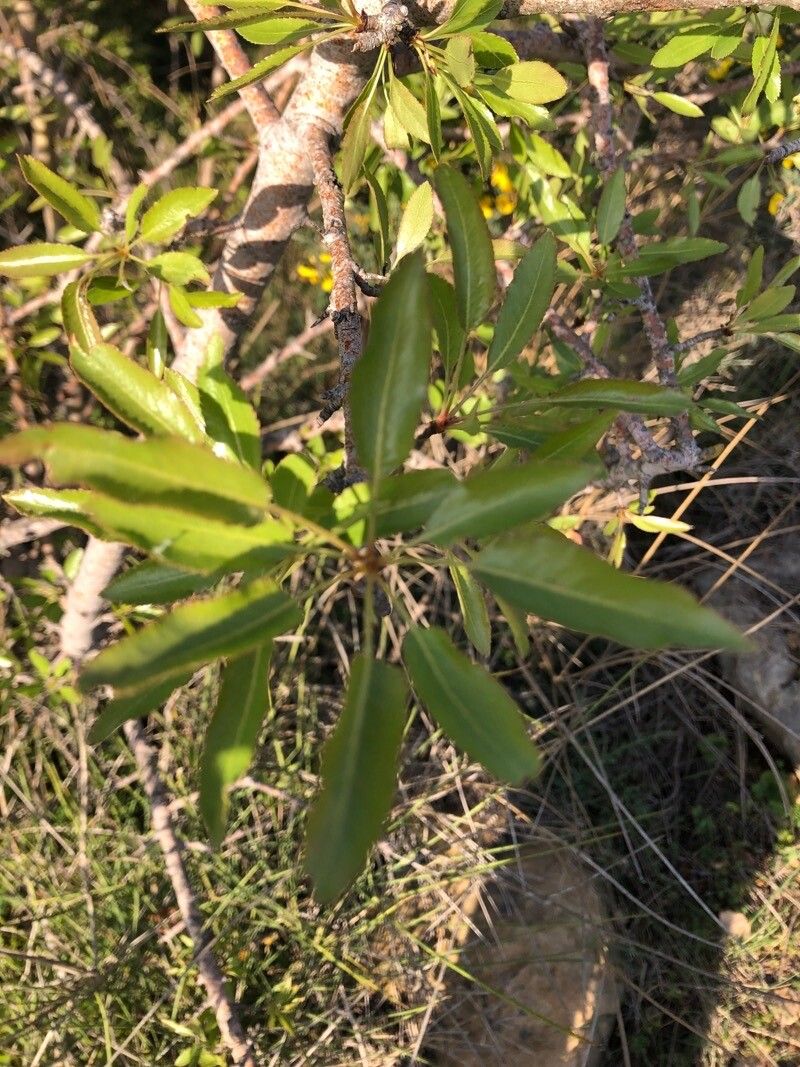
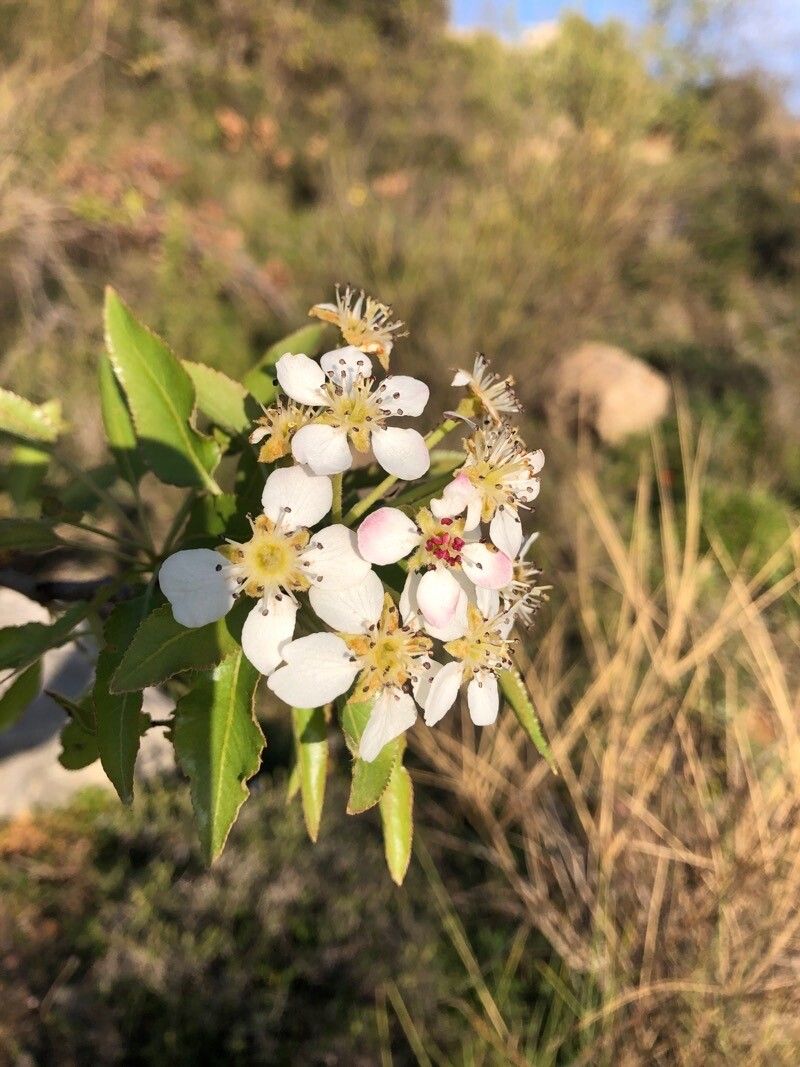
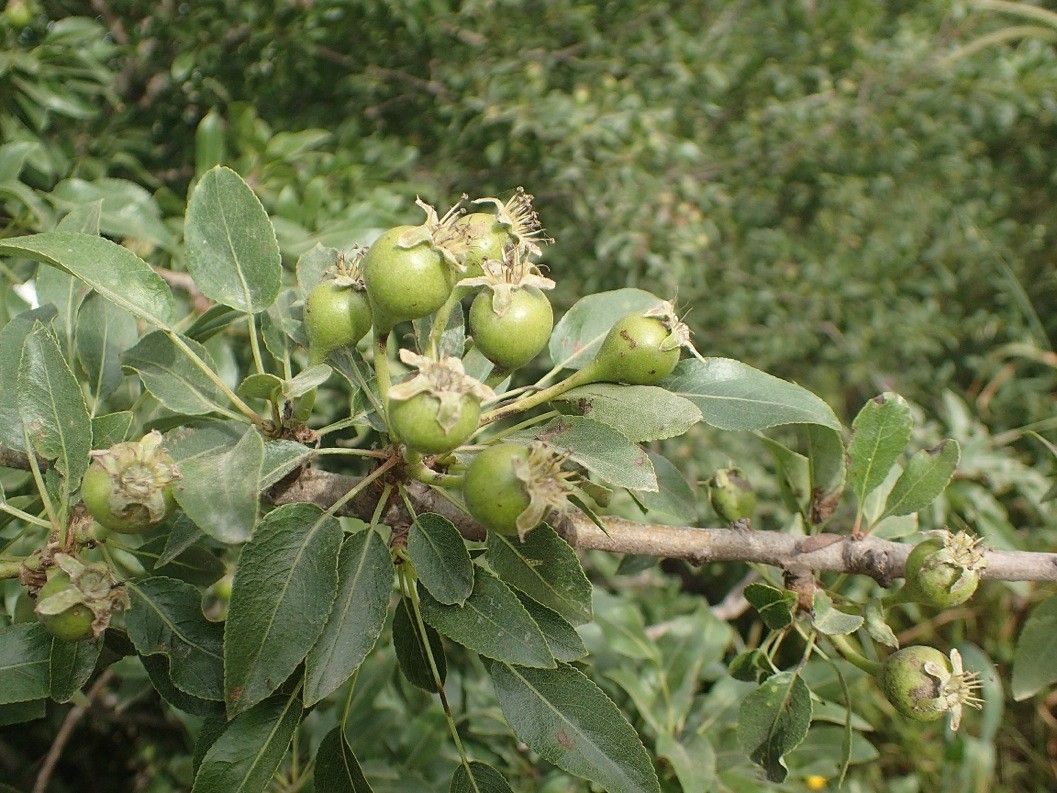
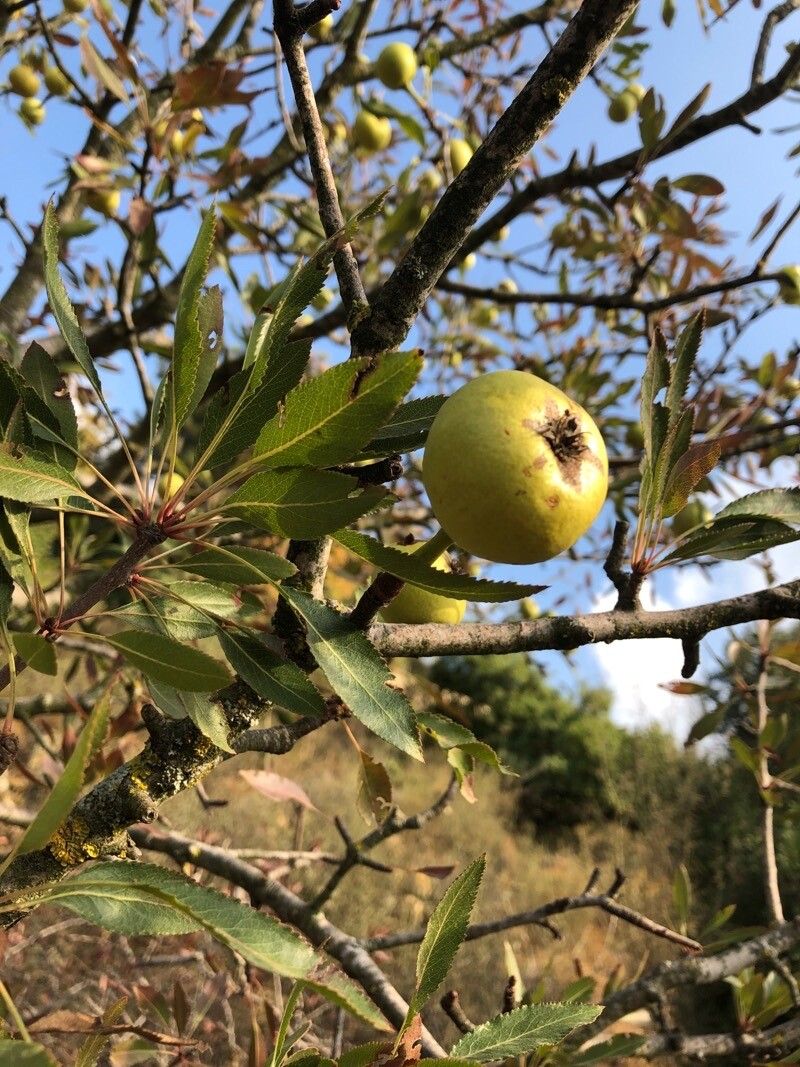
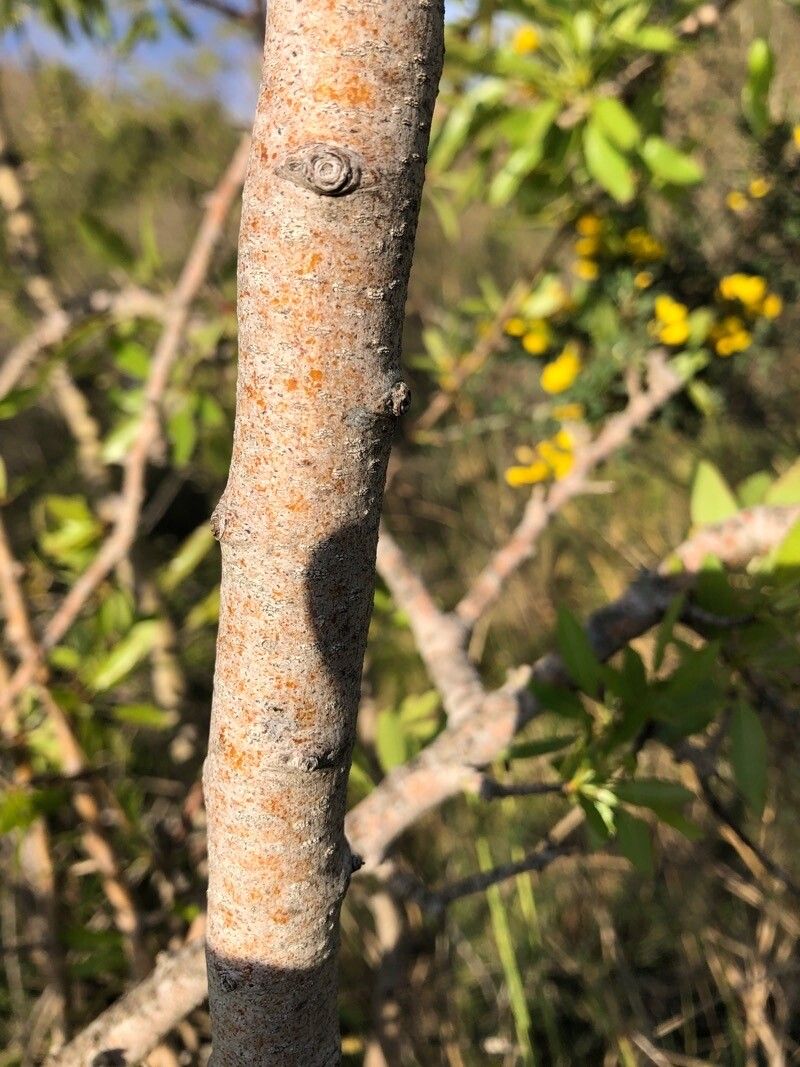
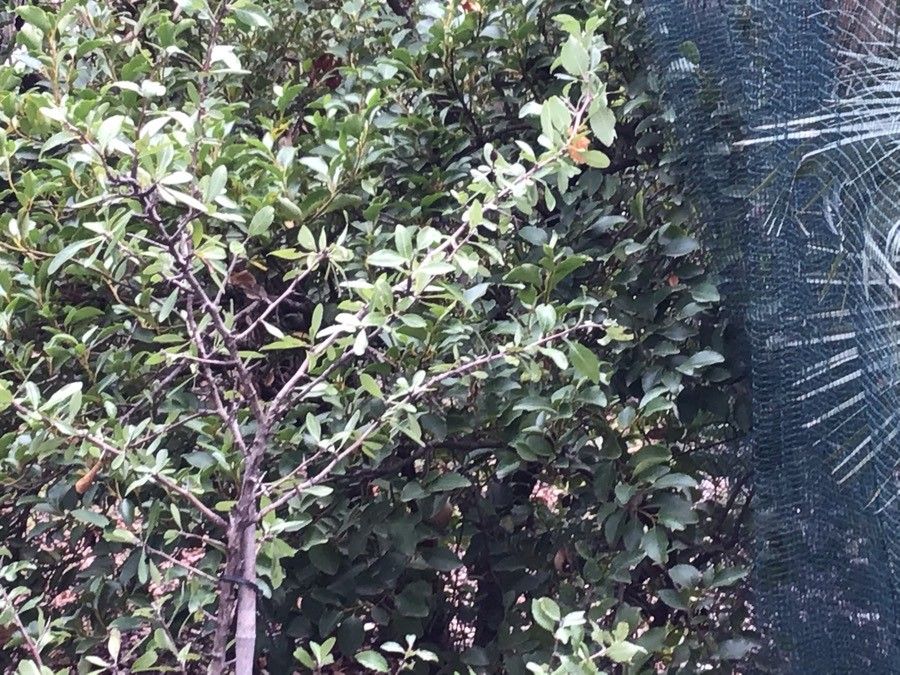
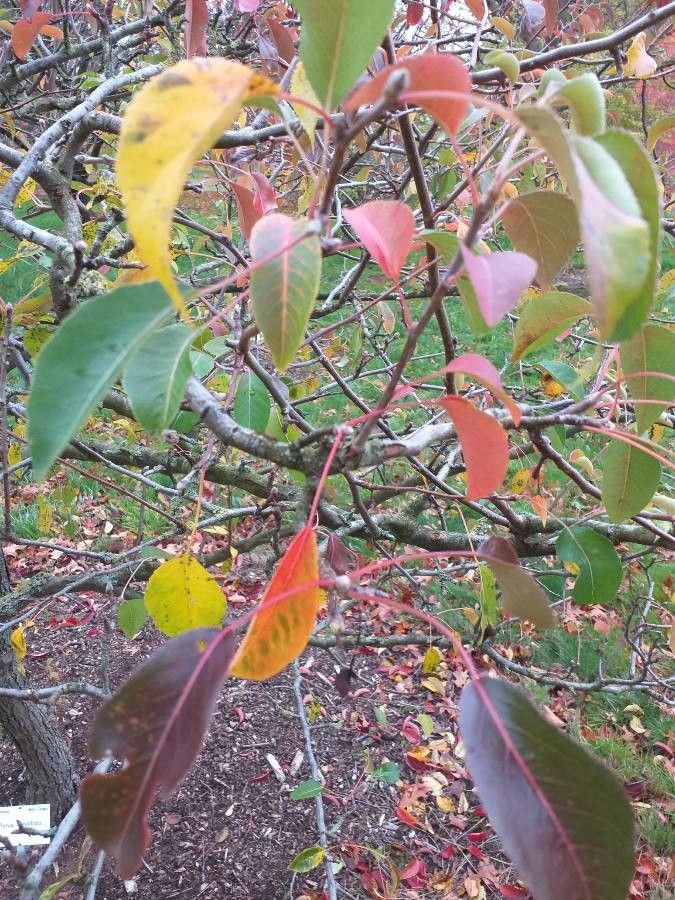
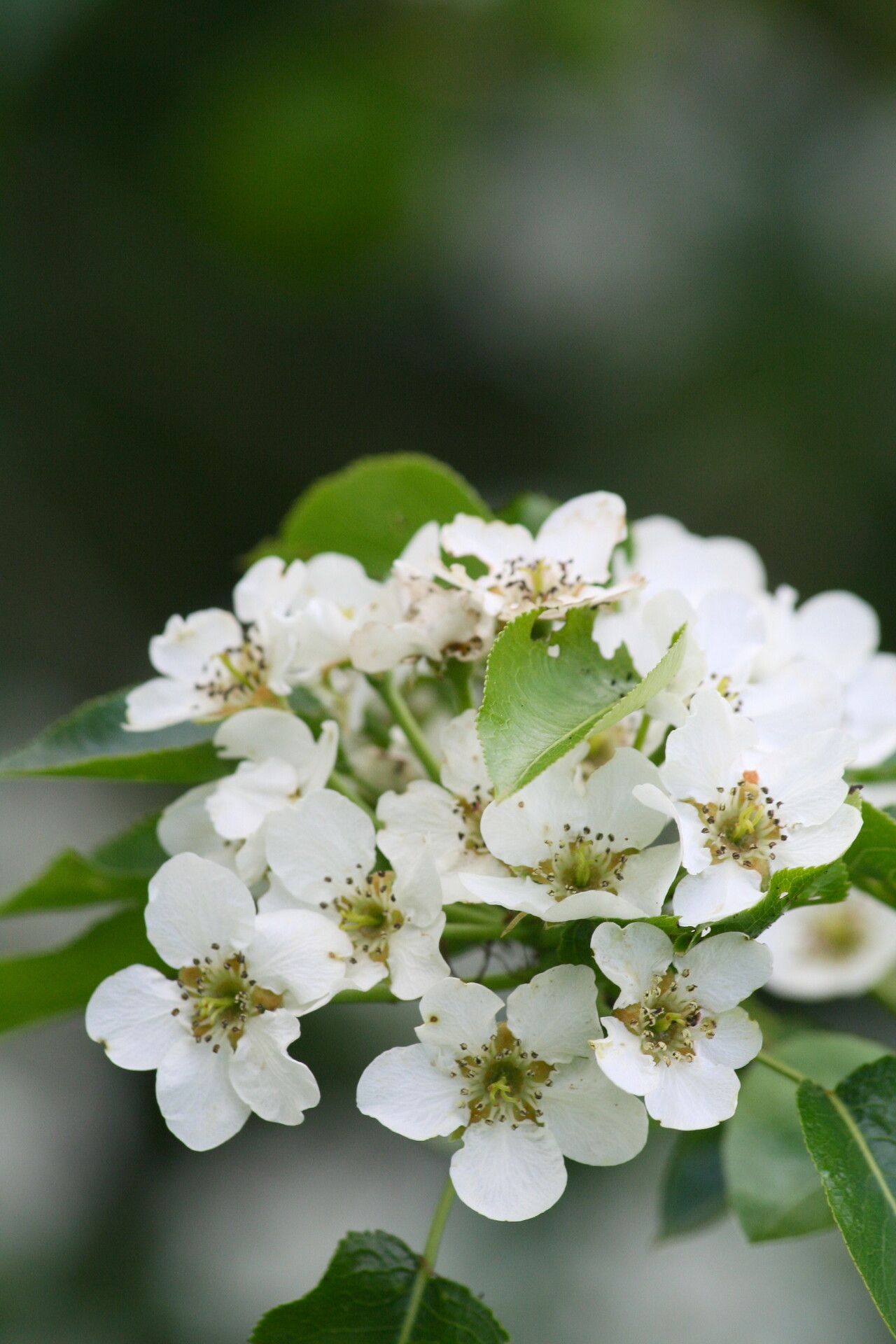
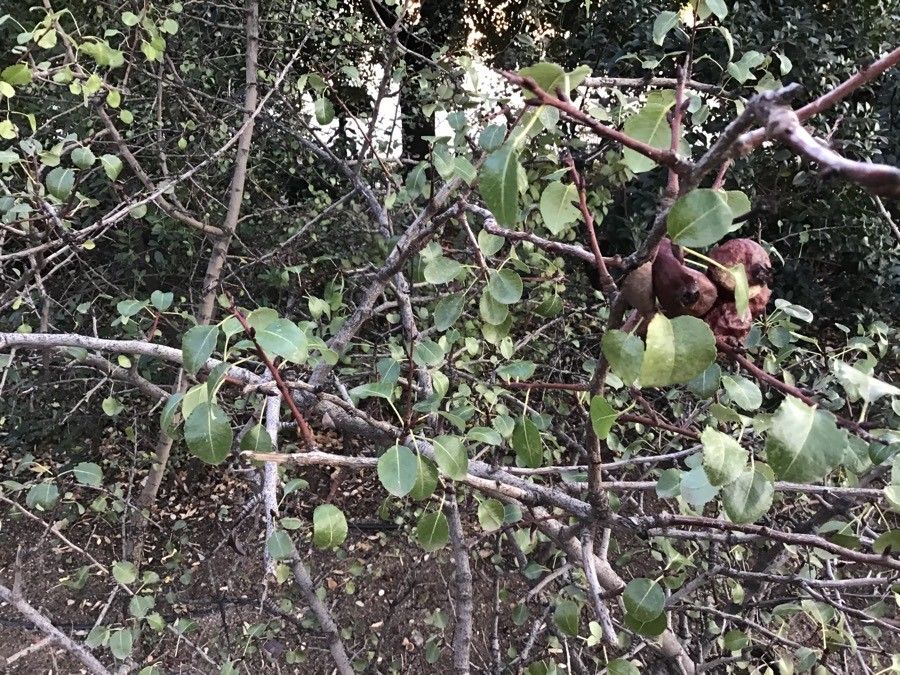
Pyrus syriaca is a deciduous tree in the Rosaceae family. It is referred to by the common name Syrian pear. It is the only pear species which grows in the wild in Lebanon, Turkey, Syria and Israel. The Syrian pear is a protected plant in Israel. It grows in unsalted ground, usually in Mediterranean scrub, in west Syria, in the Galilee and the Golan. In the months of March and April, the tree blossoms with white flowers. The fruit ripen in the autumn in the months of September and October. The fruit is edible, though not as good as the European Pear, mostly because of hard, stone like objects found in the skin. The ripe fruit falls to the ground and when it starts to rot, the smell attracts wild boars. The boars eat the fruit and distribute the seeds.
The Syrian pear is well resistant to disease and typically isn’t susceptible to illnesses. As for care, the plant is fairly low-maintenance. Planted outdoors it needs only light watering, and larger specimens usually do not require pruning. Smaller plants, however, should be pruned after they finish blooming. The Syrian pear is suitable for anyone with outdoor space—such as a garden or deck—and does not require extensive gardening experience.
How to keep Pyrus Syriaca.
Light
The Syrian pear is native to open habitats, for example sunny meadows and forest edges, where it receives abundant light. It does best in Full Sun but can tolerate Partial Sun, adapting well to a range of light conditions.
Water
The drought-resistant Syrian pear requires minimal watering, except during extended dry periods. Young plants should be watered once a week, receiving about 1 inch (2.5 cm) of water. When the topsoil feels dry, water deeply but allow the soil to dry out between watering sessions to prevent root rot.
Temperature
The Syrian pear shows strong adaptability to a wide range of climate conditions, from blazing summers to freezing winters. Still, it has a preferred temperature range for development. If temperatures rise too high, the plant can suffer from heat and humidity stress, which may cause it to die. In areas where temperatures near the lower edge of its cold tolerance, taking insulating measures is necessary to protect the plant.
Fertilizer
The Syrian pear plant needs adequate nutrients to achieve the best fruit production. Apply fertilizer in early spring to encourage new growth and bloom development. Regular feeding keeps the plant healthy, yields tastier fruit, and prevents nutrient deficiency problems such as yellowing leaves and poor fruit production.
Pruning
To ensure the healthy growth of a Syrian pear tree, it is important to prune it in early spring. Begin by removing dead wood to improve air circulation and allow more sunlight to reach the branches. Light thinning is recommended to enhance the tree's structure and increase its productivity. Avoid making heavy cuts, as they can stress the tree. Pruning at the right time encourages vigorous growth throughout the season and promotes overall healthy development.
Botanical profile.
- Plant Type
- Tree
- Life Cycle
- Perennial
- Genus
- Pyrus
- Family
- Rosaceae
- Hardiness Zone
- 5-9
- Mature Height
- 5.49 m
- Mature Spread
- 4.88 m to 7.92 m
- Leaf Color
- Dark Green, Olive Drab
- Leaf Type
- Deciduous
- Flower Color
- White
- Flower Size
- 2.03 cm
- Bloom Time
- Early spring, Mid spring
- Planting Time
- Autumn, Winter
- Harvest Time
- Late summer, Early fall, Mid fall
Reader questions.
What are the sunlight requirements for a Syrian pear (Pyrus syriaca)?
The Syrian pear (Pyrus syriaca) requires specific sunlight conditions to thrive. It needs full sun, which means it should receive above 6 hours of sunlight daily, or partial sun, with about 3-6 hours of sunlight daily. It's important to observe how sunlight moves through your garden to find spots that offer a perfect balance of light and shade, ensuring the best growth conditions for your plant.