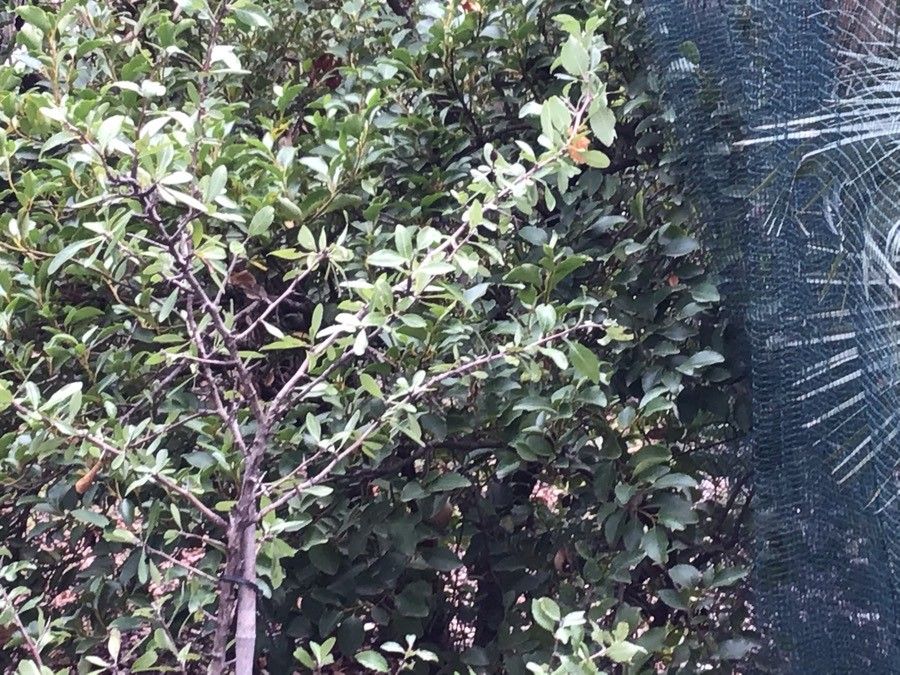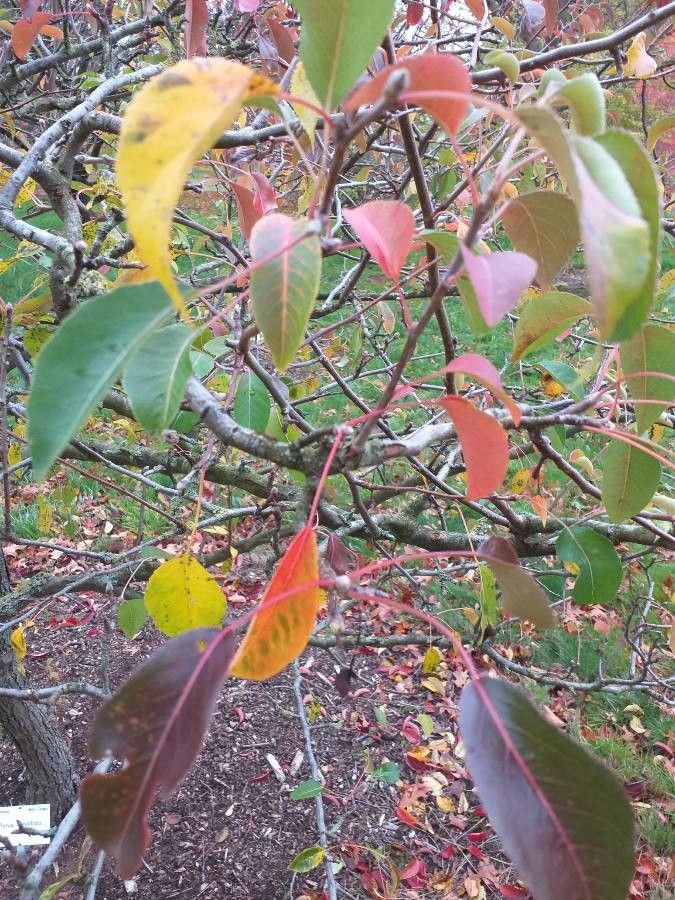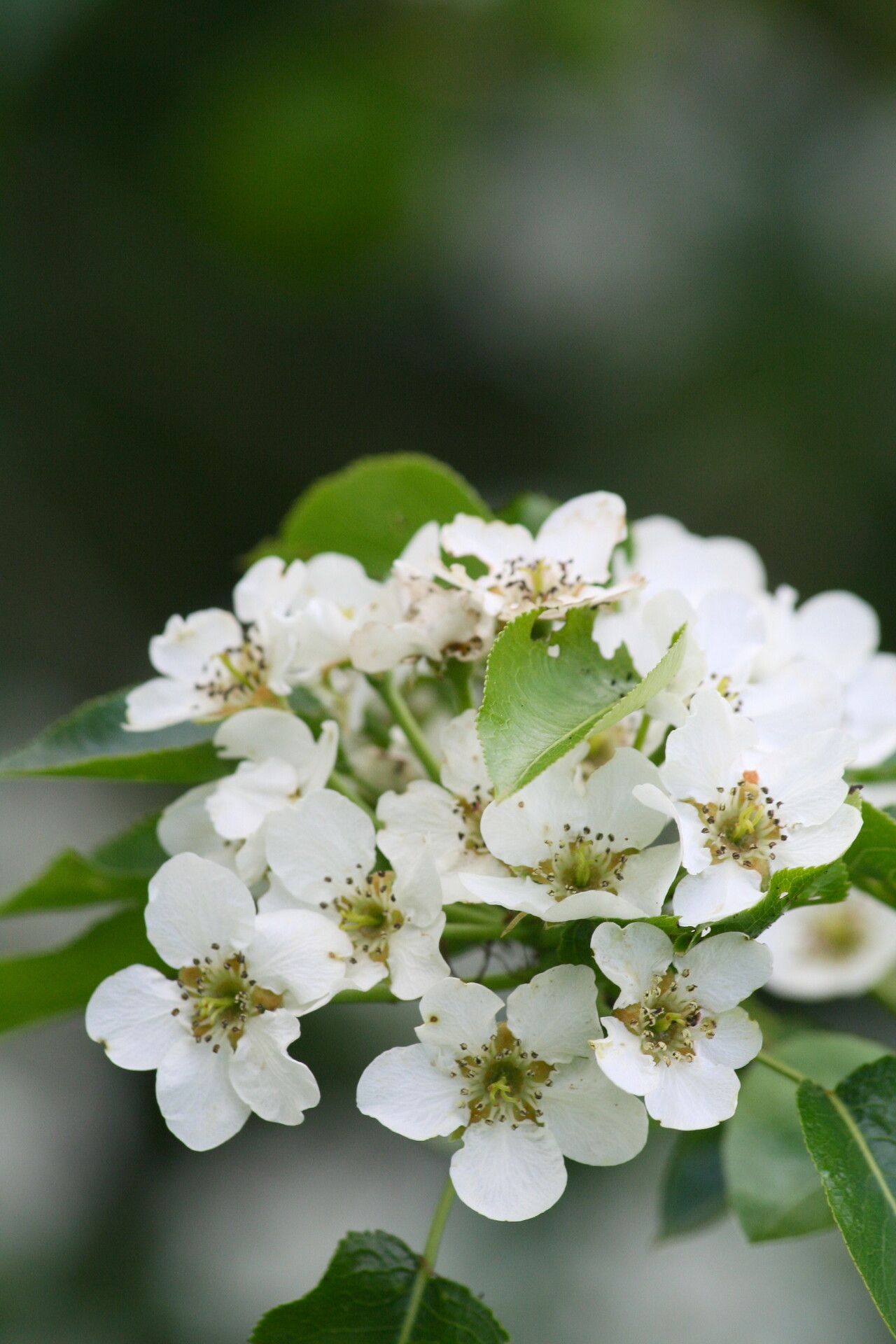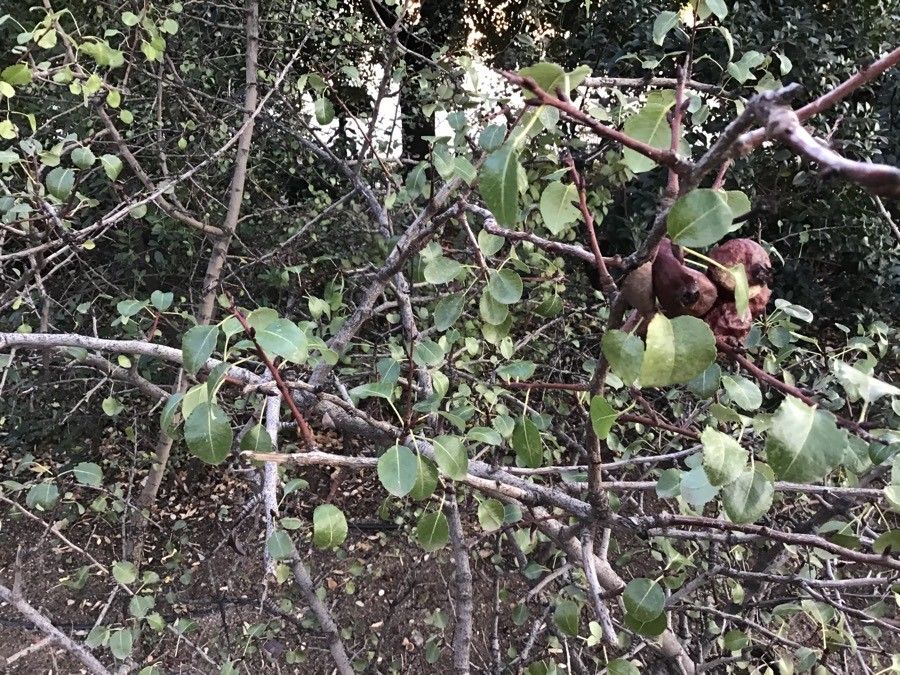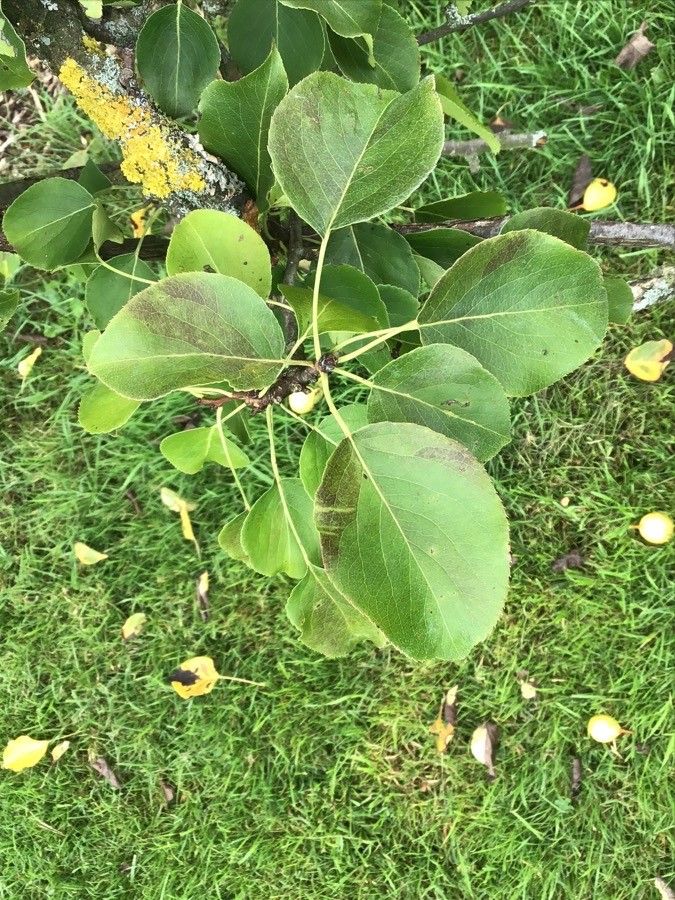
Pyrus ussuriensis, also known as the Ussurian pear, Harbin pear, and Manchurian pear, is a species of flowering plant in the family Rosaceae.It is native to Korea, Japan, and the Ussuri River area of far eastern Russia. It has flowers in spring that are slightly pink when budding and then turn white. Buds are dark brown and have an alternating arrangement. The tree grows to a height of about 15 meters (49 ft) and prefers well-drained loam-type soils. It is considered the hardiest of all pears. When planted in milder climates, the trees have been known to be killed by freezes after they begin budding. Many species of birds and mammals feed upon the fruit of this species. Deer, mice, and rabbits are known to damage the trees. Leaves are dark green in spring and summer and turn dark red and gold in autumn. Products made from the fruits may prove more effective than commercial insecticides in killing ticks and mites. The fruits are not the tastiest of pears to humans, but the taste is better after a freeze and the juice tastes better. Crosses of this species with other pears produces tasty pears that grow in climates too cold for most pears.Cultivars include the 'Reli', 'Jinxiang', 'Hongbalixiang', 'Baibalixiang', 'Fuwuxiang', 'Qiuxiang', 'Fuanjianba', 'Longxiang', 'Guanhongxiao', 'Shanli24', 'Wuxiangli', 'Shatangli', 'Manyuanxiang', 'McDermand' , and the Prairie Gem® Flowering Pear (cultivar ‘MorDak’). There are at least 108 compounds in the fruits that affect plant breeding and these show that P. ussuriensis cultivars fall into 4 groups.
The Chinese pear has strong resistance to disease and is generally not susceptible to illnesses. In terms of care, this plant is fairly low-maintenance. When grown outdoors it requires little watering, and larger plants typically do not need pruning. Smaller plants, however, should be pruned after they have finished blooming. The Chinese pear is suitable for anyone with outdoor space, such as a garden or a deck, and does not require a great deal of care experience.
How to keep Pyrus Ussuriensis.
Light
Chinese pear is native to open environments, such as sunny meadows and forest margins, which offer abundant light. It prospers in Full Sun but can also tolerate Partial Sun, adjusting well to a range of sunlight conditions.
Water
The Chinese pear does well in moderate humidity and typically requires watering every 1–2 weeks. As a deciduous plant, it conserves water during dry periods by shedding its leaves. This adaptation allows it to thrive in different climate zones, similar to its native habitat where rainfall is more consistently distributed.
Humidity
This plant will thrive in moderate humidity, which is probably the level in your home. However, misting it a few times a week can be very beneficial. Make sure the room has good ventilation.
Temperature
The Chinese pear is highly adaptable to different climates, from very hot summers to cold winters. Still, it has a preferred temperature range for healthy growth. If temperatures get too high, the plant can suffer from heat and humidity stress, which can kill it. In areas where temperatures approach the lower limit of its cold tolerance, insulating the plant is necessary to protect it.
Fertilizer
The Chinese pear plant needs adequate nutrients to achieve the best fruit production. Apply fertilizer in early spring to support new growth and flower development. Regular feeding keeps the plant healthy, yields tastier fruit, and prevents nutrient-deficiency problems such as yellowing leaves and poor fruit production.
Pruning
Chinese pear trees demonstrate strong growth and have deciduous leaves. They require careful pruning to maintain their health and productivity. The best time to prune these trees is in early spring. During this time, you should focus on removing dead and diseased branches, thinning the canopy to allow more light in, and shaping the structure of the tree. This practice enhances airflow, reduces the risk of disease, and increases fruit yield. For optimal results, yearly pruning is essential.
Botanical profile.
- Plant Type
- Tree
- Life Cycle
- Perennial
- Genus
- Pyrus
- Family
- Rosaceae
- Hardiness Zone
- 4-9
- Mature Height
- 11.89 m
- Mature Spread
- 7.92 m
- Leaf Color
- Green
- Leaf Type
- Deciduous
- Flower Color
- White
- Flower Size
- 3.05 cm to 3.56 cm
- Bloom Time
- Early spring, Mid spring
- Planting Time
- Spring, Summer
- Harvest Time
- Late summer, Early fall, Mid fall
- Native Area
- Russia, Tajikistan, India, Japan, Koppen, Pakistan, South Korea, Thailand, China
Other names.
Reader questions.
What are the sunlight requirements for a Chinese pear (Pyrus ussuriensis)?
The Chinese pear, also known as Pyrus ussuriensis, thrives in various sunlight conditions. It requires 'Full sun', which means it needs above 6 hours of sunlight daily, to flourish. However, it can also tolerate 'Partial sun', indicating it can grow well with about 3-6 hours of sunlight. It's important to observe how sunlight moves through your garden throughout the day. Finding the right spots that offer a perfect balance of light and shade will ensure your Chinese pear plants are happy and healthy.
What is the botanical name of the Chinese pear?
The botanical name of the Chinese pear is Pyrus ussuriensis.