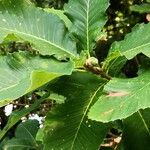
Quercus aliena
Oriental white oak · Galcham oak · Japanese white oak
Description
Source: leafsnapQuercus aliena, the galcham oak or oriental white oak, is a species of oak in the family Fagaceae, in the white oak section Quercus.
Care Guide
💧 Water
The Oriental white oak is well-suited to woodland environments. It thrives in areas with moderate moisture and, once fully established, can tolerate drought conditions. To encourage strong root development, it benefits from deep watering every three weeks. As a deciduous tree, the Oriental white oak requires adequate water during the growing season to maintain healthy leaves and ensure successful leaf shedding.
☀️ Light Full sun
Oriental white oak grows best in locations with abundant sunlight throughout the day, though it can also adjust to spots with somewhat less light. The intensity of sunlight has a positive effect on the plant's health, vigor, and growth rate. In its native growing conditions, it is used to being in the sun. Too much or too little light can cause the shrubs to wilt or exhibit stunted growth.
What are the sunlight requirements for Oriental White Oak?
Oriental White Oak thrives in locations with abundant sunlight throughout the day but can adapt to areas with slightly less light exposure. Full sun, defined as over 6 hours of sunlight, is ideal, though the plant can also grow in partial sun, about 3-6 hours of sunlight. It's crucial to watch the sunlight movement through your garden to find spots with the right balance of light and shade, ensuring the plants' optimal growth and happiness.
How does sunlight affect the growth of Oriental White Oak?
The health, vigor, and growth rate of Oriental White Oak are significantly influenced by sunlight intensity. The plant is accustomed to basking in the sun in its natural habitat. Either overexposure or underexposure to sunlight may cause the shrubs to wither or exhibit stunted growth. When natural sunlight is insufficient, especially during winter or in less sunny areas, artificial lighting can be a beneficial solution. It's important to choose the right artificial light, such as LEDs, and determine the proper duration and distance to mimic natural sunlight conditions for optimal growth.
What symptoms indicate Oriental White Oak is not receiving adequate sunlight?
Symptoms of insufficient sunlight in Oriental White Oak include smaller new leaves, leggy or sparse growth, faster leaf drop, halted leaf production, pale new leaves, chlorosis (yellowing leaves due to chlorophyll breakdown), sunscald, leaf curling, wilting, and leaf scorching. These symptoms suggest the plant is not getting enough light, affecting its ability to photosynthesize and maintain good health.
What solutions can help improve light exposure for Oriental White Oak?
To optimize light exposure for Oriental White Oak, consider several strategies depending on the setting. Indoors, gradually move plants to sunnier locations or use artificial lighting, such as desk lamps or professional grow lights, ensuring at least 6 hours of direct sunlight daily. Outdoors, relocate your plants to sunnier spots gradually to prevent sunburn. If the plant is in the ground and obstructed by elements like trees, consider pruning or transplanting to a sunnier location with ample sunlight and good drainage. It's important to remember that parts of the plant damaged by insufficient sunlight may not recover, but new growth should be healthy with improved light exposure.
🌡️ Temperature 5–32.2°C
Oriental white oak is highly adaptable to a range of climates, from scorching summers to frigid winters. It still has an optimal temperature range for growth. If temperatures become too high, the plant is vulnerable to heat and humidity stress, which can cause it to die. In areas where temperatures approach the lower limit of its cold tolerance, it is important to provide insulation to protect the plant.
What is the botanical name of the Oriental white oak?
The botanical name of the Oriental white oak is Quercus aliena.
💨 Humidity
🪴 Soil 6-6
🌱 Fertilizer
Fertilize your Oriental white oak in early spring to encourage healthy growth. Regular fertilization boosts overall health, producing vigorous growth, greater resilience to harsh conditions, and improved resistance to disease and pests. Keep a consistent fertilization schedule for your Oriental white oak to maintain vibrant, deeply colored foliage and a lush appearance.
🪴 Pot & Repot
✂️ Pruning
The Oriental white oak is a deciduous tree known for its sturdy structure and attractive foliage. For optimal health, prune in early spring to remove dead branches and thin the canopy, which improves air circulation. Be careful to avoid heavy pruning, as this can make the tree more sensitive. Proper pruning promotes growth, enhances health, and boosts disease resistance.
🌿 Propagating
🐛 Diseases & pets
☠️ Toxicity
Characteristics
- Plant Type
- Tree
- Life Cycle
- Perennial
- Genus
- Quercus
- Family
- Fagaceae
- Hardiness Zone
- 5-8
- Mature Height
- 12.19 m to 24.38 m
- Mature Spread
- 20.12 m
- Leaf Color
- Green, Dark Green
- Leaf Type
- Deciduous
- Flower Color
- Yellow, Green
- Flower Size
- 0.25 cm
- Bloom Time
- Mid spring, Late spring
- Planting Time
- Spring, Summer, Autumn
- Harvest Time
- Late summer, Early fall, Mid fall
- Native Area
- Japan, Koppen, Laos, South Korea, Thailand, China