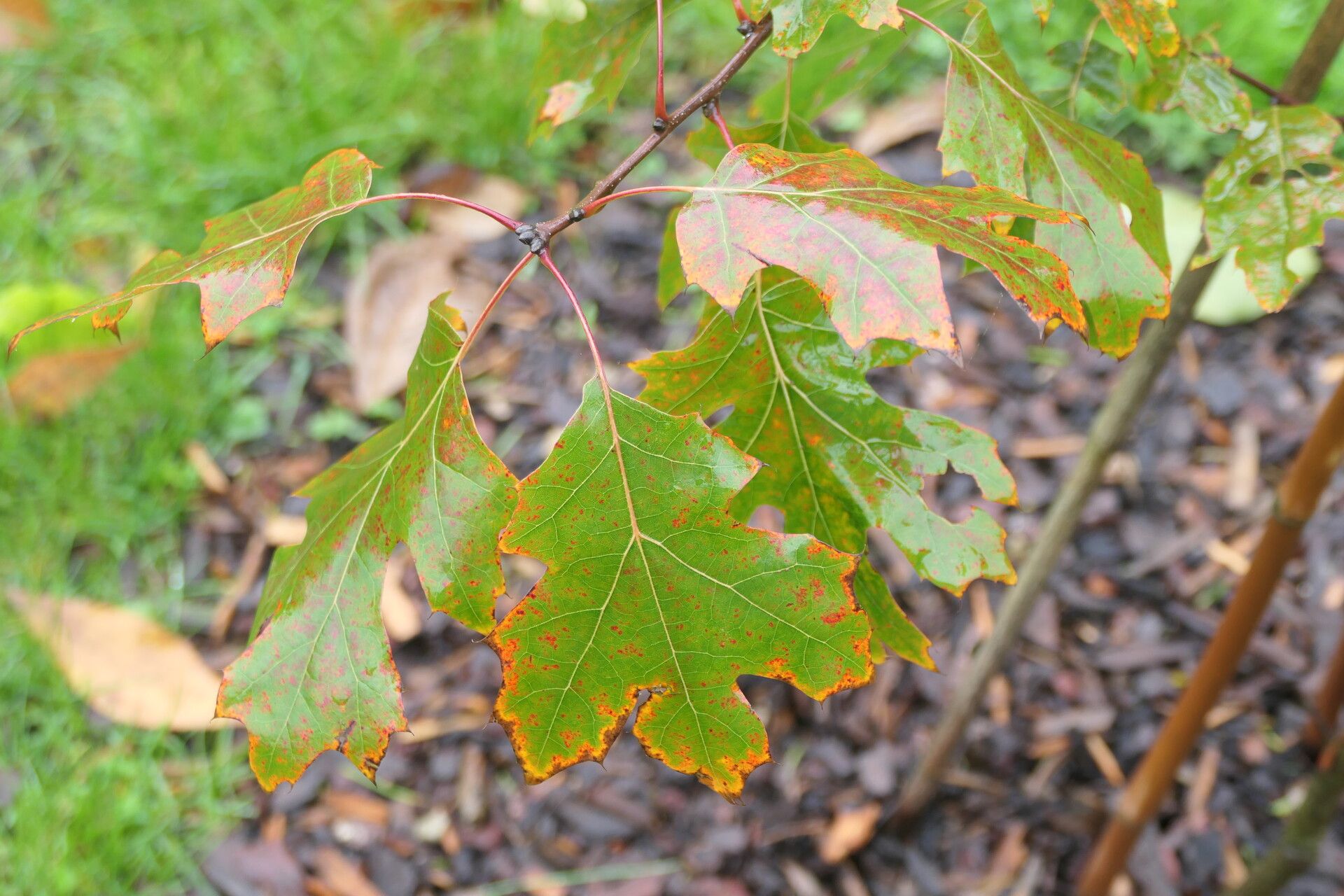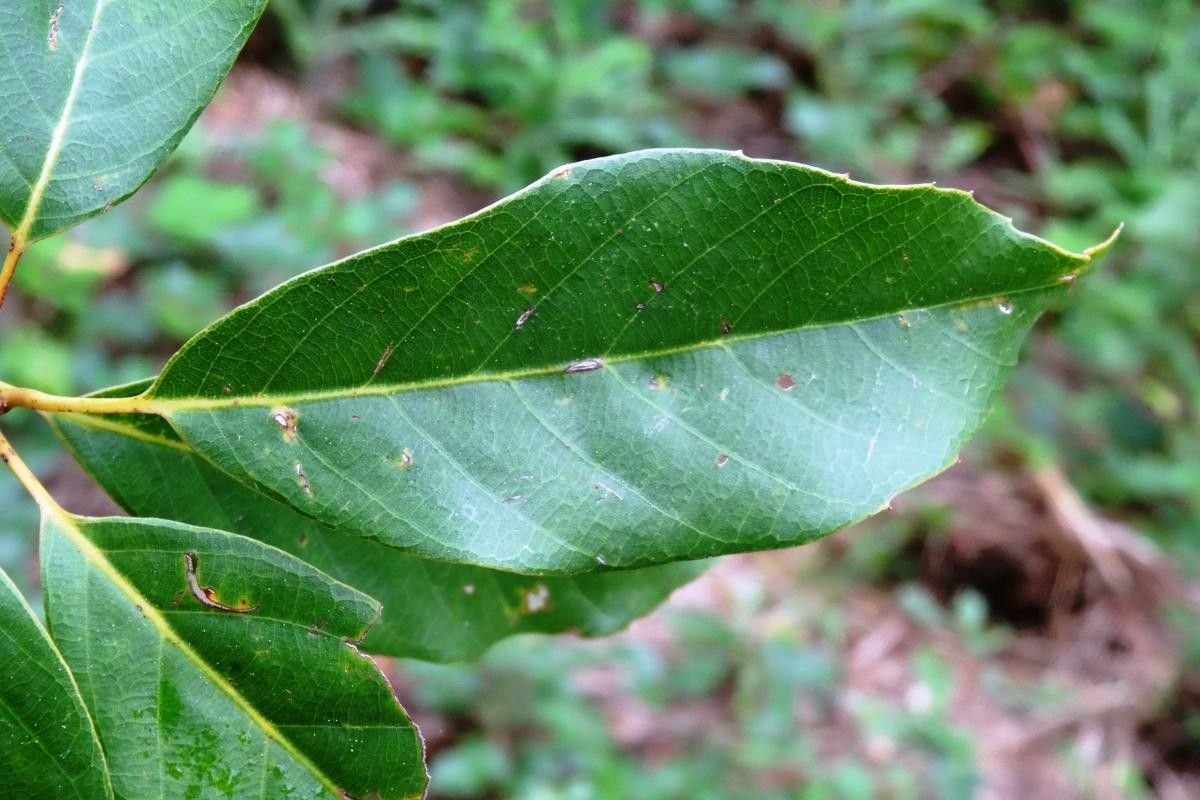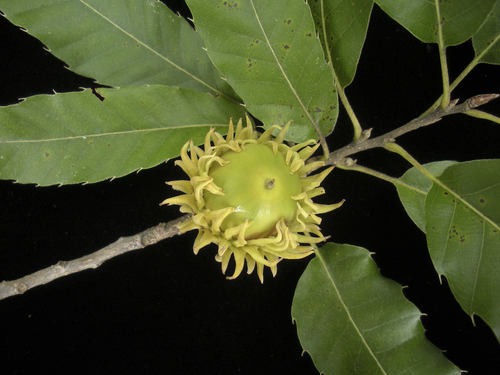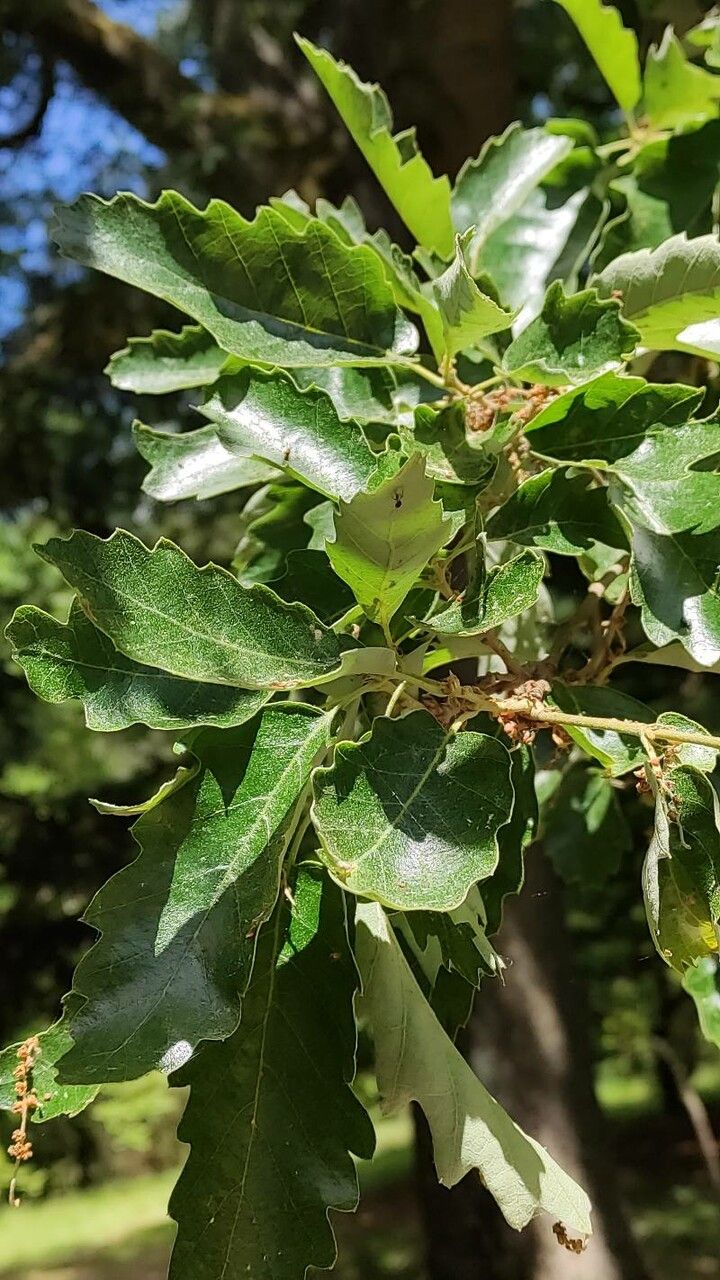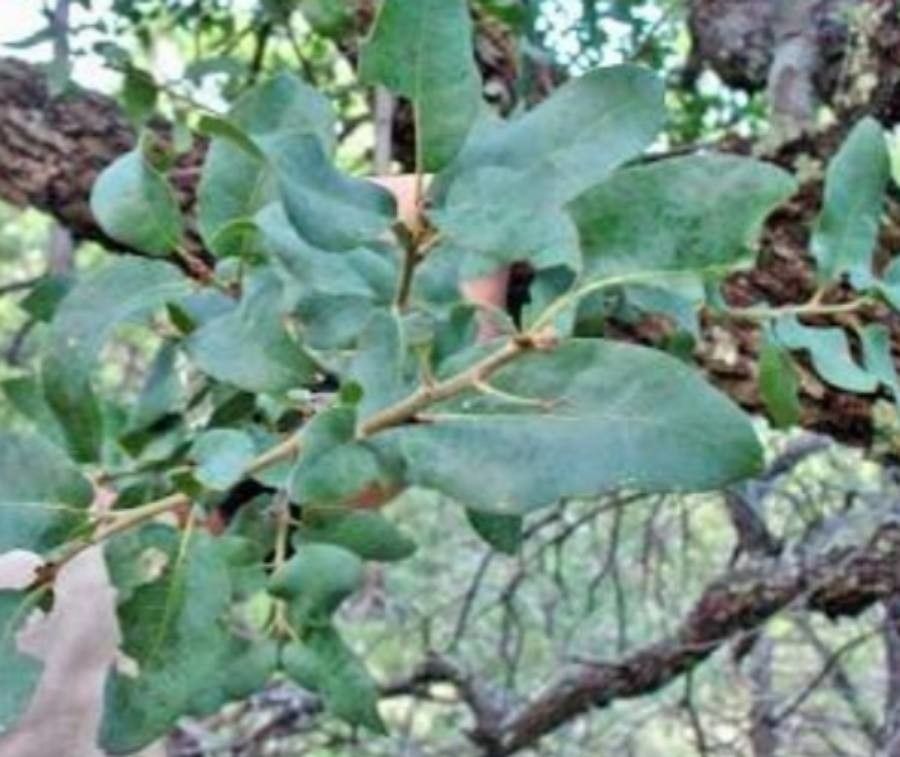
Quercus arizonica, commonly known as Arizona oak, is a species of oak tree native to the southwestern United States and northern Mexico. This tree belongs to the Fagaceae family and can grow up to 50 feet tall, with a trunk diameter reaching up to 2 feet. Its dark green, glossy leaves have a leathery texture and typically measure between 2 to 4 inches in length and width. The bark is grayish-brown with deep furrows.
Arizona oak trees are usually found in dry, mountainous regions at elevations ranging from 4,000 to 8,000 feet above sea level. They thrive in well-drained soils with slightly acidic or neutral pH levels.
These trees offer significant ecological benefits. They provide essential habitats for wildlife, including birds and mammals like squirrels, and produce acorns that serve as a food source for various animals, such as deer.
The wood of the Arizona oak has numerous uses, including as fuelwood and construction material due to its strength. Historically, it has also been utilized by Native Americans for medicinal purposes.
However, the populations of Quercus arizonica have declined over time due to habitat loss from human activities such as logging and urbanization, as well as climate change effects like droughts that negatively impact their growth. Consequently, Arizona oak is now considered a vulnerable species that requires concerted conservation efforts from all stakeholders involved in its preservation.
Arizona white oak has good resistance to disease and is generally not susceptible to illnesses. In terms of care, this plant is fairly low-maintenance. When grown outdoors it needs little watering, and larger specimens typically do not require pruning. Smaller plants, however, should be pruned after they finish blooming. Arizona white oak is appropriate for anyone with an outdoor area, such as a garden or deck, and does not demand extensive experience in plant care.
How to keep Quercus Arizonica.
Light
The Arizona white oak is native to open habitats, such as sunlit meadows and forest margins, that receive abundant light. It does best in Full Sun but will also tolerate Partial Sun, showing good adaptability to different light conditions.
Water
To care for an Arizona white oak, keep the soil moist but well-drained, ensuring it remains humid a few inches below the surface. Avoid flooding the topsoil. Reducing the amount of water during the summer promotes healthier growth, as the Arizona white oak can tolerate dry spells quite well.
Temperature
Arizona white oak is well adapted to heat and wide temperature swings. In hot conditions, it’s important to provide sufficient water and some shade to prevent sunburn. On the other hand, the species is relatively sensitive to cold; it can tolerate mild cold but very low temperatures may cause frost damage.
Fertilizer
Fertilize your Arizona white oak in early spring to encourage healthy growth. Regular fertilization improves overall health, producing vigorous growth, greater resilience to harsh conditions, and increased resistance to diseases and pests. Follow a specific fertilization schedule for your Arizona white oak to maintain vibrant, deeply colored foliage and a lush appearance.
Pruning
The Arizona white oak is a deciduous tree known for its rounded canopy and attractive bark. For optimal health, prune the tree in early spring by removing dead or crossing branches to improve air circulation. Regular thinning enhances both the tree's health and its appearance, while also increasing its resilience to pests and diseases. Be careful to avoid heavy pruning, as it can cause stress to the tree.
Botanical profile.
- Plant Type
- Tree
- Life Cycle
- Perennial
- Genus
- Quercus
- Family
- Fagaceae
- Hardiness Zone
- 7-10
- Mature Height
- 3.66 m to 10.97 m
- Mature Spread
- 7.92 m to 14.94 m
- Leaf Color
- Dark Green, Gray
- Leaf Type
- Semi-evergreen, Deciduous
- Bloom Time
- Mid spring, Late spring
- Planting Time
- Spring, Summer, Autumn
- Harvest Time
- Late summer, Early fall, Mid fall
- Native Area
- Mexico
Other names.
Reader questions.
What are the sunlight requirements for Arizona white oak (Quercus arizonica)?
The Arizona white oak (Quercus arizonica) thrives in different sunlight conditions depending on its needs. For full sun exposure, the tree requires above 6 hours of sunlight daily, which is ideal for its growth and health. If it's receiving partial sun, it should be about 3-6 hours of sunlight per day. It's important to observe how sunlight moves through your garden throughout the day to select the perfect balance of light and shade spots for planting. This careful placement ensures the plants remain happy and healthy.
What is the botanic name of Arizona white oak?
The botanic name of Arizona white oak is Quercus arizonica.