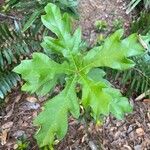
Quercus austrina
Bastard white oak · Bluff Oak
Description
Source: leafsnapQuercus austrina, commonly known as the Southern Red Oak, is a deciduous tree native to the southeastern United States. It usually grows to a height of 50-80 feet with a spread of 40-60 feet. This tree features an attractive rounded crown and has dark gray, deeply furrowed bark. The leaves of Quercus austrina are simple, alternate, and oval-shaped with pointed tips. They are dark green with smooth edges that may be slightly wavy or toothed. In the fall, the leaves turn vibrant shades of red or orange before falling off. The Southern Red Oak produces acorns approximately one inch long, with shallow caps covering about one-third of their surface. These acorns serve as a food source for various wildlife, including squirrels and deer. Quercus austrina thrives in well-drained soils and prefers full sun to partial shade but can tolerate some drought conditions once established. Due to its attractive appearance, it is commonly used in landscaping, while also playing important ecological roles, such as providing habitat for wildlife. Overall, Quercus austrina is a significant tree species in the ecosystems of the southeastern United States. It holds ecological importance and offers aesthetic value in landscaping settings.
Care Guide
💧 Water Every 7 days
☀️ Light Full sun
Bastard white oak comes from open habitats, like sunny meadows and forest edges, which provide abundant light. It grows best in full sun but can also tolerate partial sun, doing well under various sunlight conditions.
🌡️ Temperature 10–35°C
Bastard white oak is highly adaptable to a range of climatic conditions, from blazing summers to freezing winters. Still, it does have a preferred temperature range for healthy growth. If temperatures rise too far, the plant can suffer from heat and humidity stress, which may kill it. In areas where temperatures get close to the lower limit of its cold tolerance, taking insulating precautions to protect the plant is necessary.
💨 Humidity
🪴 Soil 6-8
🌱 Fertilizer
Apply fertilizer to your Bastard white oak in early spring to encourage healthy growth. Routine fertilization boosts overall health, producing vigorous growth, increased tolerance of harsh conditions, and enhanced resistance to diseases and pests. Keep to a defined fertilization routine for your Bastard white oak to preserve foliage that is vibrant, deeply colored, and lush in appearance.
🪴 Pot & Repot
✂️ Pruning
🌿 Propagating
🐛 Diseases & pets
☠️ Toxicity
Characteristics
- Plant Type
- Tree
- Life Cycle
- Perennial
- Genus
- Quercus
- Family
- Fagaceae
- Hardiness Zone
- 6-9
- Mature Height
- 12.19 m to 18.29 m
- Mature Spread
- 10.36 m to 14.94 m
- Leaf Color
- Dark Green, Olive Drab
- Leaf Type
- Deciduous
- Bloom Time
- Mid spring, Late spring
- Planting Time
- Summer
- Harvest Time
- Late summer, Early fall, Mid fall