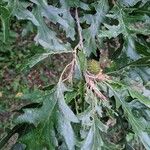
Quercus cerris
بلوط ترکی · Δρυς (Βελανιδιά) (GR) (EL) · Turkey Oak · European turkey oak · Hairy Oak
Description
Source: leafsnapQuercus cerris, commonly known as Turkey oak, is a deciduous tree species in the Fagaceae family. It is native to southeastern Europe and western Asia but has been introduced in other regions around the world as an ornamental tree. The Turkey oak can grow up to 40 meters tall, with a broad crown that can spread up to 20 meters wide. The leaves of Quercus cerris are dark green, glossy on top, and hairy underneath. They are deeply lobed with irregular margins and can grow up to 20 cm long. The bark of the tree is dark gray-brown with deep fissures. Turkey oaks produce acorns that are about 2 cm long, with a cupule covering roughly one-third of the nut's length. These acorns mature in two years, unlike those of other oaks which typically mature in one year. Quercus cerris prefers well-drained soils but can tolerate various types, including clay soils. It thrives best under full sun exposure but can also tolerate partial shade conditions. The wood from this species is prized for its durability and strength, making it valuable for furniture making, flooring, and construction materials. Overall, Quercus cerris has significant ecological importance due to its ability to sequester carbon. This helps mitigate the effects of climate change by reducing carbon dioxide levels in the atmosphere through the process of photosynthesis.
🌳 The bark of the turkey oak is rich in tannins, which were historically essential to the leather tanning industry. This use of the bark highlights the plant’s significance beyond its ecological roles and also secures its place in the cultural and economic history of the regions where it naturally occurs.
Care Guide
💧 Water Every 7 days
Turkey oak is well-suited for dry conditions and thrives with infrequent watering, ideally every three weeks. Its water needs vary with the seasons, requiring more water during its growth period and less as it enters dormancy. This watering schedule supports the tree's natural resilience and helps prevent excess moisture, which can be harmful.
What is the best way to give water to my Turkey oak tree?
To promote excellent root development, it's best to place a garden hose at the base of the plant. Avoid spraying water directly on the leaves, as this can cause issues. If the plant is outdoors and in direct sunlight, the leaves may require more watering. An option is to use bubblers or soaker hoses to ensure the roots stay well-moistened. When adding or removing plants, using soaker hoses that cover the entire garden or bed can help roots grow deeply. After watering, make sure to drain any excess water and wait for the soil to dry before watering again. Watering at ground level is advisable to prevent diseases. On sunny days, it can be beneficial to spray the entire bush with water. Whether the Turkey oak is potted or in-ground, it prefers deep watering over light sprinkling.
What do I need to do if I give Turkey oak too much water or too little water?
An overwatered Turkey oak can exhibit several symptoms, including yellowing, dropping, and wilting of leaves, as well as a dull and unhealthy appearance with mushy stems. If these signs begin to show, it is advisable to adjust your watering schedule accordingly. Conversely, wilting can also indicate under watering, with leaves turning crispy and dry. To address this, check the soil for dryness and provide a thorough watering when necessary. However, even with sufficient water, the Turkey oak may still display dryness and yellow leaves for a few days due to a damaged root system. Once the plant returns to normal, the yellowing of leaves will cease. When growing Turkey oak indoors, monitor the moisture levels in the pot and avoid overwatering. Look out for black spots, and if present, allow the soil to dry by refraining from watering for a few days. Overwatering can lead to root rot, which may require transferring the plant to a different pot, especially if discolored and slimy roots are observed. Always strive to prevent root rot by avoiding excessively soggy soil. When planting the Turkey oak outdoors, ensure that the soil is adequately moist. If your fingers detect dryness, it may be a sign of underwatering, and providing adequate water will aid in the plant's recovery.
How frequently should I water my Turkey oak?
The Turkey oak prefers deep and infrequent watering, especially when planted in pots. To avoid the soil drying out quickly, soak them with a gallon of water each time. In cold regions, water every 3 to 5 days. Water in the morning when the soil is dry, both indoors and outdoors. Check the soil by sticking your finger in – if the top 2-3 inches are dry, it's time to water. During hot days, check the moisture daily as the heat can dry out the soil faster. If you have a garden, irrigate the soil accordingly. In hot climates, water once a week. Keep an eye on the soil and add water when the top 2-3 inches are too dry. Avoid watering if there's already ample rainfall to prevent root rot. During spring and fall, Turkey oak generally grows. Outdoor plants benefit from mulch, about 3 to 4 inches deep, to conserve water. Sandy soil drains faster, so water more frequently. With clay soil, water less often – every 2-3 days – to avoid root rot. Mark the calendar whenever you water and check for drooping leaves, which may indicate you're a day late in watering.
How much water should I give my Turkey oak?
The Turkey oak generally needs about a gallon of water on a regular schedule. For potted plants, water them deeply until the water starts to drip from the bottom of the pot, then wait for the soil to dry before watering again. You can use a water calculator or moisture meter to track how much water you've given your plants in a week. During the flowering period, provide plenty of water, but allow the moisture to evaporate to avoid root rot. If the Turkey oak is planted outdoors where there is adequate rainfall, it may not need extra watering. However, when it is young or newly planted, ensure it receives 1-2 inches of rain per week. As the Turkey oak grows, it can survive solely on rainfall. Only water it fully during the cooler parts of the day when the weather is extremely hot or if there has been no rainfall for 2-3 weeks to prevent heat damage. Additional watering may be necessary during extended dry spells.
Should I water my Turkey oak more or less depending on the time of year or the climate?
The Turkey oak needs to be kept outdoors where it can receive rain, but if it persists to be dry for a long time, it will need to be watered. During the spring and fall, the soil should be kept moist but not soaked. Having alternating dry and moist conditions will help the Turkey oak grow well. In the summer, hot weather can cause the water to evaporate quickly, so if there is not enough rain, you will need to water it more often to keep it moist. During the winter, the Turkey oak will need less water because it will lose its leaves and go dormant. You can use well-draining soil, like terracotta, to help the water evaporate faster. Once the Turkey oak starts to grow leaves and go dormant in the spring, you can stop watering it as it can rely on the rain during this time. After the spring, you can encourage the Turkey oak to grow and bloom by cultivating it when it gets warmer. It's important to have good drainage at all times, especially in the winter. If the Turkey oak is in a pot, it has limited root growth, so it should be watered well, especially in the summer. Avoid cold and wet roots, and provide adequate drainage. It's best to water the Turkey oak thoroughly, making sure the entire root system gets soaked, once or twice a week, depending on the weather. Shallow sprinkles that only reach the leaves should be avoided as they can encourage fungi growth and don't reach the roots. In the fall and winter, even if it's dormant, don't let the Turkey oak dry out completely. However, be careful not to overwater the plant as it doesn't like sitting in water for too long. Proper drainage is important to prevent the plant from dying in winter. Applying mulch can help reduce stress, conserve water, and promote healthy blooms.
☀️ Light Full sun
The turkey oak does best in full, direct sunlight, which supports its nourishment and vigor. It can also achieve reasonable growth with moderate light, but excessive shade may stunt its development. Its native habitat was accustomed to plentiful sun exposure, which contributes to its hardiness.
What are the sun requirements for a Turkey oak?
A Turkey oak needs a sunny environment to thrive optimally, requiring more than 6 hours of sunlight each day for full sun exposure. It can also tolerate partial sun conditions, which means about 3-6 hours of sunlight daily. The natural habitat of the Turkey oak has accustomed it to plenty of sunlight, which is essential for its sustenance and robust health. It's recommended to observe the way sunlight moves through your garden to find spots that offer a good balance of light and shade, ensuring the well-being of your plants.
How does artificial lighting support indoor Turkey oak plants?
When natural sunlight is insufficient, especially in winter or less sunny spaces, artificial lighting becomes crucial for the growth of indoor Turkey oak plants. Proper artificial lighting supports optimal growth by promoting faster and healthier development. LED lights are commonly recommended as they can be adjusted to provide specific wavelengths needed by plants. For plants requiring full sun, 30-50W per square foot of artificial light is needed; partial sun plants need 20-30W per square foot, and those in full shade require 10-20W per square foot. The light source should be placed 12-36 inches above the plant, simulating natural sunlight. Also, it's important to mimic natural daylight hours, generally ensuring 8-12 hours of light per day for most plant species.
What symptoms indicate a Turkey oak is getting insufficient sunlight?
When a Turkey oak does not receive enough sunlight, it may show various symptoms indicating light deficiency. These symptoms include smaller than usual new leaves, leggy or sparse growth, premature leaf drop, halted new growth, or no growth, and the appearance of lighter-colored or yellow leaves, which points to chlorosis. Other symptoms like sunscald — damage from too much direct sunlight — along with leaf curling, wilting, and leaf scorching can also manifest, each signaling that the plant's current light conditions are not meeting its needs for healthy growth.
How can you improve light conditions for an indoor Turkey oak?
To enhance the growth of an indoor Turkey oak, gradually move it to a place where it can receive at least 6 hours of direct sunlight daily, ideally near a south-facing window while keeping curtains open during the day for maximum sunlight exposure. If the plant is large or not easily movable, consider providing additional light with artificial lighting solutions. Keeping a desk or ceiling lamp on for at least 8 hours a day, or investing in professional plant grow lights, can significantly benefit the plant's light intake, promoting healthier growth.
What should you do to ensure outdoor Turkey oaks receive adequate sunlight?
For outdoor Turkey oaks, it's crucial to gradually transition them to brighter locations to effectively adapt them to higher light intensities, minimizing the risk of sunburn. Over the span of a few weeks, move them bit by bit each week to spots that satisfy their sunlight needs. However, it's essential to recognize that parts of the plant already damaged due to insufficient sunlight may not recover, yet new growth that emerges after adjusting light conditions will be healthy.
🌡️ Temperature 5–32.2°C
Turkey oak is native to regions with temperatures between 41 and 90 °F (5 to 32 °C). It prefers milder conditions. Seasonal temperature adjustments may need to be taken into account to meet these preferences.
What is the native environment temperature range for Turkey oak?
Turkey oak is native to environments where temperatures vary between 41 to 90°F (5 to 32°C). It thrives in milder temperatures, and seasonal temperature adjustments might be necessary to cater to these preferences. Turkey oak has a strong resistance to cold, so special frost protection measures are typically not required during winter. However, if winter temperatures are expected to fall below -25°C, it's crucial to provide protection against the cold by wrapping the trunk and branches with materials like non-woven fabric or cloth. Additionally, it's advised to water the plant abundantly before the first freeze in autumn to ensure the soil remains moist and enters a frozen state. This strategy helps in preventing drought and water scarcity for the plant during the winter and early spring months.
How does low temperature affect Turkey oak, and what are the solutions?
Turkey oak is cold-tolerant and fares best when temperatures are kept above 5°C. However, during winter, it should remain above -20°C. If temperatures drop below -25°C, there might not be visible damage during the winter, but come spring, the branches may become brittle and dry, and no new shoots will emerge. The solution to this problem is to prune away any dead branches that have failed to produce new leaves in the spring, aiding in the plant's recovery and ensuring healthy growth.
What impact does high temperature have on Turkey oak, and how can it be managed?
During the summer, it's essential to keep the Turkey oak's temperature below 32°C. When the temperature surpasses 35°C, the leaves might lighten in color, tips could become dry and wither, and the plant becomes more prone to sunburn. To manage this, it's advisable to trim away the sunburned and dried-up parts. Relocating the plant to a shaded area, especially during the midday and afternoon sun, or using a shade cloth could provide necessary protection. Additionally, watering the plant in the morning and evening will help to keep the soil moist and support the plant's health.
💨 Humidity
🪴 Soil 6-7
🌱 Fertilizer
Fertilize your Turkey oak in early spring to encourage healthy growth. Regular feeding boosts overall health, producing vigorous growth, greater tolerance of harsh conditions, and enhanced resistance to diseases and pests. Keep to a specific fertilization schedule for your Turkey oak to preserve vibrant foliage with deep color and a lush appearance.
Why should I add fertilizer to my Turkey oak?
To ensure your Turkey oak grows healthy and strong, regardless of its type, regular fertilization is key. By providing the proper nutrients, your tree will experience more vigorous growth and become more resilient against challenging conditions, diseases, and pests. As the foliage of your Turkey oak is one of its most appealing characteristics, it is important to maintain it. This entails following a consistent fertilization schedule tailored to your specific tree, which will result in vibrant leaves and an overall lush appearance.
When should I fertilize my Turkey oak tree for the best results?
To ensure healthy growth for your Turkey oak, it is recommended to fertilize it for the first time in late winter or early spring. This will provide the necessary nutrients for the tree to thrive once the weather warms up. If you live in a warm climate region, it can be beneficial to provide an additional fertilizer feeding in early fall. This will not only supply extra nutrients for the following growing season but also help the tree withstand the cold winter without foliage damage. Fertilizing earlier will allow enough time for new branches to grow and withstand the winter conditions.
When is the best time to not fertilize my Turkey oak?
To ensure healthy growth of your Turkey oak, there are specific times of the year when you should avoid fertilizing it. First, during the early and mid-winter months when the tree is dormant, it does not require any feeding. Additionally, it is not advisable to fertilize the plant during late spring and the entire summer. These months are usually hotter and drier, which can have a negative impact on the tree if fertilized. To avoid any potential issues, it is best to stick to a fertilization schedule that only involves feeding during early spring and early fall.
What kind of plant food does my Turkey oak tree need?
Turkey oaks primarily need nitrogen as their most important nutrient, but phosphorus and potassium should not be overlooked. A balanced fertilizer like 10-10-10 can be effective because your Turkey oak requires a fair amount of all three main nutrients. However, a more customized nutrient ratio often leads to optimal growth. Fertilizers with a slightly higher nitrogen content, such as 10-6-4, tend to work well. You can choose between granular or liquid-based fertilizers when applying them to your Turkey oak.
How can I give nutrients to my Turkey oak plant?
To fertilize your Turkey oak, there are two options: granular fertilizer and liquid fertilizer. For granular fertilizer, simply sprinkle it on the soil at the right time. The slow-release nature of granular fertilizer will gradually release nutrients into the soil. It's recommended to lightly water the Turkey oak before applying fertilizer. Alternatively, you can use liquid fertilizer, although this is less common. To use liquid fertilizer, mix it with water and pour the mixture around the base of the Turkey oak. It can also be helpful to perform a soil test beforehand to determine if any pH adjustments are needed.
🪴 Pot & Repot
✂️ Pruning
The deciduous turkey oak benefits greatly from early spring pruning. Removing dead or crossing branches helps improve its structure and promotes better air circulation. It's best to prune during the tree's dormant period to minimize stress and reduce the risk of pests. This practice ensures the turkey oak maintains its long-term health and attractive appearance.
🌿 Propagating
🐛 Diseases & pets
☠️ Toxicity
Quercus cerris has no toxic effects reported.
Characteristics
- Plant Type
- Tree
- Life Cycle
- Perennial
- Genus
- Quercus
- Family
- Fagaceae
- Hardiness Zone
- 5-8
- Mature Height
- 12.19 m to 18.29 m
- Mature Spread
- 11.89 m to 17.98 m
- Leaf Color
- Green, Brown
- Leaf Type
- Deciduous
- Flower Color
- Yellow, Green
- Flower Size
- 2.54 cm
- Bloom Time
- Mid spring, Late spring
- Planting Time
- Spring, Summer, Autumn
- Harvest Time
- Mid summer, Late summer
- Native Area
- Turkey, Austria, Czech Republic, Slovakia, Montenegro, Bulgaria, Greece, Croatia, Slovenia, Lebanon, Russia, Serbia, Hungary, Germany, Syria, Italy, Switzerland, Albania, Romania, France