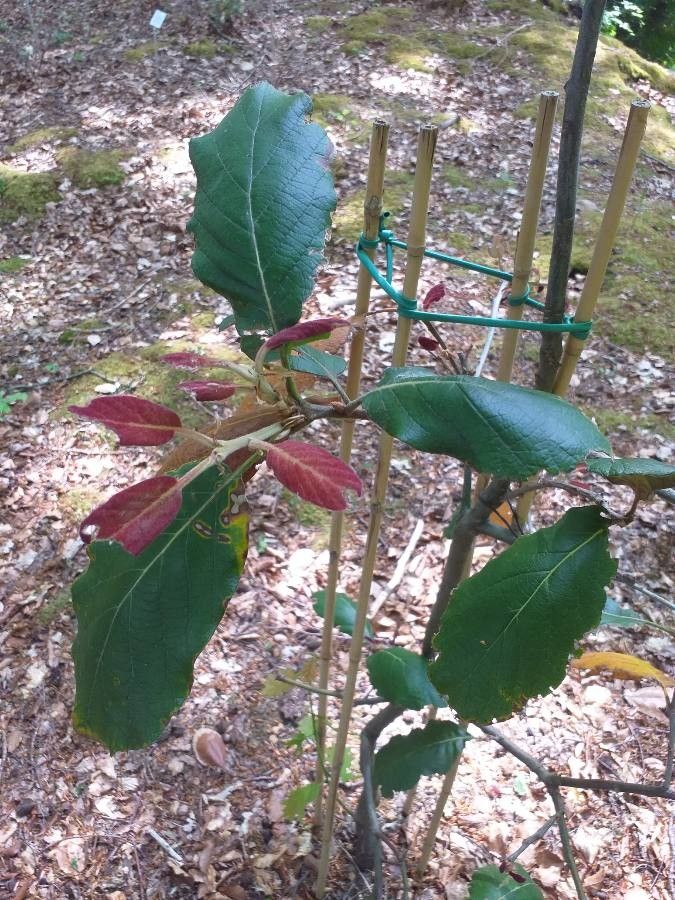
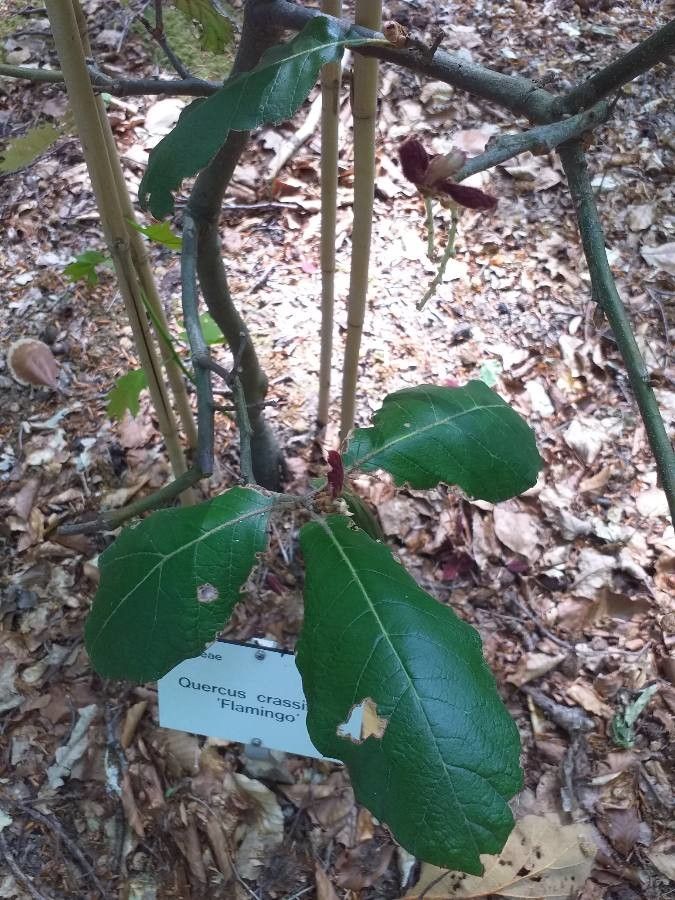
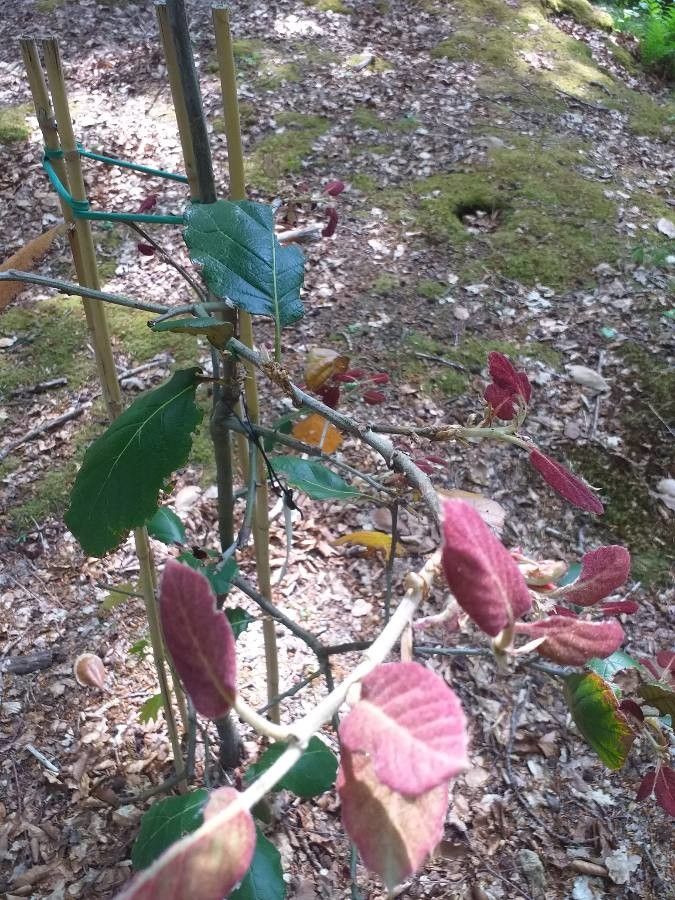
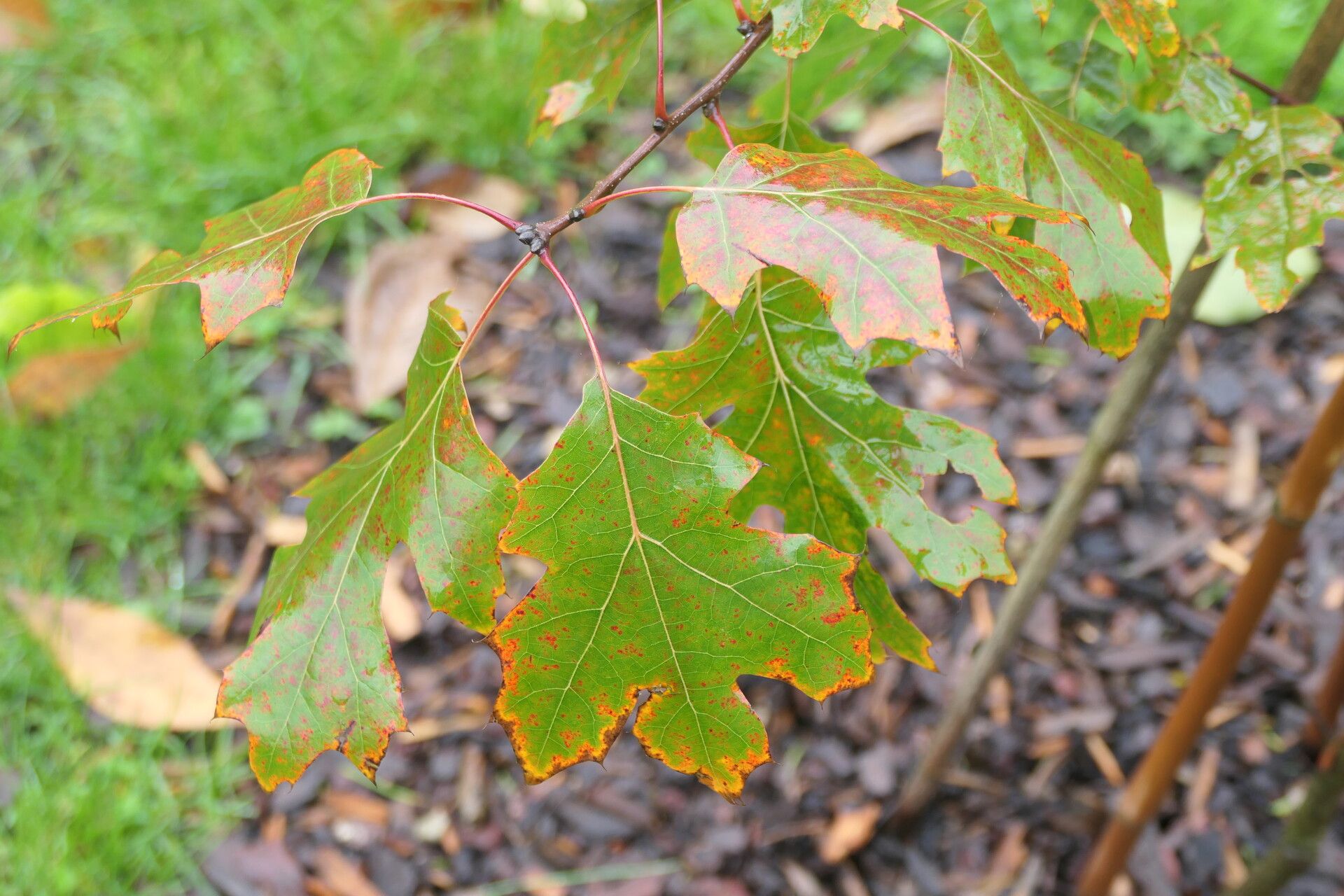
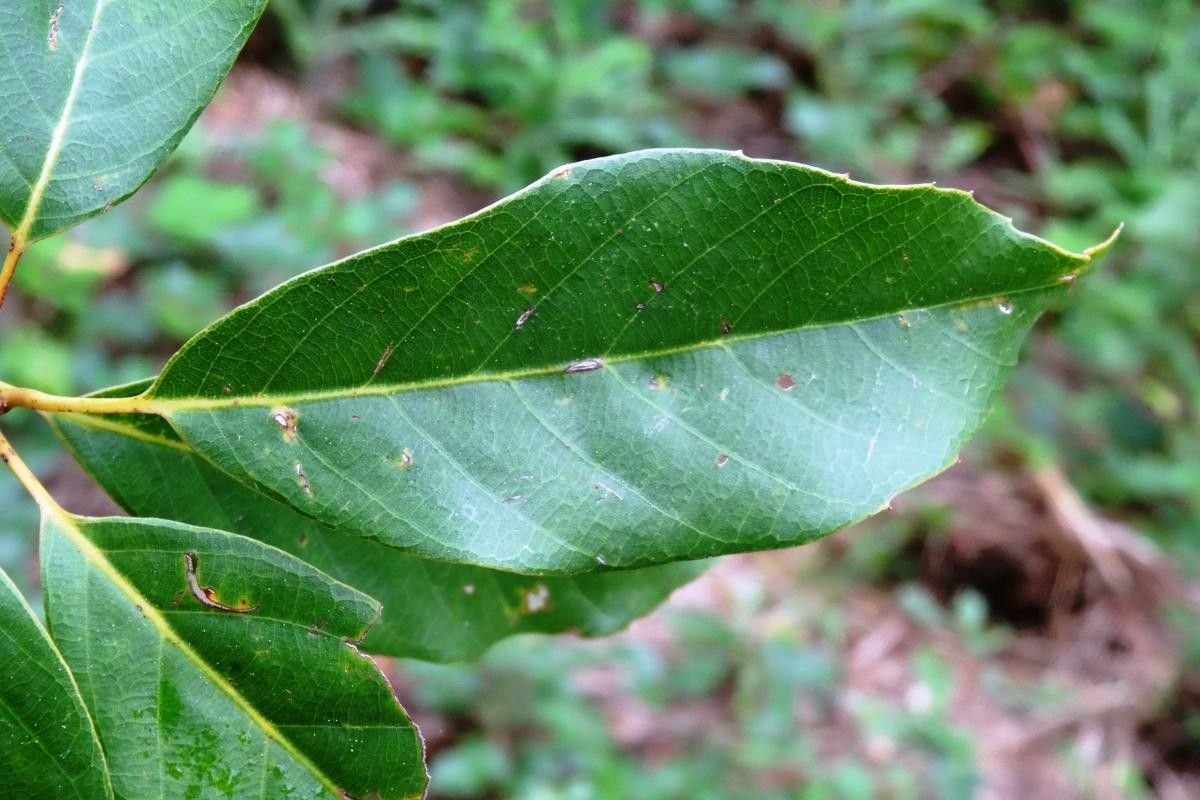
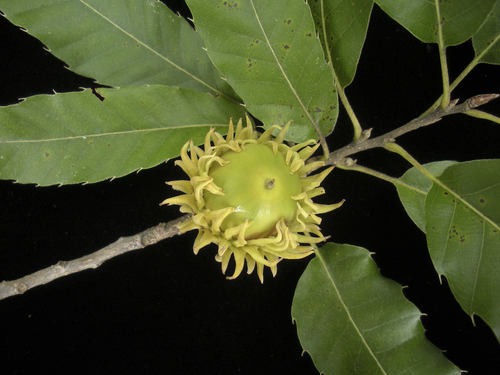
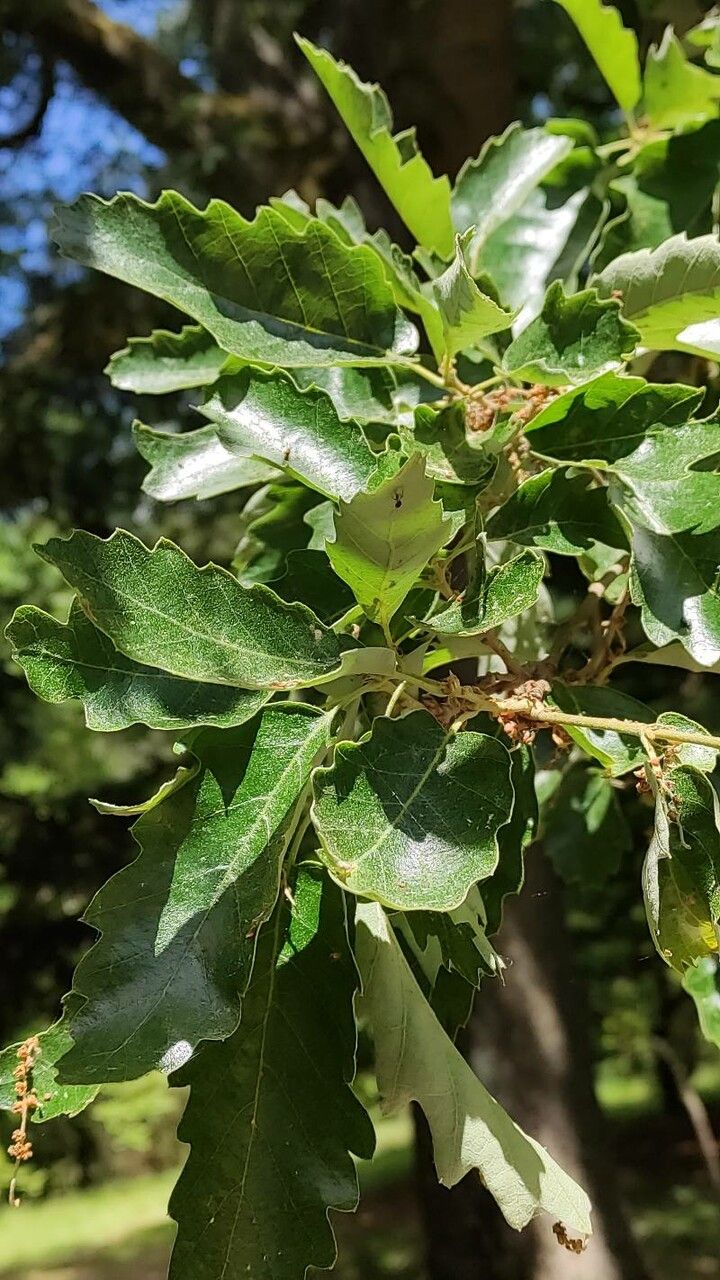
Quercus crassifolia, commonly known as the Texas live oak, is a large evergreen tree native to the southern United States. It can grow up to 50 feet tall and features a broad, spreading crown with thick, leathery leaves that are dark green and glossy. The tree's bark is rough, deeply furrowed, and grayish-brown in color.
The Texas live oak produces acorns that serve as an essential food source for wildlife, including deer, squirrels, and birds. Additionally, its wood is highly valued for its strength and durability in construction.
This species of oak thrives in well-drained soils under full sun or partial shade. While it can tolerate drought conditions once established, it may require supplemental watering during extended dry spells.
Quercus crassifolia holds cultural significance for many Native American tribes, who utilized its bark for medicinal purposes and made baskets from its branches. Today, it continues to be a vital part of many landscapes throughout the southern United States due to its beauty and its crucial role as a keystone species that supports diverse wildlife communities.
Leather leaf mexican oak is resistant to disease and is typically not susceptible to illnesses. Regarding care, this plant is fairly low-maintenance. When grown outdoors it needs only minimal watering, and larger plants usually do not require pruning. Smaller plants, however, should be pruned after they have bloomed. Leather leaf mexican oakt is appropriate for anyone with an outdoor area, such as a garden or deck, and does not demand much experience in plant care.
How to keep Quercus Crassifolia.
Light
Leather leaf Mexican oak originates in open habitats, like sunny meadows and forest edges, that provide abundant light. It does best in full sun but can also tolerate partial sun, adapting well to a variety of light conditions.
Water
For optimal growth of Quercus crassifolia, keep the soil moist but well-drained. Make sure the soil remains humid several inches below the surface, but avoid saturating the top layer. During the summer, reduce watering to encourage plant health, as Quercus crassifolia is well-adapted to withstand dry periods.
Temperature
Leather leaf Mexican oak shows strong adaptability to a range of climate conditions, from scorching summers to cold winters. Nevertheless, it has an optimal temperature range for growth. If temperatures rise too high, the plant is susceptible to heat and humidity stress, which can lead to its death. In areas where temperatures approach the lower limit of its cold tolerance, it is important to provide insulation to protect the plant.
Fertilizer
To promote healthy growth, fertilize your Leather leaf mexican oak in early spring. Regular fertilization improves overall health, resulting in vigorous growth, greater resilience to challenging conditions, and enhanced resistance to pests and diseases. Maintain a specific fertilization schedule for your Leather leaf mexican oak to keep its foliage vibrant, richly colored, and lush in appearance.
Pruning
To maintain the health and shape of Quercus crassifolia, careful pruning is essential. Start by removing dead branches and thinning dense growth. It's best to prune in early spring to ensure a quick recovery, improve structure, and prevent disease. Always use clean, sharp tools for the best results.
Botanical profile.
- Plant Type
- Tree
- Life Cycle
- Perennial
- Genus
- Quercus
- Family
- Fagaceae
- Hardiness Zone
- 7-10
- Mature Height
- 10.06 m to 20.12 m
- Mature Spread
- 7.92 m to 14.94 m
- Leaf Color
- Dark Green, Olive Drab
- Leaf Type
- Deciduous
- Flower Size
- 0.25 cm to 0.51 cm
- Bloom Time
- Mid spring, Late spring
- Planting Time
- Spring, Summer, Autumn
- Harvest Time
- Late summer, Early fall, Mid fall
- Native Area
- Mexico, Guatemala
Other names.
Reader questions.
What are the sunlight requirements for Quercus crassifolia?
Quercus crassifolia requires full sun, which means it should receive above 6 hours of sunlight each day. There is also a provision for plants that can thrive in partial sun, requiring about 3-6 hours of sunlight. It's important to observe how sunlight moves through your garden throughout the day to find locations that offer a good balance of light and shade. This ensures the plants receive the optimal conditions they need to be healthy and happy.