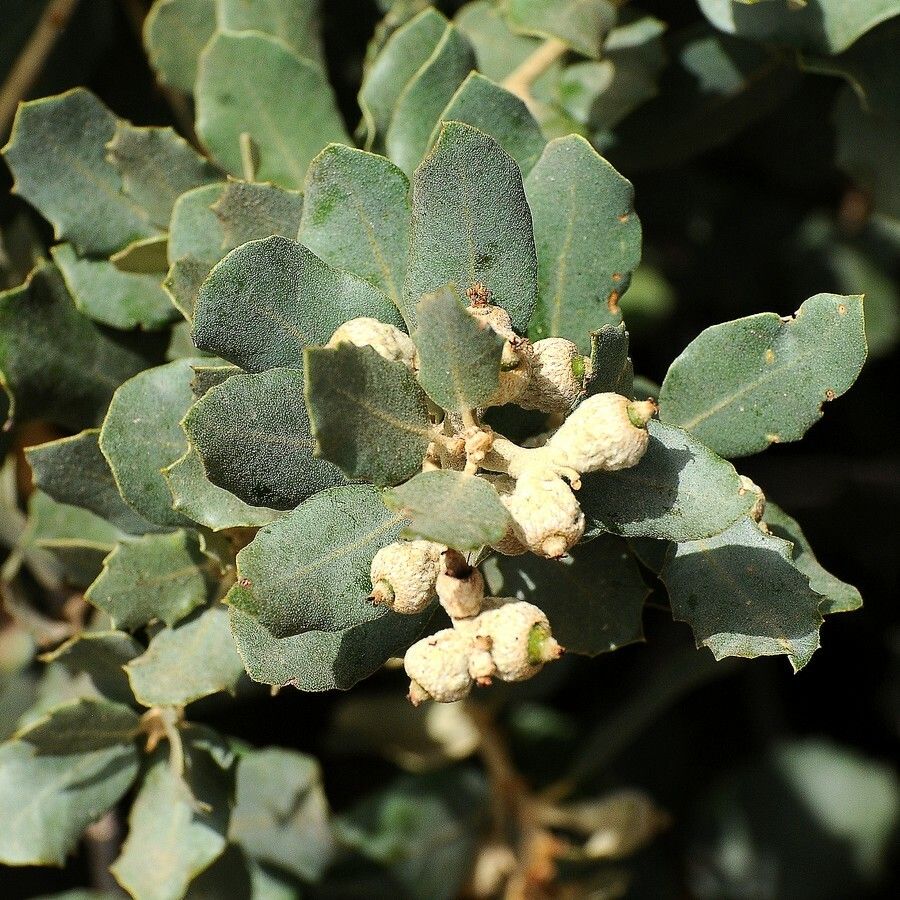
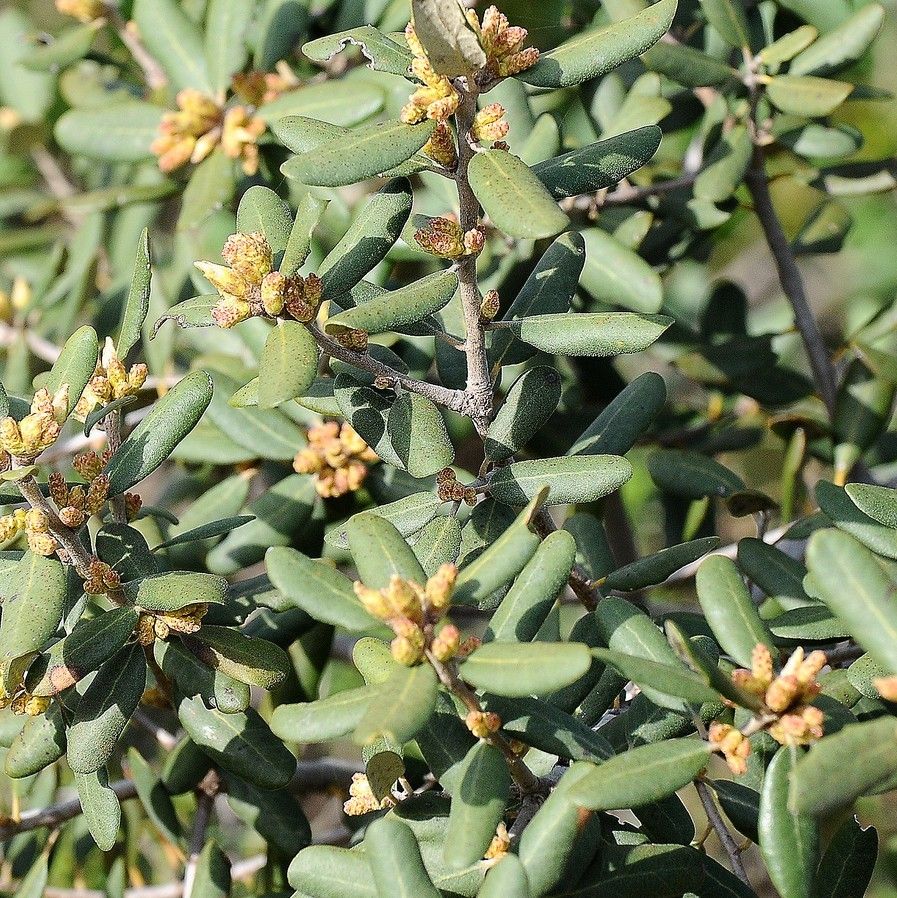
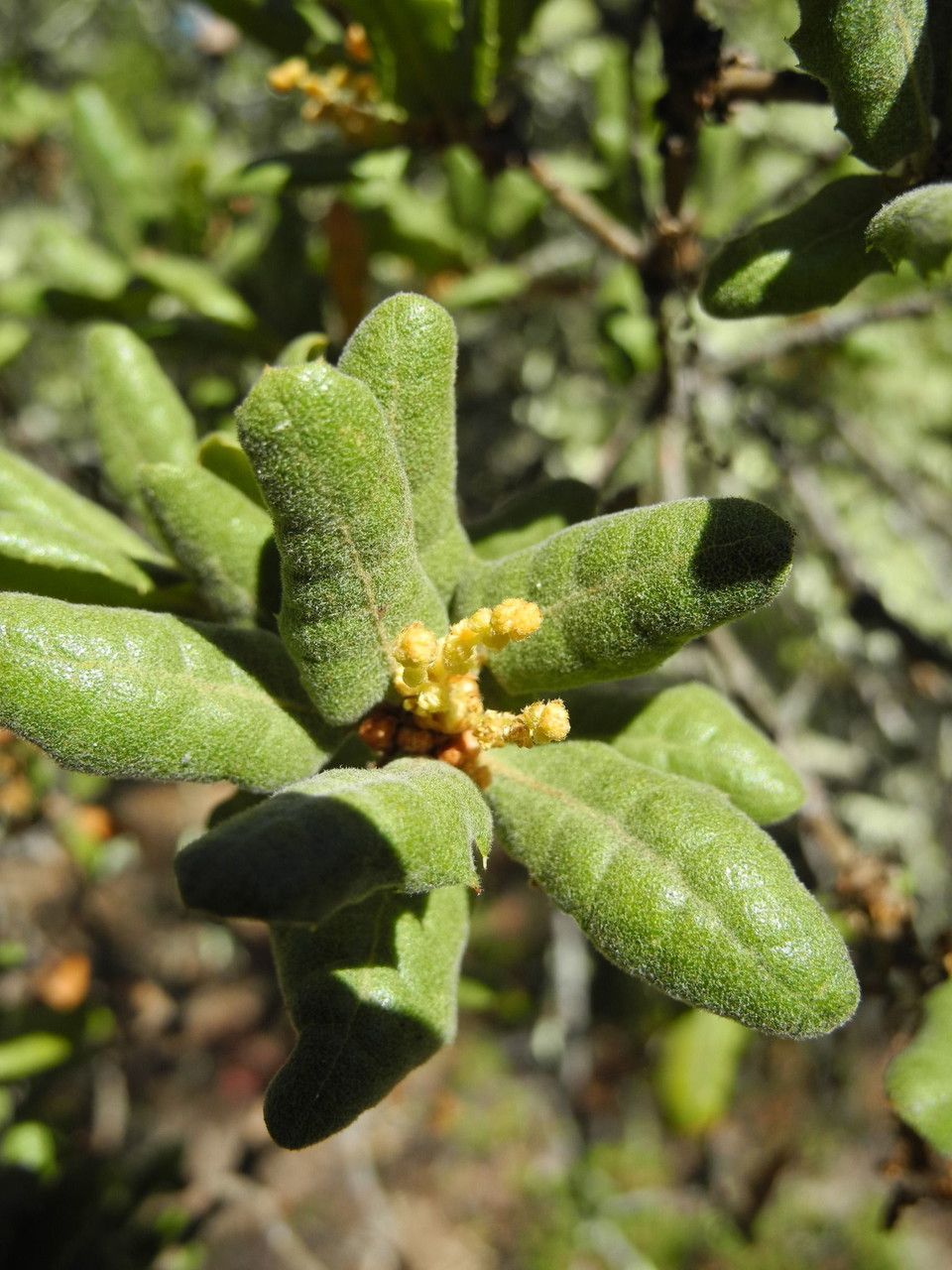
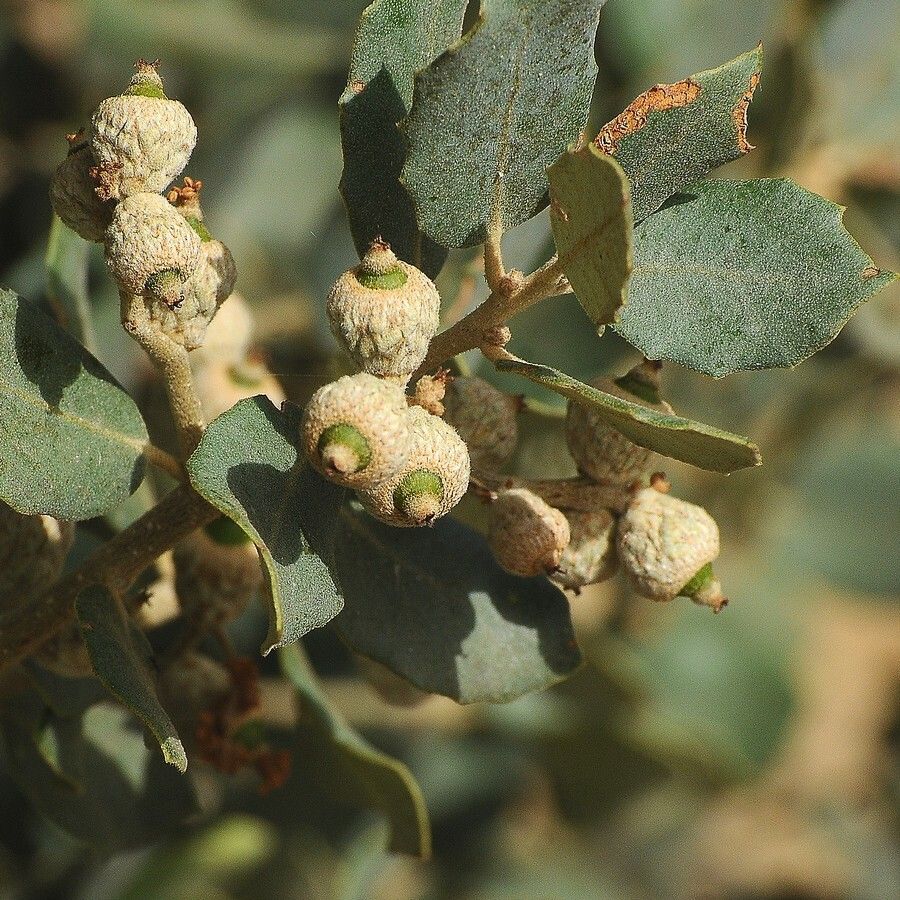
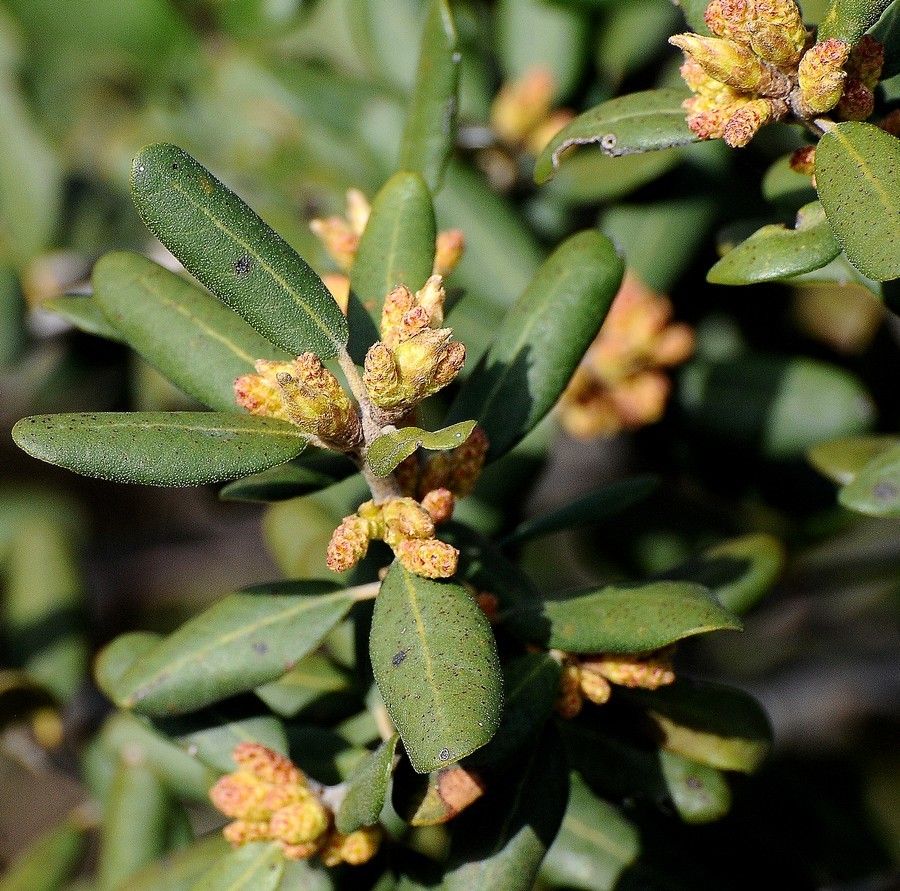
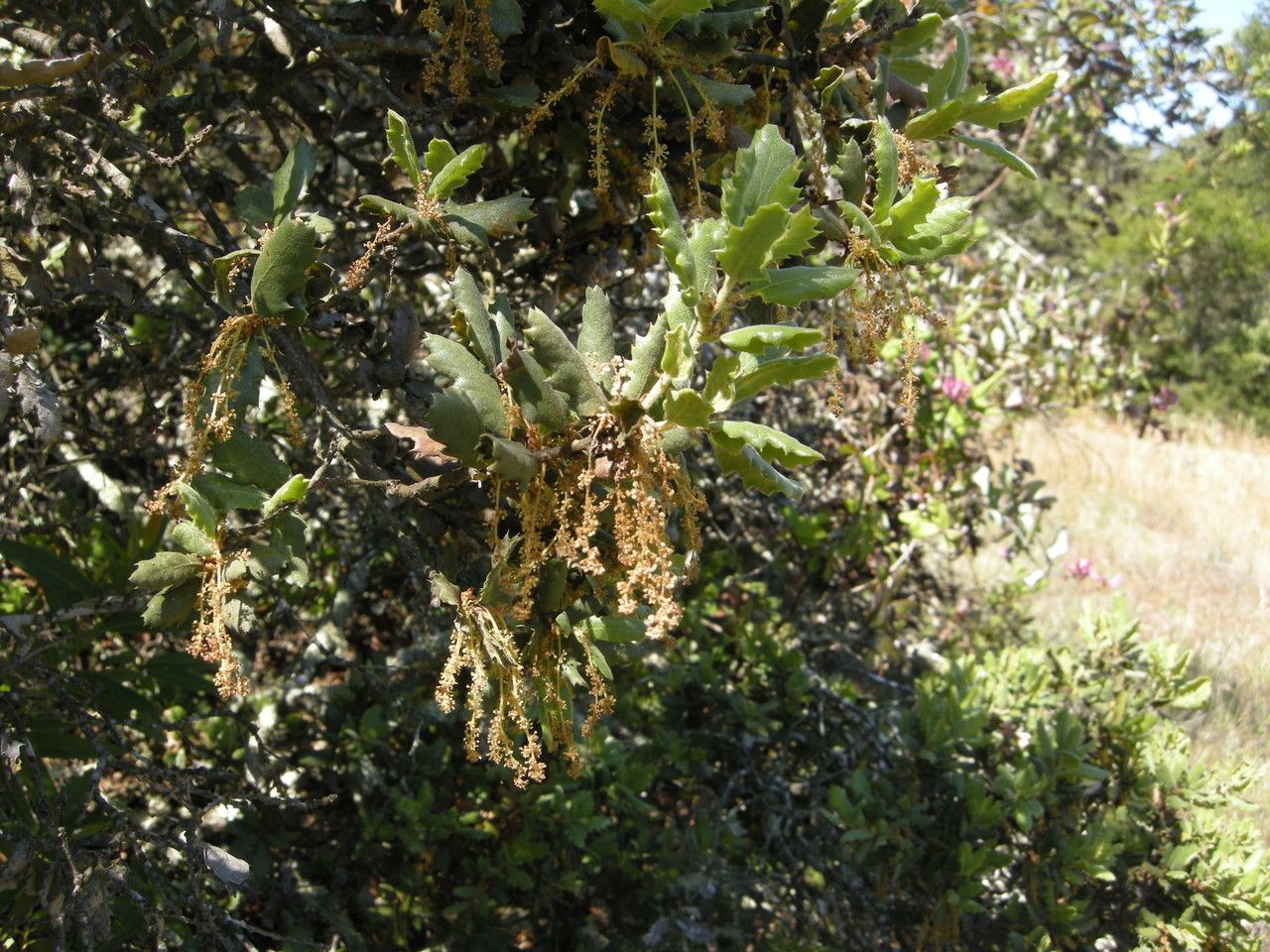
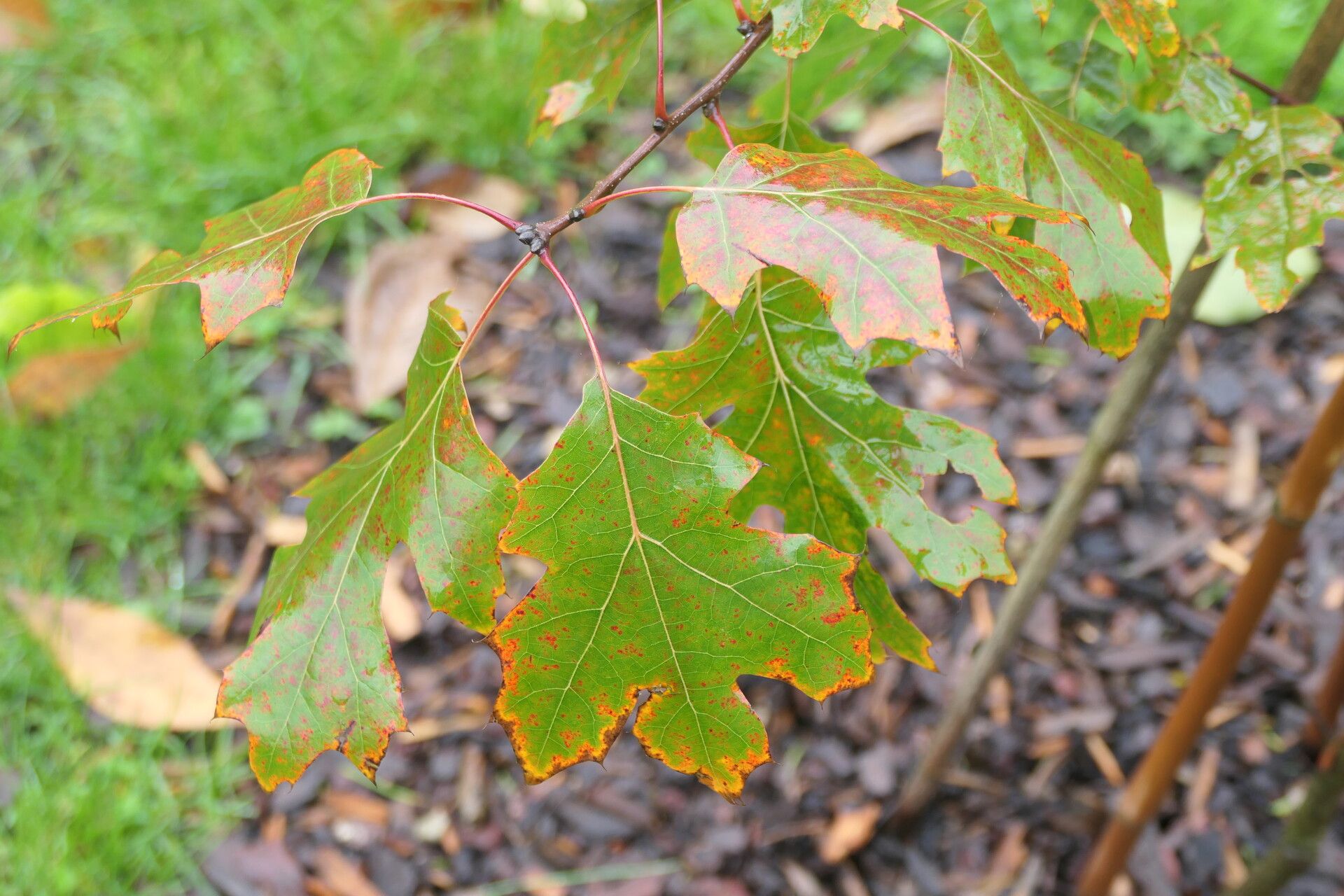
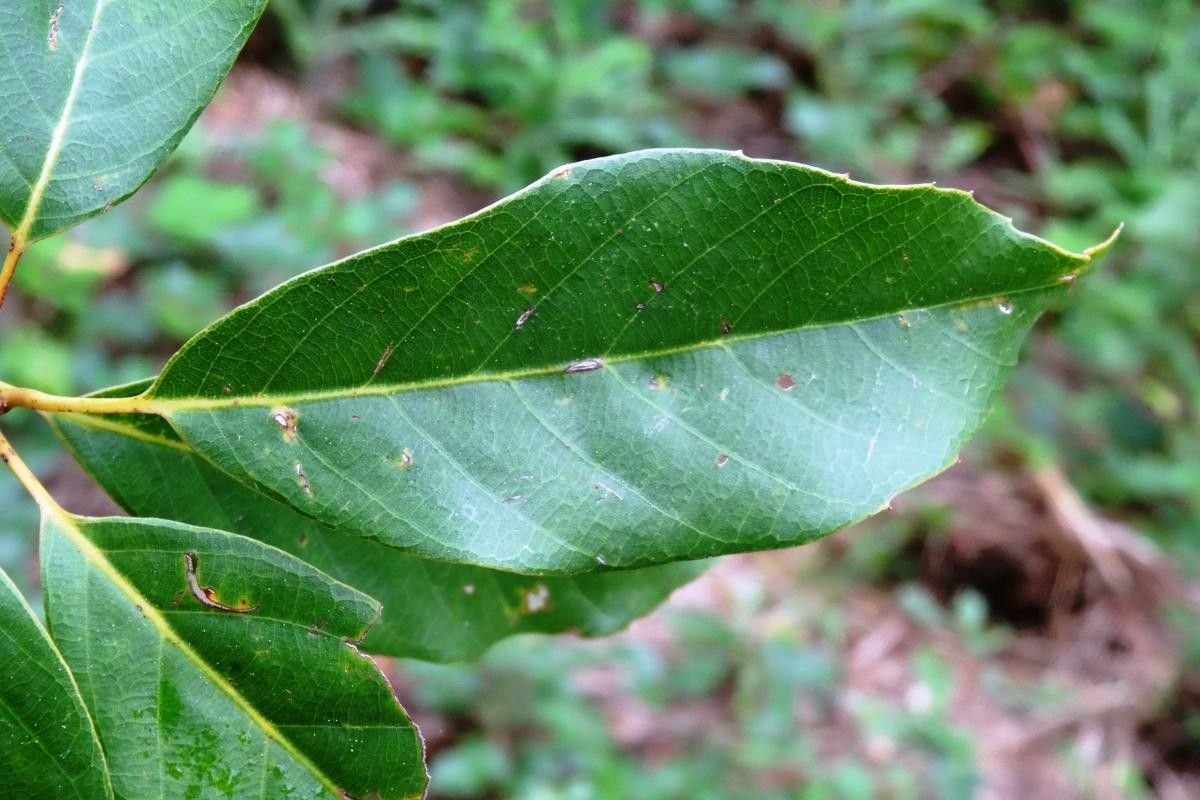
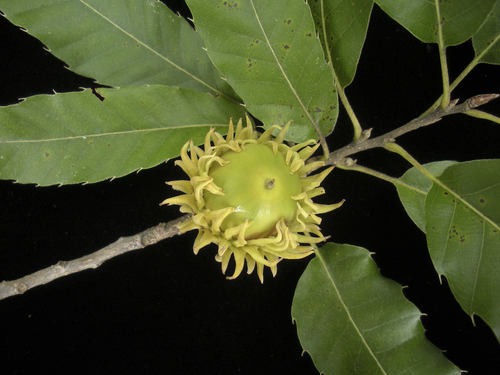
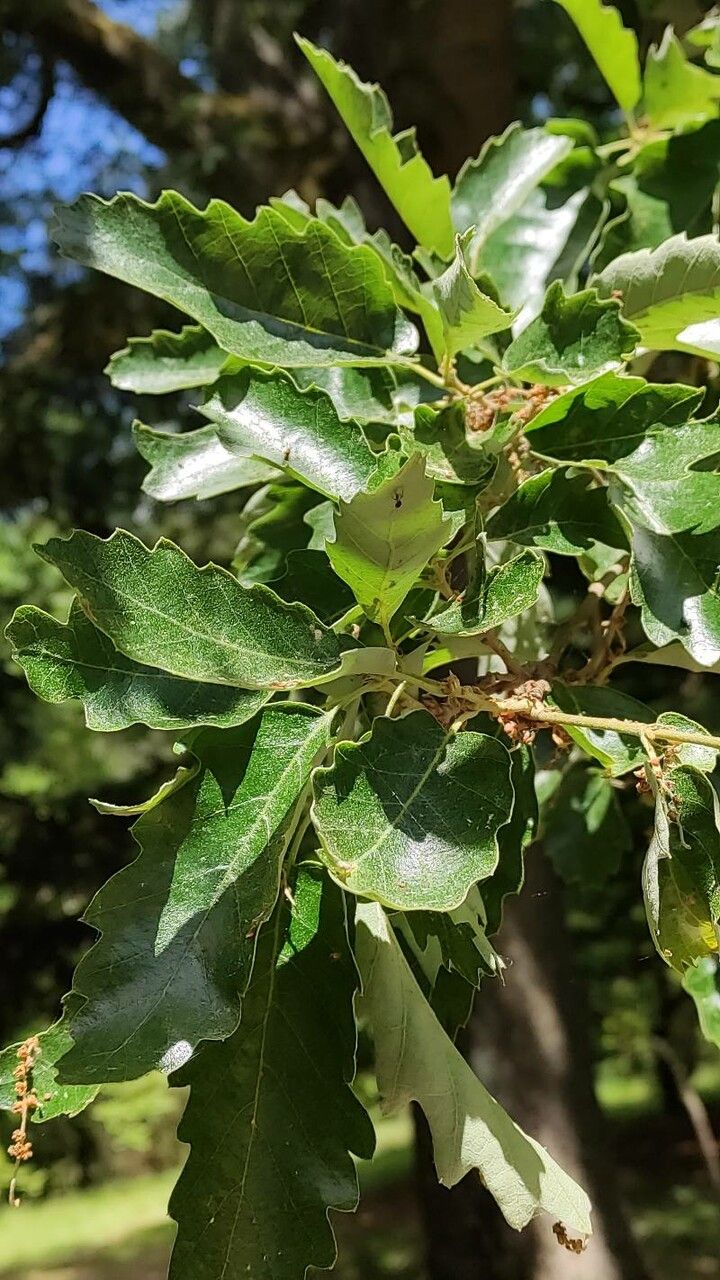
Quercus durata, commonly known as the leather oak, is a species of oak tree native to California and Arizona in the United States. It belongs to the Fagaceae family and can grow up to 30 feet tall, with a trunk diameter reaching up to 2 feet. The tree features a rounded crown with thick, leathery leaves that are dark green on top and pale green underneath. These leaves are covered in fine hairs, giving them a velvety texture.
The leather oak produces acorns, which serve as an essential food source for wildlife, including squirrels, deer, and birds. Although the acorns have a bitter taste due to their high tannin content, they can be processed into flour or roasted for human consumption.
This tree is well adapted to dry climates and can withstand drought conditions once it is established. It prefers well-drained soils but can also thrive in rocky or sandy environments.
Due to its attractive foliage and drought tolerance, Quercus durata is often used as an ornamental plant in gardens or parks throughout its native range. However, it is worth noting that this species may not be suitable for areas with high humidity or heavy rainfall due to its susceptibility to fungal diseases, such as powdery mildew.
Overall, Quercus durata is an important plant species both ecologically, as it provides food for wildlife, and aesthetically, as it enhances beauty when used ornamentally.
Leather oak exhibits strong resistance to disease and is typically not prone to infections. Regarding care, this plant is fairly low-maintenance. When grown outdoors it needs only minimal watering, and larger plants usually do not require pruning. Smaller plants, however, should be pruned after they have bloomed. Leather oak is well suited for anyone with an outdoor area, such as a garden or a deck, and does not demand much prior experience in plant care.
How to keep Quercus Durata.
Light
Leather oak prospers with uninterrupted daily sun exposure, which substantially improves its growth and overall vigor. It originates from habitats where sunlight is plentiful. Too much or too little sunlight does not affect its growth. Its sunlight preference remains constant through all stages of development.
Water
Leather oak is highly drought-tolerant, thriving with deep roots and requiring minimal water. It needs watering only every 2 to 3 weeks, making it a low-maintenance plant. Well-suited for temperate climates, leather oak adapts easily to different soil moisture levels, making it an excellent choice for xeriscaping.
Temperature
Leather oak comes from regions with temperatures between 41 and 89.6 °F (5 to 32 ℃). While it can tolerate colder temperatures, it performs best within that preferred range. In different seasons, consider adjusting the surrounding temperature to keep it near that range for optimal growth.
Fertilizer
Fertilize your Leather oak in early spring to encourage healthy growth. Regular feeding improves its overall health, producing vigorous growth, greater resilience to harsh conditions, and stronger resistance to pests and diseases. Keep to a consistent fertilization schedule for your Leather oak to maintain foliage that is vibrant, richly colored, and lush.
Pruning
Leather oak is a drought-tolerant shrub known for its leathery leaves. To keep the plant in good shape and remove any dead branches, it's best to prune it in late winter. This timing helps ensure proper air circulation and sunlight penetration. Be careful not to prune heavily while the plant is actively growing. Additionally, make sure to clean your pruning tools to prevent disease and promote healthy healing for the shrub.
Botanical profile.
- Plant Type
- Shrub
- Life Cycle
- Perennial
- Genus
- Quercus
- Family
- Fagaceae
- Hardiness Zone
- 4-8
- Mature Height
- 0.91 m to 3.05 m
- Mature Spread
- 2.13 m to 4.88 m
- Leaf Color
- Green
- Leaf Type
- Evergreen, Deciduous
- Flower Color
- Yellow, Green
- Bloom Time
- Mid spring, Late spring
- Planting Time
- Spring
- Harvest Time
- Late summer, Early fall, Mid fall
Other names.
Reader questions.
How should I water my Leather oak tree?
Your Leather oak is not picky about how you water it, so you can use any common watering tool. Watering cans, hoses, or even cups will work fine. Regardless of the tool, it's best to water directly into the soil, making sure all parts of the roots get moistened. Using filtered water is helpful as tap water may have harmful particles. Also, it's better to use water at or slightly above room temperature to prevent shocking the Leather oak. However, the plant usually responds well to any kind of water.
Why should I put fertilizer on my Leather oak?
No matter what kind of Leather oak you own, regular fertilization can help your plant thrive. By providing the right nutrients, your Leather oak will grow stronger and be better equipped to handle tough conditions and fight off diseases and pests. Maintaining the foliage of your Leather oak is important for its aesthetic appeal. To achieve this, establish a consistent fertilization schedule that is tailored to your specific Leather oak. This will encourage the growth of vibrant, lush leaves.
What are the sunlight requirements for Leather oak?
Leather oak requires full sun, meaning it thrives best with continuous daily exposure to sunlight for optimal growth and vitality. It is well-suited for environments with abundant sunlight, and its growth is not significantly affected by over or underexposure to sunlight. Leather oak's preference for sunlight does not change across different growth stages, making it essential to ensure it receives adequate light throughout its lifecycle.
What is the preferred temperature range for Leather oak?
Leather oak thrives in a temperature range from 41 to 89.6 °F (5 to 32 °C). This plant is native to regions where these temperatures are common, and adjusting the surroundings to mimic this range through different seasons can promote optimal growth. Despite its strong cold resistance, providing protection when temperatures drop below -30°C is vital to prevent damage during winter.
What should I do if I give my Leather oak tree too much or too little water?
Outdoor plants, especially newly planted ones or seedlings, are prone to lack of watering. It's important to consistently water them for a few months when they are small or recently planted. Once the roots are established, Leather oak trees can rely on rainfall most of the time. When you have Leather oak plants in pots, overwatering is more likely. If you accidentally overwater your Leather oak, take immediate action to address the situation. Firstly, stop watering the plant to minimize the impact of overwatering. Secondly, remove the plant from its pot to examine its roots. If you find no signs of root rot, you can return the plant to the pot. However, if there are indications of root rot, trim the affected roots and consider using a fungicide to prevent further damage. Finally, replant the Leather oak in soil that drains well. In the case of underwatering, simply water the Leather oak plant more frequently. Underwatering can be easily resolved. When the plant lacks water, its leaves will droop, dry out, and fall off. Watering it properly will cause the leaves to regain fullness. Make sure to adjust your watering frequency as soon as you notice signs of underwatering.
When should I fertilize my Leather oak tree for the best results?
To ensure healthy growth of your Leather oak, it is recommended to fertilize it for the first time in late winter or early spring. This initial fertilization provides the necessary nutrients for the tree to thrive once the weather warms up. Additionally, if you live in a warm climate region, it is beneficial to give your Leather oak another round of fertilizer in early fall. This not only adds nutrients to the soil for the following growing season but also increases the tree's resilience to winter cold, preventing foliage damage. Fertilizing earlier in fall will allow the new branches to grow sufficiently to withstand the winter.
How should indoor plants be supplemented with artificial lighting?
Indoor plants, including those that require full sun like Leather oak, may need additional lighting when natural sunlight is insufficient. Artificial lights, such as LED lights, are recommended because they can provide specific wavelengths needed for plant growth. For full sun plants, 30-50W/sq ft of artificial light is needed; partial sun plants require 20-30W/sq ft, and full shade plants need 10-20W/sq ft. The artificial light source should be placed 12-36 inches above the plant to mimic natural sunlight, and most plants will benefit from 8-12 hours of light per day.
How can Leather Oak be protected during extreme winter conditions?
During winters with temperatures expected to fall below -30°C, protecting Leather Oak is crucial even though it generally has strong cold resistance. Before the first freeze of autumn, it's recommended to water the plant thoroughly to ensure the soil is moist and freezes in this state, which helps guard against drought and water scarcity during winter and early spring. Additionally, wrapping the trunk and branches with non-woven fabric or cloth can offer essential cold protection.
How often should I water my Leather oak?
If you live in an area with regular rainfall, most outdoor plants can grow naturally without additional watering. However, if you don't get enough rainfall, you should water your plants every 2 weeks in the spring and fall, and more frequently in the summer. In the winter, when plants don't need as much water, you can water them less often or not at all. Young or newly planted Leather oak trees will need more frequent watering to help them establish and grow. For potted Leather oak plants, there are two main ways to determine how often to water them. The first way is to have a set schedule, such as once a week or once every other week. However, this may not always be accurate for your plant's specific growing conditions. Another approach is to check the soil moisture. It's best to wait until the top few inches of soil have dried out completely before watering again. This is usually about ⅓ to ½ depth of the pot. Remember that during summer, the plant will need more water than the set schedule may suggest.
When is it not a good idea to put fertilizer on my Leather oak tree?
There are a few specific times of the year when you should avoid fertilizing your Leather oak. The first of these times is in the early and mid-winter months when the tree is dormant and does not require any feeding. Additionally, it is not recommended to fertilize this plant during the late spring and throughout the summer. During this time, the weather is usually hotter and drier, which can have a negative impact on the tree's response to fertilizer. To prevent any problems, it is best to stick to a fertilization schedule that involves feeding only in the early spring and early fall.
What are the symptoms of insufficient light exposure in Leather oak?
If Leather oak does not receive enough light, it may show several symptoms. These include smaller leaves than normal, leggy or sparse growth with increased space between leaves or stems, faster leaf drop, and a stop in growth or slower growth rates indicating that the plant is in survival mode. New leaves may appear lighter-colored or pale, indicating a lack of chlorophyll and essential nutrients. Additionally, intense sunlight exposure can cause chlorosis, sunscald, leaf curling, wilting, and leaf scorching, impacting the plant's health negatively.
What are the symptoms and solutions for Leather Oak when exposed to low temperatures?
Leather Oak is tolerant to cold and thrives best when the temperature remains above 5°C. During winter, it's crucial to keep the temperature above -25°C. Exposure to temperatures below -30°C might not show immediate changes but can result in branches becoming brittle and dry by spring, with no new shoots emerging. The solution to this is to prune away any dead branches that failed to produce new leaves in spring.