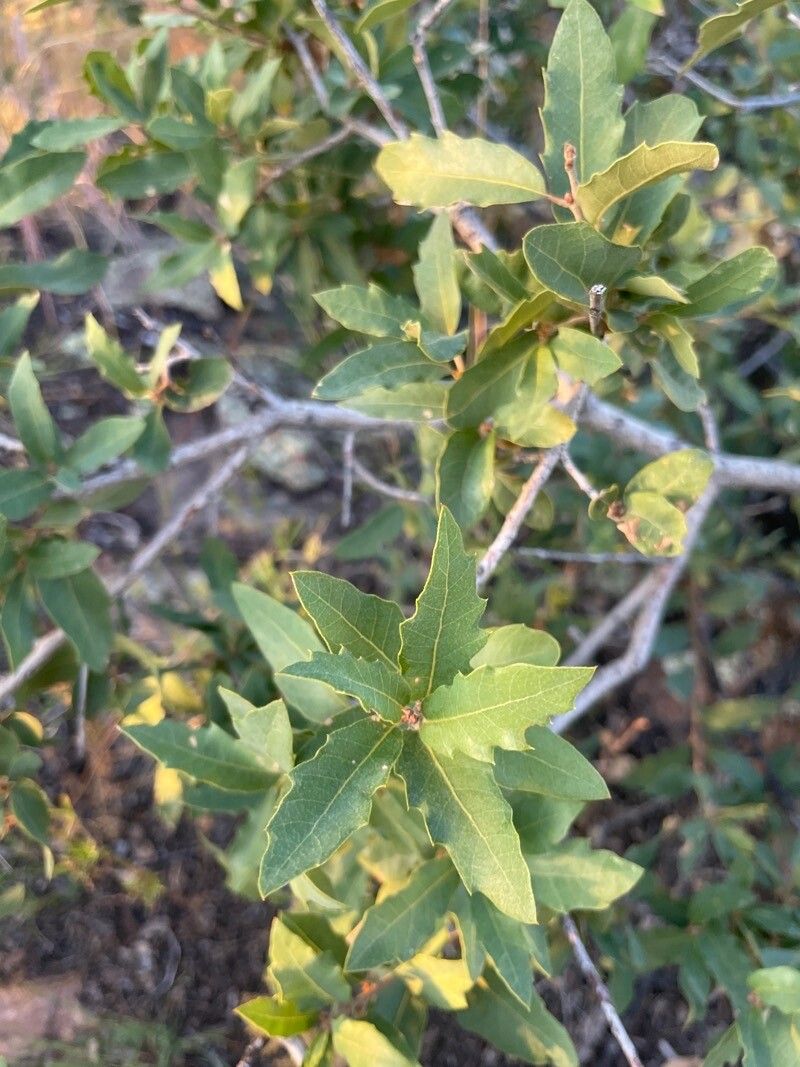
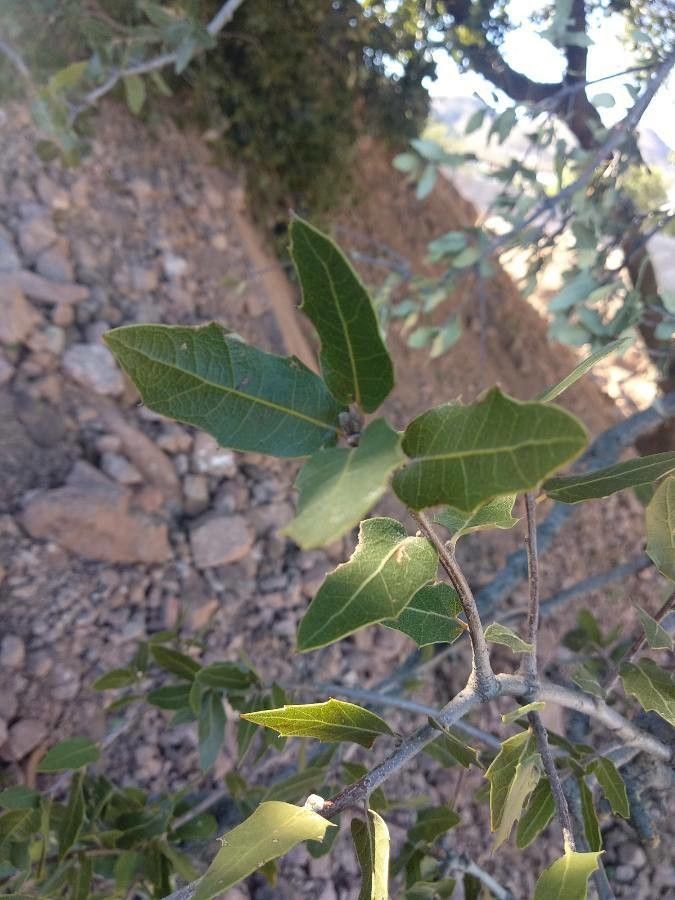
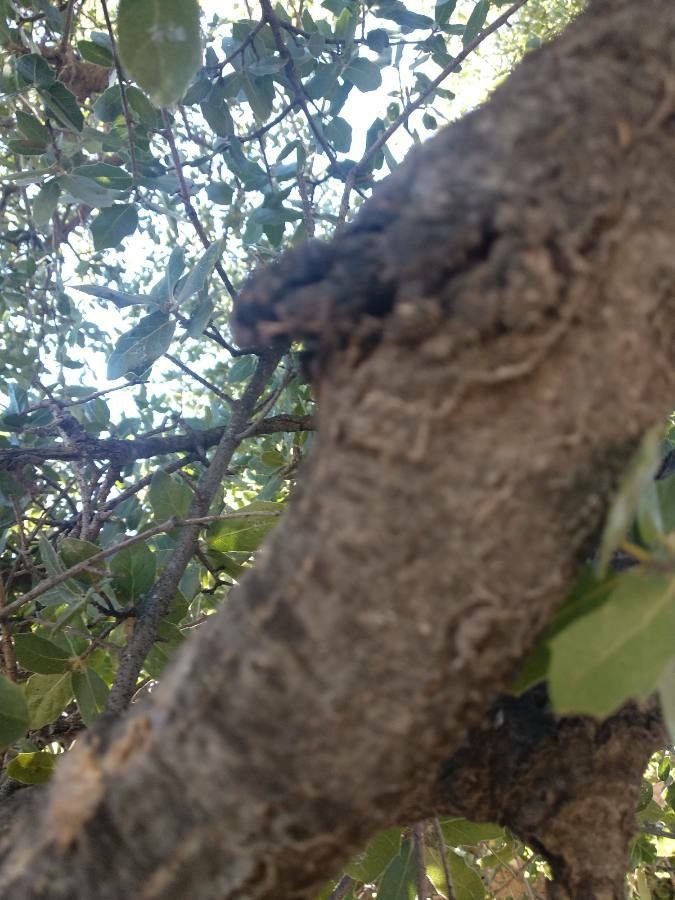
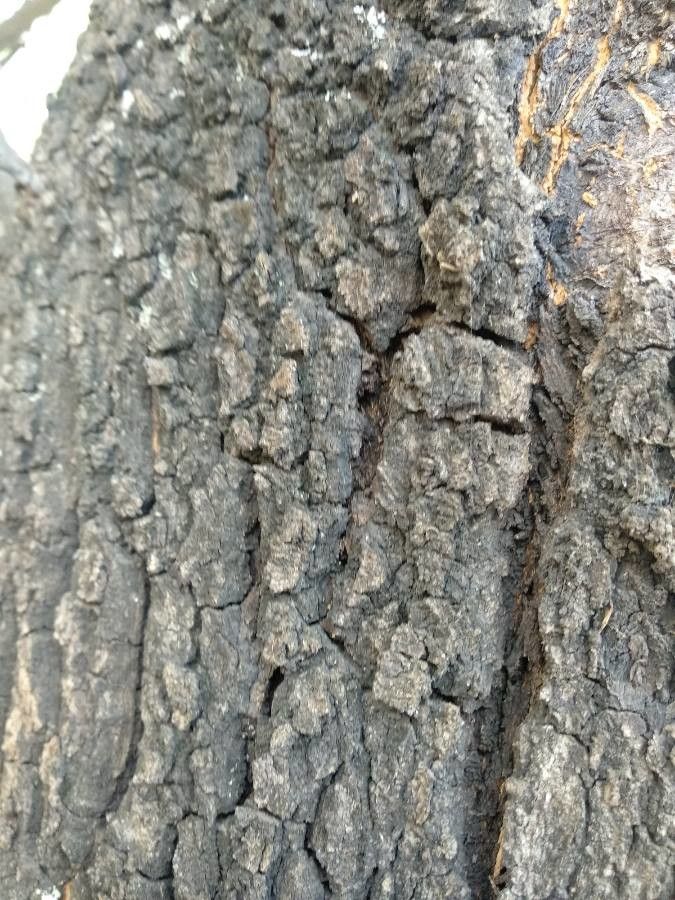
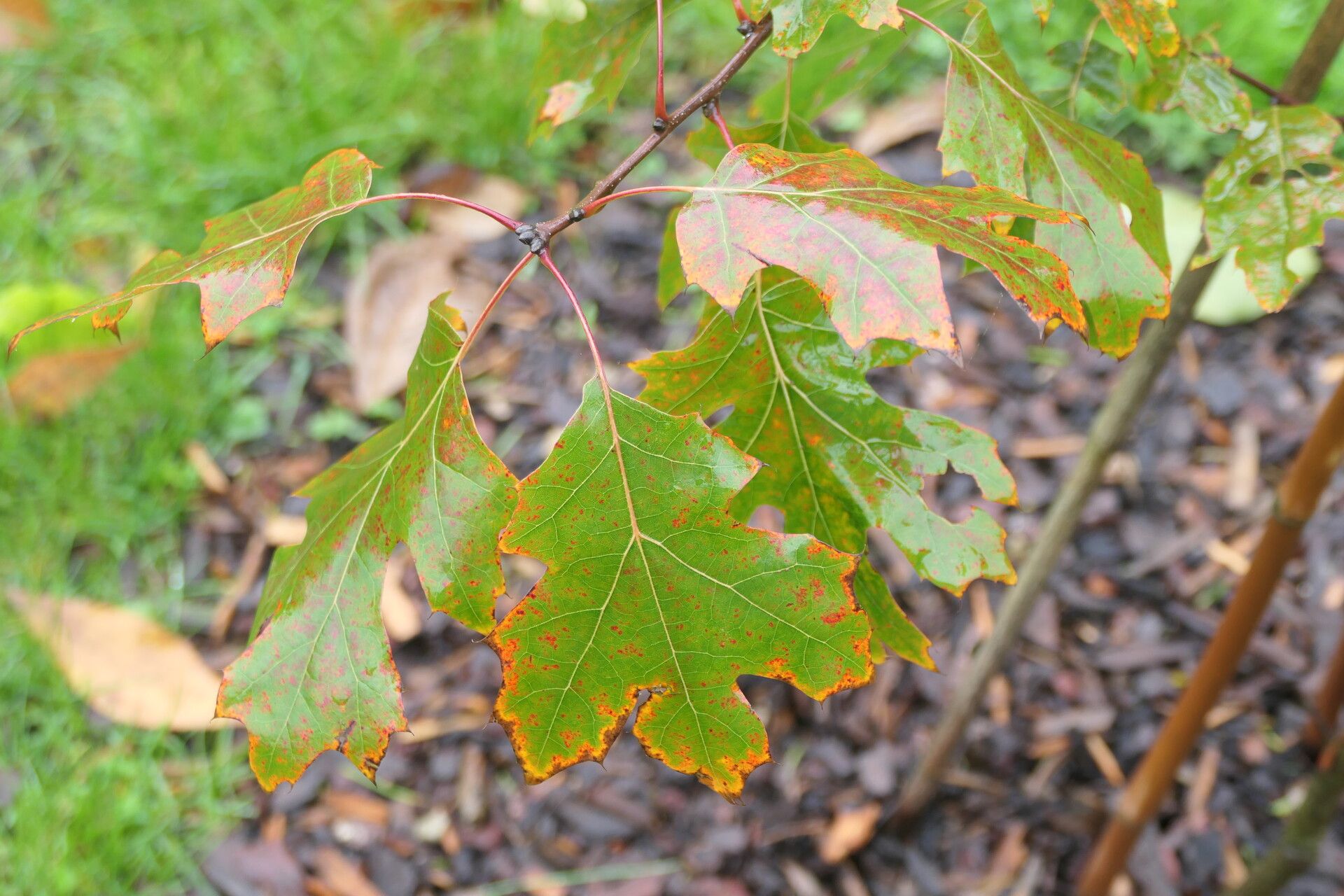
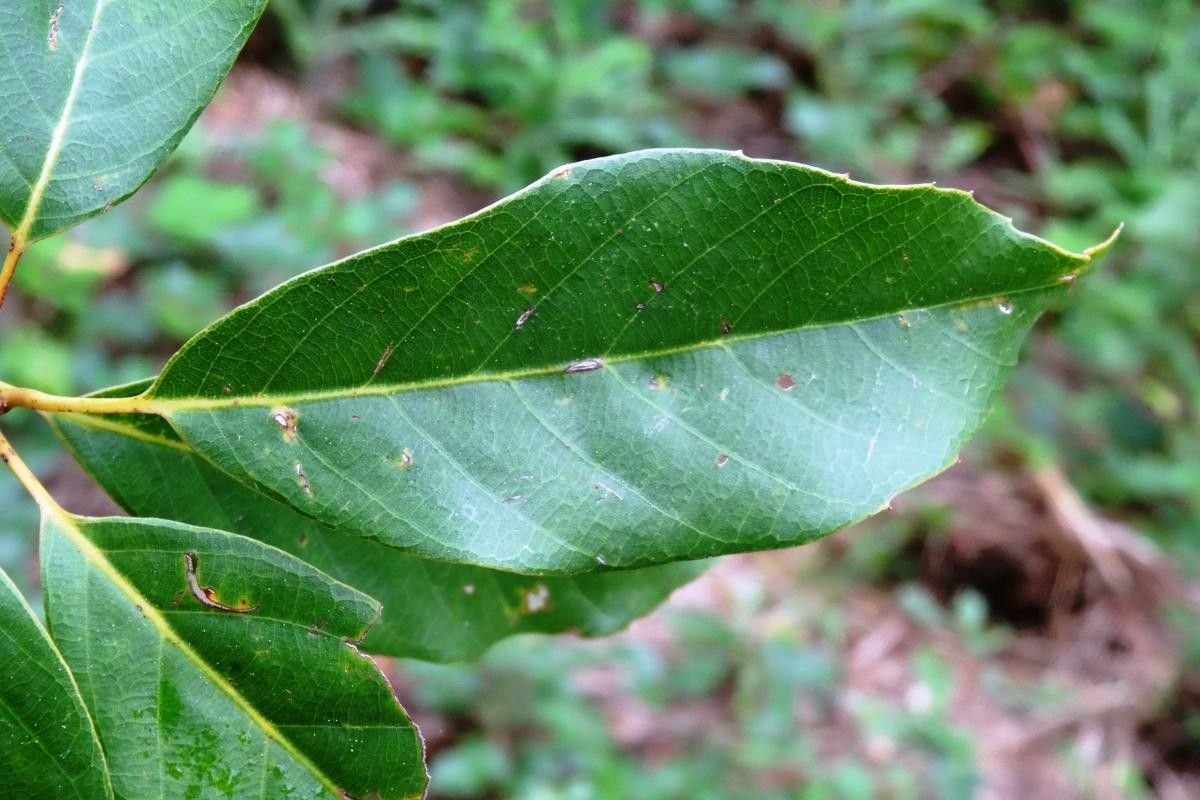
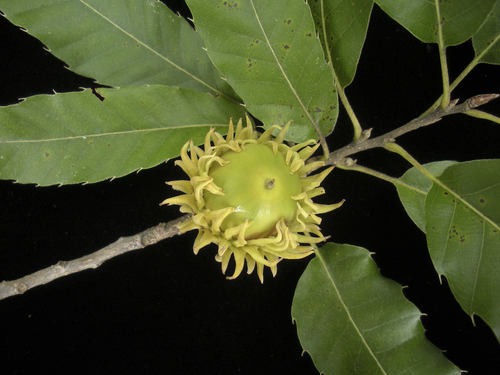
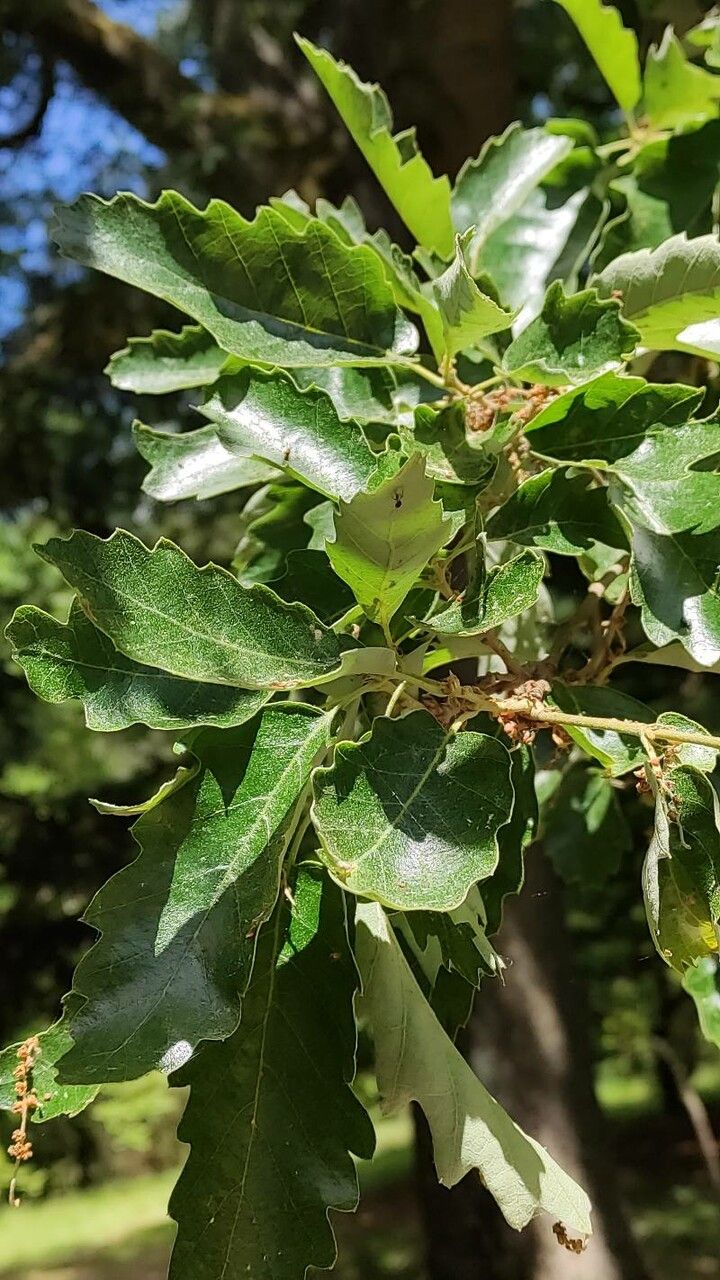
Quercus emoryi, commonly known as Emory oak, is a species of oak tree native to the southwestern United States and northern Mexico. This medium-sized deciduous tree can grow up to 50 feet tall, featuring a rounded crown. Its leaves are dark green, leathery, and deeply lobed with bristle-tipped teeth. The bark is grayish-brown with deep furrows.
The Emory oak produces acorns that serve as a vital food source for wildlife, including deer, squirrels, and birds. Additionally, Native American tribes utilized the acorns for food by grinding them into flour or roasting them.
This species of oak thrives in well-drained soils in arid or semi-arid regions with hot summers and mild winters. It is found in various habitats such as rocky slopes, canyon sides, mesas, and grasslands.
Quercus emoryi holds cultural significance among Native American tribes, who have used it for medicinal purposes, such as treating diarrhea or feverish conditions.
Overall, Quercus emoryi plays an essential role in its ecosystem by providing habitat for wildlife and offering various uses to humans throughout history, including medicinal purposes. This makes it a crucial plant species in the ecosystems of the southwestern United States.
Emory Oak exhibits strong resistance to disease and is typically not susceptible to illnesses. With respect to care, this plant is fairly low maintenance. When grown outdoors it needs only minimal watering, and larger plants usually do not require pruning. Smaller plants, however, should be pruned after they have finished blooming. Emory Oakt is appropriate for anyone who has an outdoor area, such as a garden or a deck, and it does not demand a great deal of gardening experience.
How to keep Quercus Emoryi.
Light
Emory Oak prefers full sun exposure but can also grow well with moderate daylight. The amount of light it receives strongly influences its growth. In its native habitats it does best when exposed to the full span of daily sunlight, yet it can also survive in less brightly lit conditions. Both excessive and insufficient light can impede its development.
Water
The Emory Oak, a tree native to arid regions, is highly drought-tolerant and thrives with infrequent watering. To replicate its natural habitat, it's important to water the tree deeply every 2 to 3 weeks. When grown outdoors, this tree greatly benefits from mulching, which helps to retain soil moisture and regulate temperature during its growth period.
Humidity
This plant prefers dry conditions, so don't mist it. However, watering it less often can also thrive in higher humidity.
Temperature
Emory Oak is native to habitats where temperatures generally range from 10 to 35 ℃ (50 to 95 °F). This tree prefers mild to warm climates and, when cultivated outside its native range, may need temperature adjustments based on the season.
Fertilizer
Fertilize your Emory Oak in early spring to encourage healthy growth. Regular feeding boosts overall health, producing vigorous development, greater tolerance of harsh conditions, and improved resistance to pests and diseases. Follow a consistent fertilization schedule for your Emory Oak to maintain vibrant, deeply colored foliage and a lush appearance.
Pruning
The Emory Oak is a drought-tolerant tree known for its deep green foliage and acorns. It's best to prune it during the winter when the tree is dormant. Begin by removing any dead branches, and then thin out overcrowded areas to improve air circulation. Be careful not to prune too heavily, as this helps maintain the tree's shape and promotes health, vigor, and growth. For specific pruning techniques, consult horticulture guides.
Botanical profile.
- Plant Type
- Tree
- Life Cycle
- Perennial
- Genus
- Quercus
- Family
- Fagaceae
- Hardiness Zone
- 6-9
- Mature Height
- 9.14 m to 15.24 m
- Mature Spread
- 22.56 m
- Leaf Color
- Green
- Leaf Type
- Evergreen
- Flower Color
- Yellow, Green
- Flower Size
- 2.54 cm to 5.08 cm
- Bloom Time
- Mid spring, Late spring
- Planting Time
- Spring, Summer
- Harvest Time
- Late summer, Early fall, Mid fall
- Native Area
- Mexico
Other names.
Reader questions.
What are the sunlight requirements for Emory Oak?
Emory Oak requires full light exposure for healthy growth but can also survive in moderate daylight conditions. In its native environment, it thrives under the full span of daily sunshine. However, it's essential to ensure that the plant receives an adequate balance of light and shade, as both excessive and insufficient light can hinder its growth. For indoor plants, artificial lighting can be used to supplement natural sunlight, especially in less sunny spaces or during winter. LED lights are recommended for their ability to provide specific wavelengths needed by plants. Full sun plants typically require 30-50W per square foot of artificial light, partial sun plants need 20-30W per square foot, and full shade plants require 10-20W per square foot. The distance between the plant and the light source should be 12-36 inches, mimicking natural sunlight as closely as possible.
What are common symptoms of inappropriate light exposure in Emory Oak?
Emory Oak may exhibit signs of light deficiency when not receiving optimal sunlight. These symptoms include smaller new leaves, leggy or sparse growth, early leaf drop, halted or delayed growth, lighter colored new leaves, chlorosis (yellowing leaves), sunscald, leaf curling, wilting, and leaf scorching. Each of these symptoms indicates either an excess or deficiency in sunlight exposure, stressing the importance of monitoring and adjusting the plant's light environment to promote its health and growth.
How can I address light-related issues with my Emory Oak?
To address light-related issues with Emory Oak, consider the following solutions based on your plant’s location: Indoor care involves gradually moving the plant to sunnier spots to ensure at least 6 hours of direct sunlight daily, using south-facing windows for maximum exposure. If natural light is insufficient or the plant is large, artificial light sources, such as desk lamps or professional grow lights, should be used for at least 8 hours daily. For outdoor plants, a gradual relocation to sunnier spots is recommended to prevent sunburn, emphasizing the need for a cautious adjustment to increased light intensity. To minimize obstructions for ground-planted Emory Oaks, pruning obstructive trees and considering transplanting during the plant’s dormant period to a location with better sunlight and drainage are effective strategies. It’s important to note that while parts of the plant damaged by poor lighting may not recover, new growth following these adjustments should be healthy.