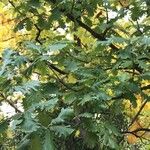
Quercus frainetto
Hungarian oak · Italian oak · Macedonian Oak
Description
Source: leafsnapQuercus frainetto (syn. Quercus conferta Kit., Quercus farnetto Ten.), commonly known as the Hungarian oak or Italian oak, is a species of oak, native to southeastern Europe (parts of Italy, the Balkans, parts of Hungary, Romania) and Turkey; it is classified in Quercus sect. Mesobalanus.
Care Guide
💧 Water Every 1-2 weeks
Hungarian oak thrives in a temperate climate with moderate rainfall and consistent moisture. While it can tolerate short dry spells, it's important to water the tree every 1-2 weeks to keep the soil evenly moist. Ensuring adequate hydration is crucial during the growing season, especially to support new growth.
☀️ Light Full sun
Hungarian oak is native to open habitats, like sunny meadows and forest margins, where plenty of light is available. It performs best in full sun but can also tolerate partial sun, showing good adaptability to different light conditions.
What are the sun requirements for a Hungarian Oak (Quercus frainetto)?
The Hungarian Oak (Quercus frainetto) thrives in various sunlight conditions. For 'full sun,' it requires above 6 hours of direct sunlight daily. If the location offers 'partial sun,' it should receive about 3-6 hours of direct sunlight. It's important to observe the movement of sunlight in your garden to find spots that offer the ideal mix of light and shade, assuring your plant's wellbeing and growth.
🌡️ Temperature 5–32.2°C
Hungarian oak shows strong adaptability to a range of climatic conditions, whether during sweltering summers or cold winters. Nevertheless, it has an optimal temperature range for growth. If temperatures become too high, the plant is susceptible to heat and humidity stress, which can lead to its death. In areas where temperatures near the lower limit of its cold tolerance, it is important to use insulation measures to protect the plant.
💨 Humidity normal (40-60%)
This plant will thrive in moderate humidity, which is probably the level in your home. However, misting it a few times a week can be very beneficial. Make sure the room has good ventilation.
🪴 Soil 6-7
🌱 Fertilizer
Fertilize your Hungarian oak in early spring to encourage healthy development. Regular feeding improves overall vigor, producing strong growth, better tolerance of harsh conditions, and increased resistance to pests and diseases. Keep a consistent fertilization schedule for your Hungarian oak to maintain lively, deeply colored foliage and a lush appearance.
🪴 Pot & Repot
✂️ Pruning
The Hungarian oak is characterized by its broad leaves and sturdy trunk. For optimal results, prune it in early spring before new growth begins. Use techniques such as removing dead wood and thinning branches. Regular pruning encourages healthy growth, helps prevent disease, and maintains the tree's structural integrity. Make balanced cuts to ensure a natural shape.
🌿 Propagating
🐛 Diseases & pets
☠️ Toxicity
Characteristics
- Plant Type
- Tree
- Life Cycle
- Perennial
- Genus
- Quercus
- Family
- Fagaceae
- Hardiness Zone
- 5-8
- Mature Height
- 15.24 m to 24.38 m
- Mature Spread
- 14.94 m to 21.03 m
- Leaf Color
- Green, Yellow, Brown, Gray, Silver
- Leaf Type
- Deciduous
- Flower Color
- Green, Yellow
- Bloom Time
- Mid spring, Late spring
- Planting Time
- Spring, Autumn, Winter
- Harvest Time
- Late summer, Early fall, Mid fall
- Native Area
- Hungary, Turkey, Italy, Czech Republic, Slovakia, Romania, Montenegro, Bulgaria, Albania, Greece, Croatia, Serbia