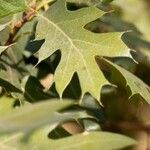
Quercus kelloggii
California black oak · Kellogg oak · Black oak
Description
Source: leafsnapQuercus kelloggii, commonly known as the California black oak, is a species of oak tree native to California and Oregon in the United States. This deciduous tree can grow up to 100 feet tall and boasts a broad, spreading crown. Its bark is dark gray and deeply furrowed. The leaves of Quercus kelloggii are large, lobed, and glossy green. In autumn, they turn yellow or reddish-brown before falling off for winter dormancy. The tree produces large acorns, up to 2 inches long, with distinctive caps that cover about one-third of the nut. Quercus kelloggii prefers well-drained soils on slopes or ridges at elevations between 1,000 and 7,000 feet above sea level. It typically grows in mixed conifer forests alongside trees such as ponderosa pine and Douglas fir. The California black oak holds significant ecological importance by providing food for wildlife such as deer and squirrels, and serving as habitat for birds like woodpeckers and owls. Additionally, its deep root system plays a crucial role in preventing soil erosion on steep slopes. Despite its ecological importance, Quercus kelloggii faces threats from habitat loss due to logging activities and agricultural land conversion, making conservation efforts vital for the species' future survival.
🌳 California black oak plays a role in Native American culinary traditions that is not widely known outside particular cultural contexts. The acorns are shelled, ground into meal, leached to remove bitterness, and then used to make a nourishing mush or baked into bread. This underscores that it is an important, sustainable food source integral to indigenous food systems.
🎭 Security, Wellness, Finances
Care Guide
💧 Water Every 7 days
The California black oak thrives with moderate watering and benefits from a weekly schedule. As an outdoor deciduous tree, it requires significant water uptake during the growing season to maintain lush foliage and robust growth. This species is also resilient against occasional dry spells, which are typical of its native woodland habitat.
☀️ Light Full sun
California black oak does best when it gets continuous sun all day but can tolerate periods of shade. Native to areas with plentiful sunlight, it needs a significant amount of light to grow well. Too little light can restrict its growth, while too much sun may cause leaf scorch.
What are the sunlight requirements for California black oak?
California black oak thrives best with continuous sunshine throughout the day but can also tolerate periods of shade. It's essential for the plant to have a generous amount of sunlight for healthy growth. Insufficient light can stunt its growth, while excessive exposure may cause leaf scorching. Ideally, plants should get more than 6 hours of sunlight for 'full sun' conditions and about 3-6 hours for 'partial sun'. Observing how sunlight moves through your garden can help in choosing the best spots that offer a balance of light and shade, ensuring the plants' wellbeing.
How can I use artificial lighting for indoor California black oaks?
Indoor California black oaks still require adequate lighting for optimal growth. When natural sunlight is insufficient, especially during the winter or in less sunlit spaces, artificial lighting can be an effective solution. LED lights are recommended because they can be customized to provide the specific wavelengths of light that plants need. Full sun plants need 30-50W/sq ft of artificial light, partial sun plants need 20-30W/sq ft, and full shade plants require 10-20W/sq ft. The light source should be placed 12-36 inches above the plant, mimicking natural sunlight as closely as possible and ensuring the plant gets 8-12 hours of light per day.
What symptoms indicate a California black oak is receiving insufficient light?
Symptoms of insufficient light in California black oaks include: smaller new leaves, leggy or sparse growth leading to a stretched out appearance, early leaf drop to conserve resources, halted or no new growth as the plant enters survival mode, leaves that may appear pale or develop irregular color patterns indicating a lack of chlorophyll, and chlorosis where leaves lose their green color and turn yellow due to the breakdown of chlorophyll from excessive sunlight, negatively affecting photosynthesis.
What symptoms show a California black oak is exposed to too much sunlight?
Excessive sunlight can cause symptoms such as sunscald, which appears as pale, bleached, or necrotic areas on plant tissue; leaf curling as a defense against water loss; wilting due to increased transpiration and difficulty in maintaining hydration; and leaf scorching, characterized by brown, dry, and crispy leaf edges. These symptoms indicate that the plant is receiving more sunlight than it can effectively utilize, leading to adverse health effects.
How can I care for a California black oak with insufficient or excessive light exposure?
For indoor plants, gradually increase sunlight exposure each week until the plant receives at least 6 hours of direct sunlight daily, using a south-facing window to maximize light and nutrient accumulation. If the plant is large or difficult to move, consider artificial lighting, keeping lamps on for at least 8 hours daily. For outdoor plants, avoid sudden light intensity changes by gradually moving them to sunnier locations weekly. If obstructed by trees, prune to increase sunlight. For small plants, consider transplanting during their dormant period to a location with ample sunlight and good drainage. Note that parts of the plant already affected by improper light may not recover fully, but new growth will be healthy with improved light conditions.
🌡️ Temperature 15–37.8°C
The temperature requirements of the native growth environment for california black oak range from 15 to 38 ℃ (59 to 100.4 ℉). The plant prefers a moderate climate, with average temperatures around 25 to 30 ℃ (77 to 86 ℉). During the summer months, regular watering is recommended to help keep it cool.
What is the native growth temperature range for California black oak?
The native growth environment for California black oak includes a temperature range of 15 to 38°C (59 to 100.4°F). This plant prefers a moderate climate, with ideal temperatures averaging around 25 to 30°C (77 to 86°F). To maintain optimal conditions during the summer, it's advised to water the plant regularly to keep it cool. These oaks have some degree of cold tolerance and generally do not require any extra measures if the temperature is above a certain minimum tolerable level. However, should the temperature drop below this minimum, temporary cold protection measures, such as wrapping the plant in plastic film, fabric, or other materials, are recommended, with the removal of these protections once temperatures rise again.
How should California black oak be cared for in low temperatures?
California black oak has a moderate tolerance to low temperatures, thriving best when kept above a specific minimum growth temperature. During winter, it's crucial to ensure the temperature remains above this minimum threshold. If temperatures fall below a certain critical point, the oak's leaves may begin to droop; they can recover in mild cases but may wilt and fall off in severe instances. To protect the oak from low temperatures, one should trim off the frost-damaged parts, wrap the plant with insulating materials like non-woven fabric or cloth, and possibly create a wind barrier to shield it from cold winds.
What precautions should be taken for California black oak in high temperatures?
During the summer, it's essential to keep the California black oak below a certain maximum suitable growth temperature. Exceeding this temperature can lead to lighter leaf colors, dry and withered leaf tips, curled leaves, and an increased risk of sunburn. To prevent damage under such conditions, one should trim away sunburned and dry parts of the plant. It can help move the oak to a shaded location, especially away from the intense midday and afternoon sun, or employ a shade cloth for protection. Ensuring the soil remains moist by watering in the morning and evening is also beneficial.
💨 Humidity
🪴 Soil 5-7
🌱 Fertilizer
Fertilize your California black oak in early spring to encourage healthy growth. Regular feeding boosts its overall health, leading to vigorous development, better tolerance of challenging conditions, and increased resistance to pests and diseases. Stick to a specific fertilization schedule for your California black oak to keep the foliage vibrant, deeply colored, and lush in appearance.
🪴 Pot & Repot 2-3 years
When repotting California black oak, select a pot 1–2 inches (2.5–5.1 cm) larger that has good drainage. Use a well-draining potting mix. Repot in spring or fall, making sure the root ball sits slightly below the rim of the pot. Water thoroughly after repotting and place the plant in a warm location with indirect sunlight.
✂️ Pruning
The California black oak is a hardy deciduous tree known for its deeply lobed leaves and rugged bark. To maintain its health and structure, it’s best to prune the tree in early spring. Concentrate on removing dead branches and thinning the canopy to allow more sunlight to reach the interior. Regular pruning helps maintain the tree's health and structural integrity. Be sure to use clean, sharp tools to minimize damage and promote faster healing.
🌿 Propagating
🐛 Diseases & pets
☠️ Toxicity
Characteristics
- Plant Type
- Tree
- Life Cycle
- Perennial
- Genus
- Quercus
- Family
- Fagaceae
- Hardiness Zone
- 8-11
- Mature Height
- 9.14 m to 24.99 m
- Mature Spread
- 10.06 m
- Leaf Color
- Green, Yellow, Orange
- Leaf Type
- Deciduous
- Flower Color
- Yellow, Green
- Bloom Time
- Mid spring, Late spring
- Planting Time
- Spring
- Harvest Time
- Mid summer, Late summer
- Native Area
- Mexico