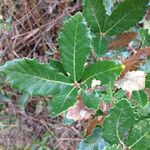
Quercus lusitanica
Scrub Gall Oak · Shrubby oak · Lusitanian oak
Description
Source: leafsnapQuercus lusitanica, commonly known as the Portuguese oak, is a species of oak tree native to the Iberian Peninsula and parts of North Africa. This medium-sized deciduous tree can grow up to 20 meters tall and has a broad, rounded crown. Its bark is dark gray and becomes deeply furrowed with age. The leaves of Quercus lusitanica are simple, alternate, and lobed with toothed margins. They are dark green on the top with lighter undersides and can grow up to 10 centimeters long. The Portuguese oak produces acorns that are about 2 centimeters long with shallow cups. These acorns mature within a year after pollination in autumn. This species prefers well-drained soils in full sun or partial shade but can tolerate some drought once established. It is commonly used for timber production as well as for ornamental purposes due to its attractive foliage. Traditionally, Quercus lusitanica has been used for medicinal purposes such as treating diarrhea, fever, wounds, and skin infections due to the anti-inflammatory properties found in its bark extracts. Overall, Quercus lusitanica plays an important ecological role by providing habitat for wildlife such as birds and insects. Additionally, it contributes to soil conservation through its deep root systems, which help prevent soil erosion during heavy rainfall events.
Care Guide
💧 Water Every 7 days
To maintain the health of a gall oak, keep the soil moist but well-drained. Ensure that the soil several inches below the surface stays humid without becoming waterlogged. In the summer, reduce watering, as the gall oak is highly tolerant of dry spells.
☀️ Light Partial sun
Gall oak naturally occurs in habitats like forest understories or rocky sites, where it grows in natural shade. It prefers partial sun but can tolerate full sun or complete shade, reflecting its adaptable and hardy character.
What are the sunlight requirements for Gall Oak (Quercus lusitanica)?
Gall Oak, or Quercus lusitanica, thrives in specific sunlight conditions. It requires 'full sun' for optimal growth, which means it should receive above 6 hours of sunlight daily. Alternatively, it can also grow under 'partial sun' conditions, which involve about 3-6 hours of sunlight each day. It's important to observe how sunlight moves through your garden throughout the day. Selecting the right spots that offer a balance of light and shade will ensure your plants grow healthy and happy.
🌡️ Temperature 15–35°C
Gall oak adapts well to heat, tolerating higher temperatures and wider temperature swings. In hot conditions, attention should be paid to irrigation and suitable shading provided to avoid sunburn. Conversely, Gall oak is relatively sensitive to cold; it can endure some chill, but very low temperatures may cause frost damage.
What is the common name of Quercus lusitanica?
The common name for Quercus lusitanica is Gall oak.
Are there any described symptoms or essential information provided for Gall oak?
No, there are no described symptoms or essential information provided for Gall oak in the provided data.
💨 Humidity
🪴 Soil 6-8
🌱 Fertilizer
Fertilize your Gall oak in early spring to encourage healthy growth. Regular feeding boosts overall vitality, leading to strong growth, better tolerance of harsh conditions, and increased resistance to diseases and pests. Keep to a consistent fertilization routine for your Gall oak to preserve vibrant, deeply colored foliage and a lush appearance.
🪴 Pot & Repot
✂️ Pruning
Gall oaks benefit greatly from careful pruning in early spring before new growth begins. The main techniques involve removing dead, diseased, or crossing branches to improve air circulation and increase sunlight exposure. Regular pruning helps maintain the tree's health, encourages growth, and prevents pest infestations. It's important to always use sanitized and sharp tools to minimize damage to the tree.
🌿 Propagating
🐛 Diseases & pets
☠️ Toxicity
Characteristics
- Plant Type
- Tree
- Life Cycle
- Perennial
- Genus
- Quercus
- Family
- Fagaceae
- Hardiness Zone
- 7-10
- Mature Height
- 6.1 m to 11.89 m
- Mature Spread
- 4.88 m to 7.92 m
- Leaf Color
- Dark Green, Olive Drab
- Leaf Type
- Evergreen
- Flower Size
- 0.51 cm to 0.76 cm
- Bloom Time
- Mid spring, Late spring
- Planting Time
- Spring, Summer
- Harvest Time
- Late summer, Early fall, Mid fall
- Native Area
- Morocco, Spain, Portugal