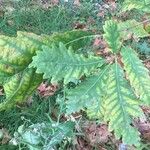
Quercus michauxii
Swamp chestnut oak · Basket oak · Cow oak · Chestnut oak
Description
Source: leafsnapQuercus michauxii, commonly known as Michaux's oak, is a deciduous tree species belonging to the Fagaceae family. Native to the southeastern United States, this tree thrives in various habitats such as upland forests, bottomlands, and savannas. It can reach a height of up to 30 meters, with a trunk diameter of about 1 meter. The leaves of Quercus michauxii are simple, elliptical, and alternately arranged, measuring between 10-20 cm in length. They feature a dark green upper surface and a lighter green underside, with distinct serrated edges. The bark of Michaux's oak is grayish-brown and deeply furrowed, creating ridges that are more pronounced on older trees. The tree produces large acorns (2-3 cm) with shallow, cup-like caps. Ecologically, Quercus michauxii is significant as it provides food for various wildlife, including deer, squirrels, birds, and insects. Its deep root system also helps in preventing soil erosion. Despite its ecological importance, Quercus michauxii faces threats from habitat loss due to urbanization and agricultural practices. Conservation efforts focus on protecting its remaining habitats, either through land acquisition or management practices such as prescribed burning and selective logging. Overall, Quercus michauxii is a vital tree species, not only for its ecological benefits but also for its aesthetic appeal. Its large size makes it a popular choice among landscapers for shade trees and ornamental features in gardens and parks.
🌳 Swamp chestnut oak provides more than just good lumber; it functions as a keystone species crucial to ecosystem health. Its acorns are an important food resource for wildlife. The tree’s bark has been used to tan leather, implying certain chemical properties and possible uses outside of standard timber applications. Its occurrence signals specific soil conditions, making it a bioindicator useful for land management.
🎭 Treat me fairly.
Care Guide
💧 Water Every 7 days
The swamp chestnut oak, which originates from wetlands, thrives in moist conditions and can tolerate short periods of dryness. To maintain its health in cultivation, it should be watered every 1 to 2 weeks to mimic its natural habitat. Natural rainfall plays an important role in its growth, as the seasonal variation in water levels is crucial for its development.
How should I water my Swamp chestnut oak tree?
To promote excellent root development, place a garden hose at the base of the plant. Avoid spraying the leaves directly, as this can require more watering, especially if the plant is outdoors in direct sunlight. You can use bubblers or soaker hoses to moisten the roots. When adding or removing plants, use soaker hoses or sprinklers to ensure the roots are deeply watered. After watering, drain any excess water and wait for the soil to dry before watering again. Water at ground level to prevent diseases. On a sunny day, it can be beneficial to spray the entire bush with water. Whether the Swamp chestnut oak is potted or in the ground, deep watering is preferred over light sprinkling.
What should I do if I give too much or too little water to the Swamp chestnut oak tree?
When a Swamp chestnut oak is overwatered, its leaves turn yellow, drop off, and wilt. The plant may also have mushy stems and look unhealthy. To address these symptoms, it's best to adjust your watering schedule if possible. However, wilting can also indicate under watering, in which case the leaves become crispy and dry. In both cases, check the soil moisture and provide sufficient watering if needed. Despite recovering, the plant may still appear dry with yellow leaves due to root damage. When growing a Swamp chestnut oak indoors, always check the moisture levels and avoid overwatering. If black spots are present, allow the soil to dry by refraining from watering for a few days. Overwatering can lead to root rot, so if discolored and slimy roots are observed, consider transferring the plant to a different pot. When planting the Oak outdoors, ensure the soil is adequately moist. Insufficient moisture may indicate underwatering and require appropriate watering to aid plant recovery.
How frequently should I give water to my Swamp chestnut oak?
The Swamp chestnut oak prefers deep and infrequent watering, especially when planted in pots. To ensure proper hydration, soak them with a gallon of water each time. Watering should be done every 3 to 5 days in cold regions, preferably in the morning when the soil is dry. You can also check the soil's moisture level by examining the top 2-3 inches of soil. If it's dry, give the plant a thorough watering. Additionally, during hot days, monitor the soil's moisture daily due to the faster evaporation in pots. If you have a garden, irrigation of the soil is necessary, especially in hot climates where once a week watering may be needed. However, refrain from watering if there has been sufficient rainfall to prevent root rot. When planting the oak outdoors, add mulch about 3 to 4 inches deep to retain moisture. sandy soil requires more frequent watering due to its quick drainage, whereas clay soil requires less frequent watering to avoid root rot. Keeping track of watering dates on a calendar can help ensure timely care. Finally, be attentive to any drooping leaves, as they may indicate a need for watering.
How much water does my Swamp chestnut oak need?
The Swamp chestnut oak usually needs about a gallon of water on a regular basis. For potted plants, water them deeply until you see water dripping from the bottom of the pot. Then, wait for the soil to dry before watering again. You can use a water calculator or moisture meter to determine how much water you've given your plant in a week. During the flowering period, provide plenty of water, but allow the moisture to evaporate afterward to avoid root rot. If the Swamp chestnut oak is planted outside and receives sufficient rainfall, it may not need extra watering. When the oak is young or newly planted, ensure it receives 1-2 inches of rain per week. As the oak grows, it can rely solely on rainfall. Only in very hot weather or when there is no rainfall for 2-3 weeks should you consider giving the oak a thorough watering during cooler parts of the day to prevent damage from high heat. Additional watering will be necessary during extended dry periods.
Should I change how often I water my Swamp chestnut oak depending on the time of year or the weather?
The Swamp chestnut oak requires watering when there is a lack of rain. In spring and fall, the soil should be kept moist but not overly wet. Alternating between dry and moist soil conditions is beneficial for its growth. During hot summers or when there is little rainfall, more frequent watering is needed to keep the soil moist. Less water is generally required during winter when the plant is dormant. It is recommended to use a well-draining soil mixture, such as terracotta, to help evaporate excess water. Once the plant begins to leaf out and go dormant, no watering is necessary as it can rely on fall and winter rains. Good drainage is crucial at all times, particularly during winter, to avoid ponding. When the plant is in a pot, ensure it is well-watered, especially in summer, while also providing proper drainage. It is best to deeply water the entire root system once or twice a week, avoiding shallow sprinkling that can encourage fungal growth. The plant should not be allowed to completely dry out during fall or winter, even in dormancy. Avoid overwatering, as sitting in water for too long can be harmful, especially during winter. Additionally, applying mulch can help reduce stress, conserve water, and promote healthy blooms.
☀️ Light Full sun
The swamp chestnut oak prospers in areas that receive plentiful, unfiltered sunlight all day, though it can tolerate spots that are sunlit only part of the day. Its wellbeing is shaped by this abundant light, promoting optimal growth. Too much or too little light can harm its health.
What are the sunlight requirements for a swamp chestnut oak?
A swamp chestnut oak requires a range of sunlight exposures to thrive. It does best in full sun, which means it should receive above 6 hours of sunlight daily. It can also grow in partial sun conditions, receiving about 3-6 hours of sunlight. The health and growth of the swamp chestnut oak are greatly influenced by the amount of unfiltered sunlight it gets throughout the day. It is capable of withstanding areas that are lit for only part of the day. Adequate exposure to sunlight is crucial for its wellbeing, ensuring the tree grows optimally. Insufficient or excessive light can adversely affect its health.
How can artificial lighting be used for indoor swamp chestnut oaks?
Indoor swamp chestnut oaks require sufficient lighting for optimal growth, especially when natural sunlight is inadequate, such as in winter or less sunny spaces. Artificial lights can provide a vital solution, promoting faster, healthier growth. When choosing artificial lighting, LED lights are popular due to their ability to offer specific wavelengths needed by plants. Full sun plants need 30-50W/sq ft of artificial light, partial sun plants 20-30W/sq ft, and full shade plants 10-20W/sq ft. The light source should be placed 12-36 inches above the plant to mimic natural sunlight and left on for 8-12 hours per day to match the natural daylight hours.
What are the symptoms of insufficient or excessive sunlight exposure in swamp chestnut oaks?
Swamp chestnut oaks, being accustomed to full sunlight, may exhibit various symptoms under suboptimal lighting conditions. Symptoms of light deficiency include smaller new leaves, leggy or sparse growth, faster leaf drop, and slower or no new growth, indicating insufficient sunlight. Leaves may develop irregular color patterns or appear pale due to a lack of chlorophyll. Excessive sunlight can lead to chlorosis, sunscald, leaf curling, wilting, and leaf scorching. These conditions suggest that the plant is either receiving too much or too little light, affecting its ability to photosynthesize and maintain overall health.
What solutions can help swamp chestnut oaks with insufficient sunlight?
To combat insufficient sunlight for swamp chestnut oaks, gradually moving them to a location with more sunlight can be beneficial. For indoor plants, gradually increasing sunlight exposure each week until achieving at least 6 hours of direct sunlight daily is recommended, utilizing south-facing windows for maximum light. Artificial lighting, such as desk or ceiling lamps on for at least 8 hours daily or professional grow lights, can supplement light. Outdoors, adapting plants to sunnier spots gradually helps prevent sunburn. Removing obstructions like tree branches that block sunlight and transplanting smaller plants during their dormant period to sunnier locations with good drainage are effective solutions. It's important to note that while affected parts may not recover, new growth will be healthy with improved light conditions.
🌡️ Temperature 5–35°C
Swamp chestnut oak's native temperature-related habitat is cool and moist, with average growing-season temperatures of 41 to 66 ℉ (5 to 19 ℃). Its preferred temperature range is 41 to 95 ℉ (5 to 35 ℃), typical of temperate woody species. In summer, excessive heat and drought stress should be avoided by providing adequate water and shade. In winter the plant can tolerate temperatures as low as -13 ℉ (-25 ℃), though in areas with severe cold snaps it may benefit from protection.
What is the native growth temperature range for Swamp Chestnut Oak?
The Swamp Chestnut Oak thrives in a cool and moist environment with an average temperature range during the growing season between 41 to 66°F (5 to 19°C). Its overall preferred temperature range extends from 41 to 95°F (5 to 35°C), typical for temperate woody plants. During the summer months, excessive heat and drought stress should be avoided by ensuring the plant has adequate water and shade. In winter, the Swamp Chestnut Oak can withstand temperatures as low as -13°F (-25°C). Despite its strong cold resistance, in areas expecting temperatures to drop below this threshold, applying cold protection measures like wrapping the trunk and branches with non-woven fabric or cloth is recommended. Additionally, watering the plant abundantly before the first freeze of autumn to enter winter with moist soil can help prevent drought and water scarcity.
How does low temperature affect Swamp Chestnut Oak and what are the solutions?
Swamp Chestnut Oak is notably cold-tolerant, generally faring well when temperatures stay above its minimum tolerable limit during winter. If temperatures fall beneath this critical point, while the tree might not show immediate damage during the winter, come spring, the branches may appear brittle and dry, with no new shoots emerging. The recommended solution for dealing with such damage is to prune away any dead branches that failed to produce new leaves in the spring, encouraging the plant to focus its energy on generating healthy new growth.
What are the effects of high temperature on Swamp Chestnut Oak and how can they be remedied?
When temperatures rise above Swamp Chestnut Oak's optimal range during the summer, the plant may exhibit signs of stress, such as lighter leaf color, dry and withered leaf tips, and an increased susceptibility to sunburn. To address these symptoms, trimming the sunburned and dried parts of the plant is advised. Additionally, relocating the plant to a shadier spot or employing a shade cloth can protect it from the harsh midday and afternoon sun. It's also beneficial to water the plant in the morning and evening to maintain soil moisture and prevent further stress.
💨 Humidity
🪴 Soil 5-6
🌱 Fertilizer
Fertilize your Swamp chestnut oak in early spring to encourage healthy growth. Regular feeding boosts overall health, leading to vigorous growth, better tolerance of harsh conditions, and increased resistance to pests and diseases. Keep to a set fertilization schedule for your Swamp chestnut oak to preserve foliage that is vibrant, richly colored, and lush.
Why should I add fertilizer to my Swamp chestnut oak?
No matter what type of Swamp chestnut oak you have, regularly fertilizing it will promote overall plant health. Providing the proper nutrients will result in stronger growth and increased resilience to challenging growing conditions, as well as improved disease and pest resistance. Maintaining the foliage of your Swamp chestnut oak is important, as it is one of its most appealing features. To achieve this, it is crucial to establish and follow a fertilization schedule that is tailored to your specific Swamp chestnut oak. By doing so, you can expect deep-colored leaves and a lush appearance.
What is the best time to put fertilizer on my Swamp chestnut oak tree?
To ensure healthy growth, it is recommended to fertilize your Swamp chestnut oak in late winter or early spring. This will supply the necessary nutrients for it to thrive when the weather warms up. Additionally, if you live in a warm climate region, giving your oak tree another round of fertilizer in early fall can further benefit its overall health. Not only does this provide extra nutrients for the following growing season, but it also helps the tree withstand winter cold without damaging its foliage. Fertilizing earlier in the season ensures that new branches have ample time to grow and withstand the colder months.
When is it not a good idea to add fertilizer to my Swamp chestnut oak?
There are certain times of the year when you should avoid fertilizing your Swamp chestnut oak. Firstly, during the early and mid-winter months when the tree is dormant, it does not require any feeding. Secondly, it is not recommended to fertilize the plant in late spring and throughout the summer. During this period, the weather tends to be hotter and drier, which can cause negative effects if fertilized. To prevent such issues, it is best to stick to a fertilization schedule that only involves feeding in early spring and early fall.
What kind of plant food does my Swamp chestnut oak tree need?
For a Swamp chestnut oak, nitrogen is typically the most important nutrient. However, this does not mean that phosphorus and potassium are unimportant. In fact, your oak tree will likely benefit from a sufficient amount of all three nutrients. Therefore, using a balanced fertilizer like a 10-10-10 can be effective. Nonetheless, it is often more beneficial to use a fertilizer with a more nuanced nutrient ratio for optimal growth. In particular, fertilizers with slightly higher nitrogen content, such as a 10-6-4 ratio, tend to work well. You have the option to use either granular or liquid-based fertilizers when applying them.
How should I add fertilizer to my Swamp chestnut oak?
To fertilize your Swamp chestnut oak, you have two options: using a granular fertilizer or a liquid fertilizer. If you choose the granular fertilizer, simply sprinkle it on the soil at the appropriate time. The slow-release properties of this fertilizer will gradually release nutrients into the soil. It's ideal to lightly water your oak before applying the fertilizer. Alternatively, if you opt for a liquid fertilizer, mix it with water and pour the mixture onto the soil surrounding the oak tree's base. It's worth noting that using a liquid fertilizer is less common. Additionally, before fertilizing, it may be helpful to conduct a soil test to determine if any adjustments to the pH levels are needed.
🪴 Pot & Repot
✂️ Pruning
The swamp chestnut oak is a deciduous tree that grows well in wet soils and displays vibrant autumn colors. To promote healthy growth, it is best to prune the tree in early spring by removing dead or crossing branches. Avoid heavy pruning; instead, use thinning cuts to improve air circulation, which enhances the tree's overall health and regrowth.
🌿 Propagating
🐛 Diseases & pets
☠️ Toxicity
Characteristics
- Plant Type
- Tree
- Life Cycle
- Perennial
- Genus
- Quercus
- Family
- Fagaceae
- Hardiness Zone
- 5-9
- Mature Height
- 20.12 m
- Mature Spread
- 9.14 m to 21.03 m
- Leaf Color
- Green, Yellow, Gold, Silver, Gray
- Leaf Type
- Deciduous
- Flower Color
- Yellow, Green, Red, Burgundy, Gold
- Flower Size
- 2.54 cm to 7.62 cm
- Bloom Time
- Mid spring, Late spring
- Planting Time
- Spring
- Harvest Time
- Mid summer, Late summer