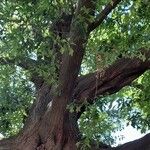
Quercus nigra
Water oak · Southern Live Oak · Possum oak · Live Oak · ᏙᎳᏥ
Description
Source: leafsnapQuercus nigra, commonly known as the water oak, is a deciduous tree native to the southeastern United States. Typically, it reaches a height of 50-80 feet with a spread of 40-60 feet. The tree boasts an oval-shaped crown and dark green leaves that are oblong and smooth-edged. In the fall, the leaves turn yellow-brown before dropping. The water oak thrives in wet soils and is often found near streams, swamps, or other wetland areas. Its acorns serve as a crucial food source for wildlife such as deer, squirrels, and birds. Although the wood of the water oak is strong and durable, it is not commonly used for lumber because it tends to warp when drying. Historically, however, its resistance to rot made it valuable for shipbuilding. Overall, Quercus nigra plays a significant ecological role by providing habitat and food sources for wildlife. Additionally, it contributes aesthetically with its attractive foliage throughout the spring and fall seasons.
🌳 Water oak, a tree valued for both its looks and usefulness, provides shade and enhances the visual appeal of landscapes. Its acorns are an important fall food source for wildlife such as squirrels, deer, and birds. Those same birds often nest in the tree’s sturdy branches. People also benefit from water oak, using its strong, easily worked wood to produce furniture. A less expected use of the tree is its bark, which is harvested for tannin, a substance needed to turn animal hides into usable leather.
🎭 Security, Well-being, Wealth, Power
Care Guide
💧 Water Every 7 days
The water oak, commonly found in wetlands, prefers consistent moisture but can withstand short periods of drought. It should be watered every 1-2 weeks, being careful to avoid waterlogging. As an outdoor tree, it benefits from natural rainfall, which supports its growth during the growing season and sustains its deciduous characteristics.
When Should I Water My Water Oak?
Recognizing when to water your water oak is crucial for its health and growth. It's important to check the soil's moisture level by inserting a finger up to two inches deep; dry soil at this depth means it's time to water. Signs such as wilting or drooping leaves and fading or yellowing of the leaves indicate the plant needs water. Additionally, wrinkled or shriveled leaves suggest drought stress, and visible soil cracking or gapping signifies the soil is too dry. Environmental factors like high temperatures and dry conditions increase water requirements. However, be cautious of watering too early or too late to avoid risks such as root rot or plant death.
How Should I Water My Water Oak?
Watering your water oak effectively involves certain techniques and considerations. Utilize large-scale watering methods for mature trees and a bucket or watering can for younger trees, focusing the water low at the tree's base without wetting the foliage. A moisture meter can help ascertain when the soil is at the correct moisture level for watering. Special attention should be given to watering the soil around the base and ensuring the water is absorbed by the roots not the trunk or leaves. Adjust the watering volume based on the tree's size, age, rainfall, and the season. During hotter and dryer periods, the tree may require more frequent watering.
How Much Water Does Water Oak Really Need?
The water requirement for a water oak varies depending on several factors including pot size, root depth, and the tree's overall size. A mature water oak in a large pot may need about 2 to 3 liters per watering session. The right amount of water results in lush, vibrant leaves, and sturdy stems, indicative of proper hydration. However, both overwatering and underwatering can pose risks, such as root rot or stunted growth. Aim for a balance to ensure the soil can dry out somewhat between waterings while adequately hydrating the plant.
What Kind of Water is Best for Water Oak?
Rainwater is ideal for water oak due to its purity and absence of chlorine, fluoride, and other additives found in municipal water. Tap water is acceptable, especially if it's hard water, though distilled or filtered water may require a calcium supplement. Let tap water sit for 24-48 hours to allow chlorine to evaporate. Water oak is somewhat tolerant of chlorine and fluoride but prefers slightly acidic to neutral pH water. Using water at room temperature is advisable to avoid shocking the plant's root system.
How Do Water Oak's Watering Needs Change with the Seasons?
Water oak's watering needs vary with the seasons. In spring, ample watering supports new foliage growth, while in the hot summer months, increased watering is necessary to combat the high transpiration and evaporation rates. As autumn transitions the tree towards dormancy, reduce watering frequency, tailoring it to the cooler temperatures and natural rainfall increase. Winter requires minimal watering due to the tree's dormancy and reduced water needs, but ensure the soil does not completely dry out to prevent root dehydration.
☀️ Light Full sun
Water oak grows best in locations that receive abundant sunlight, though it can still persist in areas with limited light. Proper illumination promotes vigorous growth. Excessive or inadequate light can reduce its vigor. Its native habitat provides the light conditions that support its healthy development.
What are the sunlight requirements for Water Oak (Quercus nigra)?
Water Oak requires full sunlight to thrive, which means it needs to be exposed to above 6 hours of sunlight daily. It can also survive in partial sun, with about 3-6 hours of sunlight. It's crucial to observe how sunlight moves through your garden to find spots that provide the right balance of light and shade, ensuring your plants' happiness. Water Oak does best in areas with generous sunlight but can adapt to less sunny locations. However, too much or too little light can affect its growth negatively.
How can artificial lighting be used for Water Oak indoors?
Indoor Water Oak plants require adequate lighting for optimal growth, especially when natural sunlight is insufficient, like in winter or less sunny spaces. Artificial lights, such as LEDs, can be an effective solution, providing specific light wavelengths needed for healthy growth. For plants needing full sun, 30-50W/sq ft of artificial light is recommended, 20-30W/sq ft for partial sun plants, and 10-20W/sq ft for full shade plants. The light source should be placed 12-36 inches above the plant to mimic natural sunlight, with 8-12 hours of light per day depending on the plant species.
What are the symptoms of insufficient sunlight in Water Oak?
Water Oak exhibits several symptoms when it doesn't receive enough sunlight, including smaller new leaves, leggy or sparse growth, faster leaf drop, slower or no new growth, and lighter-colored new leaves. Other issues like chlorosis (leaves turning yellow), sunscald (damage from intense sunlight exposure), leaf curling (as a defense mechanism against excessive sunlight), wilting (loss of turgor pressure), and leaf scorching (brown, dry edges on leaves) can also occur due to inappropriate light exposure.
What solutions are available for Water Oak experiencing light-related issues?
For indoor Water Oak plants suffering from insufficient light, gradually move them to sunnier locations each week until they receive at least 6 hours of direct sunlight daily, using a south-facing window. If moving the plant isn't feasible, consider artificial lighting solutions like desk or ceiling lamps, or invest in grow lights for at least 8 hours daily. Outdoors, gradually acclimate your plants to sunnier spots to prevent sunburn. Reducing obstructions like pruning trees can also help. For smaller plants, consider transplanting during their dormant period to areas with better sunlight and drainage. Note that parts of the plant damaged by insufficient light might not recover, but new growth should be healthy with improved light exposure.
🌡️ Temperature 10–35°C
Water oak is native to habitats with temperature ranges of 50 to 87 ℉ (10 to 30 ℃), though it can tolerate conditions outside that range. Water oak prefers temperatures from 50 to 95 ℉ (10 to 35 ℃) and can acclimate to cooler conditions in the fall and winter months.
What are the optimal and tolerable temperature ranges for Water oak?
Water oak thrives in environments with temperature ranges of 50 to 87 °F (10 to 30 °C) but can adjust to cooler temperatures during fall and winter. It prefers temperatures between 50 and 95 °F (10 to 35 °C) and exhibits strong cold resistance, meaning special frost protection measures are usually not necessary. However, if winter temperatures are expected to drop significantly, measures such as wrapping the trunk and branches with non-woven fabric or cloth are recommended. Additionally, watering the plant abundantly before the first freeze in autumn helps the soil remain moist and prevents drought and water scarcity during winter and early spring.
How does low temperature affect Water oak and what are the solutions?
Water oak is cold-tolerant and generally does well when the temperature stays above its minimum tolerable limit. However, when temperatures fall below a certain threshold, although there may not be noticeable changes during the winter, the branches can become brittle and dry, and in spring, no new shoots will emerge. To counteract these effects, it is advisable to prune away any dead branches that have failed to produce new leaves in the spring.
How does high temperature affect Water oak and what are the solutions?
During the summer, it is crucial to keep the Water oak's temperature below its maximum tolerable level. Exceeding this temperature could result in the leaves becoming lighter in color, the tips may turn dry and wither, and the plant may become more prone to sunburn. To mitigate these issues, trim any sunburned and dried-up portions of the plant, move it to a location with shade from the midday and afternoon sun, or use a shade cloth. Additionally, watering the plant in the morning and evening can help maintain soil moisture.
💨 Humidity
🪴 Soil 6-7
🌱 Fertilizer
Fertilize your Water oak in early spring to encourage healthy growth. Regular feeding improves its overall health, leading to robust growth, greater tolerance of harsh conditions, and better resistance to pests and diseases. Follow a consistent fertilization schedule for your Water oak to maintain vivid, richly colored foliage and a full, lush appearance.
Why should I add fertilizer to my Water oak?
Regardless of the type of Water oak you own, regular fertilization is essential for the overall health of your plant. Providing the proper nutrients will result in stronger growth and increased resistance to challenging growing conditions, as well as improved ability to fend off diseases and pests. The foliage of your Water oak is particularly appealing, and thus it is crucial to take measures to preserve it. This involves establishing and adhering to a specific fertilization schedule tailored to your Water oak, which will promote the development of vibrant, lush leaves.
When should I put fertilizer on my Water oak tree?
To keep your Water oak healthy and promote growth, it is recommended to fertilize it twice a year. The first fertilization should take place in late winter or early spring, giving the tree the necessary nutrients to thrive once the weather warms up. If you live in a warm climate, it is beneficial to provide an additional fertilizer feeding in early fall. This helps to nourish the tree's roots and prepare it for the following growing season. It also increases your Water oak's resilience to cold temperatures, preventing any damage to its foliage during winter. Starting the fertilization process earlier in the year ensures that the new branches have enough time to develop and withstand the cold winter.
When is it not a good idea to add fertilizer to my Water oak?
To properly care for your Water oak, it is important to avoid fertilizing it during specific times throughout the year. One such time is during the early and mid-winter months when the tree is in a dormant state and does not require any feeding. Another time to refrain from fertilization is during the late spring and summer, when the weather tends to be hot and dry. These conditions can have a detrimental effect on your Water oak if fertilized during this period. To prevent any negative consequences, it is recommended to follow a fertilization schedule that only involves feeding the tree in early spring and early fall.
What kind of fertilizer does my Water oak tree need?
Water oak trees primarily require nitrogen as their most essential nutrient. However, phosphorus and potassium should not be disregarded as they are also important for the tree's health and growth. It is recommended to provide a balanced fertilizer, like a 10-10-10 blend, to ensure an adequate supply of all three main nutrients. Nonetheless, a more precise nutrient ratio often yields the best results. Higher nitrogen levels, such as a ratio of 10-6-4, tend to promote optimal growth for water oaks. There are two commonly used types of fertilizers—granular and liquid—both of which can be employed during the fertilization process.
How can I make my Water oak tree healthier by giving it plant food?
To fertilize your Water oak, you have two options: using granular fertilizer or using liquid fertilizer, although the latter is less common. With granular fertilizer, simply sprinkle it onto the soil at the correct time. The slow-release nature of granules allows nutrients to be released gradually over time. It's a good idea to water your Water oak lightly before applying the fertilizer. On the other hand, if you choose to use liquid fertilizer, mix it with water and then pour it onto the soil around the base of your oak tree. Before fertilizing, it may be helpful to perform a soil test to determine if you need to adjust the soil's pH.
🪴 Pot & Repot
✂️ Pruning
Water oaks benefit greatly from pruning in early spring, which helps wounds heal and encourages strong growth. Focus on removing dead or crossing branches to support an upright structure. Regular pruning improves air circulation, increases sunlight exposure, and boosts overall health, but be sure to respect the tree's natural shape to avoid over-pruning.
🌿 Propagating
🐛 Diseases & pets
☠️ Toxicity
Characteristics
- Plant Type
- Tree
- Life Cycle
- Perennial
- Genus
- Quercus
- Family
- Fagaceae
- Hardiness Zone
- 6-9
- Mature Height
- 29.87 m
- Mature Spread
- 17.98 m to 21.03 m
- Leaf Color
- Green, Brown
- Leaf Type
- Deciduous
- Flower Color
- Yellow, Green
- Flower Size
- 2.54 cm
- Bloom Time
- Mid spring, Late spring
- Planting Time
- Spring, Autumn
- Harvest Time
- Mid summer, Late summer, Fall
- Native Area
- Eastern to Midwest North America