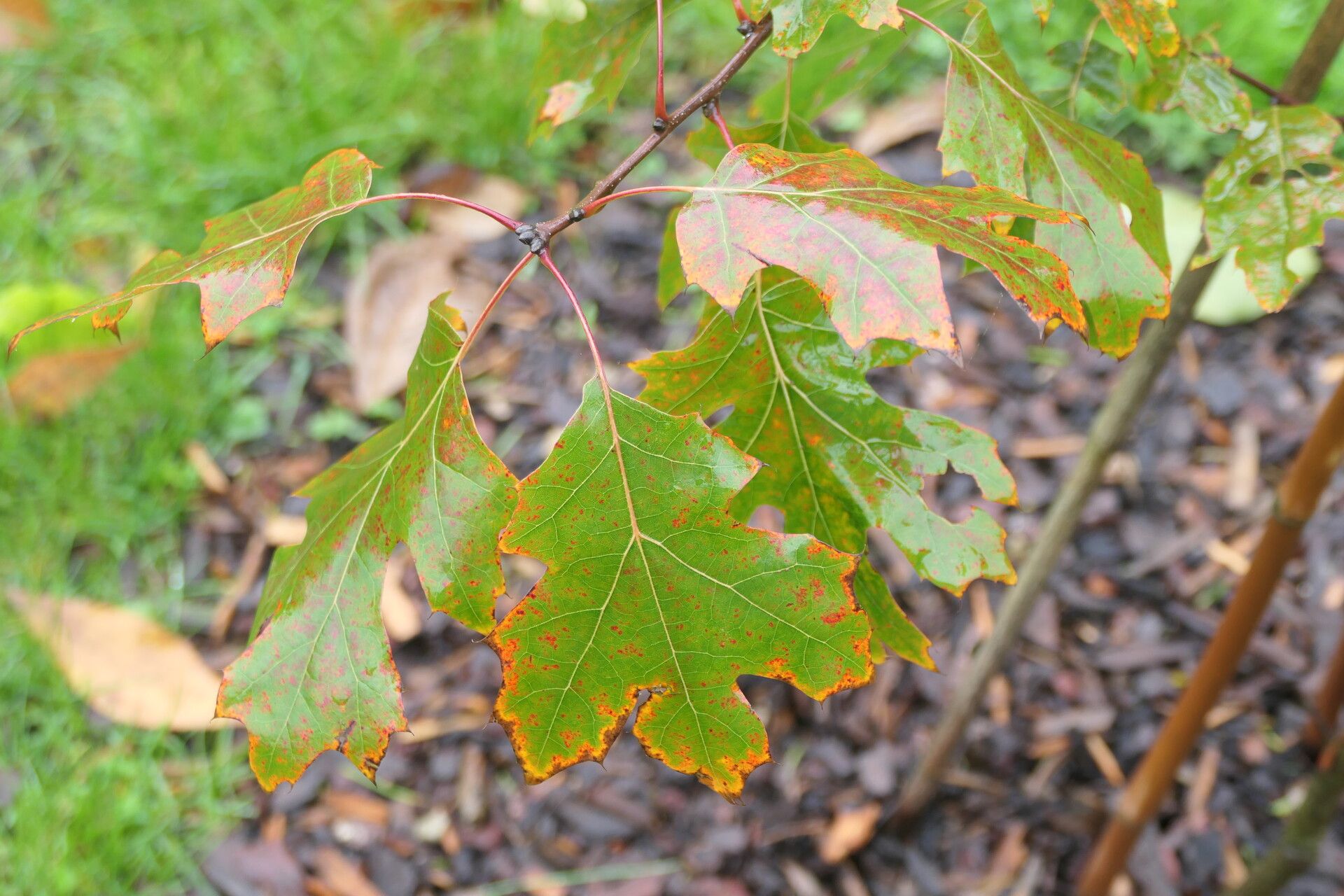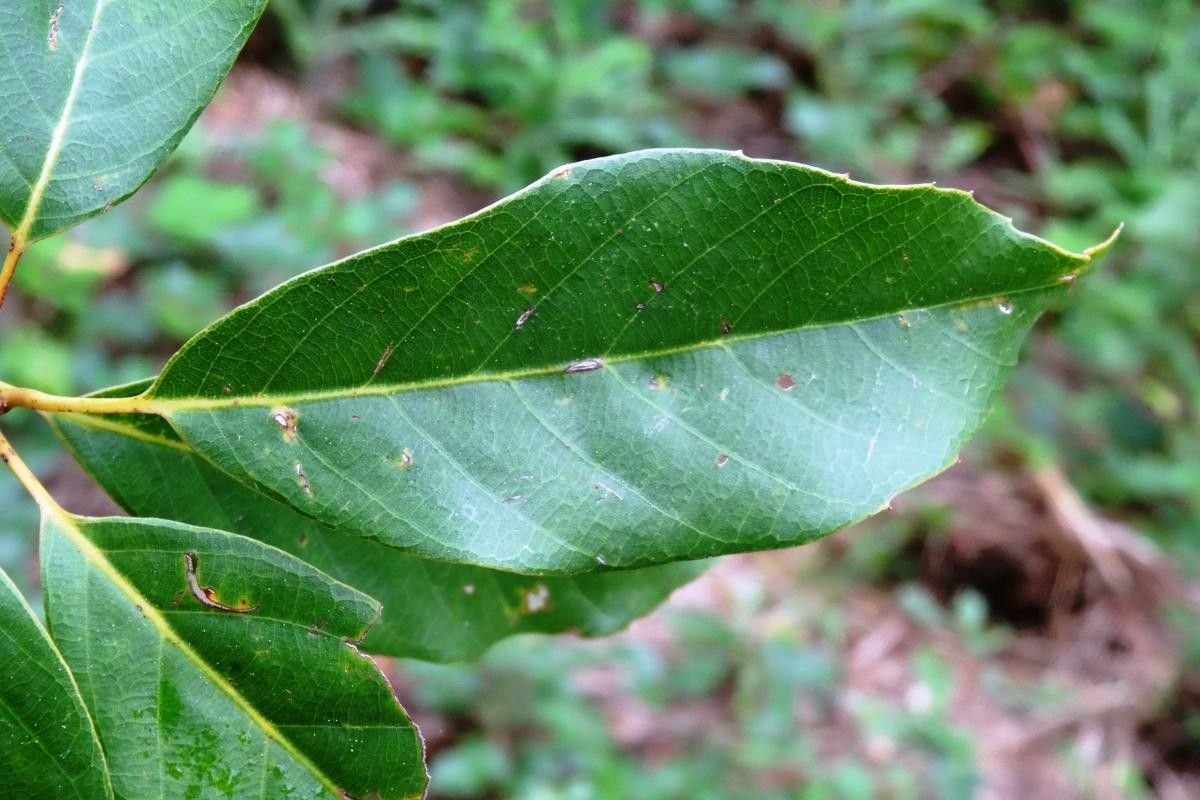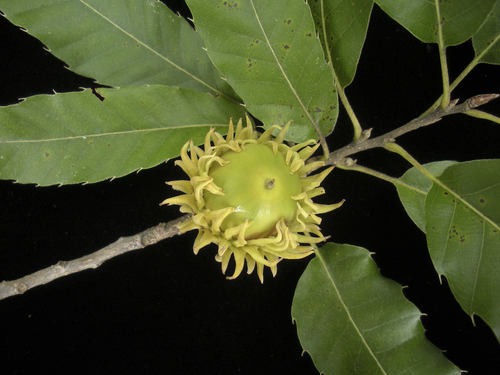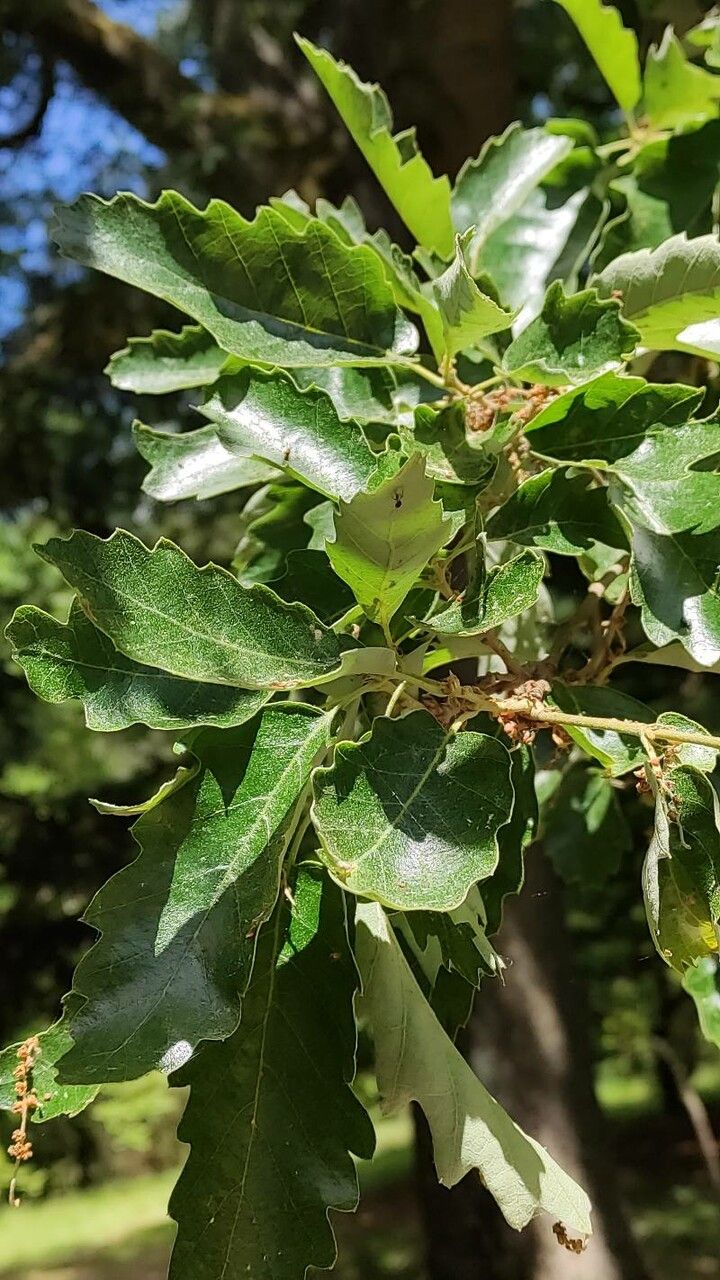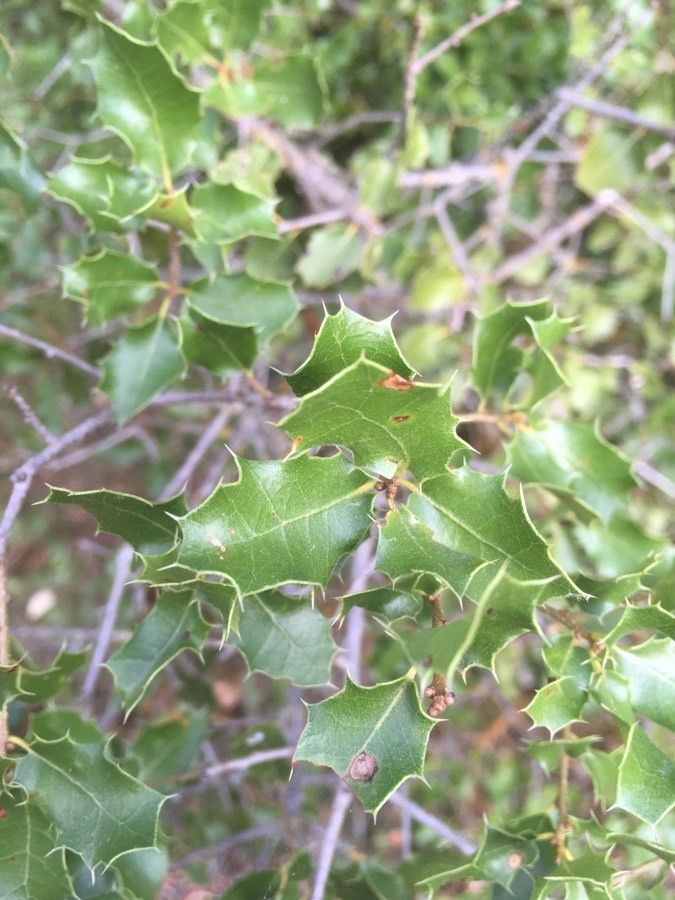
Quercus palmeri, commonly known as Palmer's oak, is a species of oak tree native to the southwestern United States and northwestern Mexico. It belongs to the Fagaceae family and can grow up to 20 meters tall. The tree features a rounded crown with thick, leathery leaves that are dark green on top and pale green underneath. The leaves are deeply lobed with pointed tips and can reach up to 10 centimeters in length. Palmer's oak produces acorns that are approximately 2 centimeters long, with a shallow cup-like cap covering about one-third of the nut. These acorns mature in one year and serve as a food source for various wildlife species such as squirrels, deer, and birds. This oak species prefers well-drained soils in sunny or partially shaded areas at elevations ranging from 600 to 2,400 meters above sea level. It is commonly found on rocky slopes or in canyons within its range. Indigenous people have utilized Palmer's oak for various purposes, including basket weaving from its branches and using bark fibers for medicinal purposes due to their anti-inflammatory properties. Overall, Quercus palmeri plays a crucial role in maintaining ecological balance by providing food for wildlife and serving as an important cultural resource for indigenous communities within its range.
Palmer's oak is fairly disease-resistant and is typically not prone to disease. As for care, this plant is relatively low-maintenance. When grown outdoors it needs only minimal watering, and larger specimens usually do not require pruning. Smaller plants, however, should be pruned after they have bloomed. Palmer's oak is appropriate for anyone with an outdoor area, such as a garden or deck, and does not demand extensive gardening experience.
How to keep Quercus Palmeri.
Light
Palmer's oak comes from open habitats, such as sunny meadows and forest margins, where light is plentiful. It does best in full sun but can also tolerate partial sun, showing good adaptability to different light conditions.
Water
Palmer's oak flourishes in dry environments due to its high tolerance for drought. This tree requires minimal watering, typically only once a week. It has evolved to efficiently use the sparse rainfall, adapting its growth cycle to seasonal rain patterns to optimize water absorption and storage.
Temperature
Palmer's oak shows good tolerance to warm conditions and broad temperature swings. In hot weather, attention should be paid to watering and supplying adequate shade to avoid sunburn. However, Palmer's oak is not very hardy in cold; although it can tolerate some chill, extremely low temperatures may cause frost damage.
Fertilizer
Fertilize your Palmer's oak in early spring to encourage healthy growth. Regular feeding boosts its overall health, producing vigorous growth, increased tolerance of harsh conditions, and enhanced resistance to pests and diseases. Keep to a specific fertilization schedule for your Palmer's oak to preserve lively foliage with rich color and a lush appearance.
Pruning
To ensure the health and vitality of Palmer's oak, it is important to prune it in early spring. This involves removing any dead or crossing branches to improve air circulation and promote new growth. Regular maintenance helps prevent pest infestations and maintains the tree's structural integrity, contributing to the overall robustness of the plant. Additionally, lightly thinning out crowded areas during the plant’s active growth period facilitates better recovery and development.
Botanical profile.
- Plant Type
- Tree
- Life Cycle
- Perennial
- Genus
- Quercus
- Family
- Fagaceae
- Hardiness Zone
- 7-10
- Mature Height
- 3.05 m to 6.1 m
- Mature Spread
- 3.05 m to 4.88 m
- Leaf Color
- Dark Green, Gray
- Leaf Type
- Evergreen
- Bloom Time
- Mid spring, Late spring
- Planting Time
- Spring, Summer
- Harvest Time
- Late summer, Early fall, Mid fall
- Native Area
- Mexico
Other names.
Reader questions.
What are the sunlight requirements for Palmer's oak?
Palmer's oak (Quercus palmeri) thrives in both full sun and partial sun conditions. Full sun means the plant should receive above 6 hours of sunlight daily, whereas partial sun refers to an exposure of about 3-6 hours of sunlight. It's important to observe how sunlight moves through your garden to select the best spots that offer an ideal balance of light and shade, ensuring the optimal growth and happiness of your Palmer's oak.
What is Palmer's oak?
Palmer's oak, known botanically as Quercus palmeri, is a type of oak tree. The specifics about its essentials and symptoms were not provided. It lacks additional information on its characteristics or habitat. The absence of details beyond the botanical name suggests a focus on its identification rather than its cultivation or ecological role.