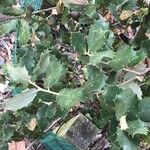
Quercus rotundifolia
Evergreen Oak · Holly oak · Holm Oak · Sweet Acorn Oak · Round-leaved oak
Description
Source: leafsnapQuercus rotundifolia, the holm oak or ballota oak, is an evergreen oak native to the western Mediterranean region, with the majority on the Iberian Peninsula and minor populations in Northwest Africa. The species was first described by Jean-Baptiste Lamarck in 1785. It is the typical species of the Iberian dehesa or montado, where its sweet-astringent acorns are a source of food for livestock, particularly the Iberian pig. It has previously been described in the same species as Quercus ilex. Its acorns have been used for human nourishment since the Neolithic era (7,000 BC).
Care Guide
💧 Water
The Iberian holm oak thrives in the arid regions of Iberia, demonstrating excellent drought tolerance while maintaining balanced water levels. It should be watered every 2 to 3 weeks. As an evergreen, the Iberian holm oak retains its leaves throughout the year, which helps conserve water during dry periods.
☀️ Light Full sun
The Iberian holm oak comes from open habitats, like sunny meadows and forest margins, that receive plenty of light. It does best in Full Sun but can also tolerate Partial Sun, adjusting well to different sunlight conditions.
What are the sunlight requirements for Iberian holm oak?
The Iberian holm oak, also known as Quercus rotundifolia, thrives best in conditions of full sunlight, which means it requires more than 6 hours of sunlight daily. It can also adapt and grow well in partial sun, with about 3-6 hours of sunlight. The natural sunlight encourages optimal growth, mimicking the open environments, like sunny meadows and forest edges, from which it originates. It's essential to watch how sunlight moves through your garden to select spots that provide an ideal balance of light and shade, ensuring the plants' health and happiness.
How can artificial lighting be used for indoor Iberian holm oaks?
For Iberian holm oaks grown indoors, artificial lighting can serve as a crucial substitute for natural sunlight, especially in conditions where natural light is insufficient, such as during winter or in less sunny spaces. Optimal growth is achieved by choosing the right type of artificial light, like LED lights, which can be customized to provide specific wavelengths needed by the plants. Full sun plants require 30-50W/sq ft, partial sun plants need 20-30W/sq ft, and full shade plants need 10-20W/sq ft of artificial light. Positioning the light source 12-36 inches above the plant and ensuring it receives 8-12 hours of light per day can mimic natural sunlight conditions effectively.
What symptoms indicate light deficiency in Iberian holm oak?
When an Iberian holm oak experiences light deficiency, several symptoms might manifest. These include smaller new leaves, leggy or sparse growth, faster leaf drop, slower or halted growth, lighter-colored new leaves, and conditions such as chlorosis, sunscald, leaf curling, wilting, and leaf scorching. These symptoms indicate the plant's struggle in suboptimal lighting conditions and its efforts to conserve resources or protect itself from excessive sunlight.
What solutions exist for dealing with light deficiencies in Iberian holm oaks?
To address light deficiencies in Iberian holm oaks, several strategies can be implemented. For indoor plants, gradually moving them to sunnier locations until they receive at least 6 hours of direct sunlight daily, or using artificial light sources such as desk lamps or professional grow lights for at least 8 hours daily can be effective. Outdoor plants should be moved to optimal sunlight spots gradually to avoid sunburn, considering the existing growth might not recover but new growth will be healthy. Additionally, reducing obstructions like pruning trees to allow more sunlight or transplanting smaller plants during their dormant period to sunnier locations with good drainage can help improve sunlight exposure.
🌡️ Temperature 15–35°C
The Iberian holm oak is highly adaptable to various climate conditions, whether very hot summers or cold winters. However, it has an optimal temperature range for growth. If temperatures become excessively high, the plant can undergo heat and humidity stress, which may lead to its death. In regions where temperatures near the lower limit of its cold tolerance, it is important to apply insulation measures to protect the plant.
What is the name of the tree?
The tree is known as Iberian holm oak.
What is the botanical name of the Iberian holm oak?
The botanical name of the Iberian holm oak is Quercus rotundifolia.
💨 Humidity
🪴 Soil 5-7
🌱 Fertilizer
Fertilize your Iberian holm oak in early spring to encourage healthy growth. Regular fertilizing improves the tree’s overall health, producing vigorous growth, greater tolerance of adverse conditions, and enhanced resistance to pests and diseases. Keep a set fertilization schedule for your Iberian holm oak to maintain foliage that is brightly colored and lush in appearance.
🪴 Pot & Repot
✂️ Pruning
The Iberian holm oak features a dense, rounded canopy and evergreen leaves. To maintain its health, prune the tree from early to late winter. Focus on removing dead branches and thinning out congested areas to improve air circulation. Making clean cuts will help promote the tree's health and resilience against diseases, enhancing its overall vitality. Be sure to follow reputable horticultural guidelines for the best care practices.
🌿 Propagating
🐛 Diseases & pets
☠️ Toxicity
Characteristics
- Plant Type
- Tree
- Life Cycle
- Perennial
- Genus
- Quercus
- Family
- Fagaceae
- Hardiness Zone
- 7-10
- Mature Height
- 7.92 m to 11.89 m
- Mature Spread
- 14.94 m
- Leaf Color
- Green
- Leaf Type
- Evergreen
- Flower Color
- Yellow, Green
- Flower Size
- 0.25 cm to 0.51 cm
- Bloom Time
- Mid spring, Late spring
- Planting Time
- Spring, Summer, Autumn
- Harvest Time
- Late summer, Early fall, Mid fall
- Native Area
- Libya, Tunisia, Spain, France, Algeria, Morocco, Portugal