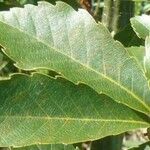
Quercus serrata
Bao li · Gland-bearing oak
Description
Source: leafsnapQuercus serrata, commonly known as the Japanese white oak, is a deciduous tree native to Japan, Korea, and China. It belongs to the Fagaceae family and can reach heights of up to 30 meters with a trunk diameter of about 1 meter. The tree boasts a broad crown adorned with dark green leaves that transition to yellow or reddish-brown in the autumn. The bark of Quercus serrata is grayish-brown and develops deep fissures as the tree matures. The tree produces acorns approximately 2 centimeters long, each nestled in a shallow cup. Quercus serrata thrives in well-drained soils and can be planted in full sun or partial shade. While it is tolerant of cold temperatures, it does not fare well in hot climates. The tree is highly valued for timber production due to its strong, decay-resistant wood. In traditional medicine, Quercus serrata has been utilized for its anti-inflammatory properties and as an astringent to treat diarrhea. Overall, Quercus serrata is an attractive ornamental plant with cultural significance in Japan, symbolizing strength and longevity.
Care Guide
💧 Water Every 7 days
Bao li thrives in arid regions due to its excellent drought tolerance. It only needs watering every 2 to 3 weeks, and it's important to let the soil dry out between waterings. Usually grown outdoors, Bao li requires even less water during its dormant period in the colder months, reflecting its natural preference for drier conditions.
☀️ Light Full sun
Bao li requires ample sunlight for optimal growth but can tolerate moderate shade. Its native habitat has abundant sunshine. The amount of sunlight the plant receives strongly affects its health and productivity. Both too little and too much sunlight can impair its growth and vitality.
What are the sunlight requirements for Bao li?
Bao li thrives with copious sun exposure for optimal growth, favoring conditions of full sun, which is above 6 hours of sunlight daily, but can also cope with partial sun, approximately 3-6 hours of sunlight. Originating from regions characterized by abundant sunlight, the plant's health and productivity are significantly influenced by the amount of sunlight it receives. Both insufficient and excessive sunlight can adversely affect its growth and vitality. It's essential to monitor the sunlight's path through your garden to ensure spots that offer the right balance of light and shade for your plants, ensuring their happiness.
How does artificial lighting support Bao li's growth indoors?
Indoor Bao li plants require adequate lighting to ensure optimal growth. When natural sunlight is insufficient, especially during winter or in less sunny spaces, artificial lights become crucial in providing the necessary support for healthier, faster growth. LED lights are recommended due to their capability to offer specific wavelengths needed by plants. Full sun plants need 30-50W/sq ft of artificial light, partial sun plants need 20-30W/sq ft, and full shade plants require 10-20W/sq ft. The artificial light source should be placed 12-36 inches above the plant, and the duration should mimic natural daylight hours, typically 8-12 hours per day.
What are key symptoms of sunlight deficiency in Bao li?
Bao li shows various symptoms when experiencing sunlight deficiency, crucial for growers to recognize for proper care. Symptoms include smaller new leaves, leggy or sparse growth indicating a need for more sunlight as spaces between leaves or stems lengthen, faster leaf drop as the plant conserves resources in low light, halted growth as the plant enters survival mode, and paler new leaves due to inadequate chlorophyll. These signs help identify when Bao li is not receiving enough sunlight, crucial for its health and growth.
What are the solutions for sunlight deficiency in Bao li plants?
To address sunlight deficiency in Bao li plants, gradual steps should be taken to increase their exposure to sunlight. Indoors, plants can be gradually moved to sunnier locations, near a south-facing window, or supplemented with artificial light, ensuring at least 6 hours of direct sunlight daily. Outdoors, plants should be moved gradually to sunnier spots to prevent sunburn, emphasizing the avoidance of sudden changes in light intensity. Additionally, reducing obstructions such as pruning trees that cast shade or transplanting to better-lit locations can significantly help. New growth post-adjustment will be healthy, though parts previously affected may not recover fully.
🌡️ Temperature 10–35°C
Bao li originates from regions where the average temperature usually ranges from 50 to 95 °F (10 to 35 ℃). It prefers moderate to warm conditions. Adjusting for seasonal changes is essential. In periods of extreme heat or cold, suitable measures should be taken to maintain optimal temperature levels.
What is Bao Li and where is it native to?
Bao Li, scientifically known as Quercus serrata, is native to regions where the average temperature ranges from 50 to 95 °F (10 to 35 °C). This plant thrives in moderate to warm environments and requires seasonal adjustments to maintain optimum temperature levels. Despite its strong cold resistance, special care is necessary during extreme weather conditions to keep it healthy.
How do you protect Bao Li in winter?
To protect Bao Li during winter, especially if temperatures are expected to drop below -25°C, it's important to take measures to avoid cold damage. Wrapping the trunk and branches with non-woven fabric or cloth can provide sufficient protection. Additionally, watering the plant abundantly before the first freeze in autumn ensures that the soil remains moist and enters a frozen state, which helps prevent drought and water scarcity for the plant during the colder months.
What are the symptoms of low temperature on Bao Li and how can you manage them?
Bao Li is cold-tolerant and prefers temperatures above 10°C, but should be kept above -15°C during winter. Exposure to temperatures below -25°C may not immediately show noticeable changes, but may result in brittle and dry branches during spring, with no new shoots emerging. The remedy involves pruning away any dead branches that have failed to produce new leaves.
How does high temperature affect Bao Li and what are the solutions?
During summer, it's critical to ensure Bao Li's environment remains below 35°C. Temperatures exceeding 41°C can cause the leaves to lighten in color, tips to become dry and withered, and increase susceptibility to sunburn. To alleviate these symptoms, trim away sunburned and dried-up parts of the plant. Relocating the plant to a shaded area during the midday and afternoon sun or using a shade cloth, in addition to watering the plant in the morning and evening to keep the soil moist, are effective strategies.
💨 Humidity
🪴 Soil 4-7
🌱 Fertilizer
To encourage healthy development, apply fertilizer to your Bao li in early spring. Consistent feeding boosts overall vigor, leading to strong growth, greater tolerance of harsh conditions, and better resistance to pests and diseases. Follow a defined fertilization routine for your Bao li to achieve rich, deeply colored foliage and a full, lush look.
🪴 Pot & Repot
✂️ Pruning
Prune Bao Li in early spring to encourage healthy growth. Key techniques include removing dead branches, thinning for better airflow, and shaping the plant for improved structure. Always use sharp tools for precise cuts, which helps reduce stress and enhances both the plant's appearance and vitality.
🌿 Propagating
🐛 Diseases & pets
☠️ Toxicity
Characteristics
- Plant Type
- Tree
- Life Cycle
- Perennial
- Genus
- Quercus
- Family
- Fagaceae
- Hardiness Zone
- 6-10
- Mature Height
- 24.99 m
- Mature Spread
- 14.94 m
- Leaf Color
- Green, Dark Green
- Leaf Type
- Deciduous
- Flower Size
- 1.52 cm to 3.05 cm
- Bloom Time
- Late spring, Early summer
- Planting Time
- Autumn
- Harvest Time
- Mid summer, Late summer
- Native Area
- Myanmar, Japan, Koppen, Laos, South Korea, China