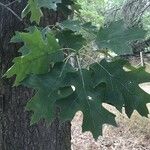
Quercus shumardii
Shumard oak · Shumard red oak · Spotted oak · Swamp red oak · Southern red oak
Description
Source: leafsnapQuercus shumardii, the Shumard oak, spotted oak, Schneck oak, Shumard red oak, or swamp red oak, is one of the largest of the oak species in the red oak group (Quercus section Lobatae). It is closely related to Quercus buckleyi (Texas red oak), Quercus texana (Nuttall's red oak), and Quercus gravesii (Chisos red oak).
🌳 The shumard oak's strong, flexible wood is highly prized for making long-lasting furniture. Its importance, however, goes beyond woodworking. In addition to its valued timber, the oak's acorns have played a significant role in human history as a food ingredient, convertible into edible flour once the tannins are removed. Native Americans used this nutritional resource, and it continues to support wildlife by feeding a variety of small creatures and bird species.
🎭 Security, Wellness, Finances
Care Guide
💧 Water
The Shumard oak flourishes in moderate water conditions and requires watering once every 1 to 2 weeks. As a deciduous tree, it goes dormant during the colder months, significantly reducing its water needs.
☀️ Light Full sun
The shumard oak performs best in sites with abundant light throughout the day, though it can adjust to situations where sunlight is partly diffused or weaker. Its origin in well-lit habitats supports a healthy growth habit. Too little or too much light can cause harmful effects, such as stunted growth or leaf scorching.
What are the sun requirements for Shumard oak?
Shumard oak requires significant light exposure to thrive, categorized into full sun, meaning above 6 hours of sunlight daily, and partial sun, about 3-6 hours of sunlight. It's essential to observe how sunlight moves through your garden to ensure your Shumard oak is planted in an area that provides the perfect balance of light and shade to ensure optimal growth and health.
How does light affect the growth of Shumard oak?
The Shumard oak thrives in environments that offer an abundance of light throughout the day but can adapt to less intense sunlight conditions. Originating from well-lit habitats, the Shumard oak benefits from ample illumination for a healthy growing habit, whereas inadequate or excessive light can lead to adverse effects like stunted growth or leaf scorching.
Can artificial lighting be used for Shumard oak growth?
Yes, artificial lighting can support the growth of Shumard oak, especially when natural sunlight is insufficient, such as during winter or in less sunny spaces. Optimal growth under artificial lighting involves choosing the right type of light, like LED lights, adjusting the distance and duration of exposure to mimic natural sunlight conditions. Full sun plants need 30-50W/sq ft, partial sun plants require 20-30W/sq ft, and shade plants need 10-20W/sq ft of artificial light.
What are the signs of insufficient light in Shumard oak?
Symptoms of light deficiency in Shumard oak include small or lighter-colored new leaves, leggy or sparse growth, faster leaf drop, and in severe cases, no new growth at all. Additionally, overexposure to light can lead to chlorosis, leaf curling, sunscald, wilting, or leaf scorching, indicating the plant's struggle with its current light conditions.
How can I remedy light-related issues in Shumard oak?
To address light-related issues in Shumard oak, adjust the plant's location gradually to a spot with better sunlight or use artificial lighting. For indoor plants, moving them to a sunnier location or providing additional light with artificial sources can make a significant difference. Outdoors, gradual adjustment to brighter locations is recommended. Additionally, reducing obstructions like overhanging branches or relocating the plant to ensure it receives adequate sunlight can drastically improve its health. It's crucial to avoid sudden changes in light intensity to prevent sunburn.
🌡️ Temperature 5–35°C
Shumard oak prefers temperatures between 41 and 95°F (5 and 35°C) and can endure both hot summers and cold winters. It naturally occurs in temperate regions with four distinct seasons. In the warmer months it performs best in shaded locations or where moisture is adequate. In the cooler months it goes into dormancy.
What are the ideal temperature conditions for Shumard Oak?
Shumard oak flourishes in temperatures ranging from 41 to 95°F (5 to 35°C), making it well-suited for temperate zones with four distinct seasons. It is adept at handling both the heat of hot summers and the chill of cold winters. During the warmer months, it thrives in shaded areas or with ample moisture, while in the cooler months, it enters a dormant phase. The tree possesses strong cold resistance, negating the need for special frost protection measures in most cases. However, if temperatures are forecasted to plunge below its growth temperature limit, it's crucial to protect the tree by wrapping its trunk and branches with materials such as non-woven fabric or cloth. Ample watering before the first freeze in autumn is advised to keep the soil moist, helping the tree withstand winter and early spring drought and water scarcity.
How should you care for Shumard Oak in low temperature conditions?
Shumard oak is notably cold-tolerant, thriving best when temperatures remain above its suitable minimum growth temperature. During winter, keeping temperatures above its minimum tolerable growth threshold is important. If temperatures drop below its growth limit, the tree might not exhibit immediate distress, but come spring, branches may turn brittle and dry, possibly failing to produce new shoots. To manage this, the recommended solution is to prune any dead branches in spring to encourage new growth.
What care does Shumard Oak need in high temperature conditions?
During the summer, it's crucial to ensure that the Shumard oak's surrounding temperature does not exceed its maximum suitable growth temperature. Overheating beyond its tolerable maximum can lead to leaves lightening in color, dry and withered tips, and increased susceptibility to sunburn. Care strategies include trimming away sunburned and dried parts, relocating the plant to a shaded area or using a shade cloth to protect it from midday and afternoon sun, and ensuring the soil remains moist by watering in the mornings and evenings.
💨 Humidity
🪴 Soil 6-7
🌱 Fertilizer
Fertilize your Shumard oak in early spring to encourage healthy growth. Regular feeding boosts its overall health, producing vigorous development, greater tolerance of difficult conditions, and improved resistance to pests and diseases. Follow a consistent fertilization schedule for your Shumard oak to maintain foliage that is vivid, richly colored, and lush in appearance.
🪴 Pot & Repot
✂️ Pruning
For healthy growth and an ideal shape, prune Shumard oaks in early spring to remove any dead, diseased, or crossing branches. Avoid heavy pruning, as it can stress the tree. This practice improves air circulation and reduces the risk of disease, contributing to the tree's overall health and strength.
🌿 Propagating
🐛 Diseases & pets
☠️ Toxicity
Characteristics
- Plant Type
- Tree
- Life Cycle
- Perennial
- Genus
- Quercus
- Family
- Fagaceae
- Hardiness Zone
- 5-9
- Mature Height
- 12.19 m to 18.29 m
- Mature Spread
- 11.89 m to 14.94 m
- Leaf Color
- Green, Red, Gold, Brown
- Leaf Type
- Deciduous
- Flower Color
- Green
- Flower Size
- 2.54 cm
- Bloom Time
- Mid spring, Late spring
- Planting Time
- Autumn, Winter
- Harvest Time
- Mid summer, Late summer, Early fall