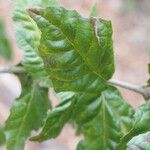
Quercus tomentella
Island live oak · Island Oak
Description
Source: leafsnapQuercus tomentella, commonly known as the Island oak, is a species of oak tree native to California's Channel Islands. This slow-growing evergreen can reach up to 80 feet in height, featuring a broad, spreading canopy. The leaves are dark green and leathery with a fuzzy underside due to fine hairs. Its bark is grayish-brown and deeply furrowed. The Island oak thrives in well-drained soils in coastal areas with moderate temperatures and high humidity. While it can tolerate drought conditions, it struggles in areas with heavy frost or extreme heat. Quercus tomentella plays a vital role in its ecosystem by providing habitat for various wildlife species such as birds, insects, squirrels, and other small mammals. Its acorns serve as an essential food source for many animals. Unfortunately, habitat loss due to human development on the Channel Islands, along with threats like fire suppression practices that promote the overgrowth of competing vegetation around young trees, has led to this species being listed on California's endangered list since 1997. Conservationists are working on restoration projects to protect this unique plant from extinction. These efforts include planting new trees and removing invasive plant species around existing ones, allowing them to thrive in their natural environment once again.
Care Guide
💧 Water Every 7 days
Island live oak thrives in areas with moderate rainfall and shows remarkable resilience to drought. For optimal health, it should be watered every 2 to 3 weeks. As an evergreen tree, the island live oak retains its leaves throughout the year, requiring regular watering even during cooler months.
☀️ Light Full sun
Island live oak is native to open habitats, such as sunny meadows and the edges of forests, which offer abundant light. It performs best in full sun but will also tolerate partial sun, adjusting well to a range of light conditions.
What are the sunlight requirements for Island live oak?
Island live oak thrives in environments that provide ample light, originating from open spaces like sunny meadows and forest edges. This plant requires full sun, equating to above 6 hours of sunlight daily, but it can also tolerate partial sun, which means about 3-6 hours of sunlight. Artificial lighting can supplement natural sunlight, especially in less sunny spaces or during winter. LEDs are recommended for their ability to mimic the sun's spectrum, with full sun plants needing 30-50W/sq ft, partial sun plants 20-30W/sq ft, and full shade plants 10-20W/sq ft. The light source should be placed 12-36 inches above the plant and kept on for 8-12 hours per day to simulate natural daylight hours effectively.
What symptoms indicate Island live oak is not receiving enough light?
When Island live oak does not receive sufficient light, it may show various symptoms such as smaller new leaves, leggy or sparse growth, faster leaf drop, halted or no new growth, and lighter-colored or irregularly patterned new leaves. Other symptoms include chlorosis (yellowing leaves), sunscald (damage from intense light), leaf curling (to minimize exposure to excessive sunlight), wilting (loss of turgor pressure), and leaf scorching (brown, dry edges on leaves). These signs indicate the plant is struggling with the lighting conditions, affecting its growth and overall health.
How can I address light deficiency symptoms in Island live oak?
To counteract symptoms of light deficiency in Island live oak, gradually increase its exposure to sunlight. For indoor plants, move them to a sunnier location each week, aiming for at least 6 hours of direct sunlight daily, or use artificial lighting, such as desk or grow lights, for at least 8 hours a day. For outdoor plants, relocate them progressively to avoid shock from sudden light intensity changes. If sunlight is blocked by obstructions like trees, consider pruning to improve light access. For smaller plants, transplanting during the dormant season to a brighter location can also help. Note, however, that parts of the plant already affected by insufficient light might not recover, but new growth should be healthy with improved light conditions.
🌡️ Temperature 15–35°C
Island live oak shows considerable adaptability to a range of climate conditions, whether enduring hot summers or cold winters. However, it does have an optimal temperature range for growth. When temperatures become excessively high, the plant is vulnerable to heat and humidity stress, which can lead to its death. In areas where temperatures approach the lower limit of its cold tolerance, it is important to provide insulation to protect the plant.
What is the optimal temperature range for Island live oak, and how does it adapt to climate fluctuations?
Island live oak shows remarkable adaptability to a wide range of climate conditions, thriving in both hot summers and cold winters. However, it does have a preferred temperature range where it grows best. High temperatures, especially above 41°C, can subject the plant to heat and humidity stress, potentially leading to its death. Conversely, in cold climates where temperatures are at the lower end of its tolerance, insulation measures are advisable to shield the plant. Although Island live oak has strong resistance to cold, in instances where temperatures are expected to plummet below -15°C, protective actions, such as wrapping the trunk and branches with non-woven fabric or cloth, are necessary. It's also recommended to water the plant copiously before the first freeze of autumn to keep the soil moist, aiding the plant through winter and early spring by preventing drought and water scarcity.
How should you care for an Island live oak during extreme cold temperatures?
Island live oak tolerates cold well, ideally surviving above -10°C. If winter temperatures are expected to fall below -15°C, the tree may not show immediate damage but come spring, branches might turn brittle and dry, failing to sprout new leaves. To mitigate these effects, it's crucial to provide additional protection by covering the plant with insulative materials. Also, ensuring the soil is moist before the onset of winter can be beneficial. Pruning dead branches in spring that haven't produced new leaves is advisable for the health and appearance of the tree.
How does high temperature affect Island live oak, and what measures can be taken?
When experiencing temperatures above its comfort zone, particularly over 35°C, Island live oak may show signs of stress such as lighter-colored leaves, with tips turning dry and withered, indicating sunburn. To care for a sunburned Island live oak, remove the damaged parts of the plant. Relocate the plant to a shadier area or use shade cloth to protect it from intense midday and afternoon sun. Watering the plant in the morning and evening helps keep the soil moist and supports the plant's recovery and continued health.
💨 Humidity
🪴 Soil 6-8
🌱 Fertilizer
Fertilize your Island live oak in early spring to encourage healthy growth. Regular feeding improves its overall health, leading to vigorous growth, greater toughness under difficult conditions, and increased resistance to diseases and pests. Maintain a consistent fertilization schedule for your Island live oak to keep the foliage vibrant, deeply colored, and lush.
🪴 Pot & Repot
✂️ Pruning
The island live oak has dense, evergreen foliage and requires pruning in early spring to maintain its shape and remove any dead or diseased branches. Light pruning helps improve air circulation and allows more sunlight to reach the tree, while also preserving its aesthetic and ecological benefits.
🌿 Propagating
🐛 Diseases & pets
☠️ Toxicity
Characteristics
- Plant Type
- Tree
- Life Cycle
- Perennial
- Genus
- Quercus
- Family
- Fagaceae
- Hardiness Zone
- 7-10
- Mature Height
- 12.19 m to 18.29 m
- Mature Spread
- 6.1 m to 9.14 m
- Leaf Color
- Green, Blue
- Leaf Type
- Deciduous
- Flower Color
- Yellow, Green, Brown
- Flower Size
- 0.51 cm to 0.76 cm
- Bloom Time
- Mid spring, Late spring
- Planting Time
- Spring, Autumn
- Harvest Time
- Late summer, Early fall, Mid fall
- Native Area
- Mexico