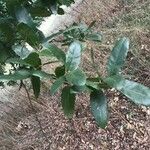
Quercus trojana
Macedonian Oak · Trojan oak
Description
Source: leafsnapQuercus trojana, commonly known as the Trojan oak, is a species of oak tree that originates from the Mediterranean region. This slow-growing tree can reach heights of up to 20 meters and is characterized by its broad, rounded crown. The bark is dark gray and deeply furrowed. The leaves of Quercus trojana are deciduous and typically measure 5-10 cm in length, featuring irregularly lobed margins. They are dark green on the upper surface with a lighter underside, turning yellow or brown in the autumn before falling off. The Trojan oak produces acorns that are about 2 cm long with shallow cups. These acorns mature within a year and serve as a food source for various animals, including squirrels, deer, birds, and insects. Quercus trojana prefers well-drained soil but can tolerate some moisture. It thrives best in full sun or partial shade, though it can also endure some shade. This species holds cultural significance as it was named after Troy (Troia), an ancient city located on the northwest coast of Turkey. It was first discovered by botanists during a 1844 expedition led by French botanist Pierre Edmond Boissier. Overall, Quercus trojana is an attractive tree species valued for both its ornamental qualities and its ecological importance within its native range.
Care Guide
💧 Water Every 7 days
Keep the soil for a Trojan oak moist but well-drained, as it has a taproot that draws moisture from deep underground. Make sure the humidity is maintained a few inches below the surface without flooding the topsoil. Reducing watering during the summer can benefit the tree's health, as trojan oak is well-adapted to dry spells.
☀️ Light Full sun
Trojan oak comes from open habitats, such as sunny meadows and forest edges, which supply plenty of light. It performs best in Full Sun but can also tolerate Partial Sun, showing good adaptability to different light conditions.
What are the sunlight requirements for a Trojan Oak?
The Trojan Oak, or Quercus trojana, requires specific sunlight conditions to thrive. It needs full sun, which is above 6 hours of sunlight daily, to flourish. However, it can also tolerate partial sun, approximately 3-6 hours of sunlight per day. It's important to observe the patterns of sunlight in your garden carefully to find the ideal spots that provide the right balance of light and shade, ensuring the health and happiness of your Trojan Oak.
🌡️ Temperature 10–35°C
The Trojan oak is highly adaptable to a range of climate conditions, whether faced with very hot summers or cold winters. Still, it has a preferred temperature range for healthy growth. If temperatures climb too high, the tree can suffer stress from heat and humidity, which may lead to its death. In areas where temperatures near the lower limit of its cold tolerance, providing insulation to protect the plant is necessary.
What is the Trojan oak?
The Trojan oak, known scientifically as Quercus trojana, is a species of oak. There is no additional detailed information provided about its essentials or symptoms concerning its growth, care, or appearance.
💨 Humidity
🪴 Soil 6-8
🌱 Fertilizer
Fertilize your Trojan oak in early spring to encourage healthy growth. Regular feeding boosts the tree’s overall health, producing vigorous growth, greater tolerance of challenging conditions, and improved resistance to pests and diseases. Keep a consistent fertilization schedule for your Trojan oak to maintain foliage that is vibrant, deeply colored, and lush.
🪴 Pot & Repot
✂️ Pruning
To ensure a robust and attractive Trojan oak, it's best to prune the tree in early spring during its dormant period. Focus on removing dead branches, thinning out some of the growth to improve air circulation, and shaping the tree for a balanced appearance. Pruning while the tree is dormant reduces stress and encourages healthy growth, increasing its density and resistance to pests and enhancing its overall health.
🌿 Propagating
🐛 Diseases & pets
☠️ Toxicity
Characteristics
- Plant Type
- Tree
- Life Cycle
- Perennial
- Genus
- Quercus
- Family
- Fagaceae
- Hardiness Zone
- 6-9
- Mature Height
- 10.06 m to 14.94 m
- Mature Spread
- 7.92 m to 11.89 m
- Leaf Color
- Dark Green, Olive Drab
- Leaf Type
- Deciduous
- Bloom Time
- Mid spring, Late spring
- Planting Time
- Spring, Summer, Autumn
- Harvest Time
- Late summer, Early fall, Mid fall